A driveway takes more pressure than almost any other outdoor surface. It has to handle vehicle weight, turning tyres, harsh sun, rain, oil marks, daily movement and constant exposure to the elements.
That is why choosing the right driveway pavers matters. The wrong material can crack, fade, stain, shift or create an uneven surface that becomes expensive to fix later.
This guide looks at the best driveway pavers in Australia, including natural stone options, cost factors, design choices, installation requirements and maintenance tips for long-lasting results.
What Are the Best Driveway Pavers in Australia?
The best driveway pavers in Australia are dense, durable and able to handle vehicle pressure without cracking, shifting or wearing down too quickly. Granite, bluestone, porphyry and quartzite are among the strongest choices because they offer reliable load-bearing performance, weather resistance and long-term stability.
Granite is often selected for heavy-use driveways because of its hardness and strength. Bluestone works well for modern and classic homes, offering a strong surface with a clean blue-grey look. Porphyry is a smart option where natural grip and texture matter, while quartzite suits premium driveways that need strong resistance to heat, pressure and wear.
These options are often easier to compare when viewed as part of a broader natural stone paving decision, rather than as standalone materials.
Limestone and travertine can also work in selected driveway settings, but they are better suited to lighter-use, flatter areas where the right thickness, sealing and installation method are used.
The best choice depends on the driveway’s slope, traffic level, climate exposure, design style and budget. For most Australian homes, the safest approach is to choose a paver that combines strength, surface texture, suitable thickness and proper installation over a compacted base.
Why Choose Pavers for a Driveway?

Pavers are a strong choice for driveways because they combine durability, design flexibility and practical repairability. Unlike a single poured surface, pavers are installed as individual units, which helps distribute pressure and makes future repairs easier.
A well-installed paver driveway can handle regular vehicle movement, turning tyres and outdoor weather without losing its shape too quickly. If one section becomes stained, chipped or damaged, individual pavers can usually be replaced without resurfacing the entire driveway.
Pavers also give homeowners more control over the final look. Natural stone, concrete, brick and other paver options come in different colours, formats, finishes and laying patterns, making it easier to match the driveway to the home’s facade, garden and entry design.
Drainage is another advantage when the system is planned correctly. Permeable paving layouts, open joints and proper base preparation can help water move away from the surface, reducing pooling and long-term base damage.
Maintenance is usually straightforward. Sweeping, washing, topping up joints and resealing suitable materials can keep the driveway looking clean and stable. For Australian homes, driveway pavers offer a practical balance of strength, kerb appeal and long-term value.
What Makes a Driveway Paver Suitable for Australian Conditions?
A good driveway paver needs to do more than look attractive. In Australian conditions, it has to handle vehicle weight, heat, rain, UV exposure, stains and daily use without becoming unsafe or unstable.
Load-Bearing Strength
Driveway pavers must be strong enough to support regular vehicle movement without cracking, rocking or sinking. Dense materials such as granite, bluestone, quartzite and porphyry are well-suited because they can handle pressure more reliably than softer or thinner paving options.
Correct Thickness
Thickness matters because driveways carry more weight than patios, paths or garden areas. A driveway-grade paver should be selected in a format that suits vehicle traffic, the base system and the expected load. Thin pavers may loosen, crack or move over time.
Surface Texture and Grip
Smooth surfaces can become slippery in wet weather, especially on sloped driveways. Textured finishes such as flamed, exfoliated, sawn, split or naturally rough surfaces can create better traction for tyres and pedestrians.
Low Porosity and Stain Resistance
Driveways are exposed to oil, tyre marks, dirt and moisture. Low-porosity stones are usually easier to clean and less likely to absorb stains or water. More porous stones may still work, but they often need sealing and more careful maintenance.
Weather and UV Performance
Australian driveways face strong sun, heat, rainfall and seasonal changes. The best pavers resist fading, surface weakness and weather-related movement, helping the driveway keep its appearance and structure over time.
Clean Cutting and Consistent Thickness
Quality cutting improves installation. Pavers with consistent thickness, clean edges and strong surface integrity are easier to lay evenly, reducing the risk of rocking, uneven joints and early movement.
Best Driveway Paver Materials in Australia

The best driveway paver material depends on how much traffic the driveway receives, whether it is flat or sloped, how exposed it is to weather, and the style of the home. For most Australian driveways, strength and surface texture should come before appearance alone.
Granite Driveway Pavers
Granite is one of the strongest options for driveway paving. Its dense structure helps it handle vehicle weight, turning tyres and regular use without wearing down quickly. It also performs well in exposed areas because it resists heat, scratching and general weather damage.
From a design point of view, granite works well for homes that need a clean, refined and long-lasting driveway surface. Granite Grey can suit modern homes, architectural builds and properties where a strong street presence matters without making the driveway feel overly busy.
Bluestone Driveway Pavers
Bluestone is a reliable driveway choice for Australian homes because it offers durability, natural grip and a timeless blue-grey finish. It suits both modern and traditional properties, making it one of the more versatile natural stone options.
For driveways, bluestone works best when the right thickness and finish are selected. Bluestone Flamed can create a more textured outdoor surface, while sawn, exfoliated or cobbled formats can all support different driveway styles when matched to the right base and layout.
Porphyry Driveway Pavers
Porphyry is ideal for driveways that need texture, grip and strong natural character. Its split surface and earthy colour variation make Porphyry Cobble especially useful for sloped driveways, high-wear areas and homes that need a more rustic or European-style finish.
Because porphyry is extremely hard-wearing, it can handle regular vehicle movement while adding depth and visual interest to the driveway.
Quartzite Driveway Pavers
Quartzite is a premium option known for its hardness, surface strength and natural colour variation. It suits driveways where durability is important, but the homeowner also wants a more distinctive finish.
Its resistance to heat, scratching and pressure makes it a strong choice for exposed Australian driveways, especially in homes aiming for a high-end exterior.
Limestone Driveway Pavers
Limestone can work for lighter-use or flatter driveways when the right grade, thickness and finish are chosen. It offers softer natural tones, which can suit coastal homes, traditional properties and warmer exterior palettes.
Because limestone is more porous than harder stones, sealing and proper maintenance are important.
Travertine Driveway Pavers
Travertine is best suited to decorative, low-load or low-gradient driveway areas. It offers warm colour, natural texture and a softer look, but it is not the best fit for heavy vehicle pressure or steep driveways.
| Material | Best For | Key Strength | Main Consideration |
| Granite | Heavy-use driveways | Exceptional density | Higher upfront cost |
| Bluestone | Modern and classic homes | Durable and stylish | Finish selection matters |
| Porphyry | Sloped or high-grip areas | Natural texture | Strong visual character |
| Quartzite | Premium driveways | Very hard surface | Can sit at a higher price point |
| Limestone | Light to moderate use | Soft natural tones | Needs careful selection |
| Travertine | Decorative light-use areas | Warm appearance | Not ideal for heavy loads |
Natural Stone vs Concrete Driveway Pavers
Natural stone and concrete pavers can both be used for driveways, but they suit different priorities. Concrete is often chosen for affordability and consistency, while natural stone is usually selected for strength, character and a more premium finish.
| Feature | Natural Stone Pavers | Concrete Pavers |
| Appearance | Unique colour, texture and natural variation | More uniform and manufactured |
| Durability | Very strong when the right stone is selected | Durable, but can crack, fade or wear over time |
| Maintenance | Simple care with sealing where needed | May need resealing, cleaning and occasional repairs |
| Cost | Higher upfront investment | Usually more budget-friendly |
| Design Value | Premium kerb appeal with natural character | Flexible, but less organic in appearance |
| Lifespan | Strong long-term value with correct installation | Depends heavily on product quality and base preparation |
Natural stone is the stronger choice if you want a driveway that feels high-end, long-lasting and connected to the home’s exterior design. Materials like granite, bluestone, quartzite and porphyry bring natural texture and colour variation that manufactured pavers often cannot match, which is why many homeowners compare natural stone vs concrete before making a final decision.
Concrete pavers can still be practical, especially for larger driveways or projects with tighter budgets. They offer consistent sizing, predictable colours and a wide range of shapes, which can make installation and design planning easier.
The right choice depends on what matters most. Choose natural stone if durability, street appeal and long-term value are the priority. Choose concrete if upfront cost and uniformity are more important than natural variation and premium finish.
How Much Do Driveway Pavers Cost in Australia?
Driveway paver costs in Australia vary because every project has different site conditions, material choices and installation requirements. The final price is usually shaped by the type of paver, driveway size, base preparation, drainage, labour, jointing, sealing and design complexity.
Material Choice
Natural stone pavers such as granite, quartzite, porphyry and high-grade bluestone usually cost more upfront than standard concrete pavers. Limestone and travertine can vary depending on density, format, finish and suitability for driveway use.
Driveway Size and Layout
Larger driveways need more material, more base preparation and more labour. Curved layouts, custom borders, detailed cuts, turning areas and complex paving patterns can also increase the installation time and overall cost.
Base Preparation
The base is one of the most important cost factors. Excavation, compacted crushed rock, geotextile fabric, bedding material and drainage preparation all add to the project, but they are essential for long-term stability.
Thickness and Finish
Driveway-grade pavers need to be stronger than standard patio or garden pavers. Thicker stone, textured finishes, sawn edges and custom formats can influence cost, especially when the driveway needs to handle regular vehicle loads.
Installation and Sealing
Professional installation, jointing, edge restraints and sealing all contribute to the upfront investment. However, they also help prevent movement, staining, sinking and early surface failure.
The cheapest driveway is not always the best value. A stronger paver, proper base and skilled installation can reduce future repair costs and help the driveway last much longer.
Driveway Paver Design Options for Australian Homes

Driveway design affects more than appearance. The right layout can improve load distribution, guide water movement, define the entry and make the front of the home feel more polished. This is where suitable paver patterns can make the driveway feel intentional while still supporting everyday use.
Running Bond and Stretcher Bond
Running bond and stretcher bond patterns create a clean, structured look. They work well with rectangular granite, bluestone and concrete pavers, especially on homes where the driveway needs to feel neat, simple and timeless.
Herringbone Pattern
Herringbone is a strong choice for driveways because the interlocking layout helps distribute pressure from vehicles. It also adds visual movement, making it useful for driveways that need a classic paved look without feeling plain.
Stack Bond
Stack bond suits contemporary homes with sharp lines and a more architectural style. The grid-like layout looks clean and minimal, but it needs accurate installation because any uneven spacing or movement becomes more noticeable.
Crazy Paving
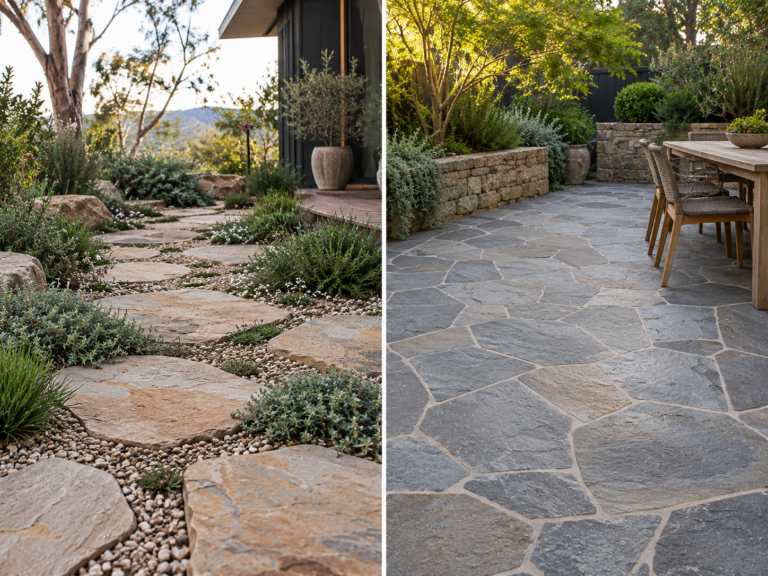
Crazy paving creates a more organic and relaxed driveway finish. It works especially well with natural stone where irregular shapes, varied tones and surface texture can add character to the entry. A detailed crazy paving guide can help clarify where this style suits driveways and where a more structured paver format may be better.
Filetti and Linear Formats
Filetti and linear formats create a bold, directional look. They are often used for architectural driveways, narrow entries or spaces where the paving needs to make a stronger design statement.
Borders and Edge Details
Borders help frame the driveway and give the surface a finished look. They also support the outer edges, helping reduce lateral movement over time when installed correctly.
Colour and Texture Coordination
The paver colour and texture should work with the home’s facade, garage door, garden, retaining walls and nearby stonework. Lighter tones can soften the entry, while darker stones create stronger contrast and definition.
Installation Requirements for a Long-Lasting Driveway
Even the best driveway pavers can fail if the installation is rushed or the base is poorly prepared. A strong driveway depends on proper excavation, drainage, compaction, bedding, jointing and edge support, the same fundamentals that shape any reliable stonepaver installation.
Plan the Layout and Drainage
Start with a clear layout that suits the driveway’s shape, slope and vehicle movement. Water should drain away from the home, garage and paved surface. Without proper fall, water can pool beneath the pavers and weaken the base over time.
Excavate to the Correct Depth
Driveways need deeper preparation than patios or garden paths because they carry vehicle weight. The depth should allow enough space for the sub-base, bedding layer and paver thickness, while still keeping the finished surface level with surrounding areas.
Build a Strong Sub-Base
A compacted crushed rock or road base layer gives the driveway its strength. This material should be installed in layers and compacted properly so it can support regular vehicle movement without sinking or shifting.
Add Geotextile Fabric Where Needed
In some ground conditions, geotextile fabric can help separate the soil from the base material. This reduces movement, improves stability and helps stop the base from mixing with softer ground beneath it.
Use the Right Bedding Layer
The bedding layer supports the pavers and helps create an even surface. It should be level, consistent and suitable for the chosen stone or paver system. Poor bedding can cause rocking, uneven pavers and early movement.
Lay the Pavers Accurately
Each paver should be laid with consistent spacing, alignment and height. Levels should be checked throughout the process, especially around edges, turning zones and transitions near the garage or footpath.
Fill the Joints Properly
Jointing material helps lock the pavers in place and reduce movement. Suitable sand, grout or mortar can also help limit weed growth and water erosion between the pavers.
Seal and Finish Where Suitable
Some driveway pavers benefit from sealing after installation, especially more porous stones or high-stain areas. Sealing can help protect against oil marks, moisture and weather exposure while making the driveway easier to clean.
Common Mistakes When Choosing Driveway Pavers
Choosing driveway pavers can feel simple at first, but small material or installation mistakes can create major problems later. The wrong choice may lead to cracking, staining, sinking, poor drainage or a driveway that does not suit the home.
- Choosing style over strength: Some pavers look impressive but do not have the density or load-bearing capacity needed for regular vehicle traffic.
- Using pavers that are too thin: Thin pavers can crack, loosen or shift under repeated vehicle pressure, especially around turning zones and garage entries.
- Ignoring surface texture: Very smooth finishes may become slippery in wet weather. A textured, flamed, split or exfoliated finish is usually safer for driveways.
- Overlooking porosity: Highly porous materials can absorb oil, moisture and stains more easily. These stones may need sealing and more careful maintenance.
- Skipping proper base preparation: A weak or poorly compacted base can ruin even premium pavers, causing sinking, movement and uneven sections.
- Not planning drainage: Water pooling beneath or around the driveway can weaken the base and lead to long-term movement or surface damage.
- Choosing poor-quality batches: Inconsistent thickness, weak edges, visible fissures or poor cutting can make installation harder and reduce long-term stability.
The best result comes from matching the paver to the driveway’s traffic, slope, climate exposure and installation system. Appearance matters, but strength, thickness, texture and base preparation matter more.
How to Maintain Driveway Pavers
Driveway pavers are relatively easy to maintain, but they still need consistent care to stay clean, stable and safe. Because driveways deal with tyres, oil, weather and daily movement, small issues should be handled before they become bigger repairs.
- Sweep and wash regularly: Remove leaves, dirt, grit and organic buildup before they stain the surface or settle into the joints. A regular rinse can also help keep the driveway looking fresh.
- Clean oil and tyre marks quickly: Oil, grease and tyre residue can leave stubborn marks if ignored. Regular paver cleaning and maintenance is especially important on driveways because tyres, oil, grit and weather exposure all affect the surface over time.
- Top up joint material: Sand, grout or jointing material can loosen over time, especially after heavy rain or regular vehicle movement. Proper paver joint filling and sealing helps keep the surface locked in place and reduces the risk of water working into the base.
- Remove weeds early: Weeds can grow through weakened joints and disturb the surface. Removing them early helps protect the jointing and keeps the driveway looking tidy.
- Reseal suitable stones: Some natural stone pavers benefit from resealing, especially more porous materials or high-traffic areas. Sealing can help protect against moisture, oil and staining.
- Protect turning zones: Areas where tyres pivot often can wear faster. Pay extra attention to garage entries, tight corners and reversing areas.
- Check drainage after storms: Water pooling on or around the driveway should be fixed early, as it can weaken the base and cause pavers to shift or sink over time.
Which Driveway Paver Is Right for Your Home?
The right driveway paver depends on how your driveway is used, how exposed it is, the slope of the surface and the style you want to create. A flat suburban driveway with light vehicle use may not need the same material as a steep, high-traffic or architecturally detailed entry.
Choose granite if strength is the main priority. It suits heavy-use driveways, modern homes and areas where durability, low maintenance and a refined finish matter.
Choose bluestone if you want a versatile natural stone with strong performance and timeless blue-grey tones. It works well across both contemporary and classic Australian homes.
Choose porphyry if your driveway needs more grip, texture and visual character. It is a strong option for sloped driveways, high-wear areas and designs that suit a more natural or rustic finish.
Choose quartzite if you want a premium surface with excellent hardness and distinctive colour variation. It suits homes where the driveway needs to feel both durable and high-end.
Choose limestone if your driveway is flatter, lighter-use and suited to softer natural tones. It needs careful selection and proper sealing.
Choose travertine for decorative, low-load driveway areas where warmth and texture are more important than heavy-duty performance.
Choose concrete if budget and consistency matter more than natural variation or premium stone character.
Choose Driveway Pavers Built for Australian Conditions
The best driveway pavers in Australia are chosen for strength, texture, thickness, drainage, style and long-term value, not appearance alone. A driveway needs to handle vehicle pressure, turning tyres, heat, rain and daily use without becoming unstable too quickly.
Natural stone can create a driveway that feels premium, durable and well-matched to the home’s architecture when it is selected and installed properly. Granite, bluestone, porphyry and quartzite are especially strong options for long-lasting results.
If you are planning a new driveway, Splendour in Stone can help you compare suitable stone pavers, finishes and formats for your home.
FAQs About Driveway Pavers in Australia
1. What are the best driveway pavers in Australia?
Granite, bluestone, porphyry and quartzite are among the best driveway pavers in Australia because they offer strong density, weather resistance and long-term durability. These materials can handle vehicle traffic better than many softer or thinner paving options when installed on a proper base.
2. Are natural stone pavers good for driveways?
Yes, natural stone pavers are good for driveways when the stone is dense, thick enough and suitable for vehicle use. Options like granite, bluestone, porphyry and quartzite provide strength, surface texture and premium kerb appeal for Australian homes.
3. How thick should driveway pavers be?
Driveway paver thickness depends on the material, vehicle load and installation system. In general, driveway-grade pavers need to be thicker and stronger than standard patio or pathway pavers because they must support repeated vehicle pressure without cracking or shifting.
4. Are driveway pavers more expensive than concrete?
Natural stone driveway pavers usually cost more upfront than standard concrete pavers. However, they can offer better long-term value through durability, repairability, stronger visual appeal and a more premium finish when installed and maintained properly.
5. What is the lowest-maintenance driveway paver?
Granite, bluestone and quartzite are generally strong low-maintenance driveway paver options. They still need regular sweeping, occasional washing, joint checks and sealing where suitable, but they are known for strength and reliable outdoor performance.
6. Do driveway pavers need sealing?
Some driveway pavers need sealing, especially more porous stones or surfaces exposed to oil, tyre marks, moisture and heavy use. Sealing can help protect the stone, reduce staining and make cleaning easier over time.
7. What driveway paver design works best?
Running bond, stretcher bond, herringbone, stack bond, crazy paving, filetti and bordered layouts can all work for driveways. The best design depends on the home style, driveway shape, slope, paver format and desired finish.