


Bluestone cobblestone is a dense Victorian basalt, cut into small modular setts and used for driveways, courtyards, pool surrounds, and heritage paving. It is valued for its deep blue-grey tone, naturally textured surface, and resistance to cracking, fading, and heavy traffic, which is why it is specified on premium projects across Australia.
Available in sawn, exfoliated, and tumbled finishes, it carries the load of vehicles as comfortably as it frames a garden path, suiting both contemporary landscapes and traditional restorations.
What Is Bluestone Cobblestone?
Bluestone cobblestone is a naturally formed basalt, valued for its dense composition, deep blue-grey tones, and uniform texture. Quarried predominantly in Victoria, it is a go-to choice for both classic restorations and contemporary landscapes.
Cobblestones are produced in a range of finishes, including sawn for sharp definition, exfoliated for added surface texture, and tumbled for a weathered, aged effect. Each format suits a different design intent, offering flexibility across outdoor settings.
Compared to granite or travertine, Bluestone’s fine-grained makeup allows for easier shaping and installation while maintaining long-term durability in outdoor paving projects. Its distinct look and performance make it ideal for high-end paving projects.
Why Is Bluestone Cobblestone Used for Premium Paving?

Bluestone is not just a beautiful material. It also offers numerous benefits that make it perfect for various projects. Here are the key advantages that make Bluestone a top choice for any application:
1. Enhances Visual Appeal with Timeless Character
Bluestone’s deep, natural colouring and fine texture bring lasting beauty to outdoor spaces. Its aesthetic suits modern and traditional landscapes, elevating driveways, courtyards, and public areas with understated elegance.
2. Offers Reliable Underfoot Grip
The natural texture of Bluestone provides a confident footing across wet or high-traffic areas. This makes it ideal for pool zones, paths, and other spaces where safety and style must go hand in hand.
3. Withstands Harsh Climate Conditions
Bluestone performs well under Australia’s intense sun, heavy rainfall, and cool winters. Its dense structure helps it resist cracking, fading, and erosion in both residential and commercial outdoor environments.
4. Adapts to Public and Private Projects
From luxury homes to busy public walkways, Bluestone cobblestones meet both visual and functional needs. Their strength, finish options, and modular sizing offer versatility across project scales and styles.
5. Delivers Long-Term Value with Minimal Upkeep
Bluestone cobblestones are low-maintenance and built to last. Their durability reduces repair costs over time, while their visual appeal ensures they remain a desirable feature in any high-end landscape setting
Common Applications of Bluestone Cobblestone

Bluestone cobblestones are not just attractive. They are also highly practical in a wide range of environments. Here are the most popular uses in both private and public spaces:
- Driveways and Vehicular Access Areas: Bluestone’s strength makes it ideal for high-traffic areas like residential driveways and laneways. It handles the weight of vehicles while offering visual sophistication.
- Courtyards, Garden Walkways, and Patios: The natural texture and colour variation of Bluestone add depth and warmth to relaxing outdoor spaces. It works beautifully in garden paths and courtyard settings.
- Pool Surrounds and Outdoor Entertainment Zones: Bluestone holds up well in moisture-prone areas. Its surface texture offers a stable footing, making it suitable for Pool Areas, alfresco areas, and entertaining spaces.
- Urban Footpaths and Heritage Zones: Bluestone’s durability and visual appeal suit public walkways and civic spaces. It complements both modern streetscapes and restoration projects in heritage-listed locations.
- Commercial Entryways and Courtyard Features: Bluestone cobblestones create a strong first impression in retail, hospitality, and office settings. Their texture and finish lend a sense of prestige and permanence to commercial outdoor spaces.
Cobblestone Patterns and Layout Options

Bluestone cobblestones are more than functional. Their layout options allow for creative freedom and architectural cohesion. Here are the most popular patterns used in outdoor paving projects:
1. Fan Pattern
The fan pattern uses radial arcs to create movement and old-world charm. Often seen in European courtyards and streets, this layout suits traditional or heritage-inspired settings and adds a decorative element to large paved areas.
2. Herringbone Pattern
This interlocking zigzag layout is both strong and stylish. The herringbone pattern distributes weight evenly, making it ideal for driveways and laneways. It also adds visual interest through directional flow and balance.
3. Running Bond Pattern
Laid like bricks, the running bond pattern offers clean lines and a consistent rhythm. It works well in narrow or linear spaces like walkways and paths, and complements both modern and classic design themes.
4. Ashlar Layout
Ashlar layouts use rectangular cobbles arranged in neat courses. This symmetrical pattern delivers a polished, contemporary feel and is often used in courtyards or commercial outdoor areas that require geometric precision.
5. Random or Uniform Layouts
Random layouts use mixed sizes for a relaxed, organic look, while uniform grids deliver structure and formality. Both approaches offer flexibility in design depending on the tone and flow of your space.
Installation Considerations for Bluestone Cobblestones

Installing Bluestone cobblestones correctly is key to achieving both visual appeal and structural longevity. Here are the essential factors to consider before starting your paving project:
- Prepare the Ground and Sub-Base: Begin with a well-compacted crushed rock or road base foundation, following proper stone paver installation practices. This provides stability, prevents movement over time, and supports the weight of vehicles or foot traffic.
- Select the Right Jointing Method: Choose between sand, mortar, or flexible paving grout based on the location and desired finish. Each jointing material affects drainage, appearance, and maintenance needs.
- Ensure Proper Drainage and Slope: Grade the surface to allow water runoff and avoid pooling. This prevents damage and prolongs the life of the cobblestones in both flat and sloped areas.
- Install Solid Edge Restraints: Use steel, concrete, or stone edging to hold the cobbles in place. Proper edging helps maintain alignment and prevents the spread of joints over time.
- Plan for Consistent Layout and Spacing: Use string lines or templates to keep cobbles aligned during installation. Maintaining even spacing improves the overall look and ensures a professional, long-lasting finish.
How Does Bluestone Compare to Granite, Travertine and Concrete?
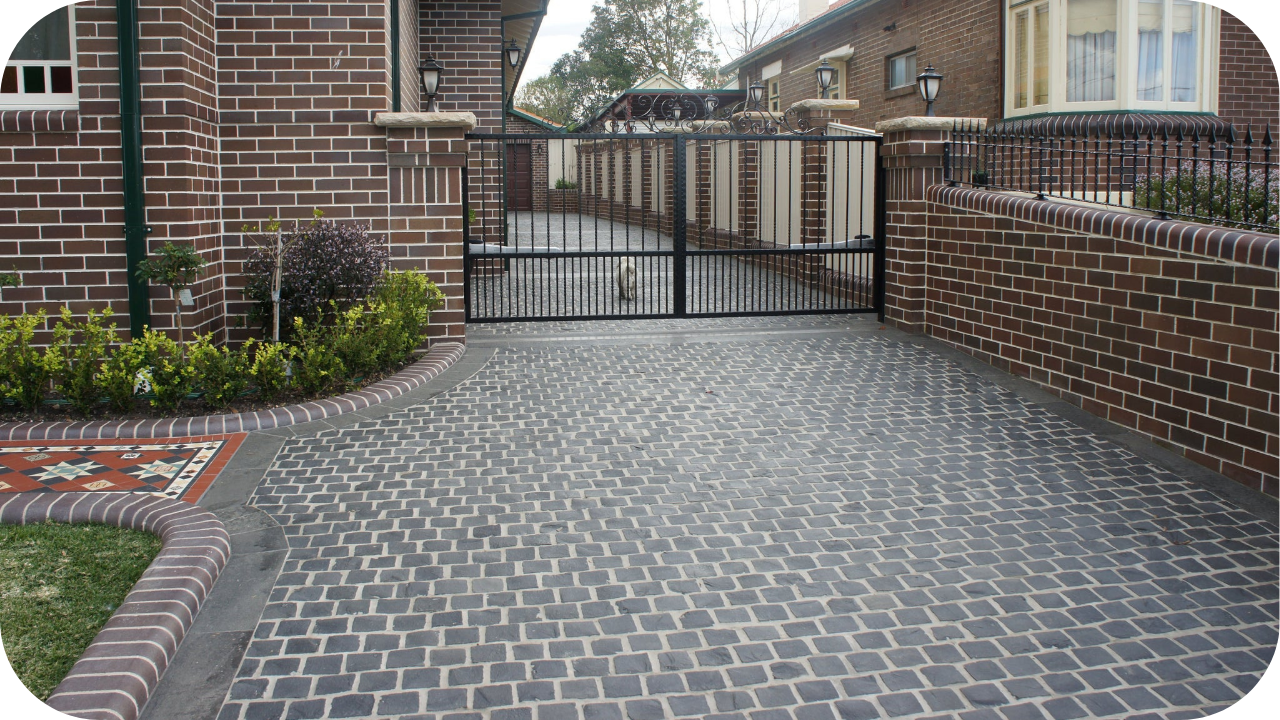
Bluestone does more than look good. Compared to other paving materials, it delivers better long-term performance and design flexibility. Here’s how it stacks up against common alternatives:
| Material | Rock type | Outdoor durability | Common finishes | Best suited to |
| Bluestone (basalt) | Igneous, fine-grained | High, dense and frost-resistant | Sawn, exfoliated, tumbled, honed | Driveways, courtyards, pool surrounds, heritage paving |
| Granite | Igneous, coarse-grained | Very high, very hard | Flamed, honed, sawn | Driveways, high-wear commercial areas |
| Travertine | Sedimentary (limestone) | Moderate, porous, needs sealing | Tumbled, honed, filled | Pool decks, alfresco, cooler-underfoot zones |
| Concrete | Manufactured | Moderate, can crack and fade | Cast, exposed aggregate | Budget paving, large flat areas |
1. Outperforms Granite, Travertine, and Concrete
Bluestone offers a more consistent texture than granite and better density than travertine, making it easier to work with. Unlike concrete, it doesn’t crack as easily or degrade with exposure to the elements, making it a strong option in the natural stone vs concrete debate.
2. Lasts Longer Under Traffic and Weather
Due to its dense structure, Bluestone is ideal for both pedestrian and vehicular use. It stands up to rain, heat, and constant wear, making it a trusted option for high-traffic zones and exposed areas.
3. Simplifies Repairs and Ongoing Maintenance
Individual cobbles can be removed and replaced with minimal disruption. Unlike poured concrete or brittle natural stones, Bluestone requires little effort to maintain while keeping its colour and structure over time.
4. Adds Greater Value to High-End Properties
Bluestone’s premium appearance and long-lasting performance enhance property appeal. Whether in residential courtyards or commercial spaces, it contributes to a polished, professional finish that increases overall market value.
5. Provides Greater Design Versatility
Bluestone cobblestones are available in multiple sizes, finishes, and patterns, allowing for more personalised design outcomes. They suit modern, heritage, and minimalist styles equally, making them adaptable across various architectural projects.
Care and Maintenance Tips for Bluestone Cobblestone

Bluestone cobblestones are low-maintenance, but a few routine steps will help them retain their natural beauty and strength. Here are the most effective care practices to follow:
- Sweep Surfaces Frequently: Regular sweeping removes dirt, leaves, and debris that can stain the surface or clog joints. This simple step keeps the cobbles looking clean and prevents build-up over time.
- Rinse with Clean Water as Needed: Hose down the surface occasionally to clear fine dust or spills. For more stubborn grime, use mild soap diluted in water and a soft-bristle broom.
- Apply Sealer Based on Exposure: In high-traffic or moisture-prone areas, applying a quality sealer will help protect against staining, fading, and surface wear while enhancing the stone’s natural colour and supporting better Bluestone care and maintenance.
- Clear Weeds from Joints: If using sand joints, inspect for weeds or moss growth. Remove them early and top up jointing material if necessary to prevent movement or discolouration.
- Inspect for Loose or Damaged Stones: Check paved areas annually for any loose or shifted cobbles. Promptly rebedding or replacing affected stones will maintain safety and prevent larger repairs.
- Use gentle, pH-neutral products for cleaning, especially when maintaining natural stone paving surfaces. High-pressure washing or acidic cleaners may damage the surface finish and compromise joint stability over time.
FAQs
1. Is bluestone cobblestone suitable for driveways?
Yes. Bluestone is a dense basalt that carries vehicle loads without cracking, which makes it well suited to residential driveways and laneways. Lay the cobbles on a compacted road base with solid edge restraints, and choose an interlocking pattern such as herringbone to spread weight evenly across the surface.
2. What finishes does bluestone cobblestone come in?
Bluestone cobblestone is commonly supplied sawn for crisp, defined edges, exfoliated for added grip, and tumbled for a softer, aged look. The finish changes both appearance and traction, so match it to the setting: tumbled and exfoliated surfaces suit wet or sloped areas, while sawn cobbles give a sharper, contemporary line.
3. Is bluestone cobblestone slippery when wet?
Bluestone has a naturally textured surface that holds grip in wet conditions, which is why it is used around pools and on garden paths. Tumbled and exfoliated finishes increase traction further. For a smoother finish in a wet zone, ask about slip ratings before specifying, as smoother surfaces reduce underfoot grip.
4. Does bluestone cobblestone need sealing?
Sealing is optional but recommended in high-traffic or moisture-prone areas. A penetrating sealer helps resist staining and surface wear and deepens the natural blue-grey colour. In sheltered, low-traffic spots, regular sweeping and the occasional rinse are usually enough. Avoid acidic cleaners and high-pressure washing, which can damage the finish and loosen joints.
5. How are bluestone cobblestones installed?
Cobblestones are laid either individually or as mesh-backed sheets for faster installation. Both methods start with a compacted crushed-rock sub-base, correct fall for drainage, and firm edge restraints. Joints are filled with sand, mortar, or flexible grout depending on the location. Mesh-backed cobbles speed up large areas while keeping spacing consistent.
6. How much does bluestone cobblestone cost?
Cost depends on the finish, cobble format, the area you are paving, and whether installation is included. Site access and pattern complexity also affect the final figure. For an accurate price, request a quote with your square metreage and preferred finish, and ask about current stock and sample delivery.



