

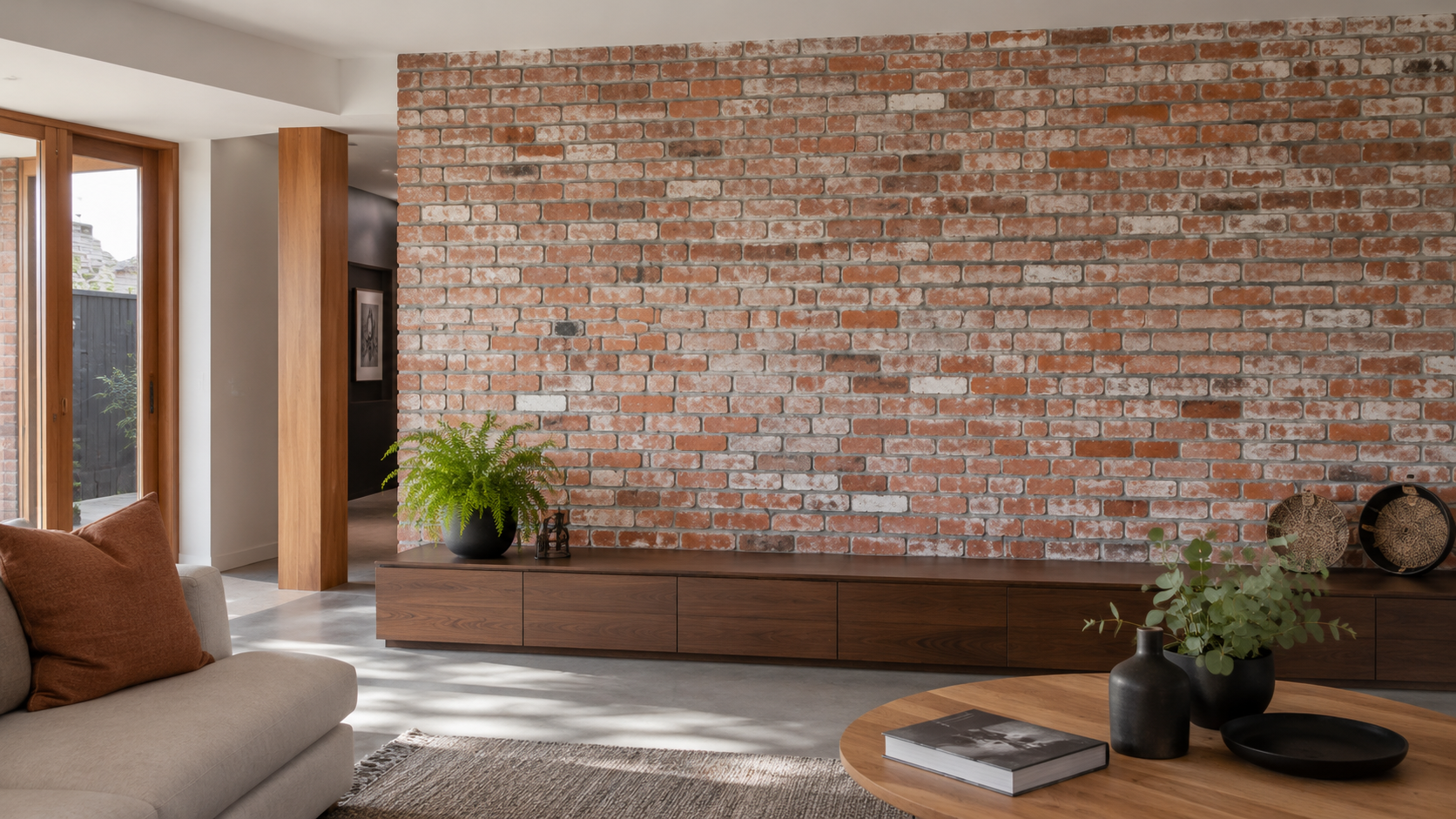
Brick cladding is a non-structural layer of brick, or brick facing, fixed to an existing wall to give it the look of brickwork without building a structural brick wall. It weighs less, goes up faster and works on walls that were never designed to carry full masonry. This guide explains the main types of brick cladding available in Australia, where each one suits, and how cladding compares to full brick and brick veneer construction, so you can choose the right approach for your project from options like the reclaimed brick range.
What Is Brick Cladding?
Brick cladding is a decorative facing of brick material attached to a wall’s surface, rather than a wall built from structural bricks. The wall behind it (timber frame, masonry, concrete or a lined interior wall) does the structural work; the cladding provides the appearance, texture and character of brick.
Because the cladding is a facing rather than a structure, it can be applied to interiors and exteriors, to new builds and renovations, and to walls where a full brick skin would be too heavy or too thick. That flexibility is the whole point: you choose brick for its look and feel, without redesigning the wall to hold it.
Brick Cladding vs Brick Veneer vs Full Brick: What Is the Difference?
The three terms describe three different wall constructions, and they get confused constantly. Full brick (double brick) uses two structural brick skins. Brick veneer is a construction method where a single brick skin is built in front of a structural timber or steel frame. Brick cladding is a surface finish fixed to an existing wall.
| Approach | What it is | Structural role | When it suits |
|---|---|---|---|
| Full (double) brick | Two brick skins forming the wall | Structural | New builds designed for masonry |
| Brick veneer | A single brick skin in front of a frame | Non-loadbearing skin, built during construction | New builds on framed construction |
| Brick cladding | Brick facing fixed to an existing wall surface | Decorative only | Renovations, feature walls, facades and interiors |
If you are renovating an existing home or adding a brick feature to a finished wall, cladding is almost always the relevant option: the other two are construction methods decided when the building is designed.
What Types of Brick Cladding Can You Buy?

Brick cladding comes in four broad formats, and the choice shapes the look, the installation and the longevity.
- Brick slips and tiles: thin slices of real clay brick, fixed individually with adhesive and then grouted like tiles. They read as genuine brick because they are, at a fraction of the thickness and weight.
- Panel systems: multiple brick faces pre-mounted on a backing panel or rail system that clips or screws to the wall. Faster to install over large areas, with a more regular, repeated appearance.
- Reclaimed brick cladding: facings cut from genuine recycled bricks, carrying decades of patina, lime marks and colour variation that new product cannot copy. This is the option for heritage character and one-off feature walls.
- Faux brick panels: printed or moulded lookalike sheets in composite materials. Cheapest and lightest, but the repeat pattern and surface reveal themselves up close and they weather differently from clay.
The honest hierarchy is simple: real brick material ages like brick; imitation product ages like the material it is actually made from. If the wall is a hero surface you will look at every day, that difference compounds over time.
Where Can Brick Cladding Be Used?

Brick cladding suits interior feature walls, fireplace surrounds, kitchen and hallway walls, exterior facades and commercial fit-outs. Interior applications are the most forgiving: weight is modest, weather is not a factor and the wall behind usually needs only a sound, clean surface.
Exterior facades are also well within cladding’s range, with more checks involved: substrate condition, fixing method, drainage detailing and compliance sign-off all matter outside. One firm rule applies to reclaimed brick specifically: reclaimed bricks are for cladding, feature walls and architectural use, not for paving or structural, load-bearing work. If a project calls for structural brick, that is a different product and a different conversation with your builder.
What Are the Advantages of Brick Cladding?
The core advantages are weight, speed and access to character. A clad wall avoids the footings and thickness a structural brick skin demands, which is what makes brick possible in apartments, renovations and light-framed buildings. Installation is measured in days rather than the weeks of a bricklaying trade, and the format opens up materials, such as genuine reclaimed brick faces, that could never be laid as full-size structural units in those settings.
Cladding also gives design control. Because the facing is chosen independently of the structure, you can select tone, texture and bond pattern purely on design grounds, and mix brick with render, timber or stone walling and cladding across the same elevation.
What Are the Disadvantages of Brick Cladding?
Brick cladding is not structural, it depends on the wall behind it, and cheap versions look cheap. The facing adds no strength to the building, so it cannot fix a wall with movement or damp problems: those need resolving first, or the cladding will telegraph them. Fixing quality matters too; a poorly adhered slip wall is expensive to make good.
The other honest caveat is the low end of the market. Faux panels and thin, mass-produced slips can look convincing in photographs and less convincing at arm’s length. If the budget only stretches to imitation product on a hero wall, it is often better to redesign the wall than to compromise the material.
Is Brick Cladding Cheaper Than Full Brick?
In most renovation scenarios, yes, because you avoid structural work, not because the facing material is always cheaper per square metre. A structural brick skin needs footings, ties, a bricklaying trade and wall thickness the building must be designed around. Cladding needs a sound wall and a fixing system. Where the comparison gets closer is new construction, where brick veneer is already priced into standard building methods.
Actual costs depend on the format, the wall condition and the site, so treat any flat per-metre figure you read online with suspicion and get a quote for your specific wall.
How Is Brick Cladding Installed?
Installation varies by format, but the sequence is consistent enough to summarise. Treat this as an overview for planning conversations, not a DIY manual.
- Assess the substrate. The wall must be sound, clean, dry and able to carry the system’s weight. Exterior walls also need drainage and damp detailing checked.
- Set out the wall. Bond pattern, corners, openings and edge details are planned before anything is fixed.
- Fix the cladding. Slips are adhered individually; panels are mechanically fixed to rails or battens; reclaimed brick facings follow the system specified for their weight.
- Grout or point the joints. Joint colour and profile decide much of the finished character.
- Seal if specified. Some interior and exterior applications benefit from a penetrating sealer; follow the product guidance.
For exterior work and any large or heavy installation, use a professional installer and confirm compliance requirements for external wall cladding under the National Construction Code with your builder or certifier.
See Real Reclaimed Brick Before You Decide
Brick cladding lives or dies on the material, and reclaimed brick has to be seen in person to be judged fairly. Order a sample from the reclaimed brick range, or talk to the Splendour In Stone team about your wall, the right format and what is currently in stock.
FAQs
1. Can bricks be used as cladding?
Yes. Brick material is used as cladding in slip, tile, panel and reclaimed-facing formats, all of which fix to an existing wall rather than being laid as a structural skin.
2. Is brick better than cladding?
They answer different questions. Structural brick is a construction method decided when a building is designed; cladding is how you get the brick look on a wall that already exists. For renovations and feature walls, cladding is usually the only practical route.
3. What are the disadvantages of brick cladding?
It adds no structural strength, it needs a sound wall behind it, and low-cost imitation products can look flat up close. Choosing real brick material and a proper fixing system addresses the third point.
4. Can you clad over an existing brick wall?
Yes, provided the wall is sound and any damp or movement issues are fixed first. Our comparison of cladding versus render for home exteriors covers the decision in more detail.
5. Does brick cladding need maintenance?
Very little in interiors: dusting and an occasional clean. Exteriors follow the maintenance pattern of the facing material and its sealer; real clay brick weathers gradually and keeps its colour well.


