

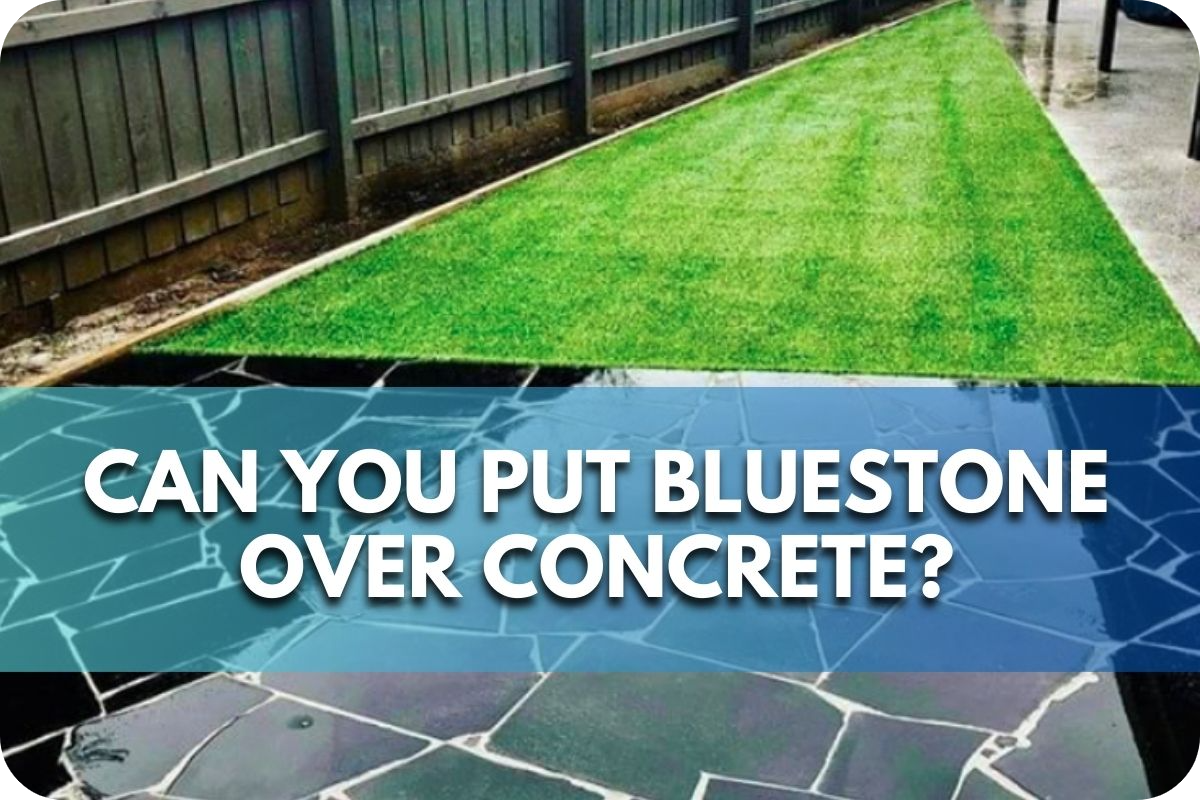
Yes, you can lay bluestone over an existing concrete slab, and it is often cheaper and faster than tearing the concrete out. It works when the slab is structurally sound, clean, falls the right way for drainage, and the stone is set in a full-bonded mortar bed.
The catch most guides skip is height. Adding stone and mortar raises the surface, which affects door thresholds, steps, drainage points, and the damp-proof course on adjoining walls. Check the build-up before you commit, because it decides whether an overlay is practical at all.
Can you put bluestone over concrete?
For most patios, paths, and pool surrounds, yes, provided the concrete underneath is in good condition. A sound slab gives you a ready-made, stable base, which is why overlaying is a popular alternative to full replacement. The stone is bonded to the prepared concrete with a full mortar bed or an exterior stone adhesive, not spot-stuck, so the whole underside is supported.
It is not a fix for a failing slab. If the concrete is heavily cracked, moving, or has no fall for drainage, an overlay only hides the problem and inherits it. In those cases, repair or removal comes first.
Which base suits which job: bonded mortar, adhesive or pedestals
There is more than one way to lay stone over concrete. The right one depends on the slab and the setting.
| Method | How it works | Best for | Watch-outs |
| Bonded mortar bed | Stone set in a full mortar bed on prepared concrete | Most patios, paths, pool decks over a sound slab | Needs clean, keyed, sound concrete; adds the most height |
| Exterior stone adhesive | Calibrated stone glued to a flat, sound, level slab | Smooth, level slabs with good fall | Less forgiving of unevenness; slab must already drain |
| Pedestal system | Calibrated pavers on adjustable pedestals above the slab | Terraces, balconies and podiums needing drainage or access below | Needs consistent-thickness pavers; raises the level further |
Pedestal systems are the modern answer where you need water to drain freely beneath the paving or access to the slab, common on balconies and podium decks. They suit calibrated bluestone, not split or irregular stock.
Is your concrete a suitable base?
Three things decide it.
1. Structural condition.
Look for major cracks, crumbling edges, or sections that move or sound hollow. Hairline cracks are usually fine to patch. Structural cracks can telegraph up through a rigid mortar bed and reappear in the stone, so they need addressing first, or a crack-isolation approach. A slab that is actively moving is not a candidate.
2. Drainage and fall.
The slab needs to shed water, ideally a fall of around 10mm per metre (1:100) or more, running away from buildings. Overlaying does not create fall that was never there. Water with nowhere to go sits between stone and concrete and causes efflorescence, staining, and bond failure.
3. Surface and cleanliness.
The concrete must be clean and free of dirt, grease, paint, and old sealer, since bond fails on a contaminated or sealed surface. Pressure wash it, patch minor cracks with a concrete repair compound, level any significant dips with a self-levelling compound, and key (etch) a smooth, troweled slab so the mortar grips.
Check the height build-up before you start
This is the step that catches people out. A bluestone overlay typically adds 30 to 50mm once you account for the stone thickness and the mortar bed.
That extra height has to go somewhere. Check that doors and gates still clear the new surface, that steps stay an even and safe height, that drains and pits still sit at or below finished level, and that the new surface stays clear of the damp-proof course on any wall it meets.
If the build-up causes a problem, calibrated (consistent-thickness) bluestone on a thinner adhesive bed, or a different approach entirely, may be needed.
How to lay bluestone over concrete, step by step
This is the bonded mortar method for a sound slab.
You will need: bluestone pavers or tiles, exterior mortar (Type S or Type N) or a flexible exterior stone adhesive, a notched trowel, rubber mallet, spirit level, chalk or stringline, broom, and sponge.
Step 1. Plan and dry-lay. Set out your pattern and dry-fit the stone across the slab to check spacing, falls, and cuts before mixing anything. Adjust the layout so cut pieces fall in the least visible spots.
Step 2. Prepare the slab. Clean, patch, level, and key the concrete as covered above. The surface must be sound, clean, and slightly textured for the bond to hold.
Step 3. Mix the mortar. Mix to the manufacturer’s consistency. Mix only what you can lay before it starts to go off.
Step 4. Lay the mortar bed. Using the notched trowel, spread a 25 to 50mm bed over a small section at a time. Work in sections so the mortar stays workable.
Step 5. Set the stone. Bed each piece firmly, tapping it down with the rubber mallet, and check it level with its neighbours. A full bed under the whole stone, with no voids, is what prevents debonding later.
Step 6. Keep spacing consistent. Use spacers or a practised eye to hold even joints across the field.
Step 7. Work in sections. Keep laying small areas at a time so the bed does not skin over before the stone goes down.
Step 8. Clean and grout. Wipe off excess mortar as you go. Once the bed has cured, fill the joints with an exterior jointing mortar or grout for stability and a finished look, and tool them neatly.
Common problems, and how to avoid them
Generic guides promise a flawless finish. Here is what actually goes wrong when stone goes over concrete.
- Debonding or tenting. Stones lift and tent upward, usually from a poor bond: a dusty, sealed, or smooth slab, voids under the stone, or trapped moisture. Avoid it with thorough prep, keying the slab, and a full bed under every piece.
- Reflective cracking. An existing crack in the concrete works its way up through the rigid bed and reappears in the stone. Address structural cracks first, or use a crack-isolation membrane over them before bedding.
- Efflorescence and staining. White salt bloom or dark patches where water is trapped between stone and slab. The fix is upstream: correct fall, free-draining joints, and not overlaying a slab that holds water.
- Trapped water with no fall. Overlaying a flat or poorly draining slab seals water in. Sort the drainage before you lay, or choose a pedestal system that drains beneath.
- Freeze damage. In alpine and cold-climate areas, water that soaks in and freezes can spall the stone and break the bond. This matters in Australia’s high country far more than in most lowland regions, so weigh it by your climate, and use a penetrating sealer where it applies.
Maintaining bluestone laid over concrete
Bluestone is low-maintenance, and an overlay needs little beyond sensible care. Sweep debris regularly and wash periodically with water and a mild detergent. Avoid acidic cleaners and high-pressure washing, which strip the finish and can disturb the joints. The same goes for household bleach, and we’ve explained why bleach and bluestone don’t mix. Blot spills promptly, and treat stubborn stains with a cleaner made for natural stone rather than a harsh chemical.
A penetrating sealer adds stain resistance and makes cleaning easier; choose one made for natural stone, and in cold-climate areas reapply before winter. If you have grouted the joints, check them periodically for cracks or gaps and repair early, since open joints let moisture under the stone, which is the start of most overlay failures.
Design ideas for bluestone over concrete
Bluestone gives you plenty of design range on an overlay. A classic running bond reads timeless, herringbone adds movement and a more considered look, and random or mixed-size layouts feel relaxed and organic. Square and rectangular pavers give clean, modern lines, while irregular flagstone-style pieces lean rustic.
The blue-grey palette runs from cool grey through shades with brown and tan undertones, and mixing tones gives a natural, variegated finish. Finish matters as much as tone here, and sawn bluestone is the option that keeps those layouts looking crisp. Contrasting brick or stone borders define a patio edge cleanly, and where the site allows, bluestone steps can link multi-level patios or paths for a more dynamic result. And if a built-in fire pit is on the wishlist, check whether bluestone is fireproof.
Is bluestone over concrete right for your project?
Laying bluestone over concrete is a sound, cost-effective way to upgrade a tired slab, as long as the concrete is structurally sound, drains correctly, and the build-up height works for your site. Get the assessment and prep right, set the stone in a full bonded bed, and the result lasts. For advice on whether your slab is a candidate and premium bluestone supply, contact Splendour in Stone for a quote.
FAQs
1. Can you lay bluestone directly over concrete?
Yes, on a sound, clean, well-draining slab. The stone is set in a full-bonded mortar bed or an exterior stone adhesive that supports the whole underside, not spot-bonded. The slab needs to be free of major cracks and movement, cleaned back to bare concrete, and keyed if it is smooth, so the bond holds.
2. Does the concrete have to be in perfect condition?
No, but it has to be structurally sound. Hairline cracks and minor dips can be patched and levelled before laying. Structural cracks, crumbling sections, or a slab that moves need fixing first, because those problems telegraph up through the stone. If the slab is failing, removal is the better option.
3. Will laying bluestone over concrete raise the height?
Yes. An overlay typically adds 30 to 50mm once you include the stone and the mortar bed. Check that doors and gates still clear the surface, steps stay even, drains sit at or below the new level, and the surface stays clear of the damp-proof course on adjoining walls before you start.
4. What mortar or adhesive should you use?
For a bonded mortar bed, an exterior-grade mortar such as Type S or Type N is commonly used. For calibrated stone on a flat, sound slab, a flexible exterior stone adhesive rated for outdoor use works. Follow the product’s mixing and curing directions, and confirm the product suits natural stone.
5. Can you lay bluestone over cracked concrete?
It depends on the crack. Hairline cracks are usually fine once patched. An active or structural crack can reappear in the stone through a rigid bed, so it needs repair first or a crack-isolation membrane over it. If the slab is moving or badly broken, overlaying will not last, and removal is the sounder choice.
6. Do you still need drainage falls if you lay over concrete?
Yes. Overlaying does not create fall that was not there. The slab should already shed water away from buildings, ideally around 1:100 or more. Without fall, water is trapped between the stone and the concrete, which leads to efflorescence, staining, and bond failure. Fix the drainage first, or use a pedestal system that drains beneath the paving.



