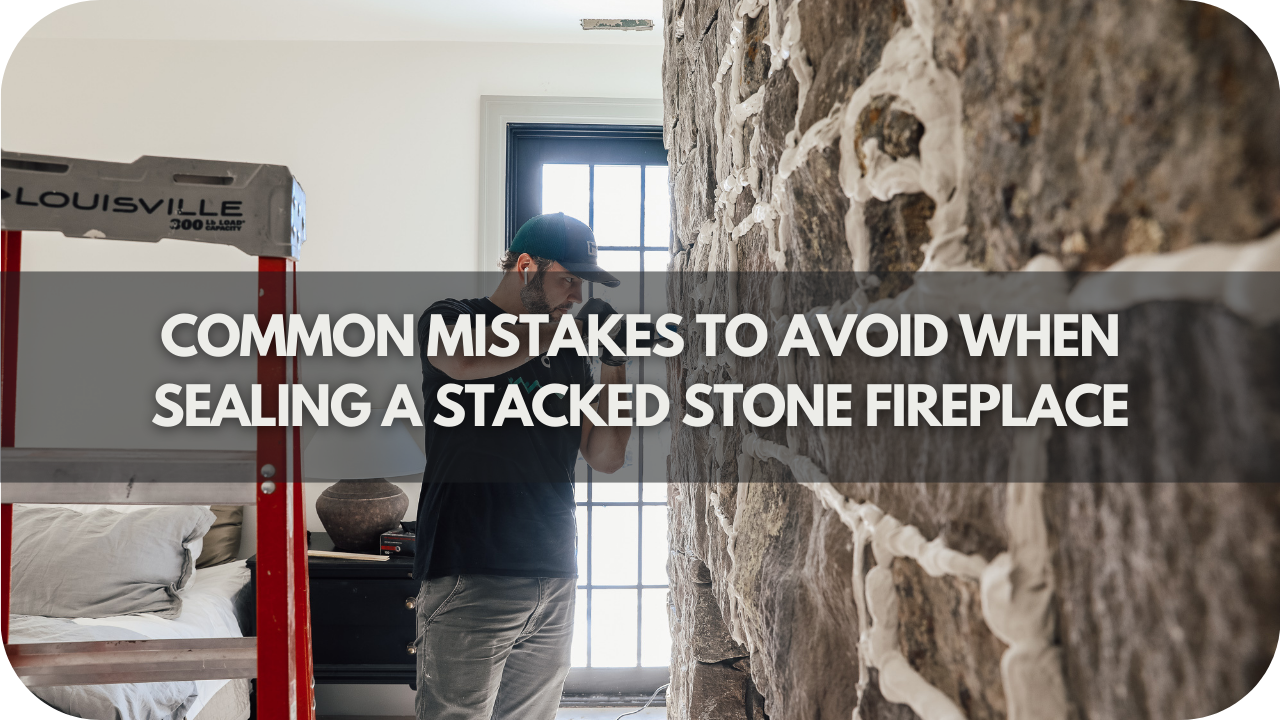
A stacked stone fireplace earns its place as the focal point of a room, but the sealing step is where good intentions most often go wrong. Done well, sealing a stacked stone fireplace protects the stone from soot, moisture and stains while keeping its natural texture. Done poorly, it leaves cloudy patches, peeling film, trapped moisture and marks that are hard to reverse.
The seven mistakes below cause the most damage, and every one of them is avoidable. Here is what goes wrong, and what to do instead.
Do you need to seal a stacked stone fireplace?
In most cases, yes. Most stacked stone is porous, so it draws in soot, smoke residue, cooking oils and moisture that show up as dark patches and stains over time. A sealer slows that absorption and makes the surface far easier to wipe clean.
The exception is dense, low-porosity stone such as some granites and quartzites, which absorb very little and may not need sealing at all. The simplest way to settle the question is a water test: drop a small amount of water on a discreet patch of the stone. If it soaks in and darkens the stone within a few minutes, the stone is porous and will benefit from sealing. If the water beads on top, the stone is dense or already sealed. For more detail on this, see how to check whether your stone is porous.
Mistake 1: Skipping surface preparation
The fix: clean the stone thoroughly and let it dry completely before any sealer touches it.
Sealer bonds to clean stone, not to dust, soot or grease. Applying it over a dirty surface seals the grime in and gives you patchy, weak protection. Before you start, scrub the stone gently with a pH-neutral stone cleaner and a soft brush, rinse with clean water, and remove any soot deposits near the firebox.
Then let it dry. Sealing damp stone traps moisture inside, which leads to discolouration, a hazy finish and, in cold conditions, the risk of efflorescence (white salt deposits pushing to the surface). Most stone needs at least 24 hours to dry after cleaning, longer in humid weather.
Finally, check the wall before you seal. Loose stones, open mortar joints and cracks should be repaired first. Sealing over a defect locks the problem in and makes the eventual repair harder.
Mistake 2: Choosing the wrong sealer
The fix: use a penetrating sealer made for natural stone, and check its heat rating for fireplace use.
The wrong sealer is the mistake that does the most lasting harm. Products made for timber or concrete can discolour or peel on stone, and film-forming topical sealers are a poor match for a working fireplace, where heat and moisture vapour can cloud or lift the film.
For a stacked stone fireplace, a penetrating (impregnating) sealer is the safer default. It soaks into the stone and protects from within, leaves the natural texture intact, and lets the stone breathe.
Penetrating vs topical sealer
| Feature | Penetrating sealer | Topical (film-forming) sealer |
| How it works | Soaks into the stone, protects from within | Sits on the surface as a film |
| Appearance | Keeps the natural matte look | Adds sheen or a wet look, with a risk of clouding |
| Suits a fireplace? | Yes, the safer choice near heat | Riskier; heat and vapour can cloud or peel it |
| Breathability | Lets moisture vapour escape | Can trap moisture behind the film |
| Reapplication | Top up when water stops beading | Strip and reapply when it wears or clouds |
Two further points decide which product within that category is right:
Heat. Stone close to a wood or gas firebox can get warm, so check the sealer’s stated temperature rating before buying. Do not seal the inside of the firebox itself; that surface is designed to take direct heat and should be left bare.
Finish. Penetrating sealers come in a natural finish (no change to the look) and an enhancing finish (deepens the colour for a subtle wet look). Decide which you want before you buy, because the two are difficult to reverse once applied. Match the sealer to your stone’s porosity as well, since a denser stone needs less product than an open, absorbent one. For specific product types, see our guide to the best sealants for stone fireplaces.
Mistake 3: Applying the sealer unevenly
The fix: apply thin, even coats with a clean brush or roller, and wipe away any excess before it dries.
Application errors show up fast. Too much sealer pools in the joints and dries to a streaky haze, especially with penetrating products, which must be wiped back. Too little leaves bare patches that stain. Both come from rushing.
Work in small sections so you can keep a wet edge and see your coverage. Use a clean, non-abrasive brush or roller rather than a cloth or sponge, which drag and streak across textured stacked stone. With a penetrating sealer, let it soak for the time stated on the label, then wipe off any residue sitting on the surface before it dries, or it will leave a film. A second thin coat usually gives better protection than one heavy coat.
Mistake 4: Rushing the drying and curing time
The fix: follow the product’s stated cure time and keep the fireplace cold until it is done.
Drying and curing are not the same thing. A sealer can feel touch-dry in a few hours but still be curing underneath. Most penetrating sealers are touch-dry within a few hours and fully cured in roughly 24 to 72 hours, but the only number that matters is the one on your product’s label.
Do not light a fire until the sealer has fully cured. Heat applied to an uncured sealer can leave it tacky, cloudy or permanently marked. Keep the room ventilated, and remember that cold or humid conditions extend curing time well beyond the stated minimum.
Mistake 5: Skipping ongoing maintenance
The fix: dust and inspect the fireplace regularly, and reseal on a schedule rather than waiting for stains to appear.
Sealing is not a one-off job. Sealers wear down over time through heat, soot and cleaning, and a fireplace that was sealed years ago may now be absorbing stains again without it being obvious.
Keep a simple routine: dust the stone with a soft brush, wipe spills promptly, and inspect every few months for cracks, chips or efflorescence so small issues get caught early. Then reseal before the protection fails completely, not after the stains have set. The same principles apply across all your stonework, covered in our stone maintenance and care guide.
Mistake 6: Cleaning with the wrong products
The fix: clean with a pH-neutral stone cleaner. Never use acids, bleach or abrasives.
The cleaning products that ruin a sealed fireplace are usually the ones already under the sink. Acidic cleaners (including vinegar and many bathroom sprays) etch natural stone and break down the sealer. Bleach and ammonia can discolour the stone and strip the protective layer. Abrasive powders and scouring pads scratch both the sealer and the surface.
Use a cleaner labelled pH-neutral and safe for sealed natural stone, applied with a soft cloth or sponge. Test any new product on a small, hidden area first. A gentle, regular clean does far more for the stone than an occasional aggressive one.
Mistake 7: Tackling a difficult job without a professional
The fix: bring in a professional when the stone is high-value, the fireplace is in heavy use, or a previous seal has failed.
Sealing a small decorative fireplace is well within reach for a careful DIYer. The job becomes one to hand over when the stone is expensive and hard to replace, when a film-forming sealer has already clouded or peeled and needs stripping back, or when you are unsure which product suits your stone.
A professional can identify the stone, match the right sealer and finish, and apply it evenly so you avoid the cost of stripping and redoing a failed job. If you decide to outsource, our guide to hiring the right stonemason covers what to ask before you commit.
How often should you reseal a stacked stone fireplace?
Test, do not guess. Reseal frequency depends on the stone, the sealer and how hard the fireplace works, so a fixed interval is unreliable. As a rough guide, an indoor decorative stacked stone fireplace may hold its seal for several years, while one in heavy daily use needs attention sooner.
The reliable check is the water-drop test. Sprinkle a little water on the stone: if it beads or sits on top, the seal is still working; if it soaks in and darkens the stone, the seal has worn and it is time to reapply.
Final word
Sealing a stacked stone fireplace is simple when you respect the basics: clean and dry stone, the right penetrating sealer, thin even coats, full curing time, and gentle ongoing care. Skip any of these and you risk the cloudy patches and stains that the seal was meant to prevent.
If you are still planning the build or choosing your stone, our stone fireplace guide and our guide to choosing the right stone for a stacked stone fireplace are the place to start.
Ready to protect your investment? Contact Splendour In Stone Melbourne today for expert guidance and premium sealing solutions.
Frequently asked questions
1. Will sealing change the colour of my stacked stone?
It depends on the sealer. A natural-finish penetrating sealer leaves the look unchanged. An enhancing sealer deepens the colour for a wet look. Decide which you want before applying, since both are difficult to reverse.
2. Can I light a fire straight after sealing?
No. Wait until the sealer has fully cured, following the time on the product label (commonly 24 to 72 hours for penetrating sealers). Heating an uncured sealer can leave it tacky, cloudy or permanently marked.
3. What is the best sealer for a stacked stone fireplace?
A penetrating sealer formulated for natural stone, with a heat rating suitable for fireplace use. Avoid film-forming topical sealers near heat, as they can cloud or peel. Match the product to your stone type and porosity.
4. Do you seal the inside of the firebox?
No. The firebox interior is built to take direct heat and should be left unsealed. Sealing applies to the visible stacked stone surround, not the combustion area.
5. Can I seal a stacked stone fireplace myself?
Yes, for a straightforward decorative fireplace, if you prepare the surface properly, choose the right penetrating sealer and respect the curing time. Leave it to a professional when the stone is high-value or a previous seal has failed.