
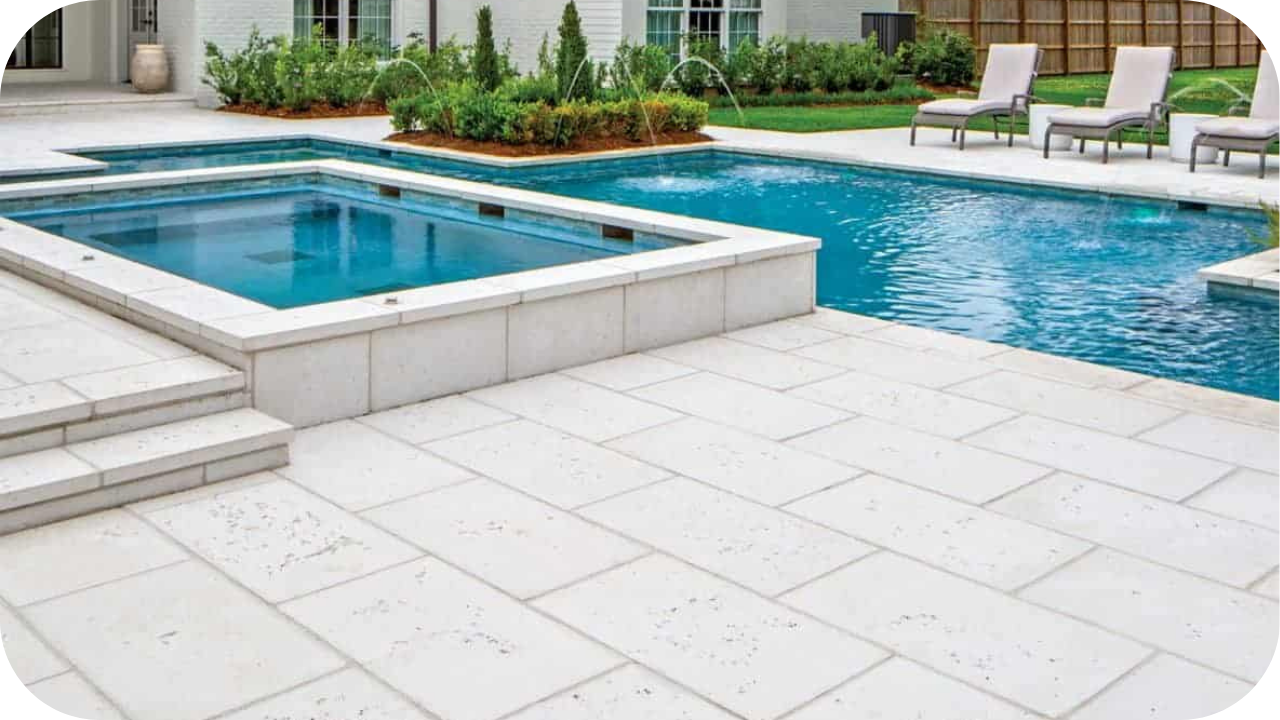
Pool coping and pool paving do two different jobs around a pool. Pool coping is the capping that finishes the top edge of the pool shell. Pool paving is the surface that surrounds the pool, used for walking, lounging and outdoor living. Understanding pool coping vs pool paving comes down to edge versus surround, and most pool areas use both together.
This guide explains the difference, the materials that suit each, how they affect safety and cost, and how to choose the right combination for your project.
Pool Coping vs Pool Paving at a Glance
Coping and paving are designed to work together. Coping defines and protects the pool edge, while paving creates the space around it. The table below sets out the practical differences before we look at each in detail.
| Feature | Pool coping | Pool paving |
| Position | Caps the top edge of the pool shell | Covers the area surrounding the pool |
| Main job | Finishes the edge and helps direct water away from the pool | Creates a usable, comfortable surface |
| Safety role | A defined, rounded edge to grip and step on | A textured surface for footing when wet |
| Typical formats | Bullnose, drop face, square or straight edge | Pavers, tiles, crazy paving |
| Common materials | Travertine, limestone, granite, bluestone, concrete | Travertine, limestone, granite, bluestone, porcelain, concrete |
| Main cost driver | Edge profile and cutting | Area size and material choice |
What Is Pool Coping?
Pool coping is the stone or material that caps the top edge of the pool, where the pool shell meets the surrounding surface. It creates a defined border between the water and the paving, and helps protect the edge of the pool structure from water movement and wear.
Coping also shapes how the pool edge feels and looks. The profile you choose changes the line around the pool and how comfortable the edge is to hold or step over.
Common coping profiles include:
- Bullnose: a rounded edge that is comfortable to grip and step on, suited to a soft, classic finish.
- Drop face (drop edge): a square front face that hangs over the pool shell for a clean, contemporary line.
- Square or straight edge: a sharp, minimal profile that suits modern pool designs.
The right profile depends on your pool design, who uses the pool, and the look you are after. For more on how coping affects edge safety and style, see our guide to pool coping for safety and style.
What Is Pool Paving?
Pool paving is the surface laid around the pool, often called pool pavers. It covers the area used for walking, lounging, dining and entertaining, and ties the pool into the rest of the outdoor space.
Good pool paving needs to handle water, sun and regular foot traffic while staying comfortable underfoot. Surface finish matters here. A textured finish gives more confident footing in a wet area than a polished one, which is why most pool surrounds use honed, tumbled or naturally textured stone rather than a high gloss.
Paving is usually laid as modular pavers or tiles. Some designs use crazy paving, an irregular pattern of stone pieces, for a more organic look around the pool. You can browse formats and finishes on the Splendour In Stone paving range.
What Are the Key Differences Between Coping and Paving?
Appearance
Coping draws the line around the pool and frames its shape. Paving covers the larger area and sets the overall colour and texture of the space. Many pool areas pair the same stone family for both, with coping in a matching or complementary tone so the edge reads as a deliberate detail rather than a separate band.
Function and Safety
Coping finishes the edge and helps move water away from the pool shell. Paving provides the surrounding surface and needs a finish that gives confident footing when wet. In Australia, slip resistance of pedestrian surfaces is classified under Australian Standard AS 4586, which is worth asking about when selecting a finish for a wet pool surround. [1]
Durability and Maintenance
Both coping and paving sit in a demanding spot, exposed to water, sun, salt or chlorine and foot traffic. Natural stone performs well outdoors when it is installed and sealed correctly. Sealing helps limit staining and marking on porous stones such as travertine, limestone and sandstone. Denser stones like granite and bluestone are harder-wearing and tend to need less attention. Our guide to sealing outdoor pavers sets out when and how to do it.
Cost and Installation
Coping usually involves more precise fabrication, because edge profiles like bullnose and drop face are cut and finished to shape. Paving covers a larger area, so the total cost is driven more by the size of the space and the material you choose. Installation complexity, site access and thickness all affect the final figure.
Which Materials Work Best for Pool Coping and Paving?
Most pool coping and paving in Australia uses natural stone, with porcelain and concrete as manufactured alternatives. The table below compares the common options for pool areas.
| Material | Feel underfoot | Look | Maintenance | Notes for pool areas |
| Travertine | Stays cooler, naturally textured | Soft ivory, beige and silver tones | Seal periodically | A popular all-rounder for coping and paving |
| Limestone | Cool, fine and even texture | Neutral, contemporary | Seal periodically | Even colour for a calm, modern look |
| Granite | Dense and firm | Charcoal and grey, modern | Low | Hard wearing, handles traffic and salt |
| Bluestone | Cool to mid | Grey to black, an Australian classic | Seal to limit marking | Dense basalt, a strong outdoor performer |
| Sandstone | Warm and textured | Earthy, natural tones | Seal, can mark | Natural look in a softer stone |
| Porcelain | Consistent | Wide range, including stone looks | Low | Manufactured, colour stable, made in paving and coping units |
| Concrete | Varies with finish | Versatile | Moderate | Cost effective, cast or precast |
For natural stone, a few options suit pool areas particularly well:
- Travertine: travertine pavers stay comfortable underfoot and have a naturally textured surface, with a relaxed, resort feel that suits coastal and family pools.
- Limestone: even-toned and contemporary, Selene limestone is a popular pick for clean, modern pool designs.
- Granite: dense and hard-wearing, charcoal granite handles high traffic and coastal pools with little fuss.
- Bluestone: for a grounded grey-black finish, sawn bluestone is a strong outdoor performer around water.
The same stone is often used for both coping and paving, with the coping cut to a bullnose or drop face profile. This keeps the colour and texture consistent from the pool edge across the surround.
Do You Need Both Coping and Paving?
In most pool builds, yes. Coping finishes and protects the pool edge, and paving creates the usable surface around it. They solve different problems, so a complete pool area normally needs both.
There are exceptions. A pool that meets a deck, a lawn or a different surface treatment may use coping with little or no stone paving beyond the edge. A spa or water feature may need only an edge detail. If you are unsure what your design calls for, it is worth confirming with your pool builder or landscaper early, because the coping and paving choice affects setout, drainage and budget.
How Do You Choose the Right Coping and Paving?
Work through a few practical points rather than starting with looks alone:
- Design style: match the stone and coping profile to the pool and the house. Modern pools suit square or drop face coping, while softer designs suit bullnose.
- Comfort underfoot: lighter toned stones such as travertine and limestone tend to stay cooler in the sun, which matters for bare feet around a pool.
- Footing when wet: choose a textured finish for the paving, and ask about the slip resistance rating for the finish you are considering.
- Salt and chlorine: denser stones and quality sealing help the surface cope with pool water over time.
- Maintenance: decide how much upkeep you want. Porous stones reward periodic sealing; denser stones and porcelain need less.
- Budget: balance the material and the area. Paving covers more space, while coping adds fabrication cost at the edge.
If you want help matching stone, finish and coping profile to your pool, the team can talk through options and send free stone samples so you can see the colour and texture in your own light.
What Does Pool Coping and Paving Cost?
There is no single price for pool coping and paving, because the cost depends on the material grade, the size of the area, the coping profile, the stone thickness, site access and installation complexity. Bullnose and drop face coping cost more to fabricate than a square edge, and a larger surround uses more paving.
The most reliable way to budget is a quote based on your actual measurements and stone choice. Splendour In Stone provides quotes and can advise on the right format and thickness for a pool surround. Request a free quote with your sizes to get a figure for your project.
Conclusion
Pool coping and pool paving work together: coping finishes and protects the pool edge, while paving creates the comfortable surface around it. Most pool areas need both, and the best results come from matching stone, finish and coping profile to your design, climate and budget. For advice, samples and a quote on premium natural stone, speak to the team at Splendour In Stone.
FAQs
1. What is the difference between pool coping and pool paving?
Pool coping is the capping that finishes the top edge of the pool shell, while pool paving is the surface that surrounds the pool. Coping defines and protects the edge and helps direct water away. Paving creates the walking and lounging area. Most pool areas use both, often in the same stone family.
2. Do you need coping around a pool?
In most pool builds, yes. Coping finishes the pool edge, gives a defined border to step on, and helps protect the pool structure from water and wear. Some designs where the pool meets a deck or lawn may use minimal coping, but a stone capping at the edge is standard for both safety and finish.
3. Can you use the same stone for coping and paving?
Yes, and it is a common choice. Using one stone for both keeps the colour and texture consistent from the pool edge across the surround. The coping is simply cut to an edge profile such as bullnose or drop face, while the paving is laid as pavers or tiles in the same stone and finish.
4. What is the best material for pool coping in Australia?
There is no single best material, but travertine, limestone, granite and bluestone are all strong choices. Travertine and limestone stay cooler underfoot and suit relaxed designs. Granite and bluestone are denser and hard wearing. The right pick depends on your pool design, sun exposure, finish preference and maintenance expectations.
5. Is travertine good for pool coping and paving?
Yes. Travertine is one of the most popular stones for pool areas because it has a naturally textured surface, stays comfortable underfoot and suits coastal and resort style designs. It works for both coping and paving when it is sealed and installed correctly, which helps it cope with water, salt and regular use.
6. What is the difference between bullnose and drop face coping?
Bullnose coping has a rounded top edge that is soft to grip and step on, suited to classic and family-friendly pools. Drop face coping has a square front face that hangs over the pool shell for a clean, contemporary line. Both finish the edge; the choice is mainly about the look and feel you want.
7. How much do pool coping and paving cost?
The cost depends on the material, the size of the area, the coping profile, the stone thickness and the installation. Coping profiles such as bullnose and drop face cost more to fabricate than a square edge, and larger surrounds use more paving. The most accurate way to budget is a quote based on your measurements and stone choice.

