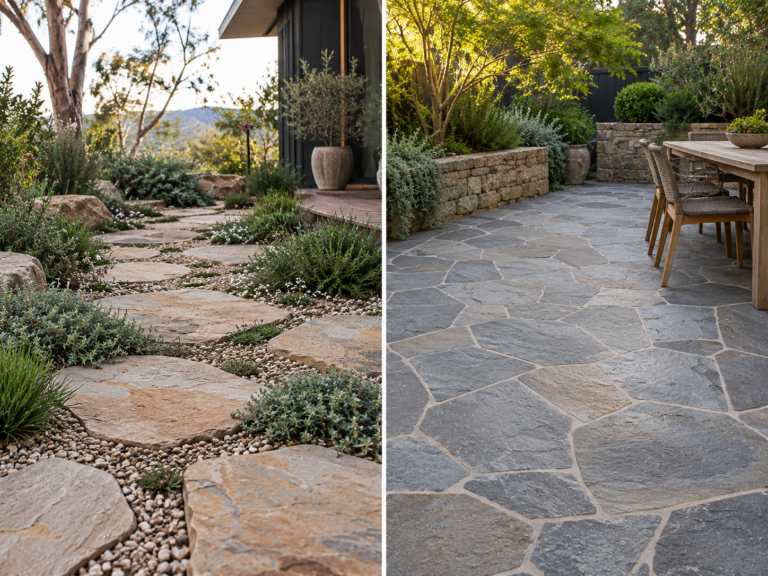


Crazy paving has a way of making outdoor spaces feel less manufactured and more connected to the landscape. Its irregular stone shapes, natural colour variation, and relaxed layout give patios, courtyards, pathways, pool surrounds, and garden areas real character.
This crazy paving guide walks through what it means, where it works best, which natural stones suit different spaces, and how to avoid the installation mistakes that often lead to uneven, unstable, or poorly finished paving.
When done well, crazy paving feels timeless, practical, and built for everyday outdoor living.
What Is Crazy Paving?
Crazy paving is a style of paving that uses irregular pieces of natural stone arranged in a free-form pattern. Instead of neat square or rectangular pavers, the stones vary in shape, size, edge line, colour, and texture. Once laid together, they create a surface that feels organic, handcrafted, and full of movement.
The name comes from the “crazy” or unpredictable pattern created by the broken stone shapes. But while the finished surface may look random, a good crazy paving layout still needs careful planning. Each piece has to be placed with the right balance of shape, spacing, flow, and joint width so the final result looks natural rather than messy.
Crazy paving is often used for patios, courtyards, garden paths, pool surrounds, outdoor entertaining areas, and feature paving. It works especially well when you want the paving to feel less rigid and more connected to the surrounding garden or architecture.
Most crazy pavers are made from natural stone such as bluestone, granite, limestone, travertine, porphyry, slate, sandstone, or quartzite. Each stone brings a different look and level of durability, which is why choosing the right material matters just as much as the layout itself.
For a broader look at material options, our natural stone guide for Australian homes explains how different stone types perform across outdoor spaces.
Crazy Paving vs Standard Pavers
Standard pavers create a cleaner, more uniform finish because each piece is usually cut to the same shape and size. Crazy paving is more expressive. It uses irregular pieces to create a natural mosaic effect, making every installation slightly different.
That difference is what gives crazy paving its charm. It feels less formal, more textured, and often more suited to outdoor spaces where character matters as much as function.
Why Choose Crazy Paving for Outdoor Spaces?

Crazy paving suits outdoor spaces that need more character than a plain paved surface can offer. Its irregular shapes create a relaxed, natural look that works beautifully around gardens, courtyards, patios, and pool areas. Instead of feeling overly manufactured, the surface has movement, texture, and visual interest.
One of the biggest advantages is design flexibility. Crazy paving can feel rustic and organic, but it can also look refined when paired with the right stone, joint colour, and surrounding materials. Bluestone can create a sharper modern finish, while limestone or travertine can soften a courtyard with warmer, lighter tones. Porphyry and granite add strength and depth where a bolder finish is needed.
Durability is another reason homeowners choose it. Natural stone crazy paving can handle everyday outdoor use when it is installed on a stable base with proper drainage and jointing. That makes it suitable for high-use areas such as garden paths, entertaining spaces, and some driveways, provided the correct stone thickness and installation method are used.
It also sits comfortably within wider stone paving projects where strength, texture, and long-term outdoor performance all matter.
Crazy paving also works well with landscaping. The uneven shapes can follow curves, garden edges, steps, and level changes more naturally than standard pavers. This makes it useful for spaces that do not suit a rigid grid pattern.
For many projects, the appeal is simple. Crazy paving gives outdoor areas a surface that feels practical, durable, and visually distinct without looking too polished or predictable.
Best Natural Stones for Crazy Paving
The best stone for crazy paving depends on where it will be installed, how much traffic the area receives, and the style you want to create. Some stones feel clean and architectural, while others bring a softer, more rustic finish. Getting this choice right makes a big difference to the final look and long-term performance.
Bluestone

Bluestone is a strong choice for Australian outdoor spaces because it has a dense structure and a distinctive blue-grey tone. It works well in patios, pathways, courtyards, and modern garden designs where you want a clean but natural surface. Its texture can also provide good grip when the right finish is selected.
Granite
Granite is one of the toughest options for crazy paving. It suits high-traffic areas, outdoor steps, driveways, and spaces where durability is a major priority. Its speckled appearance gives the surface depth, while its strength helps it handle wear, weather, and regular use with minimal fuss.
Limestone
Limestone brings a softer, warmer look to outdoor spaces. Its lighter tones can make courtyards, garden paths, and entertaining areas feel calm and open. Because limestone is more porous than some harder stones, sealing is usually recommended to help protect it from staining, moisture, and weather exposure.
Travertine
Travertine is popular for relaxed outdoor areas because of its warm colour range and naturally textured surface. It suits pool surrounds, patios, and Mediterranean-style courtyards particularly well. Like limestone, it benefits from proper sealing, especially in areas exposed to moisture, food, drinks, or heavy use.
Porphyry
Porphyry is a durable volcanic stone with rich earthy colours and a naturally textured surface. It is a good option for driveways, paths, courtyards, and high-traffic areas where strength and slip resistance matter. Its varied tones can create a bold, natural finish with plenty of visual movement, especially when used in Porphyry Crazy formats for outdoor paving.
Quartzite
Quartzite is hard-wearing and often chosen for projects that need both strength and colour variation. It can bring a more decorative finish to feature paving, garden paths, and outdoor living areas. Its durability makes it practical, while its natural veining and texture help the surface feel more distinctive.
For a premium crazy paving option with strong visual character, Euro Crazy can suit courtyards, pathways, and relaxed outdoor settings.
Where Can You Use Crazy Paving?
Crazy paving is one of those finishes that can work in more places than people first expect. Because the stones are irregular, the layout can move with the shape of the space rather than forcing everything into straight lines. That makes it especially useful for outdoor areas with curves, garden edges, level changes, or a more natural landscape style.
Garden Pathways

Crazy paving works beautifully for garden paths because it can create a soft, winding flow through the landscape. The irregular pieces feel less formal than standard pavers, which helps the path blend into lawns, planting, trees, and garden beds.
This makes it a natural fit for garden pavers and pathways where the layout needs to feel connected to the surrounding landscape rather than imposed on it.
For a more natural look, the joints can be softened with ground cover or fine gravel where suitable. For a cleaner finish, tighter jointing with grout or mortar gives the path more structure while still keeping the organic character of the stone.
Patios and Outdoor Entertaining Areas
Patios benefit from the texture and personality of crazy paving. Instead of a flat, predictable surface, the stone pattern adds movement underfoot and gives the entertaining area a more designed feel. It works especially well in a stone patio where the paving needs to support furniture, foot traffic, planting, and outdoor dining without looking too rigid.
The stone choice will shape the mood of the space. Bluestone can feel sharp and contemporary, limestone can feel warm and relaxed, while travertine can create a softer resort-style finish.
Courtyards
Crazy paving is ideal for courtyards, especially smaller spaces that need texture without feeling cluttered. The irregular pattern can make a compact courtyard feel more layered and considered.
It also works well around planters, seating areas, feature walls, and water features. With the right stone colour and joint finish, crazy paving can make a courtyard feel intimate, warm, and connected to the surrounding architecture.
Driveways
Crazy paving can be used for driveways, but the installation needs to be handled carefully. Vehicle areas require the right stone thickness, a properly compacted base, strong jointing, and excellent drainage.
Granite, porphyry, and dense bluestone are often better suited to heavier-use areas than softer stones. A driveway should never be treated like a simple garden path, as poor base preparation can lead to movement, cracking, or uneven sections. The same care applies when comparing driveway pavers, because vehicle areas need strength below the surface as much as visual appeal above it.
Pool Surrounds

Around pools, crazy paving can create a natural and relaxed finish. Textured stone can provide better grip than smoother surfaces, while the organic pattern helps soften the hard edges around the pool. The same balance of grip, comfort, and design also matters when choosing stone for pool coping and paving around wet outdoor areas.
Stone selection matters here. The surface should feel comfortable underfoot, handle moisture well, and suit the surrounding pool design.
Garden Edging and Feature Borders
Crazy pavers can also be used as edging around garden beds, fire pits, outdoor showers, or feature zones. This is a simple way to carry the same stone language across the landscape without paving the entire area.
Crazy Paving Design Ideas for a Better Layout
Crazy paving looks best when the layout feels relaxed, but not careless. The aim is to create a natural pattern that flows across the space while still looking balanced, safe, and professionally finished. Even though the stones are irregular, the overall design should feel intentional.
Start With the Pattern and Flow
Before fixing any stone in place, lay the pieces out dry so you can see how the pattern works. This gives you time to move awkward shapes, balance larger pieces, and avoid strange gaps before the installation becomes permanent.
A good layout often starts from a key point, such as a doorway, step, garden feature, pool edge, or seating area. Larger stones can sit through the main body of the space, while smaller pieces help fill edges and curves. This creates a better rhythm across the surface.
Keep Joint Spacing Consistent
Joint spacing has a big impact on how crazy paving looks. If the gaps are too wide, the surface can look patchy and unfinished. If they are too tight, the stones may feel crowded and harder to joint properly.
The goal is not perfect uniformity. Natural variation is part of the appeal. Still, the spacing should feel even enough that the eye moves across the paving without noticing awkward gaps or cramped sections.
Blend Stone Colours and Textures
Natural stone can vary from piece to piece, even within the same product. That variation is part of what makes crazy paving attractive, but it needs to be managed during installation.
Mixing stones from different crates or pallets helps avoid colour blocking, where one area looks darker, lighter, or busier than the rest. Spread tones and textures evenly so the whole surface feels connected.
Use Curves, Borders, and Garden Edges
Crazy paving works especially well with curves. It can wrap around garden beds, pool edges, outdoor seating zones, and pathways more naturally than square pavers.
Borders can also help give the layout structure. A defined edge around a courtyard, path, or patio can stop the pattern from feeling too loose while still keeping the organic look.
Match the Stone to the Surrounding Style
The best crazy paving design is the one that suits the home and landscape around it. Grey stones often work well with modern architecture, warm beige and cream tones can soften Mediterranean or coastal spaces, and earthy colours suit rustic gardens.
Think about the walling, plants, furniture, pool coping, and exterior finishes nearby. Crazy paving should feel like part of the whole outdoor design, not a separate feature dropped into the space.
How Is Crazy Paving Installed?

Crazy paving installation starts long before the first stone is fixed in place. The finished surface may look free-flowing, but the strength of the paving comes from proper planning, a stable base, careful stone placement, and the right jointing method.
A well-prepared base is central to any stone paver installation, especially when the surface uses irregular shapes rather than uniform pieces.
1. Plan the Area and Layout
Start by measuring the area and deciding how the paving should move through the space. This includes the overall shape, edge lines, drainage direction, and any features the paving needs to work around, such as steps, garden beds, walls, pools, or outdoor seating zones.
Dry laying the stones first is always worthwhile. It helps you test the pattern, balance the colours, adjust awkward shapes, and avoid large gaps before anything is permanently set.
2. Prepare a Strong Base
A weak base is one of the main reasons crazy paving shifts, sinks, or becomes uneven. The ground needs to be excavated to the right depth, levelled, and compacted before the bedding layer is added.
For most outdoor paving, a compacted crushed rock or gravel base helps create stability and drainage. The exact depth depends on the area, the stone type, and whether the paving will carry foot traffic or vehicle weight.
3. Lay and Adjust the Stones
Once the base is ready, the stones are placed in position like a puzzle. Larger pieces are usually laid first, then smaller pieces are used to fill edges, corners, and tighter sections.
Each stone should sit level with the surrounding pieces. A rubber mallet can help adjust the height without damaging the surface. The installer should keep checking the pattern, joint spacing, and surface levels as the work progresses.
4. Fill the Joints Properly
The joints can be filled with mortar, grout, sand, or polymeric sand depending on the stone, location, and desired finish. Outdoor entertaining areas and pool surrounds often need a stronger, cleaner jointing system than informal garden paths.
Good jointing helps lock the stones in place, reduces movement, and gives the finished paving a more refined appearance.
5. Seal and Finish the Surface
Some natural stones benefit from sealing after installation, especially porous materials or areas exposed to moisture, food, drinks, and heavy use. Sealing can help protect against staining and weathering while making the surface easier to maintain over time.
Common Crazy Paving Installation Mistakes to Avoid
Crazy paving is forgiving in style, but not in installation. The irregular shapes can hide small visual imperfections, but they will not make up for weak preparation, poor drainage, or rushed workmanship. These are the mistakes that usually cause trouble later.
Poor Planning Before Installation
Crazy paving should not be laid without a clear plan. The pattern may look random, but the layout still needs balance, flow, and enough material to complete the area properly.
Without planning, you can end up with awkward gaps, uneven colour distribution, wasted stone, or a surface that does not suit the space. It is better to dry lay the pieces first, check the pattern from different angles, and make changes before anything is fixed in place.
Weak Base Preparation
A poor base is one of the fastest ways to ruin crazy paving. If the ground is not excavated, levelled, and compacted properly, the stones can sink, shift, or become uneven over time.
This matters even more for driveways, steps, and high-traffic areas. A stable crushed rock or gravel base helps support the stone, improve drainage, and reduce movement. Skipping this step may save time at the start, but it often leads to costly repairs later.
Choosing the Wrong Stone
Not every stone suits every outdoor area. A stone that works beautifully in a quiet courtyard may not be the right choice for a driveway or pool surround.
Thickness, texture, porosity, slip resistance, colour, and durability all need to be considered. Softer or more porous stones may need sealing, while vehicle areas need stronger stone and a more robust installation system. The right stone should match both the design style and the practical demands of the space.
Ignoring Drainage
Drainage is easy to overlook, especially when the main focus is the visual pattern. But if water cannot move away from the paved area, it can pool on the surface, weaken the base, encourage moss or algae, and cause movement beneath the stones.
A slight fall away from buildings is usually needed. In areas that collect water, drainage channels or a more permeable base may also be required.
Inconsistent Joint Spacing
The gaps between crazy pavers should feel natural, but they still need control. Joints that are too wide can make the surface look unfinished and may weaken the overall structure. Joints that are too tight can make the stones look cramped and harder to fill properly.
Balanced spacing gives the paving a cleaner finish while allowing the jointing material to do its job.
Poor Cutting and Fitting
Some pieces will need to be cut or shaped, especially around edges, steps, drains, walls, and corners. Poor cutting can leave jagged lines, oversized gaps, or awkward transitions that make the paving look rushed.
Clean fitting does not mean removing the natural character of the stone. It simply means shaping pieces where needed so the final layout feels intentional.
Skipping Sealing and Maintenance
Many natural stones benefit from sealing, especially in outdoor entertaining areas, pool surrounds, and spaces exposed to food, moisture, or heavy use. Without the right protection, stone can stain, fade, or absorb moisture more easily.
Maintenance also matters after installation. Sweeping, gentle cleaning, weed control, joint repairs, and resealing when needed will help crazy paving keep its strength and appearance for years.
How Do You Maintain Crazy Paving?

Crazy paving is fairly easy to look after, but it still needs regular care if you want the stone to keep its colour, texture, and stability. The good news is that maintenance is usually simple when the paving has been installed properly from the start.
Sweep and Clean the Surface Regularly
Leaves, soil, dust, and garden debris can build up between the stones over time. Regular sweeping helps stop grime from settling into the joints and keeps the surface looking fresh.
For deeper cleaning, use water, a mild pH-neutral cleaner, and a soft brush. Avoid harsh chemicals, especially on natural stone, as they can damage the surface or affect the finish. Gentle paver cleaning and maintenance is especially important with crazy paving, since too much pressure can loosen jointing material or wear softer stone over time.
Keep Weeds Under Control
Weeds can appear between joints, especially in garden paths or older paving. Removing them early helps protect the jointing material and stops roots from pushing into weak spots.
If the joints start to wash out or break down, they should be topped up or repaired before the stones begin to move.
Check for Loose or Damaged Stones
A small movement in one stone can quickly affect the surrounding area. Every few months, check for loose pieces, cracks, hollow spots, or uneven sections.
Fixing minor issues early is much easier than waiting until the paving becomes unstable or unsafe.
Reseal When Needed
Some natural stones benefit from sealing, particularly limestone, travertine, and other more porous materials. Sealing can help reduce staining, moisture absorption, fading, and general wear.
How often you reseal depends on the stone type, exposure, traffic, and the sealant used. Outdoor entertaining areas, pool surrounds, and driveways usually need closer attention than low-traffic garden paths.
Is Crazy Paving Right for Your Project?
Crazy paving is a strong choice if you want an outdoor surface that feels natural, textured, and full of character. It works especially well in spaces where standard pavers might look too plain or rigid, such as garden paths, courtyards, patios, pool surrounds, and feature outdoor areas.
It is also a good option when the surrounding landscape has curves, planting, stone walls, steps, or level changes. The irregular pieces can follow the shape of the space more naturally than uniform pavers, which helps the finished area feel more connected to the garden.
For driveways or heavy-use areas, crazy paving can still work, but the stone selection and installation method become much more important. You need suitable thickness, a strong compacted base, proper drainage, and durable jointing to handle vehicle weight and regular pressure.
Crazy paving may not be the best fit if you want a perfectly uniform, grid-like finish. Its appeal comes from variation, movement, and natural imperfection.
For homeowners who want a surface that feels timeless, practical, and visually unique, crazy paving is one of the most flexible natural stone options available.
Choosing the Right Crazy Paving for a Lasting Outdoor Finish
Crazy paving is a practical way to bring natural texture, movement, and character into an outdoor space. Its irregular stone shapes create a finish that feels more relaxed than standard paving, while still offering strength and long-term performance when installed properly.
The best results come from choosing the right natural stone, planning the layout carefully, preparing a strong base, managing drainage, and avoiding rushed installation work.
For premium natural stone crazy paving, speak with Splendour in Stone. Our team can help you choose the right stone, finish, and format for your patio, courtyard, pathway, pool surround, or driveway project.
Frequently Asked Questions
1. What does crazy paving mean?
Crazy paving means a paving style made from irregular stone pieces laid in a free-form pattern. Instead of using uniform square or rectangular pavers, crazy paving uses varied shapes to create a natural, mosaic-like surface. It is often used for patios, courtyards, garden paths, pool surrounds, and feature outdoor areas.
2. Is crazy paving still popular?
Yes, crazy paving is still popular because it suits both modern and traditional outdoor designs. The look has become especially useful in projects where homeowners want natural texture, softer lines, and a less manufactured finish. With the right stone and joint colour, it can feel rustic, coastal, Mediterranean, or contemporary.
3. What is the best stone for crazy paving?
The best stone depends on the space. Bluestone is popular for modern patios and paths, granite and porphyry are strong choices for high-traffic areas, while limestone and travertine suit warmer courtyards and relaxed outdoor spaces. For pool surrounds, texture, slip resistance, and heat comfort should guide the final choice.
4. Can crazy paving be used for driveways?
Crazy paving can be used for driveways, but only when the stone and installation method are suitable for vehicle loads. The pavers need the right thickness, a strong, compacted base, proper drainage, and durable jointing. Softer stones or poorly prepared bases can lead to cracking, sinking, or movement over time.
5. Is crazy paving slippery around pools?
Crazy paving is not automatically slippery, but the finish matters. Textured natural stone can provide better grip than smooth paving, which makes it suitable for pool surrounds when chosen carefully. Dense, textured stones with proper sealing and drainage are usually better than polished or overly smooth finishes.
6. Does crazy paving need sealing?
Many natural stones benefit from sealing, especially porous materials such as limestone and travertine. Sealing can help protect the stone from moisture, stains, fading, and general outdoor wear. The need for sealing depends on the stone type, location, exposure, and how much use the paved area receives.