Stone Fireplace Guide: Cladding, Design Ideas and Material Options

A stone fireplace can change the way a room feels before the fire is even lit. It adds weight, texture and warmth, turning a plain wall or tired surround into a feature that feels considered, permanent and inviting.
But the right result depends on more than choosing a stone you like. Cladding style, material, finish, heat resistance, layout and maintenance all matter.
This guide walks through the main stone fireplace options, from split face cladding and wall panels to design ideas and practical material choices.
In this guide
- What Is a Stone Fireplace?
- Why Choose Natural Stone for a Fireplace?
- What Should You Consider Before Choosing Fireplace Stone Cladding?
- What Are the Best Stone Options for Fireplaces?
- Fireplace Stone Cladding, Wall Panels or Stone Tiles: Which Is Best?
- Stone Fireplace Design Ideas for Different Homes
- How Do You Match Fireplace Stone to Your Interior Style?
- What Should You Know About Fireplace Stone Installation?
- How Do You Care for a Stone Fireplace?
- Bring Your Stone Fireplace Idea to Life
- FAQs
What Is a Stone Fireplace?
A stone fireplace is any fireplace area finished with natural stone, stone cladding, wall panels, tiles or a stone surround. It may frame the firebox only, cover the full wall behind it, form the hearth, or become a larger architectural feature within the room.
The style can be subtle or bold. A simple limestone surround can soften a living area, while split-face cladding can create a textured wall with strong shadow and depth. Stone tiles may suit a cleaner modern look, especially around the hearth, while stacked stone or ledgestone brings a more layered, natural finish.
What makes stone different is its depth and variation. No two pieces look exactly the same, so the fireplace gains character without relying on heavy decoration.
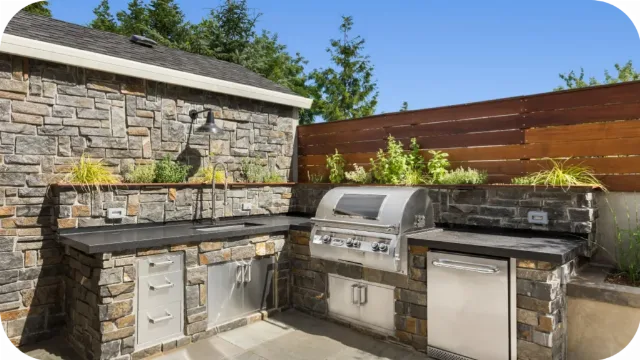
In Australian homes, stone fireplaces work across indoor living rooms, open-plan spaces, outdoor entertaining areas and covered alfresco zones. The key is choosing a stone, finish and installation method that suits the heat source, wall structure, room style and level of maintenance you are comfortable with.
Why Choose Natural Stone for a Fireplace?
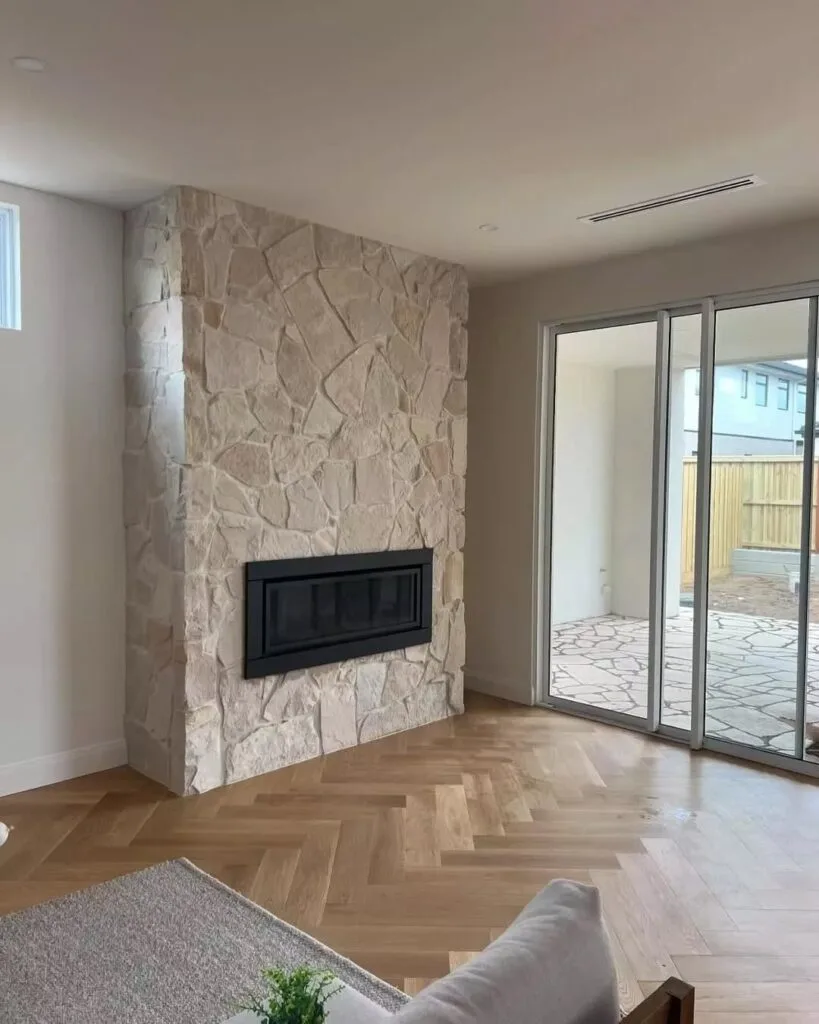
Natural stone suits fireplaces because it brings together strength, texture and design flexibility. Around a fire, materials need to do more than look good, which is why choosing from the best heat-resistant stones can help the fireplace handle heat, hold its shape and continue looking refined after years of use.
Stone also has a visual depth that manufactured finishes often struggle to match. Subtle colour shifts, rough edges, veining, grain and surface texture all help the fireplace feel grounded rather than flat. That matters in living rooms, where the fireplace often becomes the natural point people gather around.
Another advantage is how easily stone adapts to different homes. A clean granite or quartz finish can suit a modern interior, while limestone, sandstone or split face cladding can bring warmth to rustic, coastal or traditional spaces. The same material can feel understated or dramatic depending on the layout, finish and surrounding details.
For long-term value, stone is a strong choice. It does not rely on a short-lived trend, and it can make a fireplace feel more architectural and permanent. When selected carefully and installed properly, a natural stone fireplace becomes part of the home’s character rather than a decorative feature that needs replacing every few years.
What Should You Consider Before Choosing Fireplace Stone Cladding?
Choosing fireplace stone cladding starts with the way the fireplace will be used. A decorative fireplace, a gas insert, a wood-burning unit and an outdoor feature can all place different demands on the stone, backing surface and installation method. Before focusing on colour or texture, make sure the material is suitable for heat exposure and the conditions around the firebox.
Style comes next. A bold split face stone can give the fireplace strong texture and shadow, while a smoother limestone or granite finish may suit a cleaner architectural look. In smaller rooms, lighter tones and more refined formats can keep the space from feeling heavy, while larger rooms can often carry the stronger texture covered in a detailed stone cladding guide
Weight and thickness also matter. Some stone panels need a stronger substrate, mechanical fixing or professional installation to stay secure over time. This is especially important for floor-to-ceiling fireplace walls, heavy cladding, outdoor fireplaces or older homes where the wall structure may need checking first.
Maintenance should be considered early as well. Porous stones such as limestone, sandstone and travertine may need sealing to help protect against soot, smoke marks, moisture and staining. Denser stones may be easier to maintain, but every natural stone still benefits from gentle cleaning and regular inspection.
Budget should include more than the stone itself. Adhesives, backing boards, labour, sealing, trims, hearth materials and custom cutting can all affect the final cost. A cheaper stone may not always be the better choice if it needs more preparation, extra support or ongoing care.
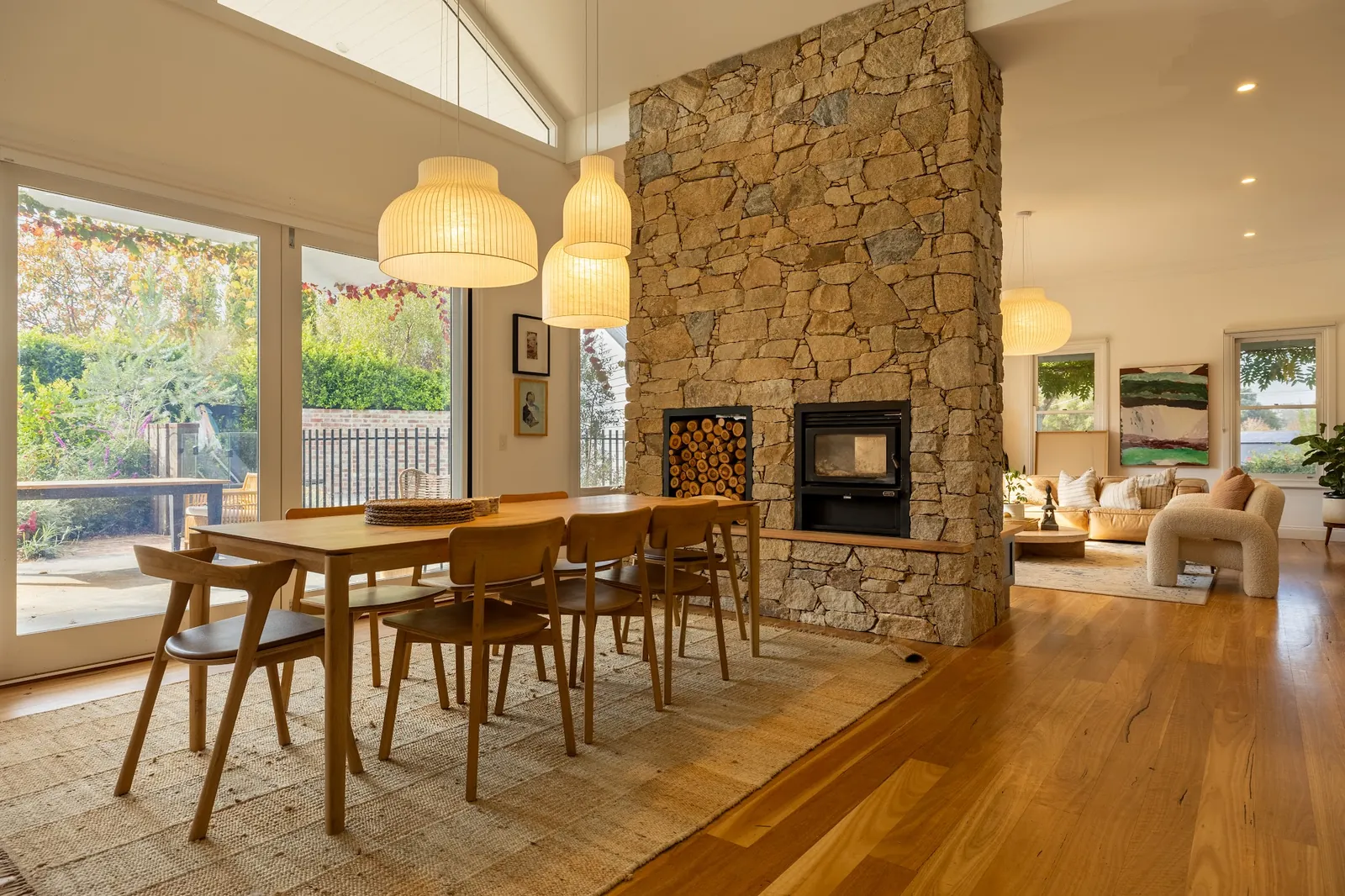
What Are the Best Stone Options for Fireplaces?
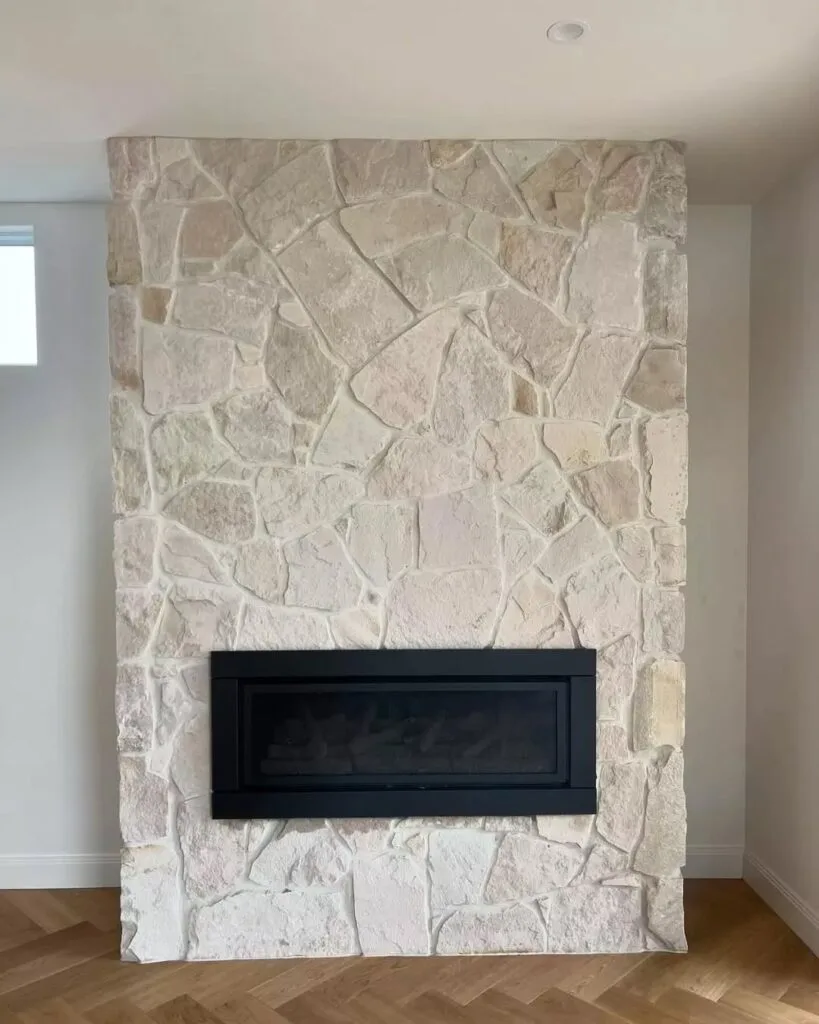
The best stone for a fireplace depends on the look you want, the type of fireplace you have and how much maintenance you are prepared to manage. Some stones are chosen for strength and heat resistance, while others are selected for softness, warmth, texture or natural movement, which is why comparing the best heat-resistant stones can help narrow the right fireplace material.
Granite
Granite is one of the strongest natural stone options for fireplace surrounds and feature walls. It handles heat well, resists everyday wear and suits homes where durability is a priority. Its natural grain can look refined without feeling too polished, making it a good fit for both modern and more classic fireplace designs.
For a clean, architectural look, granite works especially well around gas fireplaces, contemporary inserts and simple wall surrounds. Darker options, such as Charcoal Granite can add contrast, while lighter variations can keep the fireplace feeling bright and balanced.
Limestone
Limestone cladding is a popular choice for homeowners who want a softer, warmer fireplace finish. Its natural tones often sit comfortably in Australian interiors, especially when using options such as Berkshire Limestone in homes with neutral palettes, timber flooring, soft furnishings and relaxed indoor-outdoor styling.
Compared with granite, limestone has a gentler look. It can suit traditional surrounds, coastal homes, modern farmhouse interiors and understated feature walls. Because it is more porous than some harder stones, sealing and careful cleaning are important if the fireplace is used regularly.
Sandstone
Sandstone cladding brings an earthy, textured feel to a fireplace. Its natural colour variation can create warmth without making the room feel overly formal. This makes it a strong choice for rustic interiors, outdoor fireplaces, relaxed living rooms and homes that lean into natural materials.
The appeal of sandstone is its character. It does not try to look perfect, which is often exactly why it works. When properly selected and maintained, it can give a fireplace a grounded, organic finish.
Quartz
Quartz cladding suits fireplace designs where a cleaner, sharper finish is preferred. It can bring subtle sparkle, depth and consistency, making it useful in contemporary homes where the fireplace needs to feel polished but not overly decorative.
Quartz works well with sleek joinery, metal trims, simple mantels and modern gas fireplaces. It is a practical option for homeowners who want the visual interest of stone with a more controlled appearance.
Travertine
Travertine has a warm, textured finish that brings depth and softness to fireplace areas. Its natural pores, layered movement and creamy tones can make a fireplace feel relaxed, elegant and lived-in.
It suits Mediterranean, traditional, rustic and transitional interiors, especially when paired with timber, linen, brushed metal or warm neutral furnishings. Like limestone and sandstone, travertine benefits from sealing and gentle maintenance to protect its surface over time.
Fireplace Stone Cladding, Wall Panels or Stone Tiles: Which Is Best?
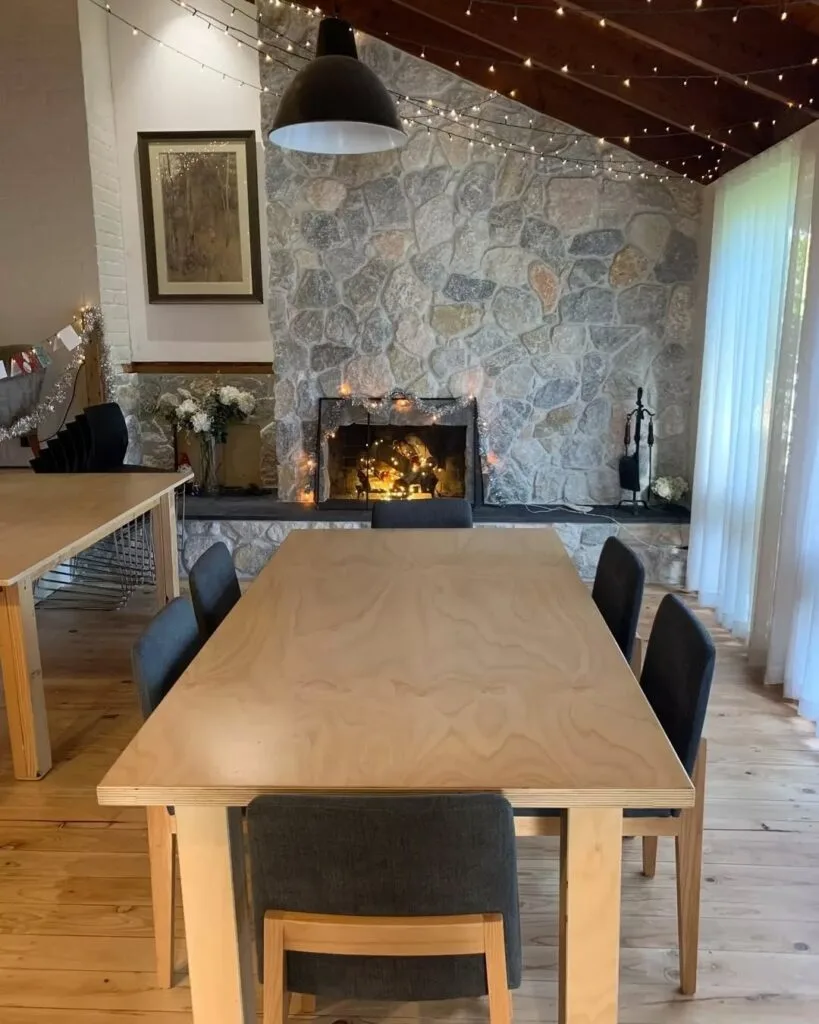
Stone fireplaces can be built in several ways, and each option creates a different look. The best choice depends on the style of the room, the size of the fireplace and the level of texture you want to introduce.
Stone Cladding
Stone cladding is ideal when you want the fireplace to feel like a built-in architectural feature. It can be used around the firebox, across a chimney breast or over a full wall to create a stronger stone feature wall that feels intentional within the room.
This option works well for homeowners who want texture, depth and natural variation. Depending on the stone and finish, cladding can feel rustic, refined, contemporary or bold.
Stone Wall Panels
Stacked stone and wall panels are practical options when you want a more structured format.They can help create a neater layout, especially when working with stacked, coursed or modular patterns.
Panels are often useful for fireplace feature walls because they make it easier to plan coverage, alignment and visual flow. They still need the right backing, adhesive and installation method, especially when used near heat.
Stone Tiles
Stone tiles suit cleaner fireplace designs, hearths and patterned layouts. They are often used when the goal is a more polished finish rather than a rugged stone wall effect.
Tiles can work beautifully in herringbone, vertical stack, large-format or simple grid layouts. They are a strong choice for modern fireplaces where precision and symmetry matter.
Split Face Cladding
Split face cladding is best when you want raw texture and shadow. Its uneven surface catches light across the stone, giving the fireplace depth even when the fire is not on, which is why split-face stone works so well for bold fireplace surrounds and feature walls.
This finish suits feature walls, full-height fireplaces and rooms where the fireplace needs to become the main
Stone Fireplace Design Ideas for Different Homes
A stone fireplace should feel like it belongs to the room, not like a feature added as an afterthought. The right design depends on ceiling height, wall space, furniture layout, natural light and the overall mood you want to create.
Full-Wall Stone Fireplace
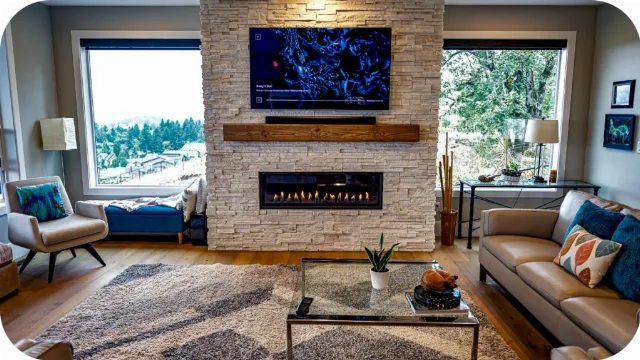
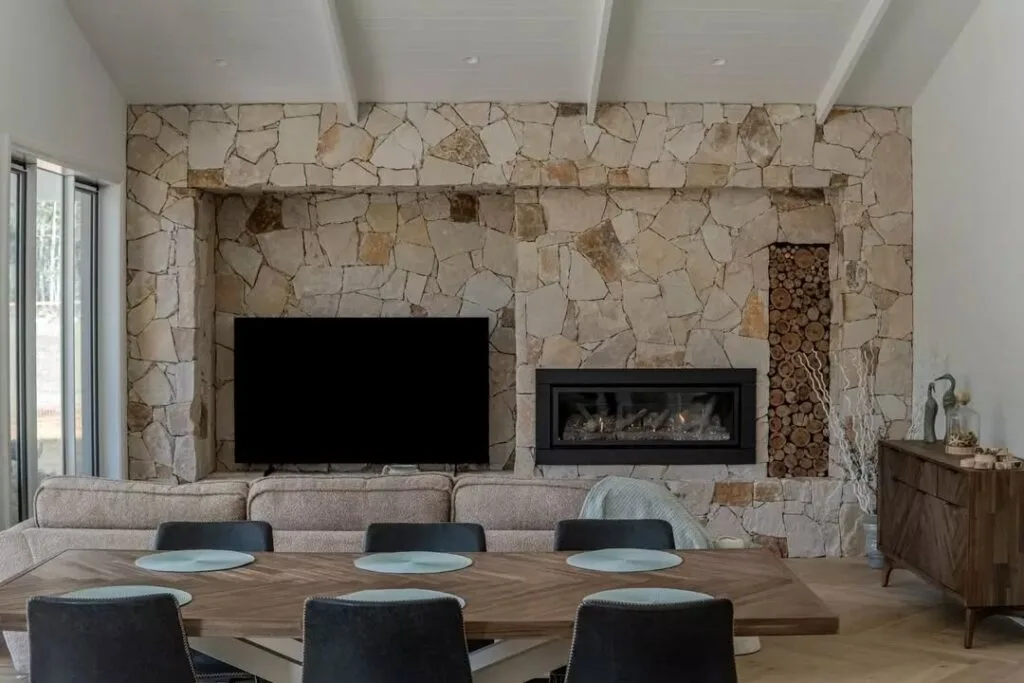
A full-wall stone fireplace works well in open-plan living areas, large lounges and rooms with high ceilings, where interior stone feature walls can create a strong architectural focal point. By extending the stone across the entire wall, the fireplace becomes a strong architectural feature rather than a small decorative insert.
This approach suits homes where the fireplace needs to anchor the room. Lighter stone can keep the wall feeling open, while darker or heavily textured stone creates a bolder, more dramatic effect.
Partial Fireplace Cladding
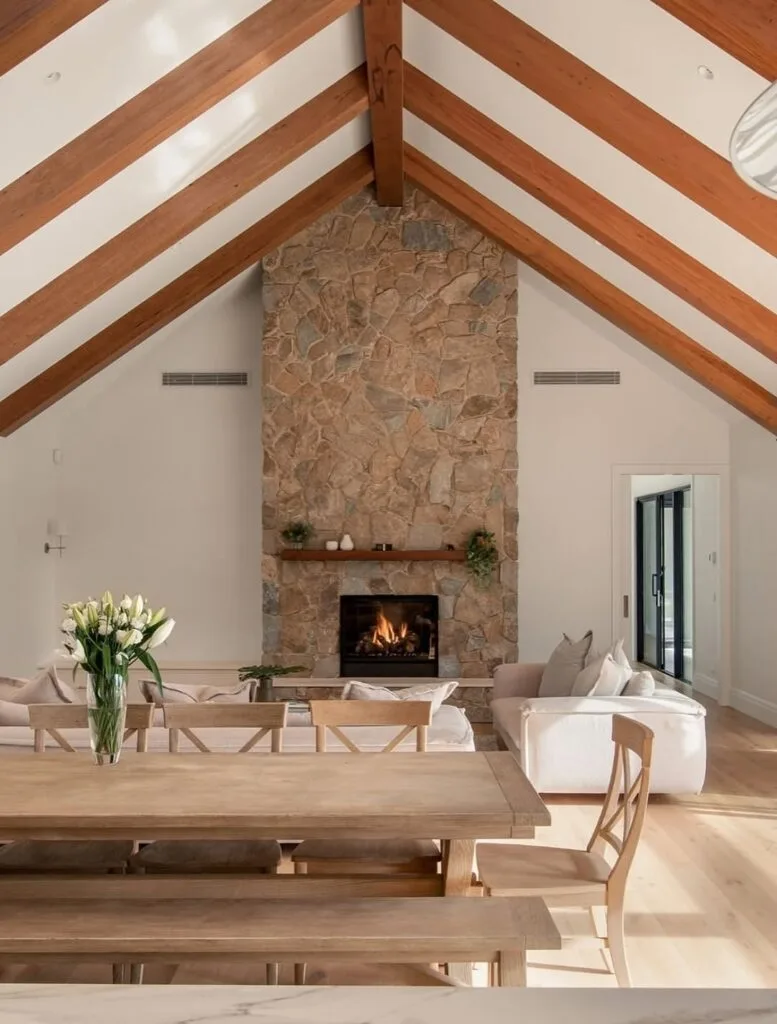
Partial cladding is ideal when you want texture without overwhelming the room. Instead of covering the full wall, stone is used around the firebox, chimney breast or central fireplace section.
This works well in smaller living rooms, modern homes and spaces where other design elements already compete for attention. It gives the fireplace presence while still keeping the overall look balanced.
Floor-to-Ceiling Stone Feature
A floor-to-ceiling fireplace draws the eye upward and adds height to the room. It is a strong choice for homes with raked ceilings, double-height spaces or large feature walls.
This design feels especially effective when paired with a simple firebox, clean hearth and minimal styling. The stone does most of the work, so the surrounding details should stay restrained.
Stacked Stone or Ledgestone Fireplace
Stacked stone and ledgestone fireplaces bring strong texture and natural movement. Their layered format creates shadow, depth and a handcrafted feel that works beautifully in rustic, contemporary and indoor-outdoor homes.
This style pairs well with timber beams, natural flooring, leather furniture and warm lighting. It is a good option when you want the fireplace to feel relaxed but still visually impressive.
Split Face Fireplace Surround
Split face cladding is a strong choice when the fireplace needs more texture and movement. Its rough surface catches light differently throughout the day, creating shadow and depth without relying on extra decoration.
This design works well in modern rustic homes, coastal interiors and open-plan living areas where the fireplace needs to feel grounded. It also pairs beautifully with timber shelving, simple hearths and warm neutral furniture.
Corner Stone Fireplace
A corner stone fireplace is useful when wall space is limited or the room layout needs more flexibility. By placing the fireplace in the corner, you can create warmth and visual interest without taking over the main wall.
This style suits smaller living rooms, bedrooms, secondary lounges and open-plan spaces where furniture placement matters. Lighter stone can keep the corner from feeling too heavy, while textured cladding can make it feel more intentional.
Stone Fireplace with Timber, Metal or Glass
Stone becomes even more interesting when it is paired with contrasting materials. Timber can soften the look, metal can add a sharper architectural edge, and glass can keep the design feeling clean and modern.
The key is balance. Let the stone remain the hero, then use other materials to frame, soften or define the fireplace area.
How Do You Match Fireplace Stone to Your Interior Style?
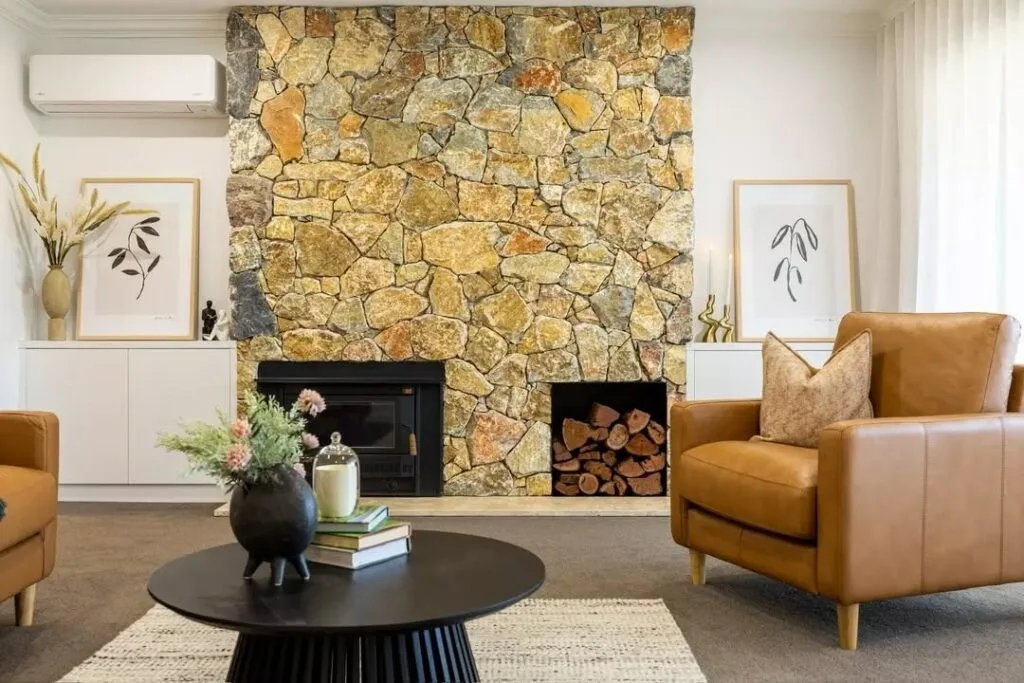
The right fireplace stone should suit the room around it. A beautiful stone can still feel wrong if the colour, texture or finish clashes with the flooring, furniture, wall colour or architectural style of the home.
Modern Interiors
Modern fireplaces usually work best with clean lines and controlled finishes. Granite, quartz or neatly cut stone panels can create a sharp, refined look without adding visual clutter. Darker tones can add contrast, while soft greys and neutral stones keep the room calm and minimal.
Rustic and Country Homes
Rustic interiors can handle more texture. Stacked stone, split face cladding, sandstone and limestone all bring warmth and natural variation. These finishes pair well with timber mantels, exposed beams, leather seating and earthy colour palettes.
Traditional Homes
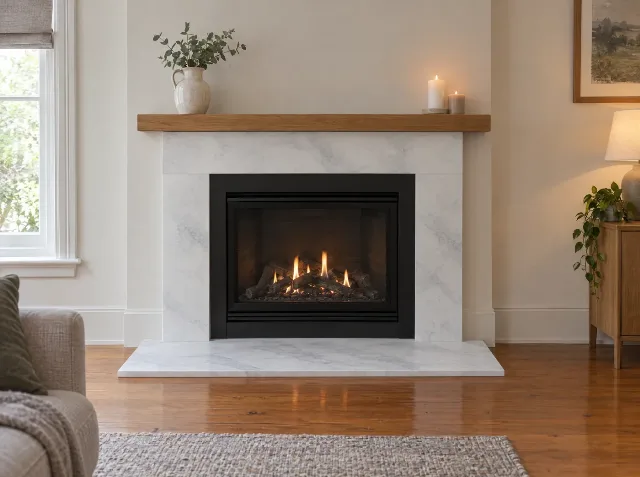
Traditional homes often suit limestone, travertine, or finely detailed stone surrounds. Softer tones, classic mantels and balanced proportions help the fireplace feel established rather than overly modern. This approach works well in formal living rooms and period-style homes.
Coastal Homes
Coastal interiors benefit from lighter stones with soft texture. Limestone, pale sandstone and warm neutral finishes can create a relaxed feel without making the room look too heavy. Pairing stone with white walls, timber flooring and natural fabrics keeps the space fresh.
Industrial Homes
Industrial spaces can carry darker stone, rough textures and stronger contrast. Split face cladding, dark granite, slate-style finishes, steel trims and concrete hearths can create a bold fireplace that feels raw, grounded and architectural.
What Should You Know About Fireplace Stone Installation?
Fireplace stone installation needs careful planning because the area must handle heat, weight and regular use. Even when the design looks simple, the materials behind the finished surface play a major role in safety and long-term performance.
The wall should be clean, dry, level and structurally sound before any stone is installed. Heavier cladding or full-height stone features may also need extra support, especially if the fireplace is being added to an existing wall. This is where professional advice can prevent costly issues later.
The right adhesive is just as important as the stone itself. Fireplace areas need products suited to natural stone and heat exposure, not general-purpose adhesives, so a proper stone cladding adhesive choice can help support long-term performance. Some projects may also require fire-safe backing boards, mechanical fixing, movement gaps or specific clearances around the firebox.
Dry laying the stone before installation can also make a big difference. It allows the installer to balance colour variation, avoid repetitive patterns and make sure the layout feels natural once it is fixed to the wall.
For small decorative areas, some experienced renovators may consider a DIY approach. For most fireplace surrounds, full-wall cladding, heavy panels or split-face stone, professional installation is the safer choice. A qualified installer can manage surface preparation, cutting, fixing, alignment and curing time properly, giving the finished fireplace a cleaner and more durable result.
How Do You Care for a Stone Fireplace?
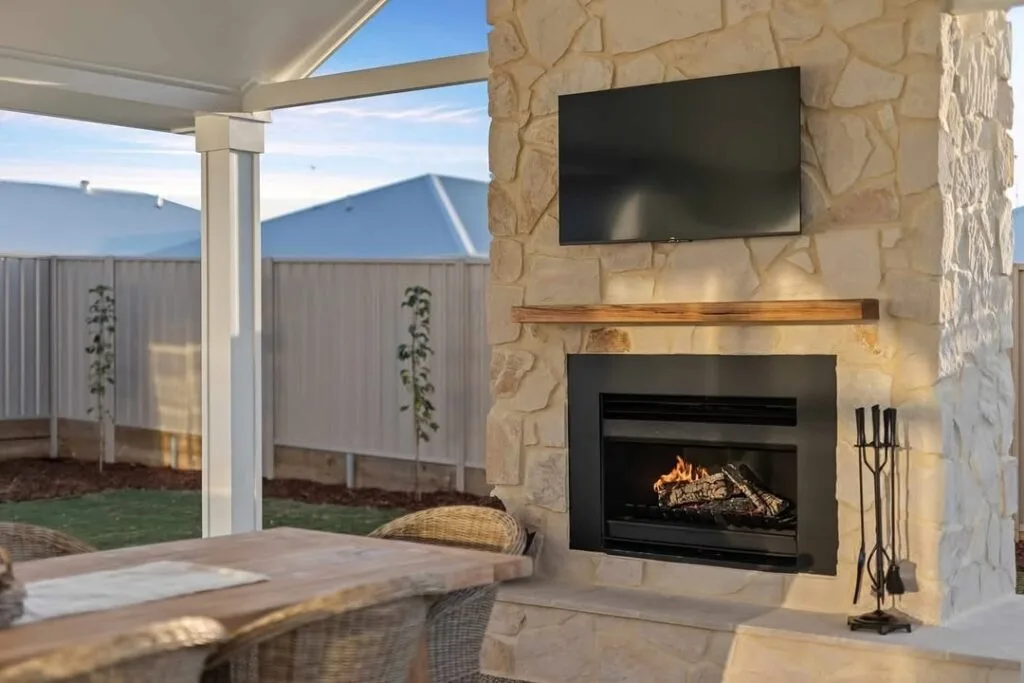
A stone fireplace does not need complicated upkeep, but it does need the right kind of care. Regular maintenance helps protect the surface from soot, smoke marks, moisture and everyday dust, especially if the fireplace is used often.
Start with gentle cleaning. Use a soft brush, microfibre cloth or vacuum brush attachment to remove dust from the stone surface. Textured finishes such as split face cladding and stacked stone can collect more dust in small grooves, so light cleaning every few weeks helps keep the detail visible.
For deeper cleaning, use a pH-neutral stone cleaner rather than harsh chemicals. Acidic or abrasive products can damage the stone, dull the finish or weaken protective sealants. Steel wool, hard scrubbing pads and strong household cleaners should be avoided.
Porous stones such as limestone, sandstone and travertine may need sealing to help protect against staining and moisture. The right schedule depends on the stone type, finish and how heavily the fireplace is used, especially when choosing the best sealants for stone fireplaces.
Soot and smoke marks should be cleaned early before they settle into the surface. It is also worth checking the fireplace area for cracks, chips, loose pieces, worn grout or movement around the surround.
Good ventilation matters too. Moisture can affect stone, adhesives and surrounding materials over time, particularly in enclosed rooms or outdoor fireplace areas. With simple, consistent care, a stone fireplace can keep its natural character for many years.
Bring Your Stone Fireplace Idea to Life
The right stone fireplace should feel natural to the home, not forced into the room. Its success depends on the stone type, cladding format, finish, scale, heat source and how the surrounding space is used every day.
A well-chosen fireplace can add warmth, texture and long-term character while becoming one of the most memorable features in the home.
If you are comparing natural stone options, Splendour in Stone can help you choose a finish that suits your design, maintenance needs and project goals. Contact our team to request samples, visit the showroom or get tailored advice for your fireplace feature.
FAQs
What is the best stone for a fireplace?
The best stone depends on the fireplace style, heat source and maintenance expectations. Granite is a strong option for durability and heat resistance, while limestone, sandstone, quartz and travertine each offer different colours, textures and design effects. For the best result, choose a stone based on both performance and the look you want to achieve.
Is stone cladding suitable for fireplace surrounds?
Yes, stone cladding can be suitable for fireplace surrounds when the right material, backing system and installation method are used. Natural stone is often chosen because it adds texture, depth and long-term strength. The cladding should always be installed with heat-appropriate adhesives, safe clearances and proper surface preparation.
What is the difference between stone cladding and stone wall panels?
Stone cladding is the broader term for applying stone to a wall or fireplace surface. Stone wall panels are usually pre-arranged or modular pieces designed to make layout and installation more structured. Both can create a strong fireplace feature, but panels may offer a cleaner format for stacked, coursed or repeated patterns.
Does fireplace stone need sealing?
Some fireplace stones need sealing, especially porous materials such as limestone, sandstone and travertine. Sealing helps protect the surface from soot, smoke marks, moisture and staining. Denser stones may need less frequent sealing, but the best schedule depends on the stone type, finish and how often the fireplace is used.
Can split face cladding be used around a fireplace?
Yes, split face cladding can work beautifully around a fireplace. Its rough, layered surface adds shadow, texture and natural character, making it ideal for feature walls and bold surrounds. Proper installation is important because the wall must support the stone safely and handle the heat conditions around the fireplace.
Should a stone fireplace be professionally installed?
Professional installation is recommended for most stone fireplace projects. Stone can be heavy, and fireplace areas need the right backing, adhesive, clearances, fixing method and curing time. A qualified installer can help avoid uneven finishes, loose panels, heat-related issues and long-term structural problems.