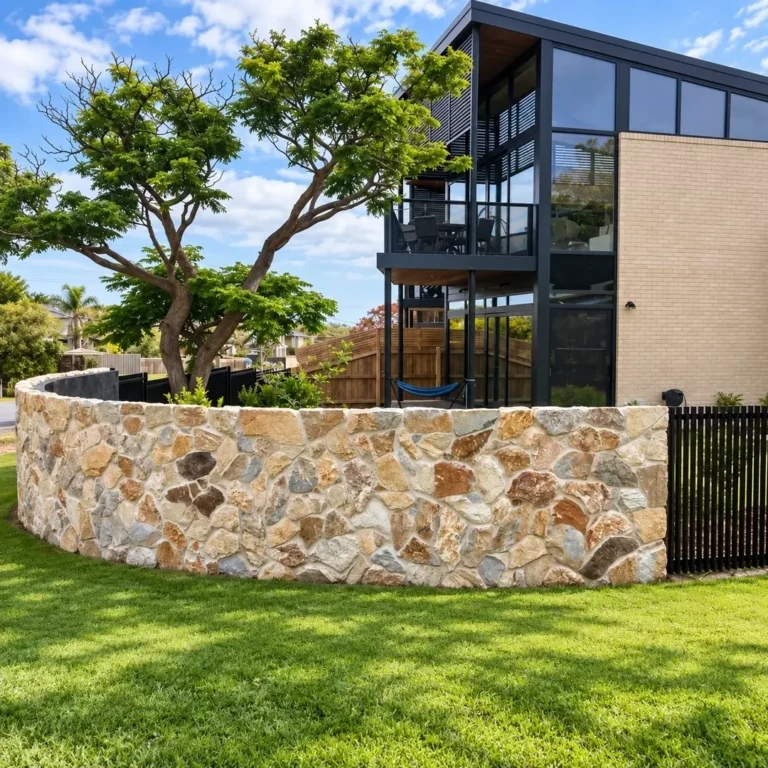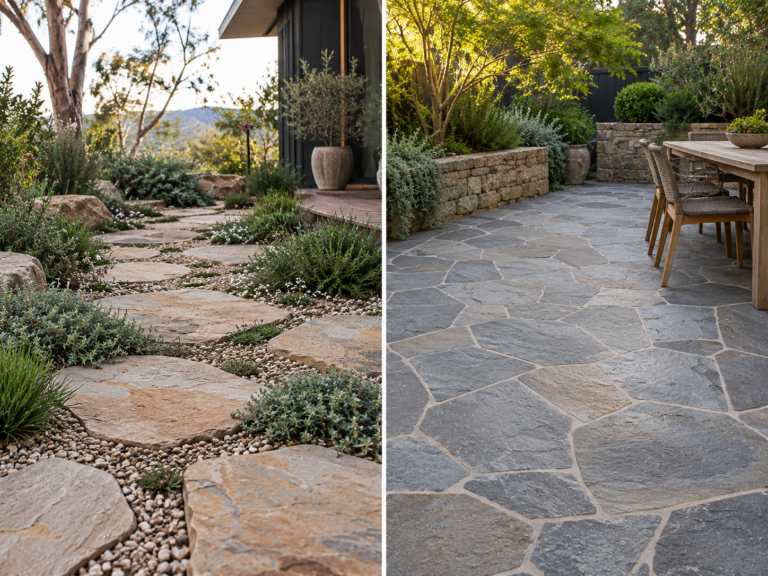


Garden pavers and pathways do more than create a route through your outdoor space. They shape how the garden feels, how people move through it, and how each area connects to the next.
The right paving can turn a plain yard into a more structured, usable, and inviting landscape.
This guide covers the best materials, natural stone options, design ideas, layout tips, patterns, installation basics, and maintenance advice to help you plan garden pavers and pathways that look good and last.
What Are Garden Pavers and Pathways?
Garden pavers are individual units of stone, concrete or brick laid over a prepared base to form a path, patio or walking surface in a garden. A pathway is what you get when they are laid in a run to connect two points. The paver is the unit, the pathway is the route.
The three things that decide which paver suits a garden are the traffic it carries, the format that fits the space, and whether the colour works with the planting and the house. Everything below follows from those three.
Garden pavers are individual paving units used to create outdoor surfaces such as paths, patios, courtyards, steps, pool surrounds, and seating areas. They can be made from natural stone, concrete, porcelain, clay, gravel systems, or other durable materials designed for outdoor use.
Garden pathways are the planned routes that guide movement through a landscape. They can lead from the house to a patio, connect different garden zones, frame planting areas, or create a more inviting journey through the outdoor space.
The two often work together. Pavers provide the surface, while the pathway gives the garden structure and direction. A well-planned path can stop people from walking over lawns or garden beds, improve access after rain, and make the whole outdoor area feel more organised.
Material choice also changes the mood of the space. Natural stone pavers can make a garden feel timeless and textured, while porcelain or concrete pavers often create a cleaner, more modern finish. Gravel paths feel relaxed and informal, especially when paired with stepping stones or stone edging.
Garden Pavers vs Garden Pathways
Garden pavers are the materials used to build a paved surface. Garden pathways are the routes or walkways created within the landscape.
Put simply, pavers are the building blocks. Pathways are the design feature they help create.
Why Use Stone Pavers in Garden Design?
Stone pavers bring structure, texture, and long-term value to a garden. They help define how each part of the outdoor space is used, whether that means creating a clear walkway, building a patio, framing a pool area, or adding a practical surface around outdoor furniture.
One of the main reasons people choose stone is durability. Natural stone can handle changing weather, regular foot traffic, and everyday outdoor use when the right material and finish are selected. Granite, bluestone, limestone, travertine, quartzite, and porphyry all offer different strengths, colours, and textures, which makes them suitable for a wide range of garden styles.
Stone pavers also improve visual flow. A pathway can guide the eye through the garden, while a paved patio can create a clear destination for relaxing, dining, or entertaining. When the paving links naturally with plants, walls, steps, furniture, and lighting, the whole garden feels more complete.
Another benefit is design flexibility. Stone can suit modern homes, traditional gardens, coastal spaces, native landscapes, courtyards, and larger outdoor entertaining areas. Smooth large-format pavers can create a clean contemporary look, while tumbled or textured stone can make a garden feel softer and more relaxed.
Stone also ages well. Instead of looking outdated quickly, quality natural stone often develops more character over time, especially when maintained properly. That makes it a strong choice for homeowners who want garden pavers and pathways that feel practical, timeless, and connected to the landscape.
Best Materials for Garden Pavers and Pathways

Choosing the right paving material is one of the biggest decisions in any garden project. The material affects how the space looks, how it performs in different weather, how much maintenance it needs, and how well it suits the surrounding landscape. This is why broader stone paving decisions should always consider design, durability, drainage, and long-term use together.
Natural Stone Pavers
Natural stone is one of the most popular choices for garden pavers and pathways because every piece has its own colour, texture, and surface character. It suits gardens where you want a finish that feels grounded, timeless, and connected to the outdoors.
Granite, limestone, sandstone, slate, bluestone, travertine, quartzite, and porphyry can all work in garden settings. Some stones feel soft and warm, while others create a sharper, more contemporary look. Natural stone is also known for its strength, which makes it suitable for paths, patios, courtyards, steps, pool surrounds, and feature areas.
Concrete Pavers
Concrete pavers are a practical option for homeowners who want flexibility at a more accessible price point. They come in many shapes, colours, textures, and sizes, which makes them suitable for structured paths, patios, and larger paved areas.
They can create a clean, consistent look, although they do not have the same natural variation as stone. For budget-conscious projects, concrete can still deliver a neat and functional garden surface when installed well.
Porcelain Pavers
Porcelain pavers suit modern outdoor spaces where a sleek, low-maintenance finish is important. They are usually resistant to stains, fading, moisture, and scratches, which makes them useful for patios, pool areas, and entertaining zones.
Their clean lines and consistent colour make them ideal for contemporary gardens. However, they can feel less organic than natural stone, so they work best in designs where a refined, controlled look is the goal.
Clay Pavers
Clay pavers bring warm, earthy tones into a garden. They suit traditional homes, cottage-style gardens, classic pathways, and outdoor areas where you want a softer, more established feel.
They are durable, colour-stable, and relatively easy to maintain. Their natural warmth can pair beautifully with greenery, timber, brickwork, and older architectural styles.
Gravel and Gravel Pavers
Gravel works well for informal garden pathways, side access areas, drainage-friendly spaces, and relaxed landscapes. It can soften the look of a garden and create a more casual walking surface.
When paired with stepping stones, edging, or larger stone slabs, gravel becomes more structured without losing its natural feel. It is also useful where water movement and drainage need to be considered.
Eco-Friendly and Permeable Pavers
Eco-friendly and permeable pavers are a smart choice for gardens where sustainability and water management matter. These options allow rainwater to move through the surface rather than running straight off hard paving.
They can help reduce pooling, support better drainage, and create a more environmentally conscious outdoor design. For many gardens, especially those exposed to heavy rain or poor drainage, this can be both practical and visually effective.
Best Natural Stone Pavers for Australian Gardens

Natural stone works especially well in Australian gardens because it can handle outdoor exposure while bringing real texture and character to the landscape. The best choice depends on the look you want, the amount of traffic the area receives, and how much maintenance you are comfortable with over time.
Granite
Granite is a strong option for high-use garden areas. It suits pathways, steps, driveways, public-facing entrances, and outdoor zones that need a hard-wearing surface. A product such as Granite Grey can work well when the garden needs a durable stone with a clean, structured finish.
Its natural density helps it perform well in changing weather, while textured finishes can improve grip underfoot. Granite also works beautifully in modern gardens where darker, sharper, or more structured paving is needed.
Limestone
Limestone brings a softer and warmer look to garden paving. Its cream, beige, grey, and earthy tones make it suitable for courtyards, patios, garden paths, and relaxed outdoor entertaining spaces.
It pairs well with greenery, rendered walls, timber, and natural planting schemes. Because some limestone can be more porous, sealing is often recommended to help protect it from staining and weather exposure.
Travertine
Travertine is a popular choice for patios, pool surrounds, and resort-style outdoor areas. Its warm tones and natural surface variation create a calm, inviting feel without making the space look too formal.
It can work well around water when the right finish is selected. Like limestone, travertine usually benefits from sealing, especially in areas exposed to moisture, food, drinks, or regular use.
Bluestone
Bluestone suits modern Australian gardens, front entries, courtyards, and structured pathways. Its blue-grey colour gives outdoor spaces a clean architectural feel, while textured finishes can add grip and visual depth. Bluestone Sawn is especially suited to garden designs that need a sharp, natural surface without looking too polished.
It is a strong choice when you want paving that feels contemporary but still natural.
Quartzite
Quartzite is valued for its strength, surface texture, and colour variation. It can suit feature pathways, garden steps, patios, and outdoor areas where the paving needs to feel more refined.
Its natural split texture can add visual movement, making it a strong option for gardens that need both durability and a more decorative finish.
Porphyry
Porphyry brings earthy colour variation and a more rustic feel to outdoor spaces. It works well for laneways, borders, courtyards, cobblestone-style areas, and pathways that need texture and strength.
Its natural grip and hard-wearing character make it especially useful in gardens where practicality and visual impact both matter.
Sandstone and Slate
Sandstone and slate are both suitable for natural garden pathways and textured outdoor surfaces. Sandstone brings warmth and softness, while slate can create a deeper, more dramatic finish.
Both can work beautifully in traditional, rustic, and relaxed garden settings when the right thickness, finish, and sealing approach are chosen.
Garden Paver and Pathway Design Ideas

Garden pavers and pathways can do much more than cover bare ground. Used well, they can shape the whole garden, create useful zones, and make the space feel more finished. The best ideas usually come from balancing how the garden looks with how people will actually use it.
1. Create a Curved Garden Pathway
A curved pathway can make a garden feel softer and more natural. Instead of cutting through the space in a straight line, it guides people through the landscape in a more relaxed way.
This works especially well in gardens with layered planting, lawns, water features, or informal seating areas. Natural stone, gravel, and stepping stones are all good choices because they can follow organic shapes without looking forced.
2. Build a Patio or Outdoor Seating Area
A paved stone patio gives the garden a clear place to sit, dine, entertain, or unwind. It can sit close to the house for easy access or further into the garden to create a quiet retreat.
Stone pavers are ideal for patios because they provide a stable surface for furniture while adding texture and character. Larger pavers can make the area feel modern and open, while smaller or tumbled pieces can create a more relaxed garden feel.
3. Use Stepping Stones for a Minimalist Path
Stepping stones are a simple way to create movement without covering the whole garden in hard paving. They work well through grass, gravel, ground cover, or planted areas.
This idea suits minimalist, native, and relaxed garden designs. The spacing needs to feel comfortable underfoot, so each stone should be placed with natural walking movement in mind.
4. Add Borders and Garden Edging
Pavers can be used to define garden beds, lawns, vegetable patches, and pathway edges. This keeps the garden looking organised and helps stop soil, mulch, or gravel from spilling into other areas.
Stone edging also adds a finished look without taking over the design. It works particularly well when the edging material matches or complements the main pathway.
5. Combine Stone and Gravel
Stone and gravel are a strong pairing for garden pathways. Gravel softens the look and supports drainage, while larger stone pieces provide a stable walking surface.
This combination is useful for side paths, informal garden routes, low-water gardens, and spaces where a fully paved surface might feel too heavy. It also gives the garden more texture without making the layout complicated.
6. Design Around a Fire Pit or Outdoor Kitchen
Pavers can help turn a fire pit, barbecue zone, or outdoor kitchen into a practical feature. A stable paved surface makes it easier to place seating, dining furniture, grills, and storage.
For these areas, choose pavers that can handle heat, foot traffic, spills, and regular cleaning. Natural stone, concrete, or porcelain can all work depending on the style and performance needed.
7. Frame Water Features with Stone
Stone pavers can make water features feel more connected to the garden. They can be used around ponds, fountains, water bowls, or small streams to create a natural edge and a more polished finish.
Textured stone works especially well here because it adds contrast against water and planting. Proper drainage and slip resistance should always be considered in wet areas.
8. Use Pavers Around Pool Areas
Around pools, pavers need to look good and perform safely. The right surface should provide grip, feel comfortable underfoot, and handle regular exposure to water, especially where pool coping and paving need to work together visually and practically.
Travertine, limestone, granite, and textured natural stone can all suit pool areas when selected carefully. Lighter colours can also help reduce heat underfoot, which makes the space more comfortable during warmer months.
Garden Pathway Layout Tips for Better Flow
A good garden pathway should feel easy to follow. It needs to guide movement, connect important areas, and sit naturally within the wider landscape. Before choosing the paver pattern or stone finish, think about how people will move through the garden every day.
Match the Path Shape to the Garden Style
Straight pathways suit formal gardens, modern homes, front entries, and spaces where a clean visual line is needed. They create structure and make the route feel direct.
Curved pathways suit softer garden styles. They work well through lawns, native planting, cottage gardens, and relaxed outdoor spaces because they create a slower, more natural journey.
Use Width to Control Movement
Path width changes how the garden feels. A narrow path can feel intimate and quiet, which works well for side gardens or small planted areas.
Wider pathways feel more open and practical. They are better for main access routes, entrances, entertaining areas, and spaces where two people may need to walk side by side.
Plan Transitions Between Garden Zones
A pathway should not feel like an isolated strip of paving. It should connect useful parts of the garden, such as the house, patio, pool area, lawn, outdoor kitchen, seating zone, or feature garden bed.
Smooth transitions make the whole outdoor space easier to use. Repeating the same stone, colour, or edging detail can also help different areas feel connected rather than separate.
Balance Pattern and Scale
Large pavers can make a small garden feel cleaner and more open because there are fewer joint lines. Smaller pavers or detailed patterns can add texture to larger spaces that need more visual interest.
The scale of the paver should suit the size of the garden. Oversized slabs may overpower a narrow path, while very small pavers can make a large area feel too busy.
Leave Room for Planting
Plants soften hard paving and make pathways feel more settled into the landscape. Ground covers, grasses, low shrubs, and border planting can help the path blend naturally with the garden. For a low, no-mow ground cover you can even grow moss between pavers to green up the joints themselves.
This is especially useful around curved pathways, stepping stones, and gravel paths where a softer edge feels more natural.
Think About Drainage Early
Drainage should be planned before the pathway is installed. A slight fall, stable base, and suitable jointing can help water move away from the surface.
Poor drainage can lead to pooling, movement, staining, moss growth, and uneven pavers, so it should never be treated as an afterthought.
Popular Paver Patterns, Finishes and Formats
The pattern, finish, and format of your pavers can completely change how a garden feels. The same stone can look relaxed, formal, modern, rustic, or architectural depending on how it is cut, finished, and laid, which is why choosing suitable paver patterns matters as much as choosing the material itself.
Herringbone Pattern
Herringbone creates a strong sense of movement because each paver sits at an angle to the next. It works well for garden paths, patios, courtyards, and areas where you want the paving to feel more detailed and structured.
This pattern is especially useful when the surface needs visual energy without adding too many different colours or materials.
Running Bond Pattern
Running bond is one of the simplest and most versatile paving patterns. Each row is offset from the one before it, creating a clean, brick-like layout.
It suits pathways, patios, side access areas, and driveways because it feels orderly without looking too busy. It is also a good choice when you want the material itself to be the main feature.
Basket Weave Pattern
Basket weave has a more traditional feel. It uses alternating pairs of pavers to create an interwoven effect, which can add texture and charm to courtyards, garden paths, and classic outdoor areas.
This pattern pairs well with clay pavers, stone setts, and gardens with a softer, established look.
Circular Pattern
Circular paving patterns work best when you want to create a focal point. They can frame a fire pit, outdoor table, sculpture, water feature, or central seating area.
Because circular layouts naturally draw the eye inward, they are better used as feature areas rather than across every paved surface.
French Pattern
French pattern uses a mix of square and rectangular pavers in a repeating layout. It adds rhythm and variation without feeling random.
This format is popular for patios, courtyards, alfresco areas, and pool surrounds because it gives the surface more movement while still feeling refined.
Large-Format Slabs
Large-format slabs create a cleaner, more modern finish. With fewer joint lines, they can make a garden, patio, or pathway feel larger and more open.
They work especially well in contemporary landscapes, pool areas, rooftop gardens, and open alfresco spaces where simplicity and scale matter.
Tumbled, Honed, Flamed and Exfoliated Finishes
A tumbled finish has softened edges and a more aged feel, making it suitable for rustic paths, traditional gardens, and relaxed courtyards.
A honed finish is smoother and more refined, often used in modern patios or seamless indoor-outdoor designs.
Flamed and exfoliated finishes have more texture underfoot, which makes them useful for outdoor paths, wet areas, pool surrounds, and sloped sections where grip is important.
Which Paver Format Suits Which Part of the Garden?
Format matters more than pattern in a garden, because it sets how many joints the eye reads across a small space. Fewer, larger units make a courtyard feel bigger. More, smaller units suit curves and narrow runs.
| Format | Reads as | Best suited to | Watch for |
|---|---|---|---|
| Small unit pavers | Traditional, textured | Curved paths, narrow side runs, cottage and heritage gardens | More joints to weed and more laying labour |
| Medium format | Balanced, versatile | General paths, courtyards, mixed-use areas | The default choice, so it needs the stone to do the work |
| Large-format slabs | Contemporary, calm | Patios, seating areas, courtyards you want to feel larger | Access for handling, and a base that will not settle unevenly |
| Stepping stones | Informal, light-touch | Lawn crossings, garden bed routes, low-traffic paths | Spacing to a natural stride, and mowing around them |
| Crazy paving | Organic, informal | Terraces and paths where a laid pattern would feel too formal | Cutting waste and a longer dry-fit before laying |
The rule of thumb: match the unit size to the space, not to the budget. Large slabs in a narrow path look cramped, and small units across a wide terrace look busy no matter how good the stone is.
Confirm available formats and dimensions per product before you commit to a layout, because the format range varies by stone. Where an informal look is wanted, sandstone crazy paving covers the irregular option in more detail.
How to Choose the Right Garden Pavers

Choosing garden pavers should start with how the space will be used, not just how the material looks. A path, patio, pool surround, courtyard, and driveway all need different levels of strength, grip, comfort, and maintenance.
Consider the Area’s Purpose
Think about the role of the paved area first. A quiet garden path may only need a comfortable walking surface, while a patio must support furniture, foot traffic, and regular entertaining. Pool surrounds need grip and heat comfort, while driveways require stronger pavers, proper thickness, and a stable base.
Match the Material to Foot Traffic
High-use areas need durable materials that can handle regular pressure without shifting, cracking, or wearing too quickly. Granite, bluestone, porcelain, and dense natural stone often work well in busy spaces.
For lower-use garden paths, you can consider softer visual options such as limestone, sandstone, gravel, or stepping stones.
Choose Colours That Suit the Whole Garden
Paver colour should connect with the home, garden, and surrounding finishes. Cool greys often suit modern homes, while cream, beige, and earthy tones can soften courtyards and relaxed outdoor spaces.
Before choosing, compare the paver against walls, plants, furniture, fencing, pool finishes, and nearby stonework.
Think About Maintenance
Every material has different upkeep needs. Porous stones may need sealing, gravel may need topping up, and some concrete surfaces may need more regular cleaning.
If you want a lower-maintenance garden, choose dense materials, practical finishes, and colours that will not show marks too easily.
Consider Australian Climate Conditions
Outdoor pavers need to handle sun, rain, drainage, and temperature changes. Lighter colours can feel more comfortable in exposed areas, while textured finishes are useful in wet, shaded, or sloped spaces.
Good drainage is just as important as the paver itself.
Set a Realistic Budget
Your budget should include the pavers, base preparation, installation, cutting, wastage, edging, drainage, sealing, and long-term care.
Premium stone may cost more upfront, but it can offer better long-term value when chosen and installed properly.
Coordinate with Other Landscape Elements
The best pavers feel connected to the whole garden. Match them with planting, walling, steps, lighting, furniture, timber features, and water elements so the finished space feels balanced and complete.
Basic Installation Tips for Garden Pavers and Pathways
Good installation gives garden pavers and pathways their strength. Even the best material can move, sink, or crack if the base is weak or the layout is rushed, especially with stone paver installation where base preparation, jointing, and edge restraint all affect long-term performance.
Measure the Area Properly
Start by measuring the full area, including curves, edges, steps, and any sections that need cutting. Allow extra material for cuts, breakage, and future repairs. This helps avoid delays and keeps the finished surface consistent.
Prepare the Ground
Clear the area of grass, roots, loose soil, old paving, and debris. The ground should be excavated to the right depth for the paver type, base layer, and bedding material.
Once cleared, compact the soil properly. A firm sub-base reduces the risk of sinking, uneven sections, and movement over time.
Build a Stable Base
A crushed rock or gravel base gives the pathway strength and helps water move away from the surface. This layer should be spread evenly and compacted in stages, not left loose.
A bedding layer, often coarse sand or mortar depending on the project, then creates a level surface for laying the pavers.
Lay the Pavers Carefully
Start from a straight edge, corner, or planned focal point. Keep checking levels, spacing, and alignment as you work. For pathways, make sure the route feels comfortable to walk on and follows the intended garden flow.
Fill Joints and Secure Edges
Joint filling helps lock the pavers in place. Sand, polymeric sand, grout, or mortar may be used depending on the material and setting.
Edges should also be restrained properly so the pavers do not spread or shift. Once complete, clean the surface and allow the paving to settle before heavy use.
How to Maintain Garden Pavers and Stone Pathways
Garden pavers and stone pathways do not need complicated care, but they do need consistent attention. Small maintenance habits help protect the surface, reduce staining, and keep the pathway safe to use throughout the year.
Sweep and Clean Regularly
Sweep away leaves, soil, dust, and garden debris before they settle into the joints or stain the surface. For deeper cleaning, use water, a mild detergent, and a soft brush. Avoid harsh chemicals, especially on natural stone, as they can damage the finish.
Manage Weeds and Joint Gaps
Weeds can appear between pavers when joints loosen or organic matter builds up. Remove them early before roots disturb the paving. If joint sand, gravel, or filler starts washing out, top it up before the pavers begin to move.
Seal Porous Stone When Needed
Some stones, including limestone, sandstone, and travertine, often benefit from sealing. A good sealant can help reduce moisture absorption, staining, algae growth, and general weathering. The sealing schedule depends on the stone type, location, and level of use.
Check Drainage and Movement
Watch for pooling water, sinking sections, loose pavers, or erosion around edges. These signs usually point to drainage or base issues that should be fixed early.
Repair Damage Before It Spreads
Replace cracked, broken, or unstable pavers as soon as possible. Quick repairs keep the surface safer, neater, and easier to maintain long term.
Choosing Garden Pavers That Bring the Whole Landscape Together
Garden pavers and pathways work best when they feel connected to the full outdoor space. The right material, colour, format, and layout can turn a basic garden route into a feature that improves movement, structure, and everyday use.
Strong results come from choosing pavers that suit the garden style, local conditions, maintenance needs, and long-term design goals.
For premium natural stone pavers and pathway materials, speak with Splendour in Stone. Our team can help you choose stone that brings your landscape together beautifully.
Frequently Asked Questions About Garden Pavers and Pathways
1. What is the best material for garden pavers?
The best material depends on the area, budget, style, and maintenance expectations. Natural stone is ideal for a premium, long-lasting finish, while concrete suits budget-friendly projects. Porcelain works well for modern low-maintenance spaces, and gravel is useful for informal pathways with good drainage.
2. What is the best stone for garden pathways?
Granite, bluestone, limestone, sandstone, slate, travertine, quartzite, and porphyry can all work well for garden pathways. Granite and bluestone suit high-use areas, while limestone and sandstone create a softer natural look. The best choice depends on traffic, colour, texture, and the surrounding garden style.
3. Are stone pathways expensive?
Stone pathways can cost more upfront than basic concrete or gravel options, especially when using premium natural stone. However, they often provide strong long-term value because they are durable, timeless, and less likely to date quickly. Installation complexity, stone type, and site preparation will affect the final cost.
4. What paver pattern is best for garden paths?
Running bond is a simple choice for clean, practical pathways. Herringbone adds more movement and structure, while stepping stones suit relaxed garden layouts. Circular patterns are better for focal points, and French pattern works well where you want a more detailed but balanced paved surface.
5. Do garden pavers need sealing?
Some garden pavers need sealing, especially porous natural stones such as limestone, sandstone, and travertine. Sealing helps protect against moisture, stains, algae, and weathering. Dense stones may need less frequent sealing, but the right approach depends on the material, finish, location, and exposure.
6. How do I stop weeds growing between garden pavers?
Keep the joints clean and filled properly. Remove weeds early, sweep regularly, and top up joint sand or gravel when gaps start to open. For some paved areas, polymeric sand or a suitable jointing compound can help reduce weed growth and keep the surface more stable.
7. What size pavers are best for a garden path?
Match the unit size to the width of the path. Narrow and curved paths suit smaller units because they cut and turn more easily. Wider paths and patios suit larger formats, which read calmer and leave fewer joints to maintain. Confirm the formats available in your chosen stone before finalising a layout.
8. How far apart should garden stepping stones be spaced?
Space them to a natural walking stride so nobody has to shorten or stretch their step. Walk the route first and mark where your feet land, then set the stones to those marks rather than to an even measurement.
9. What is the difference between garden pavers and garden edging?
Pavers form the surface you walk on. Edging is the restraint that holds that surface in place and separates it from lawn or garden bed. Most paved paths need both, and the edging detail is usually what fails first when it is left out.