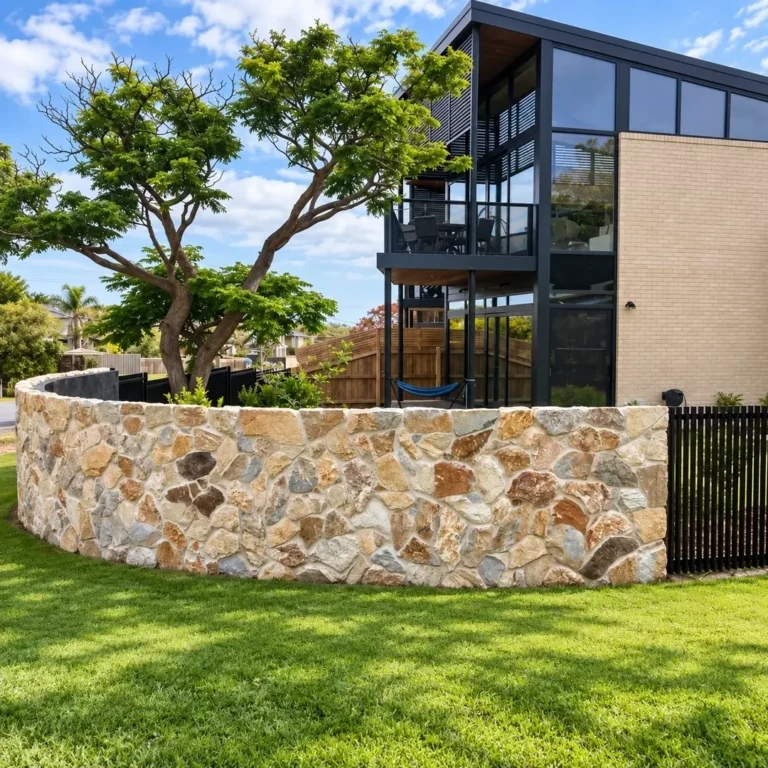
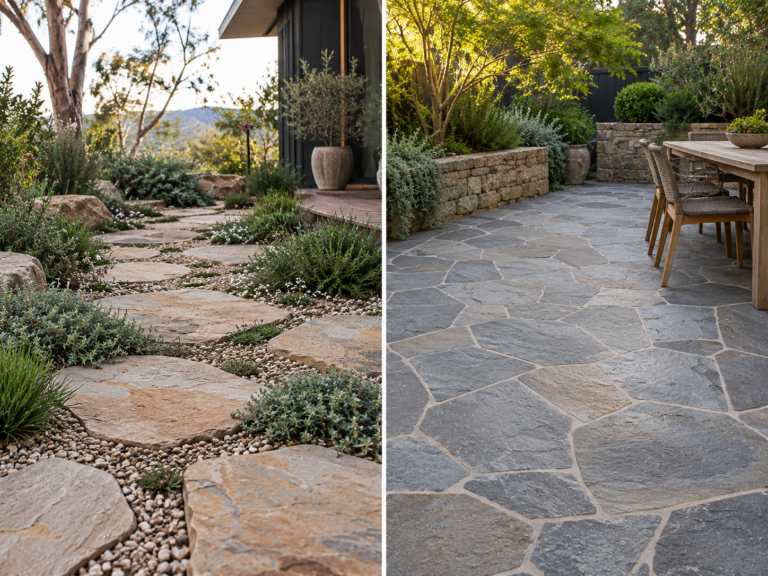
Hotham Granite is a bold natural stone with a dense structure, split-face texture and earthy mix of grey, ochre and golden tones. It suits homeowners who want a stronger architectural finish without losing natural warmth.
Its main appeal is in walling and cladding applications, including feature walls, facades, fireplaces, outdoor walls and selected interior design areas.
This Hotham Granite review covers its colours, best uses, durability, pros, cons, styling options, installation considerations and maintenance needs so you can decide if it suits your project.
What Is Hotham Granite?

Hotham Granite is a dense, coarse-grained natural granite with a split-face finish and a strong earthy colour mix. Its tones move through grey, warm ochre and soft gold, giving it a rugged but refined look.
Unlike smooth surface stones, Hotham Granite is mainly chosen for texture. The split-face finish gives walls more shadow, depth and movement, which makes it a strong option for feature walls, facades, fireplaces, garden walls and outdoor cladding.
Splendour in Stone supplies Hotham Granite as a walling product in random sizes from 150mm to 600mm, with a 25mm to 35mm thickness. Corner units are also available, which helps create a cleaner finish around edges and returns.
In simple terms, Hotham Granite is best suited to projects that need a natural stone walling finish with strength, warmth and visible character. It is not the stone you choose when you want something flat, plain or overly polished.
Hotham Granite Colours and Appearance
Hotham Granite has a grounded colour palette that feels natural rather than polished or showy. Its base is mainly grey, but the surface also carries warm ochre, soft gold and earthy brown movement. That mix gives the stone a strong Australian feel, especially in outdoor and architectural settings.
The grey tones give Hotham Granite structure. They help it sit well beside modern materials such as render, steel, glass and concrete. The warmer ochre and golden shades stop it from looking too cold, which makes it easier to use around gardens, timber features and softer interior palettes.
Its split-face texture is what gives the stone most of its personality. Light catches the raised edges and uneven surface, creating natural shadow across the wall. This makes Hotham Granite useful when a flat wall needs more depth without adding a busy pattern or loud colour.
Hotham Granite pairs well with:
- Warm white or off-white render: Keeps the overall design clean while letting the stone’s natural tones stand out.
- Black or charcoal accents: Works well for modern homes with dark window frames, metal fixtures or contemporary detailing.
- Natural timber: Softens the granite and brings out its warmer ochre and gold tones.
- Cream, beige and greige interiors: Creates a calm palette that feels warm without becoming too rustic.
- Native planting: Helps the stone blend into Australian outdoor spaces with a more natural finish.
The best results come from letting Hotham Granite be the feature. Because it already has colour variation and texture, it usually looks better with simple surrounding finishes rather than too many competing materials.
Best Uses for Hotham Granite Around the Home

Hotham Granite works best where you want texture, weight and natural character on a vertical surface. It is not a quiet background stone. Used well, it can turn a plain wall, entry or outdoor zone into a stronger design feature.
Feature Walls
A Hotham Granite feature wall can add depth to living rooms, hallways, entry areas and outdoor entertaining spaces. The split-face texture gives the wall natural movement, so the space feels more layered without needing bold paint colours or extra decoration.
Inside the home, it works best when the rest of the room is kept simple. Think neutral walls, timber flooring, soft lighting and clean furniture. That allows the stone to stand out without making the room feel crowded.
Facades and Entry Areas
Hotham Granite is a strong choice for facades and front entries because it creates immediate street appeal. Its grey, ochre and golden tones work well beside render, brick, timber, glass and dark metal accents.
For modern homes, it can add warmth to sharp architectural lines. For more natural or rustic homes, it can make the entry feel grounded and substantial. Even a small section around the front door or porch can make a noticeable difference.
Fireplaces
A fireplace clad in stone can become a strong focal point in a living room or outdoor entertaining area, especially when Hotham Granite is used for texture and depth. Granite is known for its strength, and the split-face surface gives the fireplace a more natural, textured look.
The key is to use it as cladding around the fireplace area, with proper installation and heat-safe detailing handled by the right trades. It should complement the fireplace design rather than overwhelm the room.
Outdoor Walls and Garden Features
Hotham Granite also suits outdoor walls, garden features, boundary walls and retaining wall faces. Its earthy tones sit comfortably beside native planting, gravel, lawn and timber elements.
This makes it useful for outdoor spaces that need structure without looking too polished. A garden wall, BBQ backdrop or courtyard feature can feel more finished when Hotham Granite is used with restraint.
Interior Cladding
For open-plan homes, Hotham Granite can help connect indoor and outdoor materials. It may be used on selected interior walls, island backs, dining zone features or transition areas near alfresco spaces.
The best approach is to use it in one clear place, not everywhere. That keeps the stone looking intentional, premium and easy to live with.
Is Hotham Granite Durable?

Hotham Granite is a durable stone, which is one of the main reasons it works well for walling and cladding. Granite is naturally hard and dense, so it can handle long-term use better than many softer feature stones when it is installed properly.
For exterior projects, that strength matters. Facades, garden walls, entry features and outdoor entertaining areas are exposed to sun, rain, wind, dust and temperature changes. Hotham Granite’s dense structure gives it the toughness needed for these conditions, while its split-face texture helps the wall keep a natural, rugged appearance.
Durability still depends on the full system, not the stone alone. The wall structure, fixing method, drainage, adhesive, joints and installer skill all affect how well the finished surface performs. Even strong granite can have issues if it is fixed to the wrong substrate or installed without proper preparation.
Hotham Granite is a strong option because of its:
- Dense composition: Helps it hold up well in long-term walling and cladding applications.
- Weather resistance: Makes it suitable for outdoor feature walls, facades and garden structures when installed correctly.
- Textured surface: Adds depth and hides minor surface marks better than flat, polished finishes.
- Low-maintenance nature: Needs sensible care, but does not usually demand constant attention.
In short, Hotham Granite is durable enough for serious design use. The main thing is to treat it as a premium walling material and make sure the installation matches the weight, location and exposure of the project.
Hotham Granite Pros and Cons
Hotham Granite is a strong choice when the project needs texture, weight and a natural architectural finish. Still, it is not the right stone for every surface or every design style. Its strengths are clear, but so are the things you need to plan around.
| Pros | Cons |
| Strong, dense natural granite | Heavier than some cladding alternatives |
| Earthy grey, ochre and golden tones | Natural variation may not suit people who want a uniform finish |
| Split-face texture adds depth | Textured surfaces can collect dust in exposed areas |
| Suitable for indoor and outdoor walling | Needs proper fixing and professional installation |
| Works well for facades, fireplaces and feature walls | Can feel visually heavy if used across too many surfaces |
| Low-maintenance when cared for properly | Not ideal for every kitchen surface or benchtop application |
| Creates a strong architectural look |
The biggest advantage of Hotham Granite is its presence. It does not look flat or generic, so it can give a wall, fireplace, entry or outdoor area real character.
The main drawback is that it needs restraint. If it is used across too many walls or paired with too many strong materials, the space can start to feel heavy. Hotham Granite works best when it is treated as the feature and supported by simpler finishes around it.
How to Match Hotham Granite with Interiors and Outdoor Spaces
Hotham Granite has enough colour and texture to carry a design on its own, so the safest approach is to keep the surrounding finishes simple. Let the stone do the heavy lifting, then use softer materials around it to balance the look.
Inside the home, Hotham Granite pairs well with warm whites, soft greys, greige, natural timber and matte black details. These finishes help the grey and golden tones feel intentional rather than busy. In living rooms, it works especially well with timber floors, neutral furniture, warm lighting and simple wall colours.
For kitchen areas, Hotham Granite is better treated as a feature cladding material unless a suitable slab or benchtop format is confirmed. It can work well on island backs, dining zone walls, open shelving backdrops or nearby fireplace features. Around cooking zones, always check suitability with the supplier and installer before use.
Outside, Hotham Granite suits homes with rendered walls, black window frames, timber battens, exposed beams and native planting. Its earthy tones also sit well beside gravel, lawn, bluestone, concrete and natural garden edging.
The main rule is restraint. Use Hotham Granite where you want impact, such as an entry wall, fireplace, outdoor feature wall or facade section, then keep the wider natural stone design simple and balanced. Then keep the rest of the palette calm so the stone feels premium, not overpowering.
Hotham Granite Installation Considerations

Hotham Granite should be treated as a proper walling material, not a quick decorative finish. Its weight, texture and natural variation all need to be planned before installation starts.
1. Check the Wall Structure First
The wall must be strong enough to support the stone. This is especially important for exterior walls, fireplaces, retaining wall faces and taller feature areas.
A weak or unsuitable substrate can lead to movement, cracking or poor adhesion over time. Before work begins, confirm that the surface is clean, stable and suitable for natural stone cladding.
2. Use the Right Fixing Method
The fixing method depends on the wall type, stone format, height, exposure and location. Outdoor walls may need different preparation from indoor feature walls because they deal with weather, moisture and temperature changes.
For larger projects, professional installation is the safer option. It helps ensure the correct adhesive, mechanical fixing, jointing and waterproofing details are used where needed.
3. Plan the Layout Before Fixing
Hotham Granite has natural colour and size variation, so the layout should be planned before pieces are fixed into place. Sorting the stone first helps balance grey, ochre and golden tones across the wall.
This step makes a big difference to the final look. Without layout planning, one section may look too dark, too light or too busy compared with the rest of the wall.
4. Pay Attention to Corners and Edges
Corners, returns and exposed edges need careful detailing. Poorly finished corners can make even good stonework look incomplete.
Where corner pieces are available, they can help create a cleaner and more natural wraparound finish. This is especially useful for entry walls, fireplace surrounds, garden walls and facade sections.
5. Manage Moisture and Drainage Outdoors
Outdoor stone walls need proper moisture management. Water sitting behind or around the wall can create staining, movement or long-term installation problems.
Correct preparation, drainage, waterproofing and suitable jointing all matter. Hotham Granite is durable, but the full wall system needs to be built properly for the stone to perform well.
How to Maintain Hotham Granite Surfaces
Hotham Granite is not difficult to maintain, but its split-face texture does need sensible care. Dust, garden debris and moisture can sit in the surface more easily than they would on a smooth stone, especially outdoors.
Regular light cleaning is usually better than waiting until the stone looks heavily marked. A simple routine helps protect the colour, texture and overall finish.
- Dust or sweep textured walls regularly: Use a soft brush or cloth to remove loose dirt from the raised surface.
- Use mild, stone-safe cleaners: Avoid acidic, harsh or abrasive products, as these can affect natural stone and surrounding joints.
- Rinse outdoor areas when needed: A gentle rinse can help remove dust, soil, pollen and garden residue from exterior walls.
- Clean stains early: Oils, soil, organic matter and fireplace residue should be addressed before they settle into the surface.
- Check if sealing is recommended: Sealing needs depend on the location, exposure and installer or supplier advice.
- Avoid aggressive pressure washing: Too much pressure can damage joints, disturb surrounding finishes or force water into areas where it should not sit.
- Keep plants from pressing against the stone: Dense planting can trap moisture and organic debris against outdoor walls.
- Inspect exterior walls after heavy weather: Look for loose pieces, staining, drainage issues or movement around joints.
For fireplaces, use a soft brush or dry cloth to remove dust from the textured face. If there is soot or heavier build-up, use a cleaner suited to natural stone and the fireplace setting.
Hotham Granite performs best when it is cared for consistently rather than heavily cleaned after long neglect. Keep the surface clear, use gentle products and deal with marks early. That is usually enough to preserve its natural colour, texture and rugged finish over time.
Is Hotham Granite Worth Choosing?
Hotham Granite is worth choosing if you want a natural stone that feels strong, textured and full of character. Its grey, ochre and golden tones make it especially useful for feature walls, facades, fireplaces, garden walls and selected interior cladding.
It is not the best choice if you want a flat, smooth or highly uniform finish. It also needs proper installation because of its weight and split-face profile.
For the right project, Hotham Granite offers a durable, earthy and architectural finish that can make a wall or outdoor feature feel far more complete.
FAQs About Hotham Granite
1. What colour is Hotham Granite?
Hotham Granite has a natural mix of grey, warm ochre and golden tones. The grey gives it a strong base, while the warmer shades add depth and softness. Because it is a natural stone, each piece can vary slightly in colour, texture and surface movement.
2. Is Hotham Granite good for feature walls?
Yes, Hotham Granite is well suited to feature walls. Its split-face texture creates shadow and depth, which helps plain walls feel more architectural. It works well for entry walls, fireplaces, living room features, facades, garden walls and outdoor entertaining areas.
3. Can Hotham Granite be used outdoors?
Yes, Hotham Granite can be used outdoors in suitable walling and cladding projects. It works well for facades, garden walls, boundary features, BBQ backdrops and courtyard walls. The main requirement is proper installation, including the right substrate, fixing method, drainage and moisture control.
4. Is Hotham Granite suitable for kitchens?
Hotham Granite can suit kitchens as a feature material, especially on island backs, dining zone walls, open-plan cladding or nearby fireplace features. It should not be assumed suitable for benchtops unless the correct slab or surface format is confirmed with the supplier.
5. Is Hotham Granite hard to maintain?
No, Hotham Granite is generally easy to maintain, but its textured surface needs regular light cleaning. Dust, soil and garden debris can sit in the split-face finish, especially outdoors. Gentle brushing, mild stone-safe cleaners and early stain removal are usually enough for routine care.
6. What home styles does Hotham Granite suit?
Hotham Granite suits modern, rustic, architectural and earthy Australian home designs. It pairs well with warm render, timber, black accents, native planting, neutral interiors and natural landscaping. It is best used where the design needs texture, warmth and a stronger stone feature.
7. What are the main drawbacks of Hotham Granite?
The main drawbacks are weight, natural variation and installation requirements. It can also feel visually heavy if used across too many surfaces. Hotham Granite works best as a feature stone, not as a material repeated everywhere throughout the home.