
Outdoor Kitchen Ideas: 10 Natural Stone Designs That Last

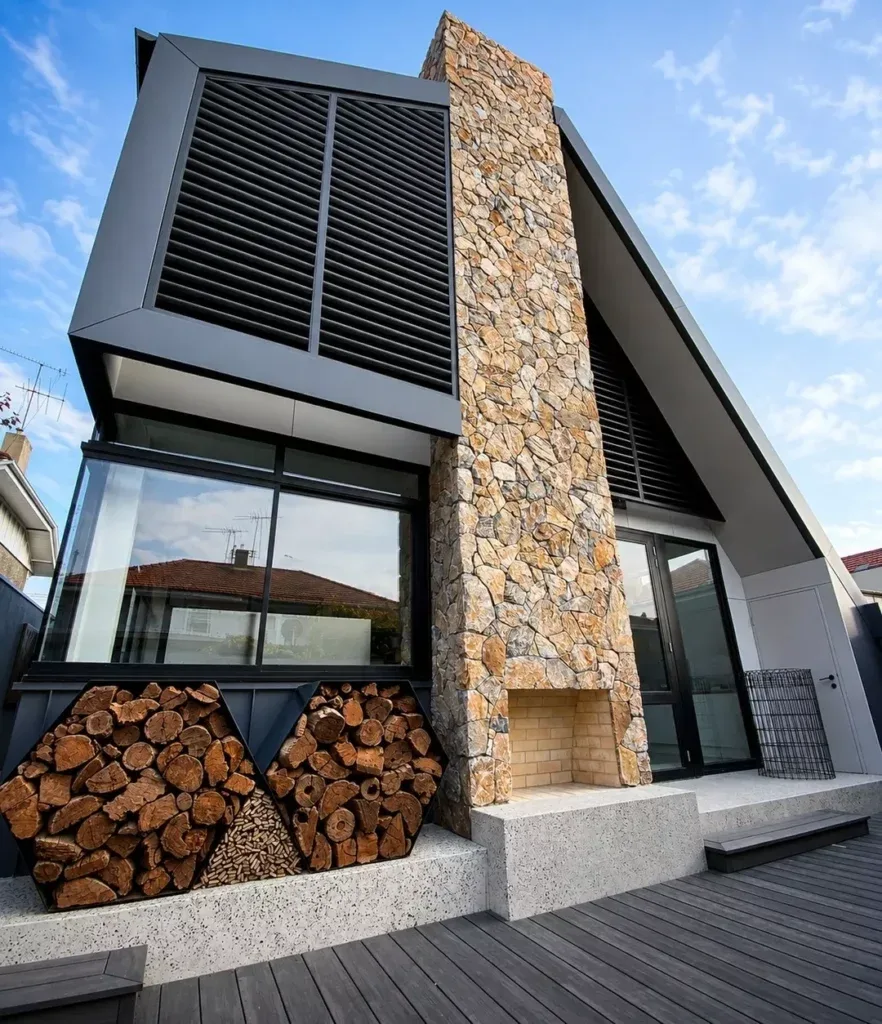
An outdoor kitchen changes how a backyard gets used. Instead of carrying plates back and forth from the house, the cooking, the conversation and the table all happen in one place, and the cook stops missing out on the evening. The outdoor kitchen ideas that age best share a few things: a layout that suits how you cook, materials that cope with sun and rain, and a structure solid enough to carry a barbecue, a sink and a benchtop for years.
The short answer: plan the layout around how you cook, build the benches on a solid masonry or steel frame, clad them in natural stone rated for outdoor use, pave underfoot with a dense, sealed stone, and have licensed trades connect the gas, power and water. Below are the layouts that work, 10 natural stone designs, the right stone for each surface, and what needs a licensed trade in Victoria.
In this guide
How Should You Lay Out an Outdoor Kitchen?
The best outdoor kitchen layout gives you a clear run of bench on at least one side of the barbecue, with the sink, fridge and bin a step or two away. Cooks need somewhere to put down a tray of raw food on the way in and a plate of cooked food on the way out.
Four layouts cover most Australian backyards:
- Straight run: one bench against a wall or fence. It’s the simplest and most affordable to build, and it suits narrow side yards and courtyards.
- L-shape: a bench that turns a corner, giving more prep space and a natural spot for a sink or bar fridge on the return.
- Galley: two parallel benches with a walkway between them. It’s efficient for keen cooks, but it needs more floor space.
- Island: a freestanding bench that faces the dining or lounge area, so whoever’s cooking can talk to guests rather than face a wall.
Whatever the shape, think about shelter, smoke and services early. A roof or pergola extends the cooking season but changes which appliances you can use under it. The position of the barbecue should keep smoke away from the table, and running gas, power and water to the bench is far easier to plan before the paving goes down.
10 Outdoor Kitchen Ideas with Natural Stone
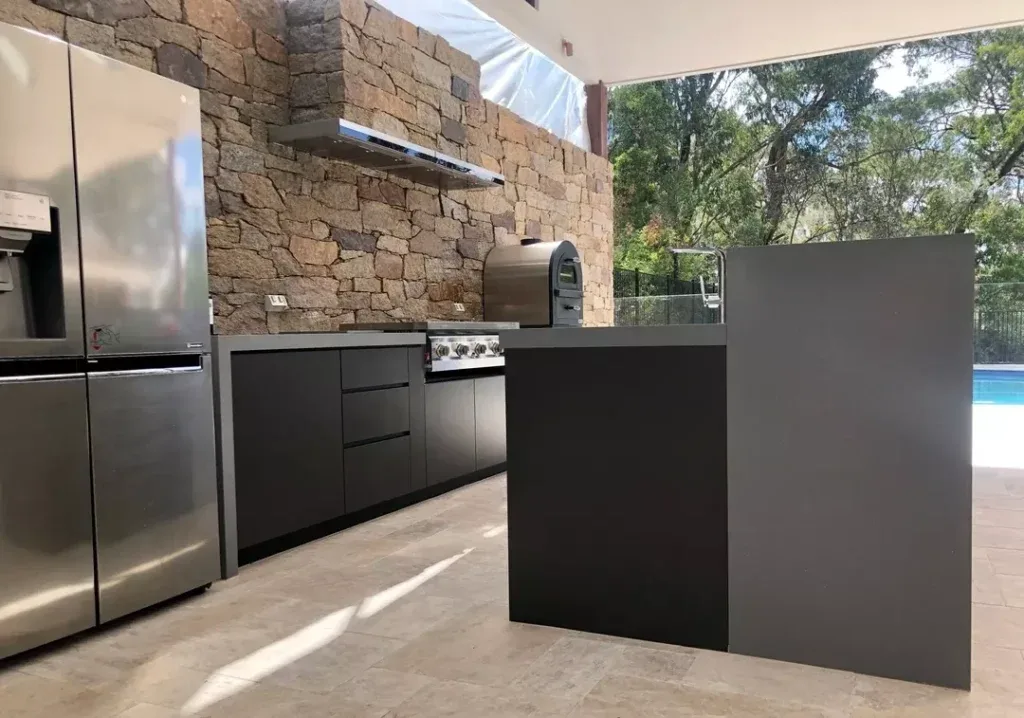
These ideas range from a compact barbecue bench to a full outdoor kitchen room. Several come straight from Splendour In Stone projects in Victoria.
1. A Stone-Clad Barbecue Bench
Cladding a built-in barbecue bench in natural stone turns a standard appliance into a permanent feature of the garden. The stone hides the frame, matches the house and stands up to weather far better than painted sheeting.
At Beloka by the Bay, Beloka limestone clads a built-in barbecue and bar fridge bench beside a tall outdoor wood-fire chimney. Beloka’s charcoal base with bronze and gold highlights reads as rugged and warm at the same time, which suits an outdoor setting.
2. An Outdoor Kitchen Room with a Wood-Fired Oven
Walling the kitchen on two or three sides creates a sheltered outdoor room that feels like part of the house. It also gives you somewhere to build in a wood-fired oven, shelves and storage.
The Bells Beach Villa project uses Jamieson limestone for an outdoor kitchen room with a wood-fired oven, with a doorway in the stone wall opening onto a sunny courtyard. Jamieson’s terracotta, tan and clay tones give the space a relaxed, Mediterranean warmth.
3. An Alfresco Chimney with a Built-In Grill
A stone chimney with a built-in wood-fired grill gives the outdoor kitchen a dramatic centrepiece and keeps smoke rising away from the table. It’s a good option for households who cook over wood more often than gas.
The Batesford Colonnade project pairs an alfresco chimney and built-in grill with entry columns and terrace piers, all clad in coarse-grained Buffalo granite. Its golden browns, ochres and muted greys tie the cooking area back to the front of the house.
4. A Galley Kitchen Against a Stone Feature Wall
A single stone feature wall behind a straight or galley kitchen gives the space a backdrop and makes even a modest barbecue look considered. It’s a smart move where the bench runs along a boundary wall or the side of the house.
Split-face stacked stone suits this well, because the texture hides splashes and the joints throw shadows under evening lighting. Grey-toned stones such as Blue Ridge quartz suit contemporary homes, while warmer limestones sit better with timber and greenery.
5. An Island That Faces Your Guests
A stone-clad island with an overhanging benchtop lets the cook face the dining area and gives guests somewhere to sit with a drink. Allow knee space under the overhang if you plan to add stools.
Islands work best in larger yards where there’s room to walk all the way around. Clad all four faces in the same stone so the island looks solid from every angle, and use matching corner pieces so the edges don’t show cut ends.
6. Reclaimed Brick Walls for a Warmer, Industrial Look
Reclaimed brick cladding gives an outdoor kitchen a lived-in, industrial character that pairs well with steel, timber and concrete. It’s used here on the walls and bench faces, not underfoot.
Midnight Ash Brick, from the reclaimed bricks range, is listed for outdoor kitchens and patio walls as well as exterior cladding and fireplace surrounds. Its darker tones work well behind a stainless steel barbecue.
7. Lighting That Grazes the Stone
Strip lighting set under the benchtop or uplights at the base of a stone wall bring out the texture of split-face cladding after dark. Low, grazing light makes every piece throw a small shadow, which is where natural stone really shows its depth.
Splendour In Stone’s Gemma Italiano project uses exactly this idea indoors, with LED lighting under the benchtop of a Beloka limestone bar. The same approach works outside with fittings rated for outdoor use, installed by a licensed electrician.
8. Dark Granite Paving Underfoot
The floor of an outdoor kitchen takes oil splatter, dropped food and constant foot traffic, so it needs a dense stone that’s easy to clean. Dark granite hides marks well and gives the space a sharp, contemporary base.
Granite pavers such as Charcoal and Grey are a strong fit, because granite is one of the least porous natural stones. SIS still recommends a quality penetrating sealer for outdoor granite, which helps prevent staining from food, drinks and oil.
9. One Stone from the Indoor Kitchen to the Alfresco
Carrying the same paving from the indoor living area out to the outdoor kitchen makes the two spaces read as one. It’s especially effective with stacker doors that open fully.
This approach is one of the most effective alfresco paving ideas for smaller homes, because it makes both spaces feel larger. Choose a stone that suits both indoor and outdoor use, and check that the outdoor finish has enough grip for wet days.
10. A Compact Barbecue Nook for Small Yards
If space is tight, a barbecue set into a short stone-clad bench with a single shelf or drawer gives you most of the benefits in a fraction of the footprint. Put it against a wall to save floor space and keep the work zone tidy.
Small yards can still borrow ideas from larger builds, such as a built-in BBQ with stone casing, a stone wall with a niche for the barbecue, or a separate grill zone. Several of these appear in our stone BBQ ideas, and most scale down well.
Which Stone Should You Use in an Outdoor Kitchen?
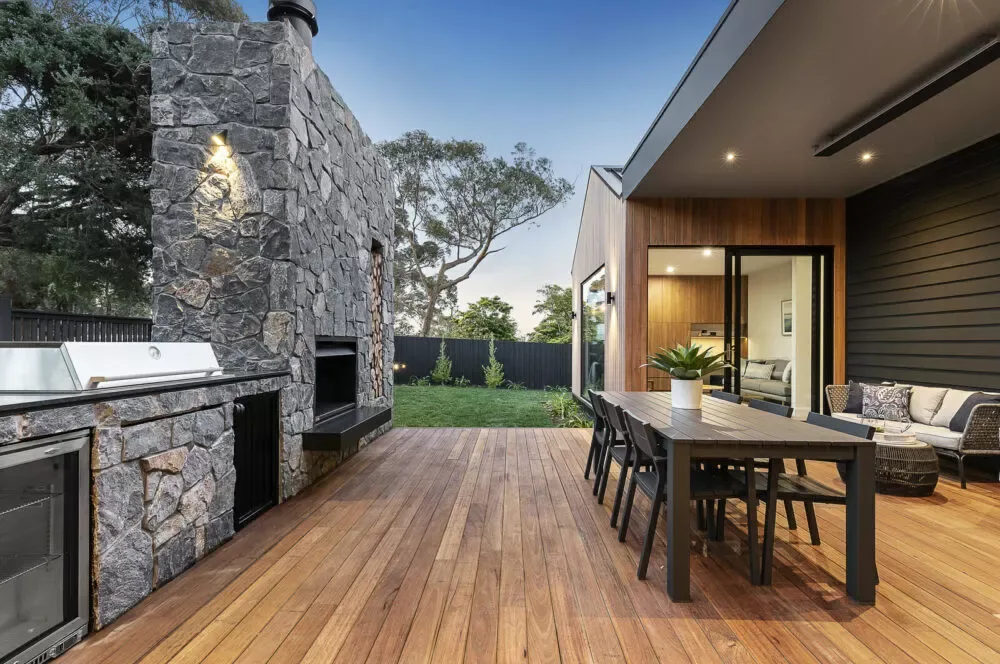
Use split-face natural stone cladding on the benches and walls, a dense sealed paver underfoot, and a low-porosity benchtop confirmed for outdoor use. Each surface does a different job, so it’s worth choosing them separately.
| Surface | What it needs | Natural stone options |
|---|---|---|
| Bench faces and walls | Rated for outdoor walls, weathers well, texture that hides splashes | Split-face cladding such as Beloka or Jamieson limestone, Buffalo or Hotham granite, Charlotte sandstone, Blue Ridge quartz |
| Floor | Resists oil and food stains, grip when wet, easy to clean | Granite pavers, Flamed or Sawn bluestone, sealed limestone |
| Benchtop | Low porosity, copes with heat and spills | A dense stone your fabricator confirms for outdoor use. Granite is denser and less porous than limestone, travertine or marble |
For the walls and bench faces, most of the SIS natural stone walling range is listed for facades and outdoor walls, and SIS recommends sealing stone in exposed or high-use areas. For the floor, avoid very smooth finishes near the barbecue, where grease and water can make the surface slick.
Marble is beautiful but heat-sensitive, so it’s better kept away from the cooking zone, or protected with trivets for anything hot. If you want more detail on materials, these tips on choosing natural stone for an outdoor BBQ cover heat, stains and finishes.
Gas, Power and Water: What Needs a Licensed Trade
In Victoria, gas appliances such as a built-in barbecue or gas cooktop must be connected by a licensed gasfitter, and power points and lighting must be installed by a licensed electrician. Plan these trades in at the design stage, because gas lines, cabling and drainage usually run under the paving or inside the bench frame.
Energy Safe Victoria says homeowners must always use a licensed or registered gasfitter for gas work. It also warns that outdoor gas appliances, including barbecues and patio heaters, can cause carbon monoxide poisoning in areas without enough ventilation, and should never be used inside. That matters for outdoor kitchens with a solid roof and several walls, because the gas installation standard (AS/NZS 5601.1) has its own definition of what counts as an outdoor area. Ask your gasfitter to check the layout before the walls and roof are locked in.
Electrical work is not a DIY job in Victoria, even for something as small as a power point, and doing it unlicensed is illegal. A licensed electrician will issue a Certificate of Electrical Safety for the work, and can advise on weatherproof outlets and outdoor-rated lighting. If the kitchen includes a sink, a plumber should connect it to the water supply and drainage.
Keeping Outdoor Kitchen Stone Clean
Wipe up grease and food spills promptly, clean the stone with warm water and a pH-neutral stone cleaner, and reseal on a regular cycle. Fresh spills lift easily from sealed stone, while ones left to bake in the sun are much harder to shift.
SIS recommends resealing outdoor paving every two to three years, with high-use areas such as dining zones and BBQ areas at the shorter end of that range. Avoid acid-based cleaners, bleach and abrasive pads, which can etch softer stones and strip the sealer.
Splendour In Stone supplies natural stone for walls, paving and fireplaces from its Mitcham showroom, and its supply and installation service covers feature walls, piers, fireplaces and outdoor kitchens across Melbourne and regional Victoria. Melbourne clients get a free, no-obligation on-site measure, and samples of up to four stones are posted free Australia-wide.
Frequently Asked Questions About Outdoor Kitchens
What is the best layout for an outdoor kitchen?
The best layout gives you clear bench space beside the barbecue, with the sink, fridge and bin close by. A straight run suits small spaces, an L-shape adds prep room, and an island lets the cook face guests.
What is the most affordable way to build an outdoor kitchen?
A straight bench against an existing wall, with a built-in barbecue and simple storage, is usually the most affordable layout. It uses one wall for support and keeps the services run short. You can add a stone feature wall or matching paving later.
What is the best stone for an outdoor kitchen?
Split-face natural stone cladding works well for bench faces and walls, and dense, sealed paving such as granite or bluestone suits the floor. For the benchtop, choose a low-porosity stone your fabricator confirms is suitable outdoors.
Does an outdoor kitchen need a roof?
No, but some shelter makes it far more usable year-round. Keep in mind that a roof and walls can change whether the space still counts as outdoors under the gas installation standard, so have your gasfitter check the design before it’s built.
Which trades do you need for an outdoor kitchen?
You need a licensed gasfitter for any gas appliance and a licensed electrician for power points and lighting. A plumber connects any sink, and a stonemason or builder handles the frame and stonework. If you’re adding a roof or pergola, ask your council or a building surveyor whether it needs a building permit.
How do you clean stone around a barbecue?
Wipe spills quickly, then wash with warm water and a pH-neutral stone cleaner using a soft brush. Avoid acidic or bleach-based products, and reseal high-use stone at the shorter end of the usual two to three-year cycle.