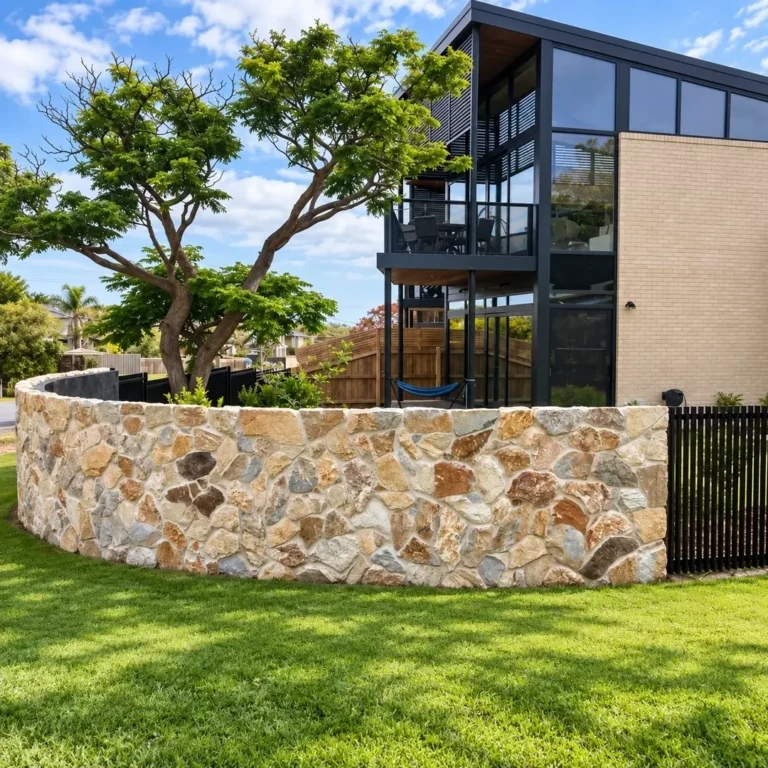
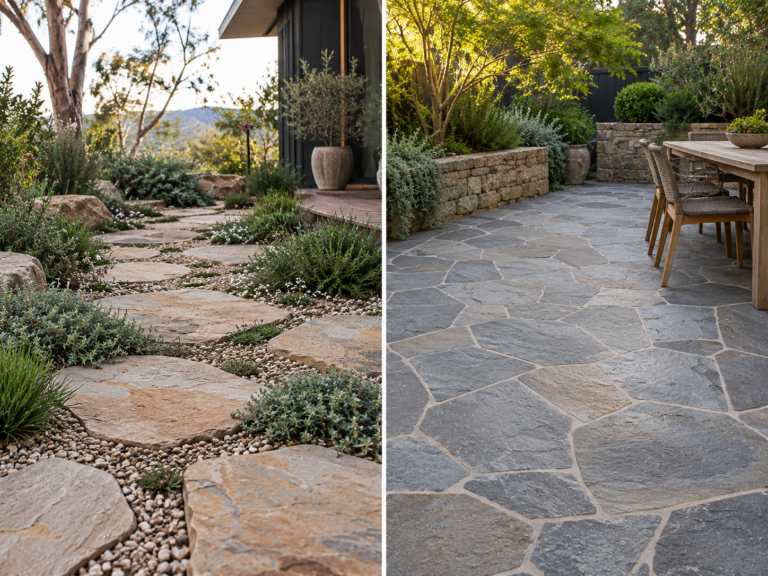
Stone cladding has become one of Melbourne’s most trusted building finishes, valued for combining natural beauty with lasting performance. From contemporary homes in Brighton to heritage façades in Carlton, it transforms surfaces with texture, depth, and durability.
Melbourne’s mix of architectural styles and unpredictable climate makes choosing the right material, finish, and supplier a decision worth getting right.
This guide covers popular stone types, finishes, installation methods, costs, and exterior applications suited to local conditions, helping homeowners, architects, and builders specify stone cladding with confidence.
What Is Stone Cladding?
Stone cladding is a decorative and protective layer of real or engineered stone fixed to interior or exterior walls. You get the look of solid stone without the weight, cost, or structural headaches of traditional masonry. Across Melbourne, it’s a go-to choice for home façades, commercial buildings, feature walls, fireplaces, and garden features.
What sets it apart from tiles or render is the authentic grain, colour, and texture of real rock. Every piece is unique, which is why no two installations ever look quite the same.
For anyone planning a project, this complete stone cladding guide walks through the finer details worth knowing before you start. Common picks include granite, limestone, sandstone, bluestone, quartz, quartzite, and travertine.
Why Melbourne properties choose stone cladding:

- Climate resilience: Natural stone handles Melbourne’s hot summers, cold winters, and heavy rainfall without warping, fading, or deteriorating.
- Design flexibility: Works across modern, coastal, heritage, and industrial styles.
- Low maintenance: Requires minimal upkeep compared to painted, timber, or rendered surfaces.
- Property value: Adds visible quality that appeals to buyers in Melbourne’s competitive market.
- Longevity: A well-installed stone cladding wall can last decades with only occasional cleaning and sealing.
Stone cladding suits both new builds and renovations, and is equally at home on a contemporary townhouse in Richmond or a period-style home in Hawthorn.
Stone Cladding vs. Stone Walling: Clearing Up the Terms
The terms stone cladding and stone walling are often used interchangeably, but they describe slightly different parts of the same process. Knowing the difference helps when specifying materials or briefing a supplier.
Stone cladding refers to the method of applying a decorative layer of stone to an existing wall or substrate. It is a finishing technique focused on appearance and protection, rather than structural support. It’s also worth understanding how stone cladding vs full-bed stone compares, since the two approaches suit very different project types and budgets.
Stone walling refers to the actual stone pieces used to create that finish. These are the cut, shaped, or natural pieces of rock that are installed to achieve the cladded look.
In practice, both terms describe the same outcome: a wall surface finished in natural stone. At Splendour in Stone, walling products are supplied as loose, individual pieces rather than rigid panels, giving installers the flexibility to create either a tightly stacked modern look or a more organic, hand-laid finish.
This distinction matters for two reasons:
- When sourcing materials, you’re buying stone walling (the product).
- When briefing a builder or designer, you’re specifying stone cladding (the application).
Understanding both terms ensures clearer communication between homeowners, architects, builders, and suppliers, and helps avoid confusion during quoting and installation.
Types of Stone Cladding Materials in Melbourne

Melbourne suppliers offer a wide range of natural stone cladding materials, each with its own character, strengths, and design uses. Choosing the right one comes down to style, budget, and exposure to the elements.
If you’re planning an outdoor project, it’s worth reviewing the best stones for exterior wall cladding before locking in your selection, since durability and weather resistance vary quite a bit between stone types.
Granite Cladding
Granite is one of the most durable cladding stones available, valued for its density, scratch resistance, and weathering performance. It suits sleek modern façades and robust heritage builds alike.
Popular options include Buffalo Granite, with golden-grey tones and irregular shapes, and Hotham Granite, which features a tightly stacked pattern ideal for contemporary builds. Granite performs exceptionally well on exterior façades, boundary walls, and commercial entryways.
Limestone Cladding
Limestone offers a softer look with warm, neutral tones that suit both classic and modern architecture. Its natural texture adds depth without overpowering surrounding materials.
Well-regarded varieties include Jamieson Limestone, Beloka Limestone, and Marrakesh Limestone, ranging from pale cream to deeper greys with golden highlights. It pairs beautifully with timber, brick, and sandstone.
Sandstone Cladding
Sandstone brings warm, earthy tones to façades, garden walls, and courtyards. Its natural golden and beige hues create a relaxed, organic feel suited to coastal homes and rustic builds.
Options such as Charlotte Sandstone, Roman Sandstone, and Stirling Sandstone cover the full tonal range. Because sandstone is porous, sealing is recommended in Melbourne’s variable climate.
Bluestone Cladding
Bluestone is a Melbourne classic, used across heritage buildings, laneways, and modern architecture. Its cool grey tones and dense composition deliver a refined finish that ages gracefully.
Available in Sawn, Honed, and Flamed finishes, bluestone performs particularly well on pool surrounds, retaining walls, and landscaped façades.
Quartz and Quartzite Cladding
Quartz and quartzite stand out for their striking patterns and excellent durability. Quartzite combines the look of marble with the resilience of granite, making it ideal for feature walls and exposed façades.
Varieties such as Blue Ridge Quartz, Como Quartz, Shoreham Quartz, and Wyndham Quartz offer cool greys, tans, and layered textures. Their non-porous nature handles Melbourne’s weather with minimal maintenance.
Travertine Cladding
Travertine brings a Mediterranean feel with its pitted surface and warm, neutral palette. It is a favourite for courtyards, indoor accent walls, and entertaining areas.
Popular options include Sorrento Travertine, Classic Travertine, and Silver Travertine, ranging from creamy beige to cooler silver tones.
Stacked Stone and Veneer Options
Stacked stone uses thin-layered pieces to create a textured, three-dimensional finish, ideal for feature walls and fireplaces. From rustic country homes to sleek modern interiors, stacked stone applications work well across a surprisingly wide range of styles.
Stone veneer, a lightweight alternative, mimics natural stone at lower cost and is often used in commercial fit-outs or renovations where weight or budget is a concern.
Stone Cladding Materials at a Glance
| Material | Best For | Durability | Maintenance | Style |
| Granite | Façades, commercial, boundary walls | Very High | Low | Modern, rustic |
| Limestone | Feature walls, entryways, heritage | High | Low to Moderate | Classic, contemporary |
| Sandstone | Gardens, façades, coastal homes | Moderate to High | Moderate (sealing needed) | Rustic, natural |
| Bluestone | Pools, façades, landscaping | Very High | Low | Contemporary, heritage |
| Quartz/Quartzite | Feature walls, façades | Very High | Low | Modern, statement |
| Travertine | Courtyards, interiors, entertaining | High | Moderate (sealing needed) | Mediterranean, elegant |
| Stacked Stone | Feature walls, fireplaces | High | Low | Textured, organic |
| Stone Veneer | Commercial, renovations, budget builds | Moderate | Low | Versatile |
Stone Cladding Finishes Explained

The finish applied to a stone cladding surface shapes how it reflects light, feels to the touch, and sits against surrounding materials. Even the same stone can look and perform very differently depending on its finish. Getting across the main types of natural stone finishes early on makes it much easier to match the right surface to your project’s style and setting.
Polished Finish
A polished finish is smooth and glossy, reflecting light and highlighting the stone’s natural colour and pattern. It delivers a sleek, refined look, best suited to modern interiors and statement walls. Polished surfaces are generally used indoors, as outdoor exposure can dull them over time.
Honed Finish
A honed finish is smooth but matte, offering a softer appearance without glare. It emphasises the natural tones and veining of the stone and works well on interior feature walls, fireplaces, and low-traffic exterior applications.
Split-Face Finish
A split-face finish has a rough, textured surface created by breaking the stone along its natural fault lines. Strong shadow lines and depth make it a popular choice for exterior façades, boundary walls, and landscape features, particularly on stacked stone and granite.
Flamed Finish
A flamed finish is heat-treated to create a rough, slip-resistant texture. It is commonly used on bluestone and granite for pool surrounds, pathways, and commercial entries where safety and weather performance matter.
Brushed Finish
A brushed finish gently wears down the surface for a soft, aged look. It suits heritage properties, rustic designs, and interior walls where warmth and texture are the focus.
Matching Finishes to Melbourne Applications
| Finish | Feel | Best Use | Indoor or Outdoor |
| Polished | Smooth, glossy | Statement walls, modern interiors | Indoor |
| Honed | Smooth, matte | Feature walls, fireplaces, entries | Both |
| Split-Face | Rough, textured | Façades, boundary walls, landscapes | Outdoor |
| Flamed | Rough, slip-resistant | Pools, pathways, commercial entries | Outdoor |
| Brushed | Softly worn | Heritage, rustic, interior walls | Both |
Tones and Colour Choices

Stone cladding is available across a wide tonal range, and the right colour depends on the surrounding architecture.
- Light tones (cream, beige, pale grey) create a bright, open feel and pair well with timber and coastal-style homes.
- Dark tones (charcoal, deep grey, black) add contrast and formality, popular in urban and contemporary builds.
- Neutral shades (mid-grey, soft brown, stone) offer flexibility across both modern and traditional designs.
Coordinating the finish and tone with nearby materials such as timber, steel, brick, or render helps achieve a cohesive look across the build.
Benefits of Stone Cladding for Melbourne Properties

- Performs reliably in Melbourne’s climate: Melbourne’s weather can shift quickly between heat, cold, wind, and rain. Natural stone cladding handles these changes well, resisting warping, fading, and cracking better than many painted, rendered, or timber-clad surfaces. When installed properly, it can remain structurally sound and visually appealing for decades.
- Improves thermal efficiency: Stone has natural thermal mass, which helps slow heat transfer through external walls. This can keep interiors cooler in summer and warmer in winter, reducing pressure on heating and cooling systems and supporting better year-round comfort.
- Reduces outside noise: In addition to thermal benefits, stone cladding can help dampen sound. This makes it a practical option for Melbourne homes near busy roads, tram lines, commercial areas, or denser suburban settings where noise reduction matters.
- Adds fire resistance: Natural stone is non-combustible, making it a safer exterior material than timber or synthetic cladding options. For homes on Melbourne’s outskirts or in bushfire-prone areas, this can offer both passive fire protection and compliance advantages.
- Requires little ongoing maintenance: Stone cladding does not need repainting, frequent touch-ups, or protection against rot and termite damage. In most cases, occasional cleaning and, depending on the stone type, periodic sealing are enough to maintain its appearance.
- Lifts property value and kerb appeal: A stone façade or feature wall adds visible quality, strengthens perceived build value, and can support better resale outcomes in Melbourne’s competitive property market.
- Works across many design styles: Stone cladding suits modern homes, coastal builds, heritage restorations, commercial façades, and landscape features. With different stone types, finishes, and installation methods available, it can be adapted to almost any architectural brief.
- Supports sustainability and timeless design: Natural stone requires less processing than many synthetic materials, has a long service life, and can often be sourced from responsibly managed quarries. It also ages gracefully, developing subtle tonal variation and character rather than looking dated over time.
Questions to Ask Your Stone Cladding Supplier
Asking the right questions upfront reveals whether a supplier can genuinely deliver quality, service, and support, or whether you’re likely to run into issues later. The following questions help separate experienced, dependable Melbourne suppliers from those who fall short on follow-through. Sourcing outside the city? The same questions apply to the best stone suppliers in Bendigo.
1. What stone varieties and finishes do you stock?
This question quickly shows the depth of a supplier’s range. A well-stocked supplier should offer multiple options across granite, limestone, sandstone, bluestone, quartz, quartzite, and travertine, along with a variety of finishes such as honed, split-face, flamed, and brushed. Broader range means better chances of finding a stone that suits both the design intent and the budget.
2. Is your stone suitable for Melbourne’s climate and building requirements?
Not every stone performs the same way outdoors. A good supplier should be able to explain how each material handles temperature swings, rainfall, and UV exposure, and whether it complies with relevant Australian standards. Suppliers familiar with Melbourne conditions will also flag which stones need extra sealing or which finishes are best for exterior use.
3. Can I request samples before placing an order?
Always ask for physical samples before committing, especially for feature walls and façades. Samples let you assess colour, texture, and scale in natural light and against nearby materials. Any reputable supplier should be happy to provide them, either through a showroom visit or by arranging delivery.
4. What are your current lead times and stock levels?
Lead times directly affect project timelines. Ask about stock availability for the specific stones you’re considering, and how long delivery typically takes once an order is confirmed. Local Melbourne suppliers usually have shorter turnaround than interstate or imported-only providers.
5. Do you offer installation guidance or recommend trusted installers?
Stone is only as good as its installation. Ask whether the supplier provides installation guidance, technical documentation, or recommendations for experienced stonemasons and installers they’ve worked with before. Suppliers with strong trade networks can save significant time when sourcing skilled labour.
6. What does the full quote include?
Always confirm what is and isn’t covered in a quote. A clear quote should include supply, delivery, any associated sealing or finishing products, and notes on substrate or fixing requirements. Avoid quotes that bundle everything into a single line item without a breakdown.
7. Do you offer after-sales support?
Good suppliers remain available after the stone has been delivered. Ask how they handle questions during installation, what happens if extra stone is needed mid-project, and whether they can assist with maintenance advice down the track.
Asking these questions early builds a clearer picture of who you’re working with and helps set the tone for a smooth project. Suppliers who answer openly, provide samples, and take the time to explain their product are usually the ones who deliver reliably on the day.
Stone Cladding Installation Process (Step-by-Step)

A quality stone cladding finish depends on careful installation. While most Melbourne projects are handled by experienced tradespeople, understanding the process helps clients follow progress and spot issues early.
Step 1: Surface Preparation
The wall is cleaned, levelled, and primed to create a strong base. Any old render, dust, or loose material is removed, and uneven sections are corrected to ensure the stone adheres properly.
Step 2: Choosing the Right Adhesive or Fixing
Heavier natural stone typically requires strong mortar or mechanical fixings, while stone veneer can be fitted with lighter adhesives. The right adhesive choice depends on the stone’s weight, the substrate, and whether the installation is interior or exterior.
Step 3: Dry-Fitting the Stones
Before applying any adhesive, the stones are laid out on the ground or against the wall to plan the pattern. This step helps balance colour variation, avoid awkward joins, and refine the layout before committing to fixings.
Step 4: Applying the Stone
The adhesive is spread in small sections using a notched trowel, and each piece is pressed firmly into place. A rubber mallet is used to ensure a secure bond. Corner pieces and edges are cut cleanly with a wet saw for a precise finish.
Step 5: Grouting or Dry-Stacking
Depending on the design, joints are either filled with grout or left dry-stacked for a more natural look. Excess grout is wiped away promptly to avoid staining the stone surface.
Step 6: Sealing and Curing
Once the adhesive and grout are fully set, a suitable stone sealer is applied to protect the surface from moisture, staining, and UV exposure. The installation is then left to cure for 24 to 48 hours before heavy contact or cleaning.
Why Professional Installation Matters
Stone cladding is unforgiving of shortcuts. Poor substrate prep, incorrect adhesives, or rushed sealing can lead to loose pieces, water penetration, or uneven finishes. Weighing up DIY vs professional stone cladding early on helps you gauge what’s realistic for your skill level and the scope of the job.
For exterior walls and larger projects, engaging experienced installers is the single best way to protect the investment and ensure the finish lasts.
Maintaining Stone Cladding in Melbourne’s Climate
Stone cladding is low-maintenance by nature, but a simple care routine keeps it looking sharp and extends its lifespan. Melbourne’s shifting weather, from dry summers to damp winters, makes regular attention worthwhile, especially on outdoor walls. A few straightforward habits around stone maintenance and care go a long way in preventing staining, moisture issues, and premature wear.
- Clean regularly. Use a soft brush and mild detergent to remove dust, dirt, and grime. Avoid acidic or abrasive cleaners, which can damage the stone’s natural surface.
- Seal when needed. Porous stones such as sandstone, limestone, and travertine benefit from periodic sealing to prevent moisture absorption and staining. Granite and bluestone generally require less frequent sealing.
- Manage moss and algae. Shaded or damp exterior walls can develop moss or algae over time. A gentle anti-fungal wash clears it without harming the stone.
- Watch for efflorescence. White salt deposits occasionally appear on new installations. Wipe them away with a damp cloth as they surface.
- Inspect periodically. Check for loose pieces, hairline cracks, or grout gaps, particularly after storms or seasonal temperature swings. Early repairs prevent bigger issues later.
- Pressure wash with care. A low-pressure setting is safe for most exterior stone. Avoid high pressure, which can dislodge grout or damage softer stones.
- Keep drainage clear. Ensure gutters, downpipes, and the surrounding ground drain properly. Pooled water behind or beneath cladding is one of the most common causes of long-term damage.
With minimal effort, stone cladding will retain its colour, texture, and structural integrity for decades, far longer than painted or rendered finishes.
Trends in Stone Cladding Design
Stone cladding continues to evolve as Melbourne designers blend traditional materials with contemporary approaches. Keeping an eye on the latest natural stone design trends helps architects, builders, and homeowners make choices that feel fresh today and still hold up in a few years’ time. These are the key trends shaping residential and commercial projects this year.
Sustainable and ethically sourced stone. Clients are increasingly asking where their stone comes from and how it’s quarried. Locally and responsibly sourced materials are now a key part of specifying, not an afterthought.
Earthy, natural colour palettes. Soft greys, warm beiges, and muted browns are replacing stark whites and cool tones. These natural shades create calm, grounded interiors and façades that sit comfortably within Melbourne’s landscape.
Mixed textures within one project. Pairing smooth honed panels with rough split-face or stacked stone adds depth and character. This layered approach is especially popular on feature walls and entryways.
Stone combined with timber and metal. Warm timber softens stone’s ruggedness, while brushed brass, matte black, or blackened steel accents bring a contemporary edge. These pairings are shaping both interior feature walls and outdoor entertaining areas.
Statement geometric walls. Bold linear patterns, stacked formats, and sculpted surfaces are being used as single-wall statements rather than covering entire façades. The effect is architectural without feeling overdone.
Larger-format stone pieces. Bigger stones with fewer visible joins are gaining popularity, particularly on modern façades where clean lines and minimal grout lines are the goal.
Across all of these trends, the common thread is authenticity. Melbourne designers are leaning into what stone does best: texture, permanence, and natural variation that synthetic materials simply can’t replicate.
Why Choose Splendour in Stone
Splendour in Stone has built a strong reputation across Melbourne as a trusted supplier of natural stone cladding and walling products. For homeowners, builders, and architects looking for quality materials backed by genuine expertise, the following sets Splendour in Stone apart.
- 100% natural stone range: Every product is genuine natural stone, sourced for consistent quality, durability, and visual appeal. No composites, no synthetic alternatives.
- Wide selection of materials: The range spans granite, limestone, sandstone, bluestone, quartz, quartzite, travertine, and more, giving clients flexibility across finishes, formats, and tonal ranges.
- Flexible walling formats: Stone is supplied as loose, individual pieces rather than rigid panels, allowing installers to achieve either a tightly stacked modern look or an organic, hand-laid finish.
- Melbourne showroom: The Mitcham showroom lets clients see, handle, and compare stone in person before committing, removing guesswork from the specification process.
- Reliable local delivery: Based in Melbourne with established logistics, stock typically arrives on time to keep projects moving.
- Expert guidance: The team provides practical advice on stone selection, finishes, and installation, drawing on years of experience across residential, commercial, and landscape projects.
- Complementary product ranges: Alongside walling, Splendour in Stone supplies paving, cobblestones, and capping, making it easier to coordinate stone across an entire project.
Choosing the right supplier matters as much as choosing the right stone. Splendour in Stone combines quality materials, local knowledge, and reliable service, making it a dependable partner for Melbourne projects of any scale.
Ready to Get Started?
Splendour in Stone supplies premium natural stone cladding across Melbourne, backed by expert advice and reliable service. Visit the Mitcham showroom to see the full range in person, request physical samples, or contact the team for a free quote within 24 hours.
Your next stone cladding project starts with the right supplier. Get in touch with us today to bring lasting beauty and structure to your build.
Frequently Asked Questions
1. Is stone cladding suitable for Melbourne’s weather?
Yes. Natural stone handles Melbourne’s temperature swings, heavy rainfall, and UV exposure without warping, fading, or cracking. Bluestone, granite, and quartzite are particularly well-suited to exterior use in local conditions.
2. How long does stone cladding last?
A properly installed stone cladding wall can last several decades, often the lifetime of the building. Longevity depends on the stone type, quality of installation, and routine maintenance such as occasional cleaning and sealing.
3. Can stone cladding be installed on any wall?
Most walls can be clad, but the substrate must be sound, level, and capable of supporting the weight. Older Melbourne homes or heavily rendered walls may need preparation or reinforcement before installation.
4. Does stone cladding add value to a home?
Yes. Stone cladding adds visible quality, improves kerb appeal, and is well regarded by buyers and valuers. It often contributes to stronger resale outcomes in Melbourne’s competitive property market.
5. Is stone cladding fire-resistant?
Natural stone is non-combustible, making it a strong choice for bushfire-prone areas on Melbourne’s outskirts. It provides passive fire protection that timber, render, and synthetic cladding cannot match.
6. How often does stone cladding need sealing?
Porous stones such as sandstone, limestone, and travertine typically benefit from sealing every 3 to 5 years. Denser stones like granite and bluestone need sealing less frequently. Your supplier can recommend the right schedule for the stone you choose.
7. What’s the difference between stone cladding and stone veneer?
Stone cladding refers to the overall practice of covering a wall with stone. Stone veneer is a specific type of cladding made from thin slices of natural stone, or a concrete-and-stone composite, designed to be lighter and easier to install than full natural stone.