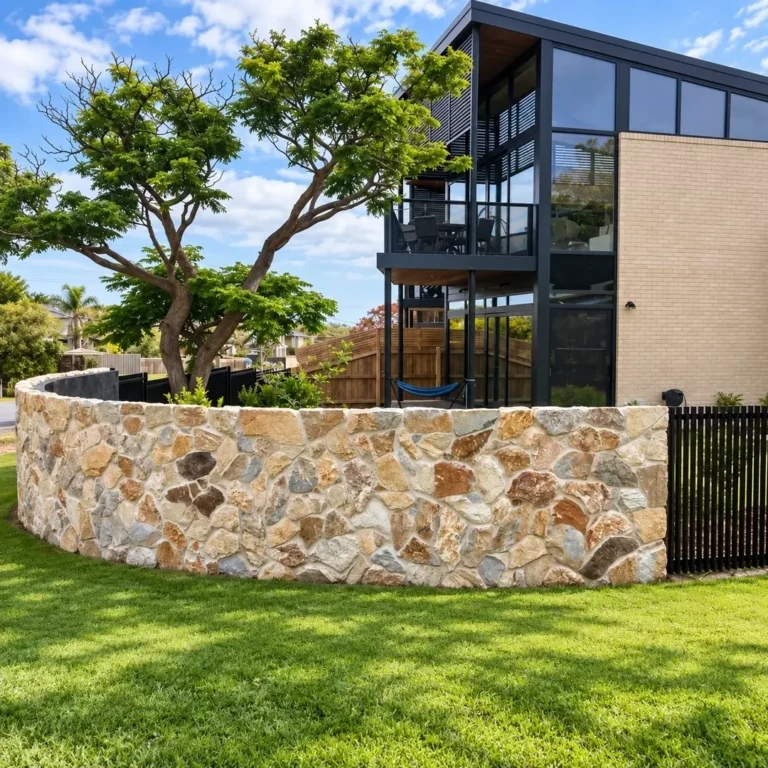
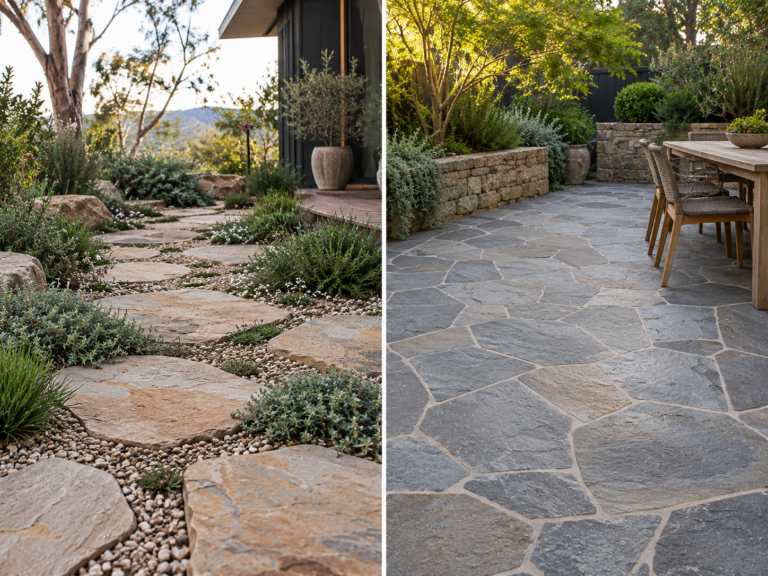
Limestone is a sedimentary rock made mostly of calcium carbonate, formed over millions of years from shell, coral and other marine deposits that settled on ancient sea floors. If you are asking what is limestone because you are choosing stone for a home, the short answer is a soft-toned natural stone used for paving, wall cladding, pool coping and steps.
It is softer and more porous than granite or bluestone, and it reacts with acids. That makes it a stone that performs well outdoors when it is sealed, cleaned gently and matched to the right job. The sections below cover what it is made of, how it behaves in Australian conditions, where it works best and how to look after it.
Limestone at a Glance
| Property | What it means for your project |
|---|---|
| Rock type | Sedimentary, formed from layers of calcium carbonate |
| Main mineral | Calcite (calcium carbonate). Limestone contains at least 50% calcium carbonate by weight |
| Hardness | Calcite rates 3 on the Mohs scale, so limestone scratches and wears more easily than granite or bluestone |
| Porosity | Porous. It absorbs water, oils and spills unless sealed |
| Acid reaction | Reacts with acids. Vinegar, citrus and acid-based cleaners etch the surface |
| Typical colours | Cream, light grey, mid-grey, charcoal, honey, ochre and terracotta |
| Common finishes | Tumbled, sandblasted, brushed, acid-washed, raw cut and natural split |
| Typical uses | Paving, pool surrounds and coping, wall cladding, steps, capping and interiors |
| Care | Penetrating sealer, pH-neutral cleaner, no acid washing |
What Is Limestone Made Of and How Does It Form?
Limestone is made of calcite, a calcium carbonate mineral, and most of it began as the shells and skeletons of marine organisms. Over millions of years these fragments built up in warm, shallow seas, then compacted and cemented into rock. Some limestone forms a different way, when calcium carbonate settles out of water as a chemical deposit.
You can often see that history in the stone. Shell fragments, fossils and fine layering show up as subtle marks and tonal shifts, which is a large part of why limestone paving and walling look soft and natural rather than uniform. According to Geology.com, a rock must contain at least 50% calcium carbonate by weight to be classed as limestone.
What Are the Main Types of Limestone?
Geologists group limestone by how it formed and what it contains. The main types you will see named are:
- Chalk: a soft, fine-grained limestone formed from microscopic marine organisms. Too soft for paving.
- Travertine: a limestone deposited by mineral springs, known for its natural holes and banding. It is common in paving and pool surrounds, and travertine is often treated as its own category by suppliers.
- Coquina: a loosely cemented mix of shell and coral fragments.
- Oolitic limestone: made of small, rounded grains of calcium carbonate, with an even texture.
- Fossiliferous limestone: limestone with visible fossils through the stone.
The limestone used for building and landscaping is the dense type. It is quarried in blocks, then sawn into pavers and coping or split into walling pieces, which is why a good paving limestone feels solid and consistent in a way chalk never could.
How Does Limestone Perform? Key Properties Explained

Limestone performs well outdoors when the stone is dense, the format suits the job and the surface is sealed. Its weak points are predictable: it is softer than igneous stones, it absorbs liquid and it reacts with acid. Knowing those three things explains almost every care rule that follows.
1. Is limestone durable?
Yes, dense limestone is durable enough for paving, walling and pool surrounds, and it has been used in buildings for centuries. It is softer than granite and bluestone, though, so it shows scratches, scuffs and wear sooner in high-traffic or heavy-load areas. For busy paths and entertaining areas it holds up well. For areas with vehicles, read the driveway section below before you choose.
2. Is limestone porous?
Yes, limestone is a porous stone. It draws in water, oil, wine and other spills, which can mark the surface if it is left unsealed. A quality penetrating sealer reduces how much the stone absorbs without changing its look much. If you want to check a sample yourself, you can test how porous a stone is with a simple water drop test.
3. How does limestone handle heat and sun?
Colour matters more than stone type when it comes to heat underfoot. Light cream and grey limestones absorb less sun than charcoal stones, so they generally stay more comfortable for bare feet around a pool. Dark limestones such as charcoal varieties will warm up more in full summer sun. Limestone handles normal outdoor temperature swings well, and the list of heat-resistant stones covers which materials suit fire pits and barbecue areas.
4. Why do acids damage limestone?
Acids dissolve calcium carbonate, so anything acidic will etch limestone. This is the same reaction geologists use to identify the rock: limestone fizzes in contact with dilute hydrochloric acid, as Geology.com’s acid test shows. At home, vinegar, lemon juice, wine, some bathroom cleaners and acid washing products leave dull marks on the surface. That is why limestone should never be acid washed after laying.
5. How does limestone cope with salt, rain and pool water?
Sealing and regular rinsing are what keep limestone looking good in wet and coastal settings. Salt carried in sea air or splashed from a pool can build up in the pores of unsealed stone and mark the surface over time. Heavy rain is not a problem for dense, well-laid limestone with good drainage, but water sitting in shaded areas encourages moss and algae. Rinse pool and coastal paving with fresh water, keep drains clear and check the sealer regularly.
What Finishes Does Limestone Come In?
The finish changes how limestone looks, how it feels underfoot and how easily it cleans. Paving limestone is usually given a textured surface for outdoor use, while walling limestone keeps its split, natural face.
A tumbled finish softens the edges and adds a slightly weathered texture, as seen on Brooklyn limestone. Sandblasted and tumbled stone such as Loch limestone has a rustic, aged surface with more texture than a smooth sawn face. A brushed finish, used on Himalayan limestone, is smoother and suits modern courtyards. Acid wash and tumbled stone such as Selene limestone has a gently textured, light surface, and raw cut, unfilled stone like Tuscan limestone keeps its natural holes for a rustic look.
For walls, natural split limestone has an uneven, fractured face that catches light and shadow. Rectangular sawn pieces give a more structured pattern. The same finishes appear on other materials too, and honed, flamed, tumbled and sandblasted stone surface finishes each change how a paver looks, feels and cleans.
Where Is Limestone Used in Australian Homes?

Limestone is most often used for outdoor paving, pool surrounds and wall cladding, with smaller uses in steps, capping and interiors. Each application calls for a different format and thickness, so it is worth matching the product to the job rather than choosing on colour alone.
1. Patios, courtyards and paths
Paving is the most common use for limestone outdoors. Its soft colours suit both modern and heritage homes, and the SIS paving limestones are listed in thicknesses from 12 to 30 mm, with thicker drop-edge pieces for exposed edges. You can compare limestone against bluestone, travertine and granite across the full range of natural stone paving, and it is worth reading up on laying limestone pavers before work starts.
2. Pool surrounds and coping
Limestone is a popular pool surround because light tones stay comfortable underfoot and the stone takes a clean edge. Several SIS limestones are made in drop-edge or bullnose formats for the pool edge, including Brooklyn, Loch and Sienna. Seal it before the pool is filled and rinse off chlorinated or salt water regularly. Edge profiles and thicknesses for limestone pool coping are worth settling early, and if you are still deciding on a material, limestone sits alongside travertine and bluestone as a leading stone for pool coping and paving.
3. Wall cladding and feature walls
Limestone cladding gives walls texture and warmth without the weight of solid blocks. SIS walling limestones such as Jamieson, Beloka and Barwon are supplied as natural split pieces 25 to 35 mm thick, at an average of 60 kg per m². They can be laid dry stacked or grouted. Every option sits within the wider range of stone walling and cladding, and the way split faces and sawn faces read on a wall is covered under limestone walling finishes and colours.
4. Steps, capping and garden edges
Limestone works well for step treads, wall capping and garden edging, where a matching stone ties paving and walls together. Thicker pieces and bullnose or drop-edge profiles give steps a solid, finished edge. Keep the same limestone across paving, steps and capping for a consistent look.
5. Fireplaces and interiors
Inside the home, limestone is used for fireplace surrounds, feature walls and floors. Interior use is gentler on the stone, but the acid rule still applies in kitchens and bathrooms, where food spills and cleaning products are common. Seal interior limestone too.
6. Is limestone good for driveways?
Limestone can be used on driveways, but it is not the first choice for heavy traffic. Vehicle loads, turning tyres, oil drips and tyre marks are harder on a softer stone than on granite or bluestone. If you want limestone on a driveway, talk to the team about the right thickness and a properly engineered base before you order.
Limestone Blocks vs Limestone Cladding: What Is the Difference?
Limestone blocks are solid, full-depth units, while limestone cladding is a thinner stone face fixed to an existing wall. Blocks are stacked to build garden beds, low walls and retaining structures, so the stone itself does the structural work. Approvals and engineering can apply to retaining walls, so check with your local council before you build one.
Cladding pieces are split or sawn to a thin profile, such as the 25 to 35 mm natural split walling in the SIS range, and are fixed with adhesive or mortar to block, brick, concrete or cement sheet. Cladding gives the look of a solid stone wall at a fraction of the weight. Before choosing cladding, an engineer should confirm the wall can support the stone.
SIS Limestone Range: Paving and Walling

The table below shows the limestones currently listed by Splendour In Stone, with the colours, finishes and formats from each product page. For anything you do not see here, such as other thicknesses or stock levels, ask the team.
| Stone | Use | Colour | Finish or format | Sizes listed |
|---|---|---|---|---|
| Loch | Paving | Soft grey | Sandblasted and tumbled | 610 × 406 × 15 and 30 mm; 30/60 mm drop edge |
| Birkshire | Paving | Cream-grey | Lightly textured | 600 × 400 × 20 mm; 20/60 mm drop edge; 30 mm coping |
| Brooklyn | Paving | Mid-grey | Tumbled | 600 × 400 × 20 and 30 mm; 900 × 600 × 20 mm; 30/60 mm drop edge |
| Sienna | Paving | Caramel and honey | Not stated on product page | 610 × 406 × 12 and 30 mm; 900 × 600 × 20 mm; bullnose; drop edge; crazy paving |
| Selene | Paving | Light grey | Acid wash and tumbled | 600 × 400 × 18 mm; 30 mm bevelled edge; 20/60 mm drop edge |
| Stamford | Paving | Mid-grey | Lightly textured | 600 × 400 × 20 mm |
| Himalayan | Paving | Charcoal | Brushed and tumbled | 600 × 400 × 20 mm; 30/60 mm drop edge |
| Tuscan | Paving | Ochre and warm beige | Raw cut, unfilled | 600 × 300 and 800 × 400 × 15 mm |
| Jamieson | Walling | Terracotta and tan | Natural split | Random 150 to 600 mm; 25 to 35 mm thick |
| Beloka | Walling | Charcoal with bronze | Natural split | Random 150 to 600 mm; 25 to 35 mm thick |
| Barwon | Walling | Warm browns and grey | Natural split | Random 150 to 600 mm; 25 to 35 mm thick |
| Jasper | Walling | Smoky grey | Natural split | Random 150 to 600 mm; 25 to 35 mm thick |
| Luxe | Walling | Graphite | Natural split | Random 100 to 300 mm; 25 to 35 mm thick |
| Marrakesh | Walling | Beige and honey | Sawn rectangular | 150 to 700 mm long; 300 and 400 mm high; 30 mm thick |
If you are weighing a warm palette such as Jamieson against a cool one such as Jasper, it helps to understand why limestone suits walling so well across different home styles.
Limestone vs Travertine, Sandstone and Bluestone
Limestone sits in the middle of the common paving stones: softer and more porous than bluestone, similar in care to travertine, and more consistent in colour than most sandstone. The table compares them in general terms. Individual stones vary, so always check the product details.
| Limestone | Travertine | Sandstone | Bluestone | |
|---|---|---|---|---|
| Rock type | Sedimentary (calcium carbonate) | Limestone formed at mineral springs | Sedimentary (mostly quartz grains) | Volcanic basalt |
| Relative hardness | Medium-soft | Medium-soft | Varies widely | Hard |
| Porosity | Porous | Porous, with natural holes | Often highly porous | Low |
| Acid sensitivity | High | High | Lower, depends on the stone | Low |
| Look | Soft, even tones | Warm, with holes and banding | Layered, earthy colours | Grey to charcoal, uniform |
| Typical use | Paving, pools, cladding | Paving, pools, coping | Paving, walling, steps | Paving, driveways, coping |
Most people deciding on limestone are also weighing up travertine vs limestone, since the two share a chemistry but differ in surface and character. Sandstone suits buyers after earthy, layered colour, though its properties vary more from quarry to quarry. Victorian bluestone is the harder, denser choice for driveways and high-traffic areas.
What Are the Pros and Cons of Limestone?
The strengths of limestone are its look and its versatility. It comes in a wide range of soft, natural colours, from cream and grey to honey and charcoal, and in finishes that suit both pavers and walls. It cuts and shapes well, so it can be made into coping, steps, capping and cladding that all match. Light tones also stay more comfortable underfoot than dark stone in summer.
The trade-offs come from its chemistry. Limestone is porous, so it needs sealing. It reacts with acid, so cleaning products and spills need care. It is softer than granite and bluestone, so it shows wear sooner in heavy-use areas. None of these rule limestone out; they simply mean it rewards a little more attention than a dense volcanic stone.
How Do You Care for Limestone?

Limestone care comes down to sealing it, cleaning it gently and keeping acids off it. Follow these steps for paving and walls:
- Seal before use. Once the stone is laid, clean and fully dry, apply a quality penetrating (impregnating) sealer made for natural stone, following the manufacturer’s instructions.
- Clean with a pH-neutral cleaner. Use a cleaner labelled safe for natural stone and a soft broom or mop. Avoid bleach and harsh chemicals.
- Never acid wash. Do not use acid-based cleaners, vinegar or brick cleaners on limestone, because they etch the surface.
- Rinse salt and pool water. Hose down pool surrounds and coastal paving with fresh water regularly to stop salt building up.
- Reseal when water stops beading. When water soaks in instead of sitting on the surface, it is time to reseal. The sealer manufacturer will give the expected interval.
Routine cleaning is simple once you know the rules for maintaining limestone pavers. Shaded paving that turns green needs a gentler approach to removing moss and algae from limestone, and chipped or weathered pieces on a wall can usually be fixed by repairing and restoring limestone walls rather than replacing them.
Frequently Asked Questions
1. Is limestone durable outdoors?
Yes, dense limestone is durable outdoors when it is sealed and laid on a sound base. It suits patios, paths, pool surrounds and walls. It is softer than granite and bluestone, so it shows wear sooner in heavy-traffic areas.
2. Is limestone porous?
Yes, limestone is porous and absorbs water and spills. Sealing it with a penetrating sealer reduces absorption and helps prevent staining. Porosity varies between stones, so a sample test is worthwhile.
3. Does limestone get hot in the sun?
Light-coloured limestone generally stays more comfortable underfoot than dark stone, because it absorbs less sun. Charcoal limestones warm up more in full summer sun. For pool surrounds, cream and light grey tones are the safer choice for bare feet.
4. Is limestone heat or fire resistant?
Limestone does not burn, and it handles normal outdoor heat well. At very high temperatures, such as in an industrial kiln, calcium carbonate breaks down into lime, which is how lime is made. For fireplace surrounds and fire pit areas, check the specific stone and installation with the team.
5. Is limestone good around pools?
Yes, limestone is a popular pool surround and coping stone, especially in light tones. Several SIS limestones are made in drop-edge or bullnose profiles for pool edges. Seal it before the pool is filled and rinse off pool water regularly.
6. Do you need to seal limestone?
Yes, sealing is recommended for limestone outdoors and indoors. A penetrating sealer reduces staining from water, oil and spills and makes cleaning easier. Reseal when water no longer beads on the surface.
7. What is the difference between limestone and travertine?
Travertine is a type of limestone that forms at mineral springs, which gives it natural holes and banding. Standard limestone usually has a more even surface and softer tonal variation. Both are calcium carbonate stones, so both need sealing and acid-free cleaning.
See Limestone in Person Before You Choose
Colour and texture vary from one batch of natural stone to the next, so it pays to see limestone in person. Order samples of the stones you are considering, or contact the team to visit the Mitcham showroom and talk through your project.