Is Granite the Best Material for Luxury Bathroom Vanities?

Granite is one of the most practical stones you can put on a bathroom vanity. It takes heat from hair tools, shrugs off water once it is sealed, and keeps its colour for decades. The trade-off is that it needs resealing, it is heavier than engineered surfaces, and every slab looks different, which some people love and some do not.
This guide works through where granite earns its place on a vanity, where another material might suit better, and what a granite top actually needs from you once it is installed.
In this guide
Is Granite the Best Material for Luxury Bathroom Vanities?
For most bathrooms, yes. Granite is dense, hard and heat tolerant, so it copes with daily use better than marble or laminate, and it has a natural depth of pattern that engineered stone does not match. It is not the best choice if you want a perfectly uniform colour, a surface that never needs sealing, or the lightest possible top for a wall-hung cabinet. In those cases quartz or engineered stone may suit you better.
Why Granite Works Well on a Vanity
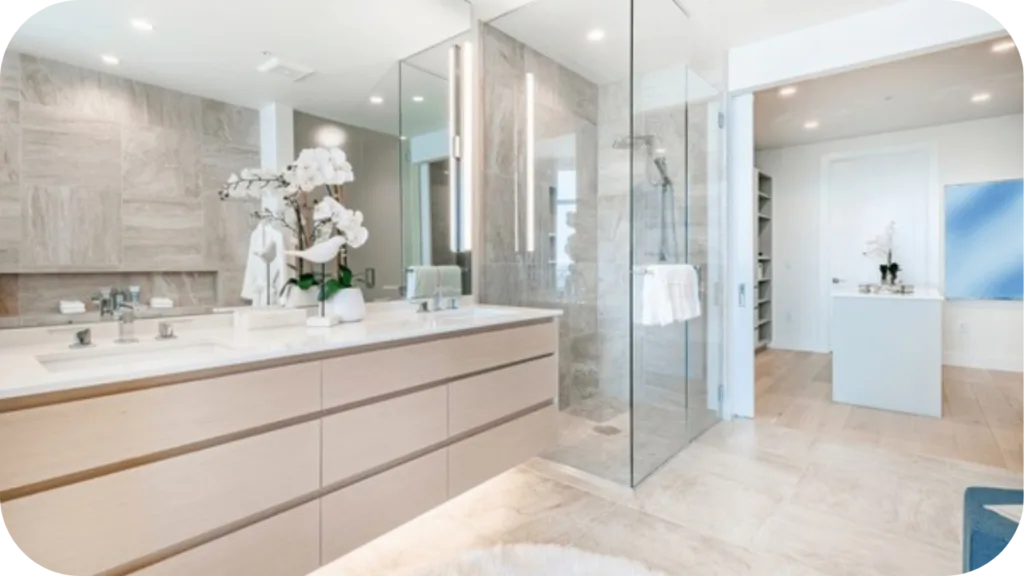
A vanity top has a harder life than most benchtops. It gets wet several times a day, it meets hot hair straighteners and curling wands, and it collects cosmetics, toothpaste and cleaning sprays. Granite handles all of that for a few plain reasons.
- Heat tolerance: granite forms under extreme heat and pressure, so a straightener left on the surface will not scorch or mark it the way it can mark laminate or some resin-based engineered stone.
- Hardness: granite is harder than marble and limestone, so it resists scratches from rings, razors and dropped bottles. Normal bathroom use will not wear a polished finish.
- Water resistance once sealed: granite is a low-porosity stone. A penetrating sealer closes the surface so water, make-up and hair dye sit on top long enough to wipe away rather than soaking in.
- Natural pattern: no two slabs match. Flecks, veining and colour shifts give the room a depth that printed or pigmented surfaces do not have, which is a large part of why natural stone is still the default in high-end interior design.
- Long service life: a granite top that is sealed and cleaned properly will outlast the cabinet underneath it. That durability is one of the reasons stone tends to hold its value when a home is sold, as covered in our guide to natural stone and property value.
Granite vs Other Vanity Materials
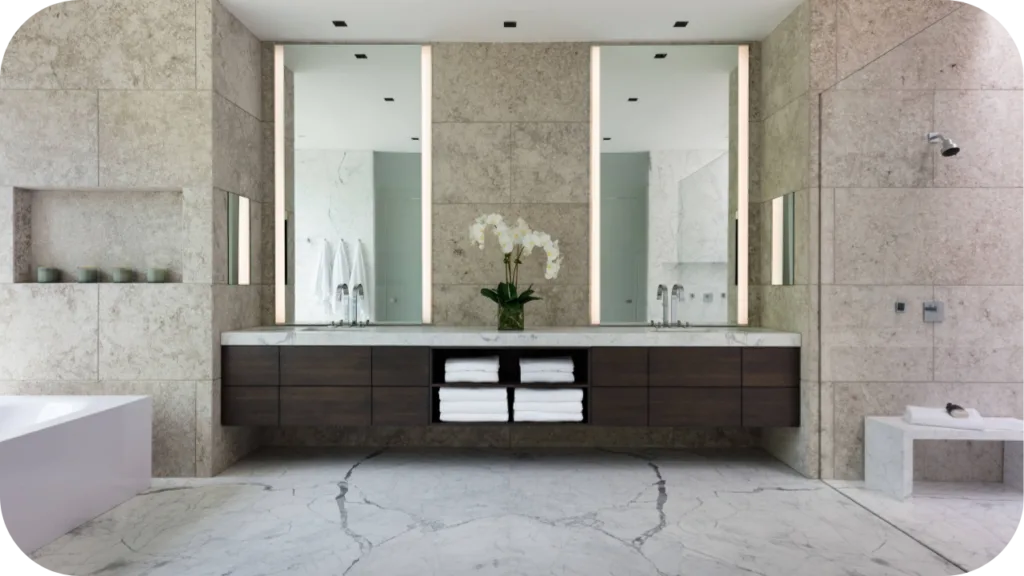
The right vanity material depends on how the bathroom is used and how much upkeep you are prepared to do. The table below sets granite against the materials buyers most often weigh it up against.
| Material | Heat | Scratches and etching | Sealing needed | Look | Best suited to |
|---|---|---|---|---|---|
| Granite | Very good | Resists both | Yes, periodically | Natural flecks and veining, every slab unique | Family and main bathrooms that get daily use |
| Marble | Good | Scratches and etches from acids | Yes, more often | Soft veining, classic | Guest bathrooms and low-traffic ensuites |
| Quartz (engineered) | Fair, resin can mark | Resists scratches, can discolour from heat | No | Uniform colour, manufactured pattern | Buyers who want zero sealing and a consistent look |
| Laminate | Poor | Scratches and chips, swells if water gets in | No | Printed finish | Budget renovations and rentals |
| Timber | Fair | Marks easily when wet | Yes, frequently | Warm and natural | Powder rooms with careful owners |
Granite vs quartz
Engineered quartz is the closest competitor. It never needs sealing and its colour is consistent from one piece to the next, which makes it easy to specify. Its weak points are heat, because the resin binder can mark under a hot tool, and appearance, because the pattern is printed or mixed rather than grown in the ground. If you want a vanity that does not change over time and you do not mind a manufactured look, quartz is a sound choice. If you want the surface to look like stone, choose granite.
Granite vs marble
Marble wins on softness of pattern and loses on everything else that matters in a bathroom. It is more porous, so it stains faster, and it etches when it meets anything acidic, including many cosmetics and cleaning products. A marble vanity in a busy family bathroom will show wear within a few years. Granite in the same spot will not.
Granite vs laminate and timber
Laminate is cheap and comes in any colour, but it is a thin skin over particleboard. Once water finds a seam or a cut edge the board swells and the top is finished. Timber looks warm but needs regular oiling or varnish and will mark around the basin. Both are acceptable in a powder room that sees little water. Neither is a good long-term choice for a main bathroom.
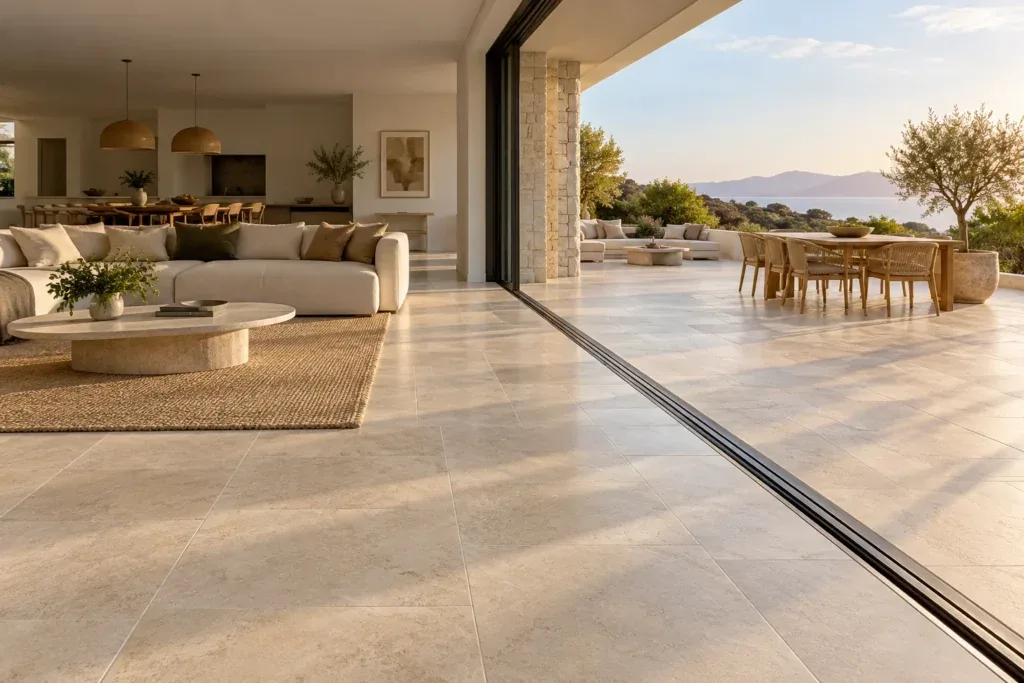
Design Choices That Make a Granite Vanity Work
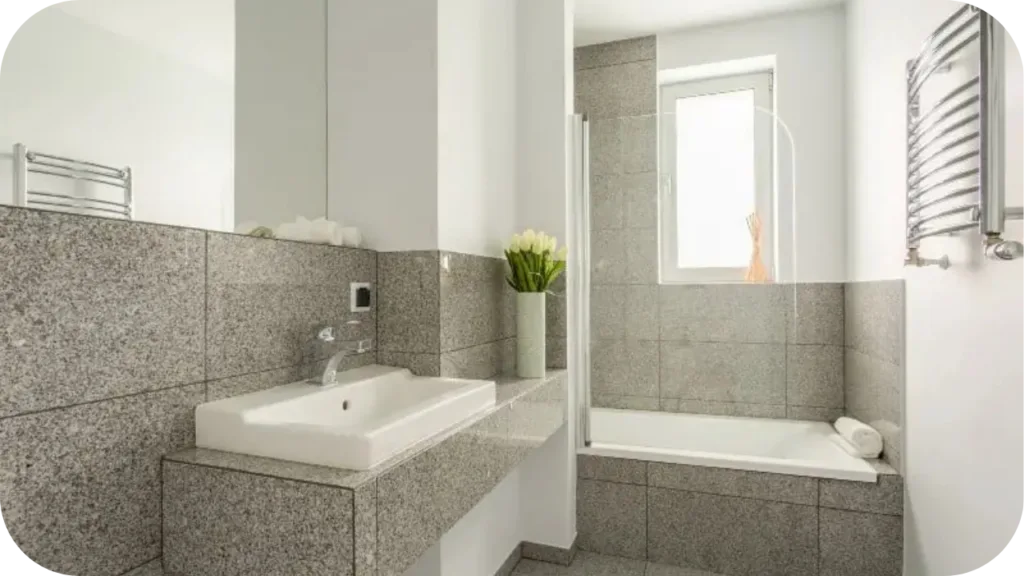
Granite suits most bathroom styles, but a few decisions at the specification stage make the difference between a top that looks considered and one that looks like an afterthought. Our guide to natural stone design in Australian homes covers the broader principles. These are the ones that matter most on a vanity.
Finish
Polished granite is the usual choice for vanities because it is the easiest to wipe down and it shows the colour at full depth. Honed granite gives a softer, matt surface that hides water spots better but can show oils from hands and products more readily. Leathered finishes add texture and are harder to keep clean around a basin. Our article on stone finishes explains the differences in more detail.
Edge profile
A straight pencil edge keeps a modern vanity clean and simple. A bullnose or bevelled edge suits traditional rooms and is kinder to knees and hips in a tight bathroom. Thicker stone, or a mitred drop edge, reads as more substantial and is worth considering on a floating vanity where the top is the main visual element.
Colour and pairing
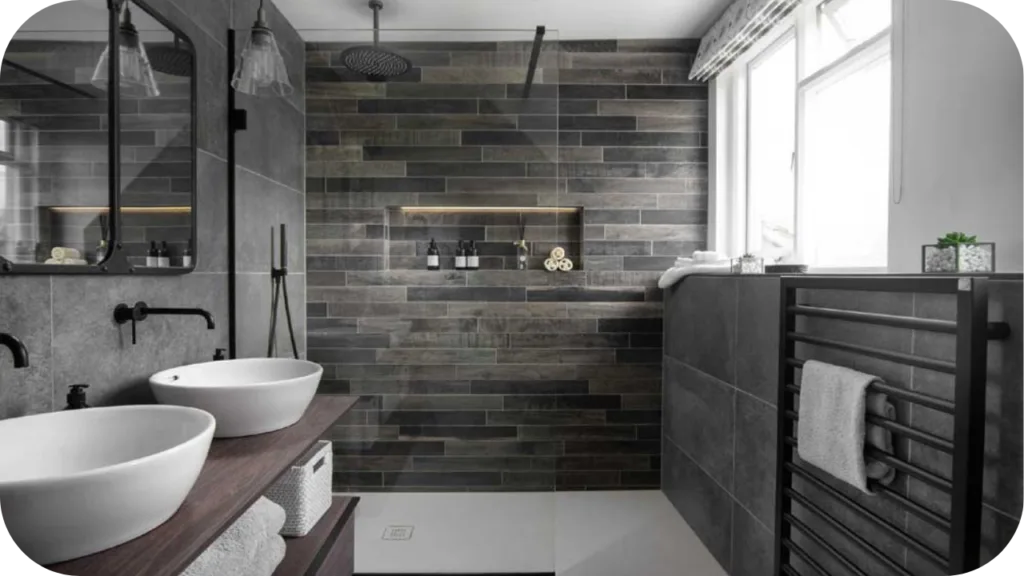
Granite ranges from near-white through greys, browns and greens to black. Lighter stones with fine flecks suit small or dark bathrooms. Darker stones with heavy movement hold their own in larger rooms with good natural light. Granite sits well against timber cabinetry, brushed metal tapware and large-format floor tiles. Match the undertone of the stone to the tapware, so warm browns with brass and cool greys with chrome or black. If you want to see how different granites read in Australian homes, the range of colours in our granite guide is a useful reference, even though those products are cut for paving rather than benchtops.
Splashbacks and floating vanities
Running the same granite up the wall behind the basin removes a grout line, makes cleaning easier and gives the room one strong material rather than two competing ones. On a floating vanity, confirm the cabinet and wall fixings are rated for the weight of stone before you order, because granite is considerably heavier than laminate or timber.
How to Care for a Granite Vanity
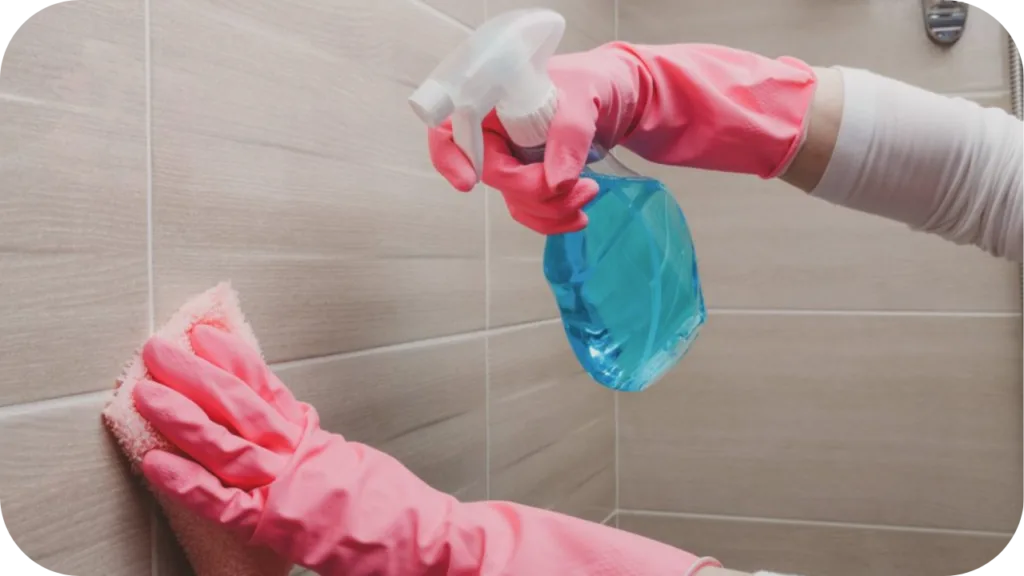
Granite asks for less than marble but more than quartz. The routine below is all it needs, and it follows the same principles as any other natural stone care.
- Wipe daily: a soft cloth with warm water and a few drops of pH-neutral cleaner removes toothpaste, soap and cosmetics before they dry on. Dry the surface around the basin to avoid water marks on darker stone.
- Avoid acids and abrasives: vinegar, lemon-based sprays, bleach and cream cleansers can dull the polish and strip the sealer. Use a cleaner made for natural stone.
- Blot spills quickly: hair dye, nail polish remover and perfume are the usual culprits. They rarely damage sealed granite if they are wiped within a few minutes.
- Reseal when water stops beading: drop a little water on the surface. If it soaks in within a minute or so instead of sitting in a bead, the sealer has worn and the top is due for another coat. On most vanities that is every one to three years. Sealing natural stone is a simple job that protects against staining and moisture.
- Keep metal off the stone: razors, aerosol cans and tins can leave rust rings if they sit in water. A small tray under toiletries solves it.
Frequently Asked Questions
Does a granite vanity top need to be sealed?
Yes. Granite is low in porosity but not sealed by nature. A penetrating sealer applied at installation and renewed every one to three years keeps water, make-up and oils on the surface where they can be wiped off.
Will hot hair tools damage granite?
Not in normal use. Granite tolerates far higher temperatures than a straightener produces. Still, a heat-proof mat is sensible, mostly to protect the tool and to avoid leaving a hot metal plate in a puddle of water.
Is granite too heavy for a wall-hung vanity?
Not if the cabinet and wall fixings are specified for it. Tell your cabinet maker the top will be stone so they can brace the carcass and fix into studs or masonry rather than plasterboard alone.
Which is better for a bathroom, granite or marble?
Granite, for any bathroom used every day. Marble is softer, more porous and etches from acidic products, so it suits a guest bathroom or powder room where it will be looked at more than used.
Talk to Splendour In Stone About Granite
Splendour In Stone supplies natural granite for paving and walling across Melbourne and Australia, and our team can advise on colour, finish and care for granite in and around the home. Contact Splendour In Stone or visit the Mitcham showroom to see the stone in person.