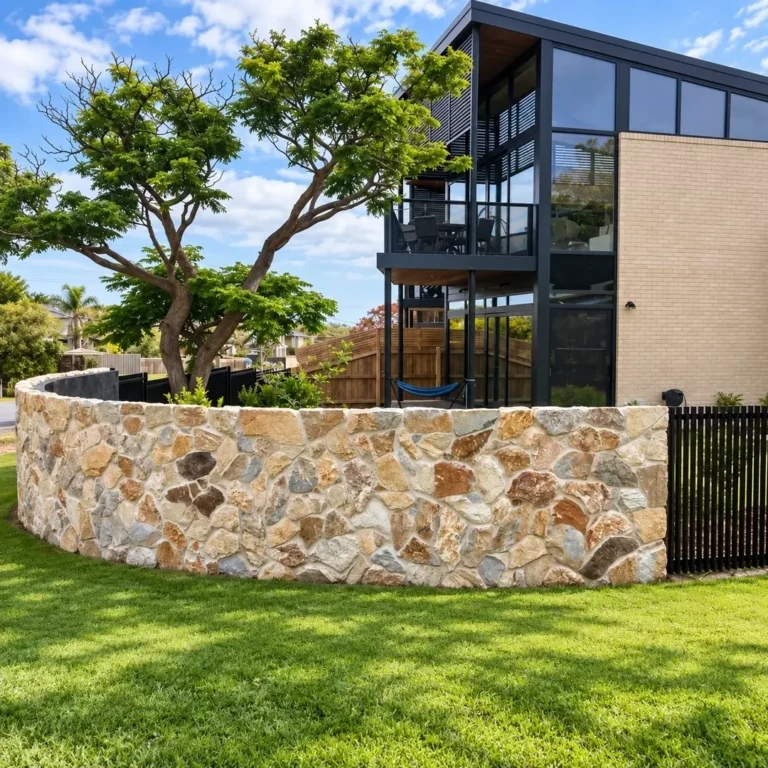
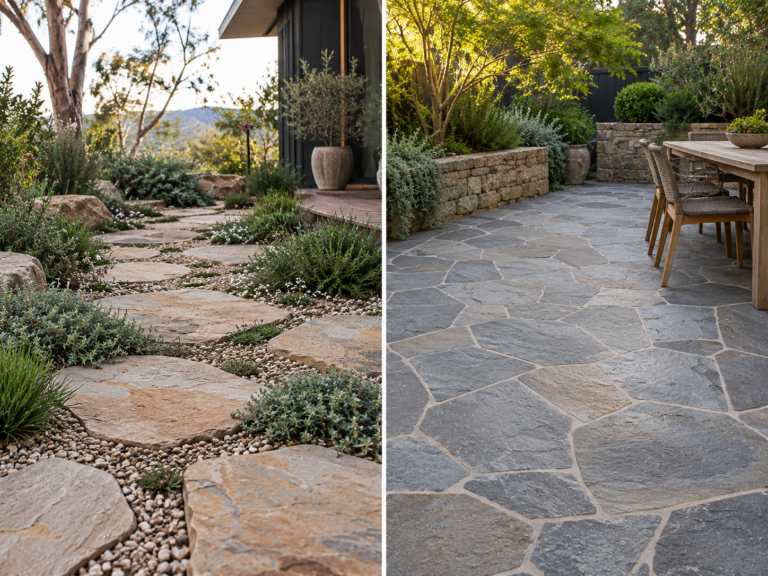
Limestone blocks are cut natural stone units used to build raised garden beds, low garden walls, garden edging, and feature walls, valued for their soft cream-to-honey tones and easy, workable nature. They suit decorative and low-height landscaping rather than tall engineered retaining walls, which need engineering advice and often council approval.
This guide covers what limestone blocks are used for, the sizes and finishes to look for, the benefits, a simple step-by-step for a limestone garden bed or edging, cost factors and how to care for the stone.
A quick note on the market: the term “limestone blocks” is used heavily in Perth and Western Australia, where limestone is the local signature stone, so what a supplier stocks varies by state, and it is worth confirming the exact product with a Melbourne supplier before you buy.
What Are Limestone Blocks Used For?
Limestone blocks are used mainly for low garden walls, raised garden beds, garden edging, and decorative feature walls, where their natural colour and texture do more work than raw structural strength. In landscaping, they are a finishing element: a way to define a bed, lift planting off the ground, edge a path, or add a stone face to a courtyard.
Because limestone is softer and more porous than a dense stone like bluestone, it is best kept to lower, decorative applications unless a specific product is confirmed as suitable for load-bearing use. For anything taller or load-bearing, treat limestone as a facing option rather than the structure itself.
Melbourne landscapers commonly build a structural core, such as a concrete block or engineered wall, and finish it with a natural stone face, which is how much of the stone-walling look is achieved in practice. Splendour In Stone supplies a range of natural stone walling and cladding through the walling and retaining hub, including limestone options, so the honest starting point is to tell the supplier the height and job, then match the right product to it.
Uses For Limestone Blocks

The four most common uses for limestone blocks in a garden are retaining and low walls, raised garden beds, garden edging, and feature walls. Each asks something slightly different of the stone, so the table below sets out where limestone works well and what to check first:
| Use | Suitability | Notes |
|---|---|---|
| Retaining and low walls | Best for low, decorative walls | Anything holding back soil above roughly one metre is an engineered structure. Confirm the product and get engineering advice before building to height. |
| Raised garden beds | Well suited | Ideal for lifting, planting, and defining beds. The inside of the bed holds constant moisture, as limestone is porous. |
| Garden edging | Well suited | Clean, natural border for paths, lawns, and beds. Small units or split pieces are easiest to work with. |
| Feature walls | Well-suited as cladding | The stone face reads as the feature. Often built as a stone facing over a structural core rather than solid blocks. |
1. Retaining and Low Walls
Limestone suits low, decorative garden walls rather than tall retaining structures. A knee-height border around a bed or along a path is a natural fit, and it reads softer than concrete or brick.
Once a wall starts holding back a meaningful volume of soil, it becomes a retaining wall in the engineering sense, and in Victoria, a retaining wall above a set height (commonly around one metre, though it varies by council) usually needs engineering and a building permit.
Check your local council’s guidance and confirm with the supplier that the specific limestone product is intended for that use before you build up.
2. Raised Garden Beds
Limestone blocks are a good choice for raised garden beds, where they lift planting to a comfortable height and give the bed a defined, natural edge. The warm tone works with greenery and softens over time.
Because limestone is porous, a bed that holds constant moisture, for vegetables or dense planting that is watered often, is worth lining on the inside with a membrane so the stone is not sitting wet against damp soil year-round.
3. Garden Edging
For garden edging, limestone gives a clean, natural border between a lawn, a path, and a planted bed. Smaller blocks, split pieces or offcuts are the easiest to lay in a run, and you can set them low and flush for a subtle line or stand them slightly proud for more definition.
This is one of the most forgiving uses because it carries no real structural load, which makes it a practical entry point for limestone garden edging if you are new to working with stone.
4. Feature Walls
As a feature wall, limestone is usually applied as a stone facing rather than built solid, and the visible stone face is the whole point. In a courtyard, along a boundary or behind an outdoor entertaining area, a limestone face brings texture and a warm, natural colour.
In practice, most stone feature walls are built as cladding fixed to a structural backing, which is how Splendour In Stone’s walling range is designed to be installed, so it is the look of solid stone without needing solid blocks.
Limestone Block Sizes and Types

Limestone for landscaping comes in a range of forms, from chunky rough-split pieces down to neat sawn units and thin cladding, and the right one depends on the job.
There is no single standard size across the market, so treat the table below as general guidance and confirm the actual dimensions of any product before ordering, because sizes vary by supplier and by state.
| Type or size | Typical use |
|---|---|
| Rough-split or tumbled pieces | Rustic edging, low informal walls, and raised beds with a natural look. |
| Sawn or chiselled rectangular units | Neater, more structured low walls and edging where a clean line is wanted. |
| Thin stone cladding (approximately 30mm) | Facing a structural core for feature walls, piers, and low wall faces. |
| Capping pieces | Finishing the top of a low wall for a clean, weathered edge. |
On finishes, limestone typically comes tumbled (softly aged with rounded edges), honed (a smooth matte face), natural split (a raw, textured face) and antiqued or distressed (a deliberately weathered look), the same finish family used across the limestone pavers range.
Splendour In Stone’s walling range includes several limestone options, such as Jamieson, Beloka, Barwon, Jasper and Marrakesh, and these are supplied as natural stone walling and cladding rather than as solid structural blocks, so the best step is to confirm which product and format suits your project.
Benefits of Limestone Blocks
The main benefits of limestone blocks are their natural appearance, their workability, and a warm, neutral colour that settles into a garden. These are the reasons landscapers reach for limestone on decorative jobs rather than a manufactured product:
- Natural, warm appearance: Soft cream-to-honey tones and visible texture give a garden a settled, established look that manufactured blocks tend to lack.
- Workable stone: Limestone is relatively soft and easy to cut and shape, which makes edging, curves, and neat runs more straightforward than with a very hard stone.
- Neutral colour that ages well: The tone suits classic and modern gardens alike and weathers gently over time rather than looking new-then-tired.
- Versatile across the garden: The same material can tie together beds, edging, a low wall, and a feature face, giving a cohesive look across a landscape.
The trade-off is porosity: limestone absorbs water more readily than a dense stone, which is why sealing and sensible drainage matter and why very high or heavily loaded walls call for a confirmed structural product or a structural core. Kept to decorative and low-height uses, that trade-off is easy to manage.
How to Build a Limestone Block Garden Bed or Edging

You build a limestone garden bed or edging by marking out the shape, preparing a firm level base, laying and levelling the stone, and then backfilling. For anything holding back significant soil or built to height, use a qualified landscaper and get engineering advice first.
The steps below cover a low garden bed or an edging run, which are jobs a confident DIYer can take on:
- Mark out the shape: Set out the line of your bed or edging with a hose, string line, or marking paint, and check it works with the surrounding paths, lawn, and planting before you dig.
- Prepare the base: Excavate a shallow trench along the line, then add and compact a layer of road base or crushed rock so the stone sits on a firm, level footing rather than on soft soil. A solid base is what stops the run shifting later.
- Lay and level the first course: Set the first course of limestone on the compacted base, working from one end and checking each piece with a spirit level as you go. For a low wall, this bottom course sets the line for everything above, so take your time here.
- Build up and stagger the joints (for a low wall): Add further courses if you are building a low wall, staggering the vertical joints between courses so they do not line up, which keeps the wall stable. Bed or bond the courses as suited to the product, and keep checking the level and line.
- Backfill and finish: Backfill behind the stone with soil for a garden bed, or with soil or gravel for an edging run, firming it as you go. For a bed that will be watered often, line the inside face first so the porous stone is not held against constantly wet soil. Finish with capping pieces on a low wall if you want a clean top edge.
For a raised bed, allow for drainage so water can escape rather than pooling behind the stone, and keep planting soil slightly below the top edge. If you would rather not build it yourself, Splendour In Stone can put you in touch with trusted installers, which you can arrange through the contact page.
How Much Do Limestone Blocks Cost?
The cost of limestone blocks depends on the stone, the format and finish, the quantity, delivery, and whether you build it yourself or use an installer, so it is best quoted for your specific project rather than taken from a single headline figure. Limestone is a natural product, and price moves with the type and finish (a rough-split piece and a honed sawn unit are not the same cost), the volume you need, and how far it has to be delivered.
Installation, if you use a landscaper, is a separate cost that varies with the complexity of the job and site access. As a reference point on natural limestone generally, Splendour In Stone’s own limestone pavers guide puts limestone pavers in Victoria in the range of $70 to $235 per square metre, depending on quality, thickness, and finish, with those figures worth confirming as current.
Blocks and walling stone are different products measured differently, so use that only as a sense of how much natural limestone can vary, rather than a price for blocks. For an accurate figure on your wall, bed, or edging, the reliable route is to request a free quote with your sizes and the look you are after.
Caring For Limestone Blocks
Caring for limestone blocks comes down to sealing the stone, keeping it clean, and managing water, because limestone is porous and absorbs moisture more readily than denser stone.
Splendour In Stone recommends sealing natural stoneto help preserve its longevity, and a sealer helps limestone resist moisture and staining in a garden setting. Reapply it periodically, as the protection wears off over time.
- Seal the stone: Apply a suitable natural-stone sealer after installation and reapply periodically to help the porous surface resist moisture and staining.
- Clean gently: Sweep or rinse to keep the stone clear, and avoid acidic cleaners, which can etch and damage limestone.
- Manage water and drainage: Allow water to drain away from beds and walls rather than pooling behind them, and line the inside of beds that stay constantly wet.
Kept sealed and free-draining, limestone weathers into a soft, natural finish. Splendour In Stone can advise on sealing and cleaning products suited to the stone, which is worth asking about when you order. The limestone maintenance guide provides further guidance on routine cleaning, moisture control and long-term protection.
Conclusion
Limestone blocks and walling stone can bring warmth, texture and clear definition to garden beds, borders and low walls. The key is to match the product to the job, prepare a stable base and manage moisture carefully.
For taller or load-bearing walls, use an engineered structural core and treat limestone as the visible finish. Browse the limestone walling range or request a project quote with your measurements and preferred style.
Frequently Asked Questions
1. Are limestone blocks good for retaining walls?
Limestone blocks suit low, decorative garden walls well, but tall retaining walls that hold back significant soil are engineered structures and need the right product plus engineering advice. In Victoria, a retaining wall above a set height (commonly around one metre, though it varies by council) usually needs engineering and a building permit, so check your local council’s guidance. For a low garden border, limestone is a natural fit; for a true retaining wall, confirm a suitable structural product or use limestone as a facing over a structural core.
2. Do limestone blocks need sealing?
Yes, sealing is recommended because limestone is porous and absorbs water more readily than dense stone. Splendour In Stone recommends sealing natural stone to help preserve its longevity, and reapplying the sealer periodically as it wears. Sealing helps the stone resist moisture and staining in an outdoor garden setting.
3. What sizes do limestone blocks come in?
Limestone for landscaping comes in a range of formats, from rough-split and tumbled pieces to sawn or chiselled rectangular units and thin stone cladding around 30mm thick, plus capping pieces for finishing a wall top. There is no single standard size across the market, and dimensions vary by supplier and state, so confirm the actual size of any product before ordering. Splendour In Stone’s walling range includes limestone options supplied as natural stone walling and cladding.
4. How much do limestone blocks cost?
Limestone block cost depends on the stone, format, and finish, quantity, delivery, and whether you use an installer, so it is best quoted for your specific project. As a general reference for natural limestone, Splendour In Stone’s limestone pavers guide puts limestone pavers in Victoria at $70 to $235 per square metre, depending on quality, thickness, and finish, worth confirming as current. Blocks and walling stone are measured differently, so request a quote with your sizes for an accurate figure.
5. Where can I buy limestone blocks in Melbourne?
Splendour In Stone supplies natural stone walling and cladding, including limestone, to Melbourne and across Victoria, with a showroom at 10/21 Cook Road, Mitcham. Because the “limestone blocks” term skews to the Perth and Western Australian market, it is worth confirming the exact product and format for a Melbourne project. Tell the supplier your job (wall, bed, or edging) and height, and they can match the right limestone product to it.