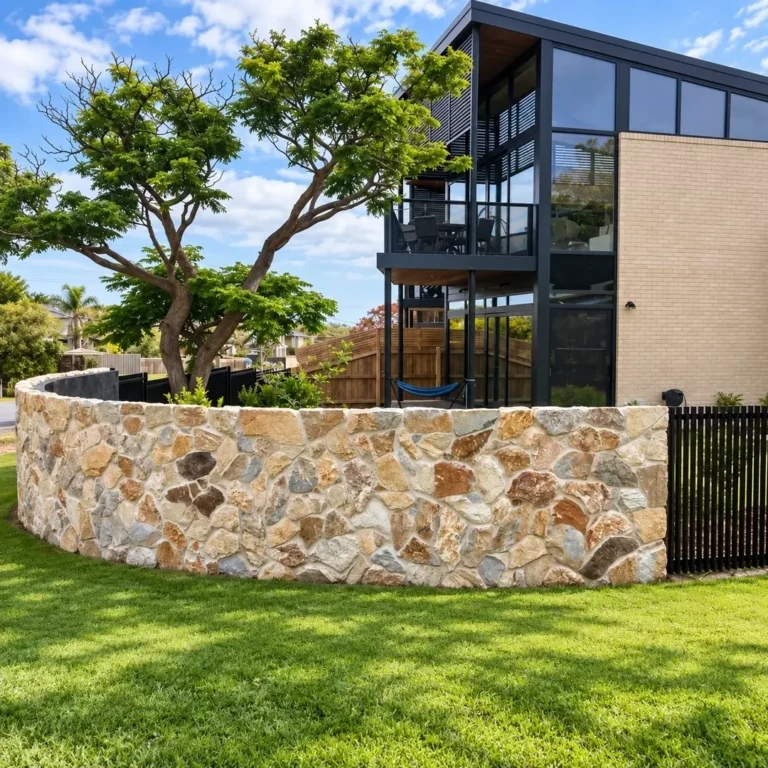
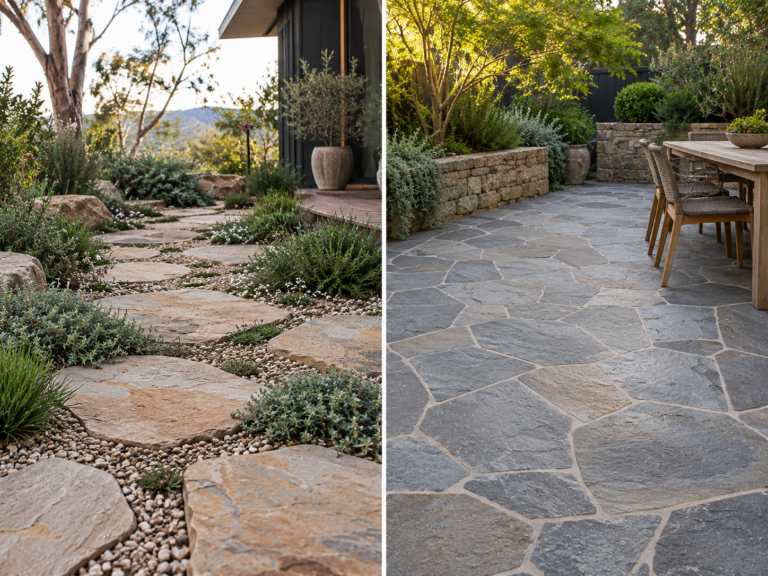
Natural stone rewards a good decision and punishes a rushed one. The right stone matches three things at once: the look you want, the way the space will be used, and the place it has to survive in. Get that match wrong and the cost is rarely just money, because a stone that stains, cracks or wears out usually has to be ripped up and replaced.
Most selection errors come down to the same handful of oversights. These are the ten most common mistakes to avoid when choosing natural stone, and how to make the call that lasts.
Start with four questions
Before you fall for a colour or a slab, answer four questions. They turn stone selection from a guess into a brief, and almost every mistake below comes from skipping one of them.
- Where will the stone go? Indoor or outdoor, wall or floor, wet or dry.
- What will it face? Foot or vehicle traffic, sun, rain, salt, frost, acidic spills.
- How much maintenance will you do? Some stones need regular sealing; others are close to fuss-free.
- What finish suits that use? Grip and wear matter as much as gloss.
Hold those answers next to every stone you consider. Our natural stone guide for Australia covers how the main types measure up.
Mistake 1: Overlooking finish and texture
The finish decides how safe and practical the stone is, not just how it looks.
Polished stone looks refined but turns slippery in wet areas like bathrooms and pool surrounds. Tumbled, flamed and bush-hammered finishes add grip underfoot, while honed finishes cut glare on walls and floors. Texture also affects cleaning: rougher surfaces hide marks but hold more debris. Match the finish to where the stone goes, paying particular attention to slip resistance in wet areas, before you settle on a look. Our guide to stone finishes covers the options.
Mistake 2: Ignoring the stone’s suitability for its environment
A stone that performs indoors can fail outdoors, and one that suits a shaded path can fail at the coast.
Stones weather differently under sun, rain, salt and frost. Limestone may last well in a shaded garden but degrade in a salty pool surround, while granite and quartzite handle temperature swings and exposure better. Indoor stones are often too porous or moisture-sensitive for outdoor use. Check the stone against your climate, exposure and use before you commit, which matters most in coastal and humid climates.
Mistake 3: Choosing on looks alone
Colour and veining are where most people start, and where most mistakes begin.
A pale, porous marble can look stunning in a hallway and still stain and scratch within a year. Aesthetics have to sit alongside performance: slip resistance, porosity, strength and maintenance. The best stone delivers the look without giving up on how the space actually gets used. Checking how porous the stone is is the quickest reality check on a beautiful but absorbent stone.
Mistake 4: Misjudging tile and slab size
The wrong size adds cost, waste and awkward joints, or makes a space feel off.
Large-format slabs give an open, continuous look in big areas but are hard to manoeuvre and can overwhelm a small space. Small tiles and cobbles flex around curves and uneven ground but add joints, labour and complexity. Oversized pavers on a steep incline can even be a safety risk. Work the size out with your supplier and installer against the layout and practical constraints, not just the look.
Mistake 5: Skipping sealing and surface protection
Most natural stone is porous, and an unsealed porous stone absorbs oil, wine, water and dirt permanently.
Travertine, limestone and marble are far more absorbent than granite or quartzite, and outdoors a seal also slows weathering, mould and discolouration. Choose a breathable sealer that suits the stone and finish, and reapply as it wears, using the water-drop test to tell when. Do not assume that installed means maintenance-free.
Mistake 6: Not factoring in installation
Stone is not laid like ceramic tile, and ignoring that leads to weak bonds, uneven surfaces and cracked pieces.
Stone needs specific substrates, adhesives and handling, and heavier or more brittle stones need extra support. Joint spacing, adhesive cure times, drainage and falls all affect the result, especially outdoors. Factor the install into the decision, including the full installation requirements and costs, and use installers experienced with natural stone.
Mistake 7: Choosing the wrong stone for high-traffic areas
Entryways, hallways, patios and driveways need hardness, strength and grip that soft stones cannot give.
Soft stones like some marbles scratch and chip under constant traffic. Granite, quartzite and dense bluestone hold up far better, and a textured finish such as flamed or bush-hammered shows wear less than a polished one. Match the stone to the traffic load, covered in our guide to stones for high-traffic spaces.
Mistake 8: Underestimating colour variation and batch differences
Natural stone is not uniform, and a single sample rarely shows the full range.
Tone, veining and texture vary between tiles and even within a batch. View several pieces before you decide, and for larger projects ask for a dry lay to preview the colour and pattern across the area. Buy enough from one batch to cover the job plus future repairs, since a later batch may not match. Some variation is part of the character of the stone; unpleasant surprises are not.
Mistake 9: Cutting corners on supplier quality
The cheapest quote often buys inconsistent stone and no support, which costs more later.
A good supplier offers more than product: guidance on installation, care and what suits your design, plus better sourcing and fewer defects. Look for a showroom where you can see the stone in person, ask about provenance and finishes, and get straight answers on care. For what to look for, see our guide on where to buy stone in Australia.
Mistake 10: Overlooking long-term maintenance
Every stone needs some care, and choosing one whose upkeep you will not keep up with is a slow mistake.
Marble and travertine need more frequent sealing and gentle, pH-neutral cleaning, while granite is more forgiving. Sweeping grit, wiping spills promptly and avoiding harsh chemicals go a long way. Choose a stone whose maintenance matches the effort you will realistically put in, and build a routine that keeps it looking right.
Natural stone at a glance: matching the stone to the job
Use this as a quick reference once you have answered the four questions. Durability and porosity here are relative guides rather than absolutes, and the right finish can change how a stone performs.
| Stone | Durability | Porosity | Best suited to | Watch-outs |
| Granite | Very high | Low | Benchtops, high-traffic floors, outdoors | Slippery if polished; hard to cut |
| Quartzite | Very high | Low | High-traffic floors, pool coping, benchtops | Premium price; hard to cut |
| Bluestone | High | Low to moderate | Paving, pool surrounds, driveways, walling | Choose a textured finish outdoors for grip |
| Porphyry | Very high | Very low | Driveways, cobbles, high-traffic paving | Limited finish range; hard to cut |
| Marble | Moderate | Moderate to high | Feature interiors, low-traffic floors, walls | Etches with acids; scratches and stains |
| Limestone | Moderate | High | Walling, shaded paving, cladding | Porous and acid-sensitive; needs sealing |
| Travertine | Moderate | High | Pool surrounds, patios, walls | Porous with natural holes; needs sealing |
| Sandstone | Moderate | High | Garden walls, paving, cladding | Soft and acid-sensitive; salt-prone at the coast |
Final word
Choosing natural stone well is a balance of beauty, performance and place. Answer the four questions, avoid the ten mistakes, and check each stone against how the space will actually be used, and you end up with a surface that still looks right in a decade. Rush it, and you pay for it twice.
For stone matched to your project, your climate and your budget, speak to the team at Splendour in Stone and choose with confidence.
Frequently asked questions
1. How do I choose the right natural stone for my project?
Match the stone to the place it will sit, the traffic and exposure it will face, the maintenance you will realistically do, and the finish that suits the use. Start with how the space works, not with the colour.
2. What is the most durable natural stone?
Granite, quartzite and porphyry are among the most durable, with low porosity and high strength, which suits high-traffic and outdoor use. Dense bluestone also performs well outdoors.
3. What is the best natural stone for high-traffic areas?
Dense, hard stones like granite, quartzite, bluestone and porphyry, ideally in a textured finish such as flamed or bush-hammered, which gives grip and shows wear less than a polished surface.
4. Does all natural stone need sealing?
No. Porous stones like marble, limestone, travertine and sandstone benefit most, while dense stones like granite, quartzite and porphyry need it less. The water-drop test tells you whether a stone is absorbing water and due for sealing.
5. Why does natural stone vary in colour between tiles?
It is a natural material, so tone, veining and texture differ from piece to piece and between batches. View multiple pieces and dry-lay larger projects before installing, and buy from a single batch where you can.