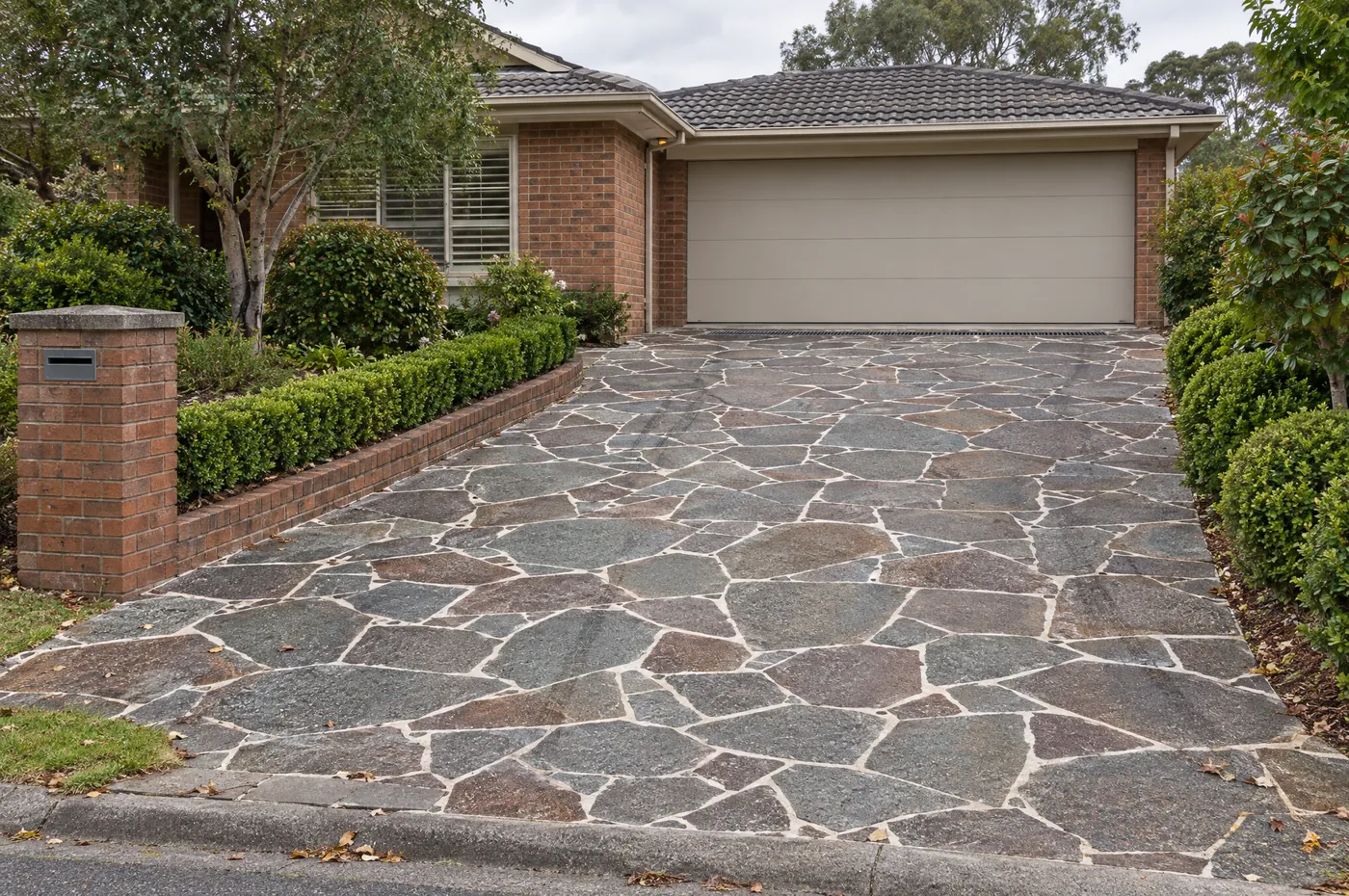
Yes, a crazy paving driveway works well if you choose a hard-wearing stone, lay it thick enough on a solid base, and set every piece in mortar rather than sand. Get any of those three wrong, and the surface will move, crack, or lift under the weight of a car, so the material and the build matter far more here than they do on a patio.
This guide covers what makes crazy paving driveways suitable, the best stones for the job, the pros and cons, how to lay it, and what drives the cost.
Crazy paving is a paving style, not a single product: irregular pieces of natural stone fitted together like a jigsaw with random joints. On a path or courtyard, almost any stone can carry that look. In a driveway, the format is the same, but the specification is stricter because the surface must withstand repeated vehicle loads over the years.
In this guide
Is Crazy Paving Good for Driveways?
Crazy paving is good for driveways when it is built for vehicle traffic, and unsuitable when it is treated like a patio. The three conditions that decide it are a hard, dense stone; adequate paver thickness; and a mortar-set installation over a properly compacted, drained base. Softer decorative stones, thin pavers, or a sand-only bed will not hold up to cars.
That conditional answer is the whole point. Plenty of homeowners see crazy paving on a courtyard and assume it transfers straight to the driveway, but a driveway is a structural surface. When the stone, thickness, and base are specified for that load, a crazy paving driveway can last for decades and look far more characterful than plain concrete or a uniform paver.
You can see the full stone range on the paving hub, and the cobblestones hub is worth a look too, since cobbles cover much of the same high-traffic territory.
What Makes Crazy Paving Driveway-Suitable
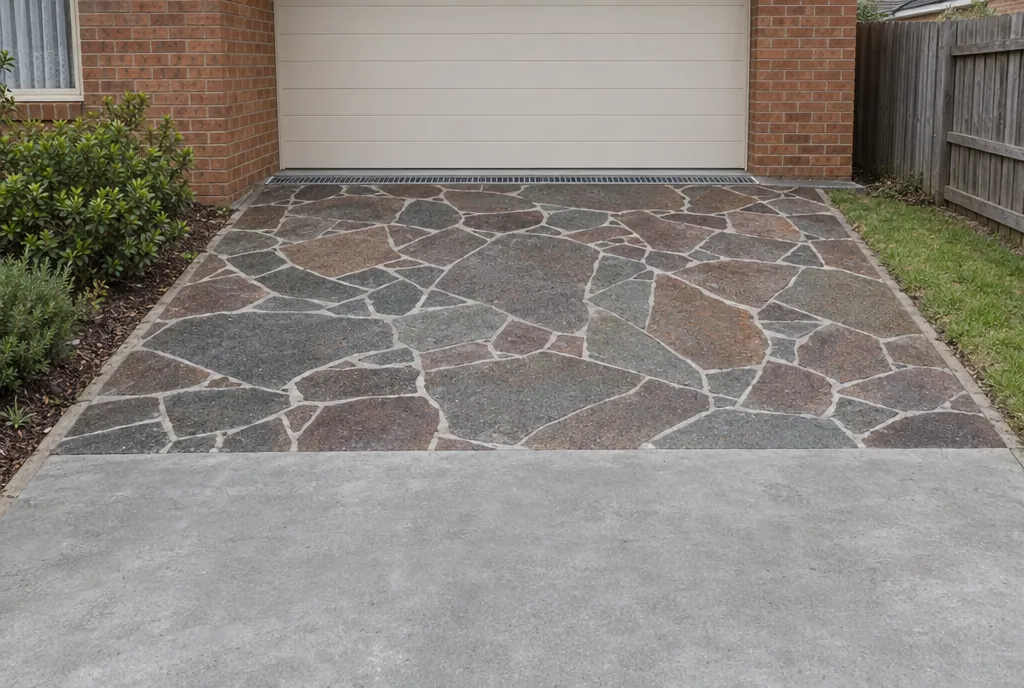
A crazy paving driveway is suitable when the stone thickness, base, laying method, and drainage are all specified for vehicles, not just for looks. Each factor does a specific job, and skipping any one of them is where driveways fail. The following are the elements that separate a driveway-grade installation from a decorative one:
- Material hardness: The stone must be dense and hard enough to resist chipping, abrasion, and point loads from tyres. This rules out soft, porous, or brittle stones and points you towards porphyry, granite, or bluestone.
- Paver thickness: Driveway pieces need to be noticeably thicker than patio pieces so they can carry vehicle loads without cracking. Confirm the exact thickness for your chosen stone with your supplier rather than assuming a patio thickness will do.
- A structural base: A driveway needs a compacted, load-bearing sub-base (typically a well-prepared aggregate base, and often a reinforced concrete slab) rather than the shallow bedding used under a patio.
- Mortar-set laying: Every piece should be bedded in mortar, and the joints filled solidly, so the surface behaves as one bound layer instead of loose stones that can rock or spread under a wheel.
- Drainage and falls: The finished surface must shed water with the correct fall and, where needed, drainage points, because standing water and saturated bedding undermine even a well-built driveway over time.
Get these right, and the surface is built for the job. Because thickness, base depth, and mortar specification depend on the stone and the site, a supplier or installer should confirm them for your project rather than relying on a generic figure.
Best Materials For a Crazy Paving Driveway
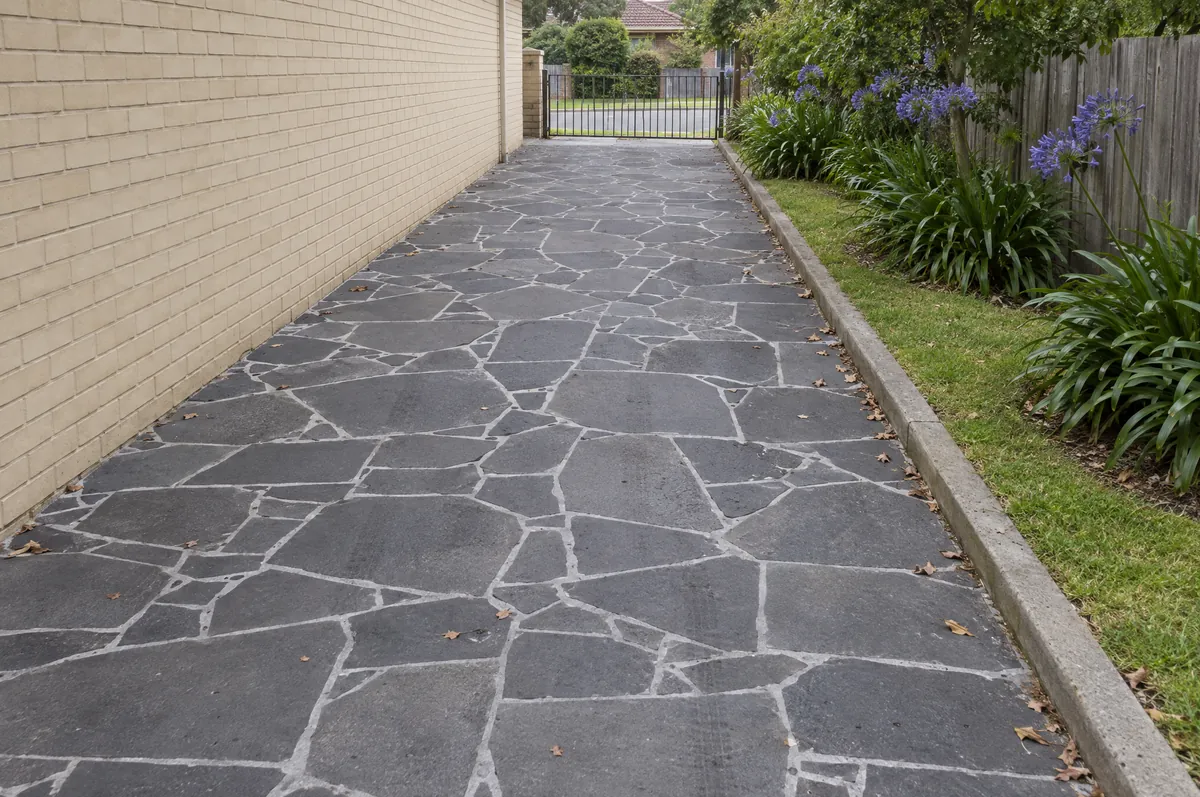
The best materials for a crazy paving driveway are hard, dense natural stones: porphyry, granite, and bluestone lead the field, while softer stones like travertine, sandstone, and limestone are better kept to patios and paths. The table below compares the common options for vehicle traffic. Treat it as a suitability guide; confirm the specific product, thickness, and driveway rating with your supplier before ordering.
| Material | Suitability for driveways | Notes |
|---|---|---|
| Porphyry | Well suited | A hard volcanic stone long used for high-traffic paving and cobbles. Naturally textured surface and earthy multi-tonal colour. A common choice where durability matters. |
| Granite | Well suited | A dense, hard igneous stone. Flamed granite is widely used for driveways and high-traffic areas for its wear resistance and grip. |
| Bluestone | Suitable | A dense basalt is used extensively across Melbourne for paving and cobbles. Strong and hard-wearing when correctly specified and laid. |
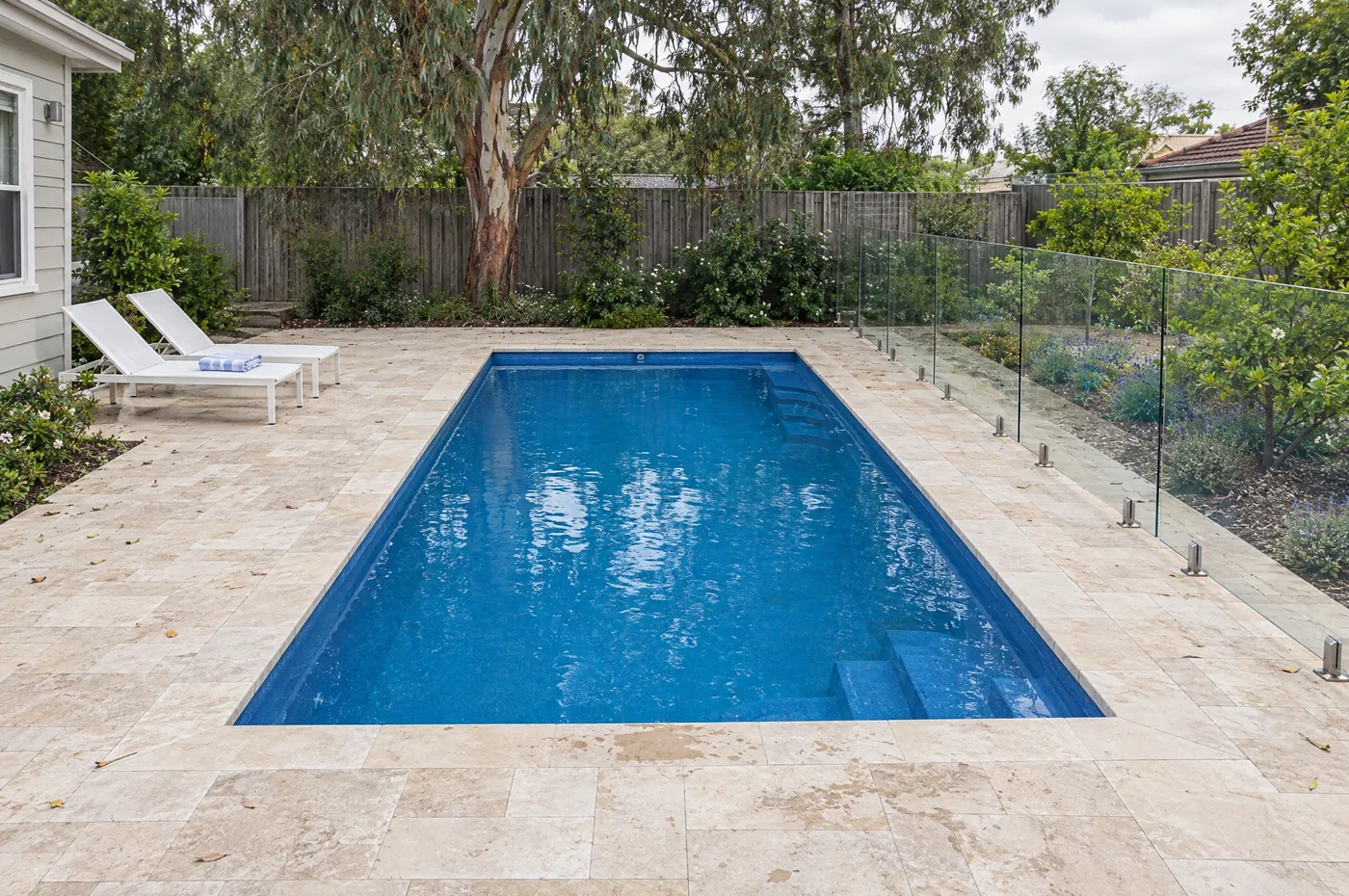
| Travertine | Better for patios and pools | A softer, porous stone prized for pale, cool tones underfoot. Generally kept to patios, alfresco areas, and pool surrounds rather than driveways. |
| Sandstone | Better for paths and patios | A warm, natural sedimentary stone that is softer and porous. Suited to paths, courtyards, and patios; confirm before any vehicle use. |
| Limestone | Better for paths and patios | A softer stone with a natural look. Best used underfoot rather than under vehicles unless a specific product is rated otherwise. |
| Reclaimed brick | Not for driveways | Reclaimed bricks are for cladding, feature walls, and architectural detailing, not paving or structural load-bearing use. |
Porphyry is the standout for a crazy paving driveway because it combines hardness with a naturally varied, characterful surface, which is exactly what the irregular format wants. Splendour In Stone stocks a porphyry crazy paving product and a Euro crazy paving in grey limestone, and works with porphyry, granite, and bluestone across its cobblestone range.
Porphyry, grey granite, and bluestone cobbles all appear on the cobblestones hub, which is a good reference point if you are weighing crazy paving against a cobbled driveway. The exact driveway rating and thickness of any specific product should be confirmed with SIS before you commit.
The material comparison also links to the individual stone guides. For more detail on the hardest option, see the porphyry crazy paving guide, and for the softer stones and where they genuinely belong, the travertine crazy paving guide and the sandstone crazy paving guide.
Pros and Cons of a Crazy Paving Driveway
A crazy paving driveway offers a distinctive natural-stone look and real durability when built correctly, but it costs more and takes longer to lay than plain concrete or uniform pavers. Weighing both sides helps you decide whether the finish justifies the outlay for your home.
The main advantages are aesthetic and practical.
The random, jointed pattern gives a driveway character that a uniform surface cannot match; no two installations look the same, and a hard stone laid on a solid base is genuinely long-lasting. Natural stone also weathers gracefully, and individual pieces can be lifted and reset if a section is ever damaged, which is harder with a poured slab. The trade-offs are cost and complexity.
Crazy paving is labour-intensive because each irregular piece is cut and fitted by hand, so installation takes longer and costs more than laying a standard paver or pouring concrete. The joints need proper filling and ongoing attention, and natural stone should be sealed and maintained to keep it looking its best. It is also a job that rewards an experienced installer: a driveway built to patio standards is the most common reason these surfaces fail.
How to Lay Crazy Paving For a Driveway
Laying crazy paving for a driveway follows the same sequence as any crazy paving job, but every stage is built up for vehicle loads: a deeper structural base, thicker stone, and a full mortar bed. The steps below are the driveway-specific version. For the general method in full, see the how-to-lay crazy paving guide.
- Excavate and prepare a structural base: Dig deeper than you would for a patio and build a compacted, load-bearing sub-base. Driveways commonly use a well-prepared aggregate base and often a reinforced concrete slab; the exact build-up should suit your soil and expected loads.
- Set the falls for drainage: Establish the correct surface fall away from buildings before laying, so water runs off cleanly and never sits on or under the paving.
- Dry-lay and arrange the pieces: Lay the irregular stones out first to work out the jigsaw, balancing large and small pieces and keeping the joint widths as even as the format allows.
- Bed each piece in mortar: Lay the pavers on a full mortar bed rather than sand, so the finished surface is bound and stable under vehicle traffic. Sand-set laying is for light-use areas, not driveways.
- Cut to fit: Trim edge and infill pieces so they lock together neatly against borders and any drainage points.
- Joint and fill solidly: Fill the joints fully with a mortar or jointing compound suited to vehicle traffic, so there are no loose edges for tyres to catch or water to penetrate.
- Cure, then seal: Let the mortar cure fully before any vehicle drives on it, and seal the stone as recommended to help protect the surface. Splendour In Stone recommends sealing natural stone to preserve its longevity.
Because base depth, slab specification, and mortar mix depend on the stone and the site, these should be confirmed by your installer for your driveway rather than taken as fixed figures. This is a build where getting the base and bedding right matters more than the surface you see.
Cost of a Crazy Paving Driveway
The cost of a crazy paving driveway depends on the stone you choose, the area, the base build-up required, and the labour to cut and lay each irregular piece, so it is best quoted per project rather than by a single rate. Because the pattern is hand-laid and driveways need a heavier base than patios, a crazy paving driveway usually costs more than a plain concrete or uniform paver driveway.
The factors that move the price are worth understanding before you budget:
- Stone selection: Harder driveway-grade stones and premium colours cost more than basic materials, and the format and thickness affect the rate.
- Area and access: Larger driveways and difficult site access add to both material and labour.
- Base and drainage works: The compacted sub-base, any concrete slab, and drainage provisions are a significant part of a driveway cost, over and above the stone itself.
- Labour: The hand-cutting and fitting that gives crazy paving its look is labour-intensive, which is the main reason it costs more than a standard paver.
- Sealing and finishing: Sealing and jointing add to the finished cost but protect the investment.
Rather than work to a figure that may not fit your site, the most reliable way to budget is a project quote. You can send your driveway dimensions and preferred stone through the contact page, and the Slendour in stone team can advise on suitable materials and provide a quote.
Conclusion
A crazy paving driveway can deliver lasting strength and a distinctive natural finish when the stone, thickness, base and installation method are all specified for vehicle traffic. Hard stones such as porphyry, granite and bluestone provide the strongest options, but proper drainage, full mortar bedding and sealing remain essential. Compare the available driveway paving options and confirm the final specification before ordering.
Frequently Asked Questions
What thickness should crazy paving be for a driveway?
Driveway crazy paving should be thicker than patio paving so it can carry vehicle loads without cracking, but the exact thickness depends on the stone and the base beneath it. There is no single figure that suits every product, so confirm the correct thickness for your chosen stone with your supplier or installer rather than assuming a patio thickness will do. Thickness works together with the base: a thicker paver on a properly built, mortar-set base is what makes a driveway durable.
What is the best stone for a crazy paving driveway?
The best stones for a crazy paving driveway are hard, dense natural stones, with porphyry, granite, and bluestone the leading choices for vehicle traffic. Porphyry is especially well regarded for high-traffic paving, granite is prized for its wear resistance, and bluestone is a strong, hard-wearing option used widely across Melbourne. Softer stones such as travertine, sandstone, and limestone look beautiful but are better kept on patios, paths, and pool surrounds.
Does a crazy paving driveway crack?
A crazy paving driveway resists cracking when a hard stone is laid thick enough on a compacted, load-bearing base and set in mortar, but it can crack or move if it is underspecified. The usual causes of failure are a stone that is too soft, pavers that are too thin, an inadequate base, or a sand-only bed that lets pieces shift under a car. Building the driveway for vehicle loads rather than patio standards is what prevents most of these problems, though no natural stone surface can be described as crack-proof.
How much maintenance does a crazy paving driveway need?
A crazy paving driveway needs routine cleaning, periodic resealing, and occasional attention to the joints to stay in good condition. Natural stone should be sealed and kept clean to preserve its colour and surface, and any joints that loosen or wash out over time should be refilled promptly so water does not get beneath the paving. Splendour In Stone recommends sealing all natural stone and can advise on suitable sealing and cleaning products.