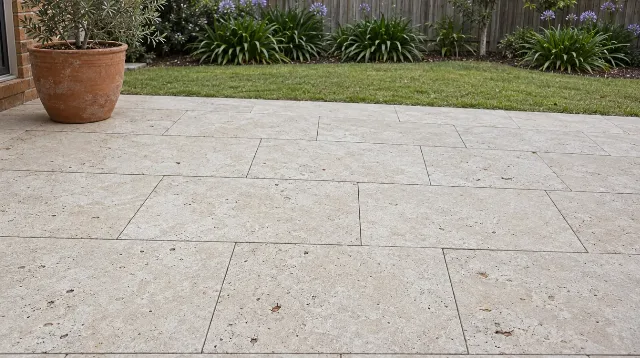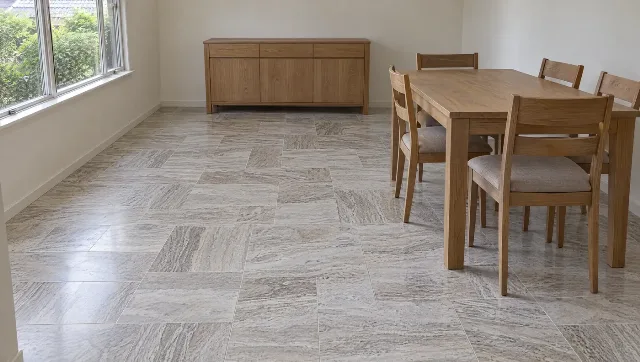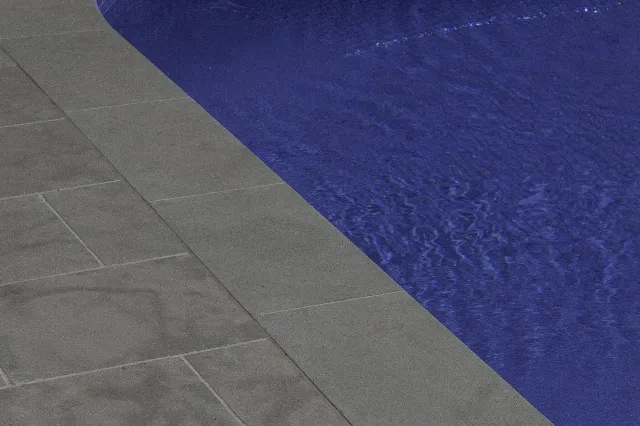
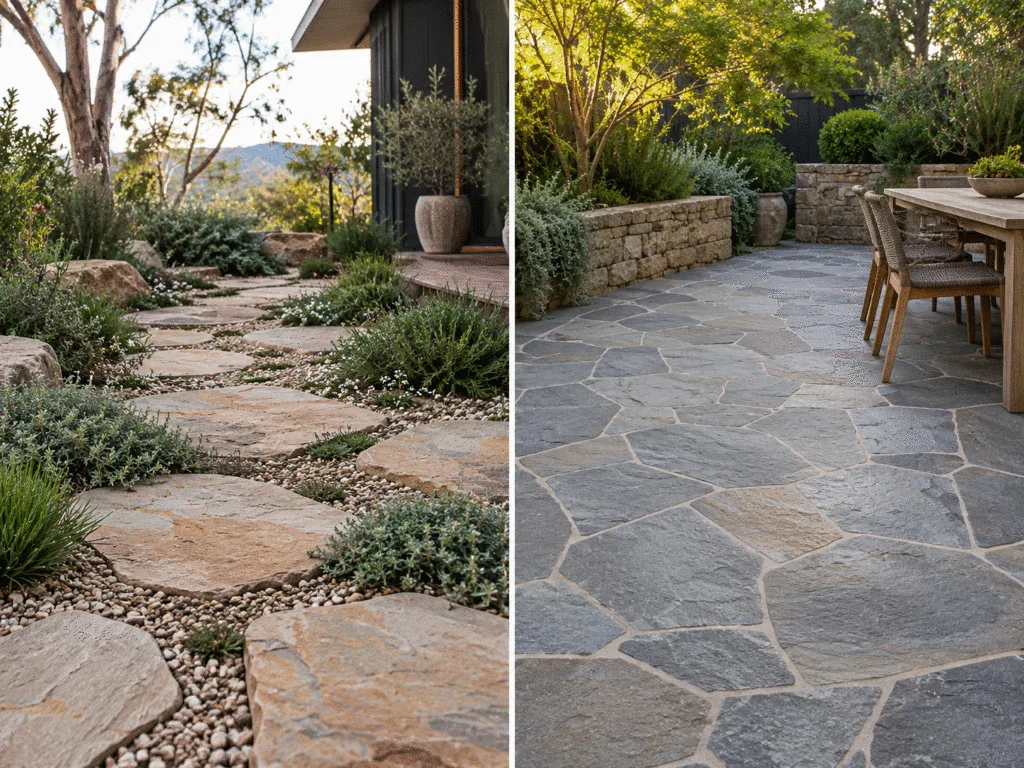
Flagstone and crazy paving are closely related types of natural stone paving, but the terms do not always mean exactly the same thing. Flagstone generally describes flat stone slabs used for paving, while crazy paving refers to a laying pattern made from irregularly shaped pieces fitted together with non-uniform joints.
In Australia, suppliers often use both names for the same irregular natural stone products. The distinction becomes more useful when comparing large individual flagstones with smaller pieces arranged into a continuous crazy paving surface.
Both can create attractive patios, pathways, courtyards and garden spaces. However, the stone material, piece size, installation method and joint layout can influence the finished appearance, cost and maintenance.
This comparison explains what separates flagstone from crazy paving, where each works best and what Australian homeowners should consider before choosing.
In this guide
- Flagstone vs Crazy Paving at a Glance
- What Is Flagstone Paving?
- What Is Crazy Paving?
- Are Flagstone and Crazy Paving Actually Different?
- Flagstone vs Crazy Paving: Which Looks Better?
- Which Costs More: Flagstone or Crazy Paving?
- Which Is More Durable: Flagstone or Crazy Paving?
- Best Uses for Flagstone and Crazy Paving
- What About Maintenance and Cleaning?
- Common Mistakes When Choosing Irregular Stone Paving
- Flagstone or Crazy Paving: Which Should You Choose?
- Frequently Asked Questions About Flagstone and Crazy Paving
- Explore Natural Stone Crazy Paving at Splendour in Stone
Flagstone vs Crazy Paving at a Glance
The main difference is usually how the stone is supplied and arranged, rather than what the stone is made from.
| Feature | Flagstone paving | Crazy paving |
| Meaning | Flat natural stone slabs used for paving | Irregular stone pieces arranged in a random pattern |
| Typical appearance | Larger individual slabs, often with natural edges | Interlocking, non-uniform stone mosaic |
| Piece size | Often larger slabs | Commonly mixed sizes |
| Joint layout | Can be wide, narrow or irregular | Usually irregular joints throughout |
| Common materials | Sandstone, limestone, slate, bluestone | Bluestone, travertine, marble, porphyry, limestone |
| Installation | Depends on slab size and intended use | Requires careful individual fitting |
| Best applications | Garden paths, stepping stones, patios | Patios, courtyards, pool surrounds and paths |
| Cost considerations | Stone size, weight and handling | Fitting, cutting, jointing and labour |
These are typical design differences, not strict industry classifications.
A large irregular stone slab can be called flagstone and also form part of a crazy paving installation.
What Is Flagstone Paving?
Flagstone is a broad term for relatively flat pieces of natural stone used to create outdoor surfaces.
Traditionally, flagstones were quarried or split from stone that naturally forms in layers. The pieces could be used for walkways, terraces and other paved areas.
Today, the term may also describe cut or processed natural stone sold in irregular paving formats.
Flagstones can vary considerably in size, thickness, edge shape and surface texture.
Large pieces are often positioned individually through lawns or gravel, creating an informal garden pathway.
They can also be installed close together to form a more continuous patio.
Common flagstone materials include:
- Sandstone, known for its layered texture and earthy colours.
- Limestone, available in softer neutral shades.
- Bluestone, valued for its grey tones and durability.
- Slate, recognised for its natural splitting characteristics.
- Travertine, often selected for warm outdoor settings.
Because flagstone describes a format rather than one specific geological material, durability and maintenance depend on the actual stone selected.
A dense bluestone flagstone and a softer sandstone flagstone should not automatically be treated as having identical performance.
What Is Crazy Paving?
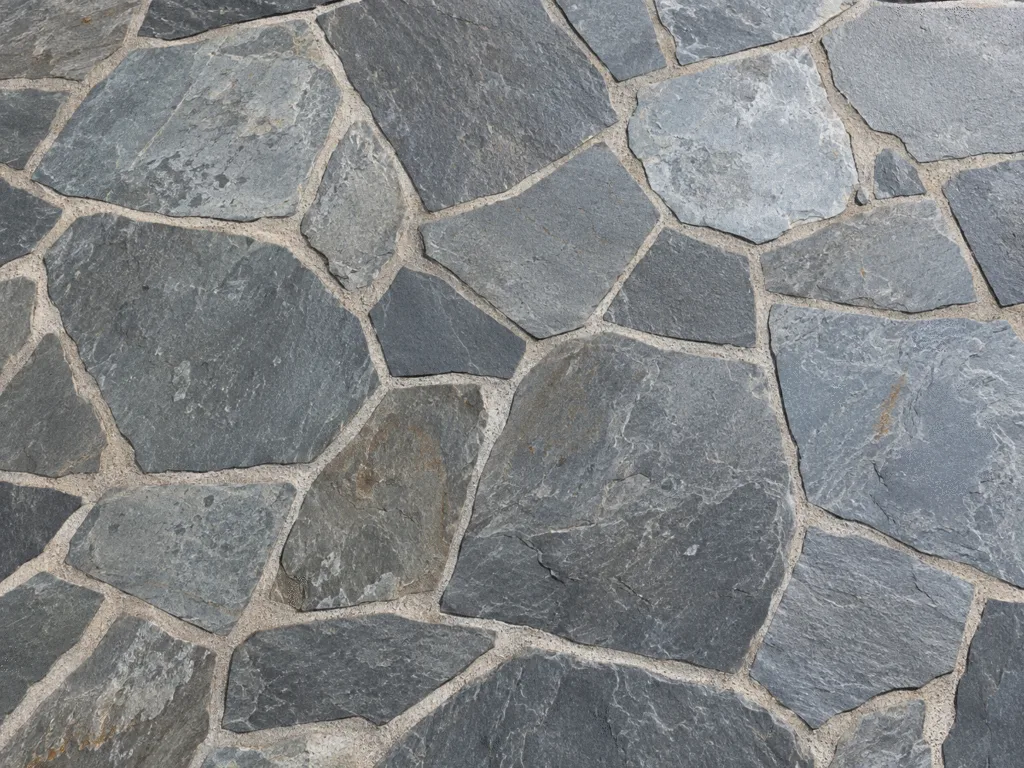
Crazy paving is a method of laying irregularly shaped paving stones in a non-repeating pattern.
Instead of arranging square or rectangular pavers in straight rows, the installer fits pieces together to create a natural mosaic-like surface.
The stones may have irregular edges, different dimensions and subtle variations in thickness.
Joint widths can vary, although a well-planned installation should maintain a balanced appearance and avoid excessively narrow or awkward pieces.
Crazy paving is commonly used for:
- Outdoor patios and alfresco areas.
- Courtyards and garden paths.
- Pool surrounds.
- Landscaped entertaining areas.
- Decorative entrance paving.
The format works especially well where rigid rectangular patterns would appear too formal.
Splendour in Stone supplies natural stone crazy paving in materials including bluestone, travertine, marble and porphyry.
The stone selection affects both the appearance and the performance of the finished surface.
For example, grey bluestone can create a restrained contemporary design, while warm travertine can suit Mediterranean-inspired gardens.
Are Flagstone and Crazy Paving Actually Different?
Not necessarily.
The terms overlap because both can involve irregular natural stone pieces.
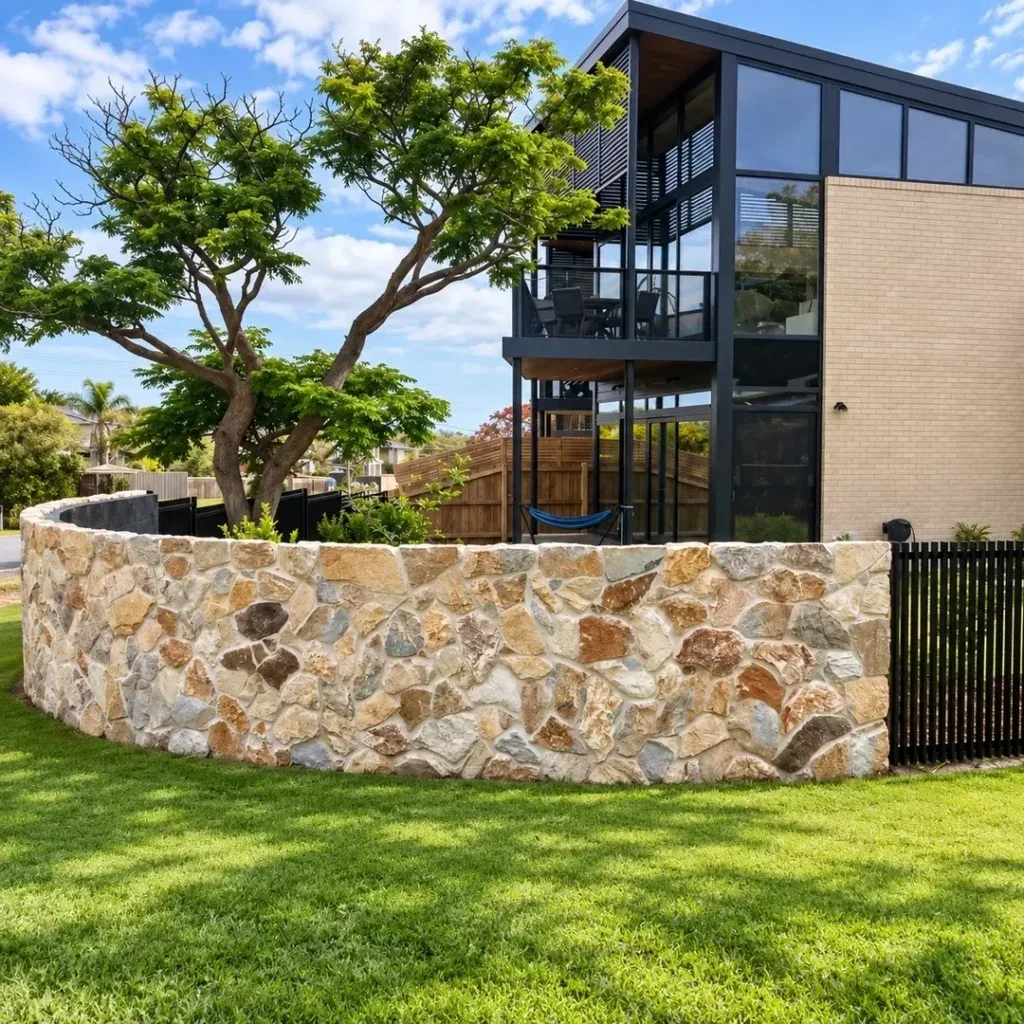
The clearest distinction is that flagstone describes the paving pieces, while crazy paving describes the arrangement of those pieces.
For example, a large sandstone slab installed individually within a lawn is usually described as a flagstone or stepping stone.
If similar irregular slabs are fitted closely together across an entire patio, the finished surface may also be described as crazy paving.
In Australian landscaping, the distinction often comes down to product naming and design style.
When comparing products, ask the supplier about the actual stone material, thickness, size distribution, surface finish and intended application.
These specifications matter more than whether the product is labelled flagstone or crazy paving.
Flagstone vs Crazy Paving: Which Looks Better?
Neither style is inherently better. They create different visual effects depending on the piece sizes, joints and surrounding landscape.
Flagstone for a Natural, Relaxed Garden
Large individual flagstones can make a garden feel informal and established.
Their uneven outlines work well with lawn, gravel and planting.
Wider spaces between slabs can also soften the appearance of hard landscaping.
This style is particularly effective for stepping stone pathways and gardens where natural materials are intended to blend into the landscape.
Crazy Paving for a Continuous Decorative Surface
Crazy paving creates a more connected paved area while retaining the variation of irregular stone.
It can be particularly effective beneath outdoor furniture, where a continuous and properly constructed surface is more practical than widely separated stepping stones.
The appearance can range from rustic to contemporary.
A pale travertine layout with subtle joints creates a different impression from dark bluestone with pronounced edges.
For smaller courtyards, maintaining consistent joint colour and avoiding too many tiny pieces helps prevent the finished surface from looking visually cluttered.
Which Costs More: Flagstone or Crazy Paving?
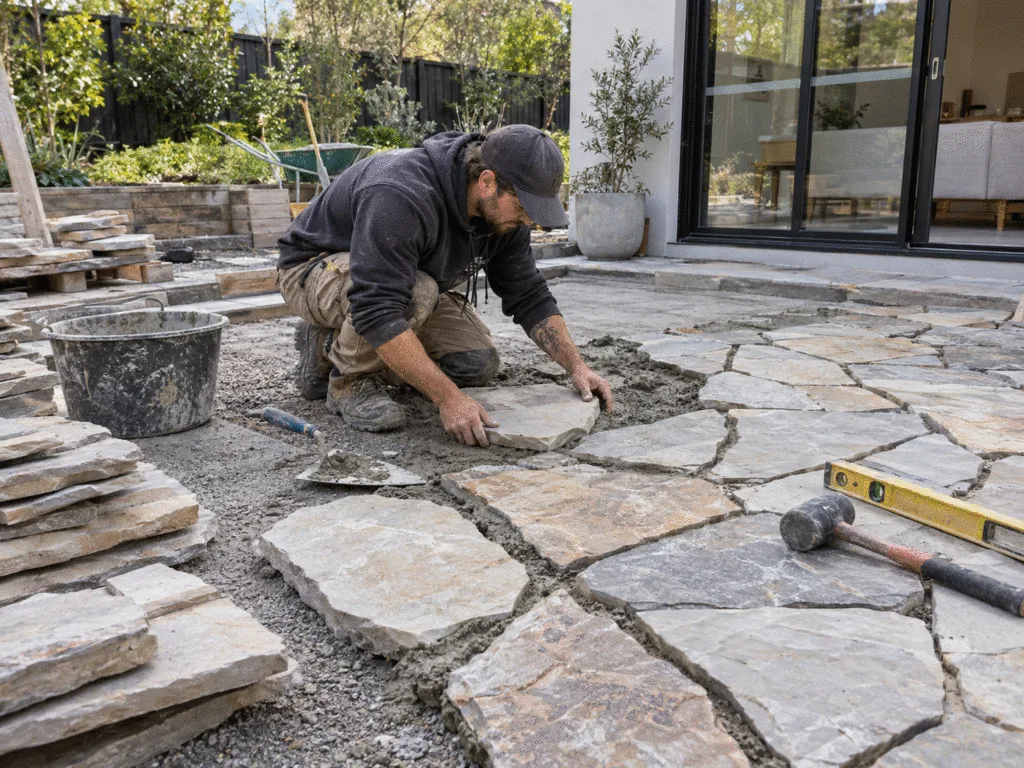
Crazy paving can cost more to install than a straightforward arrangement of large individual flagstones because fitting irregular pieces into a continuous surface is labour-intensive.
However, there is no universal rule that crazy paving is always more expensive.
A large premium flagstone that requires special handling, extensive preparation or complicated cutting may cost more than a simpler crazy paving installation.
The total project cost depends on the material and construction method.
Factors Affecting Flagstone and Crazy Paving Costs
| Cost factor | How it affects the project |
| Stone material | Premium or imported stone can increase supply costs |
| Thickness and size | Larger, heavier pieces may require more handling |
| Base preparation | Excavation, compaction and concrete work affect labour and materials |
| Laying pattern | Tight-fitting irregular pieces can increase installation time |
| Cutting and wastage | Complex shapes and edges may require additional stone |
| Jointing | Mortar, grout or suitable aggregates affect materials and labour |
| Drainage | Falls, channels and stormwater work may increase costs |
| Site access | Restricted access can complicate delivery and installation |
Why Crazy Paving Can Be More Labour-Intensive
Rectangular pavers are generally easier to position in a consistent pattern.
Crazy paving requires the installer to select, arrange and sometimes trim individual pieces to achieve a balanced layout.
The process may involve additional handling and more time spent managing joint widths.
Poorly fitted pieces can result in uneven gaps and an unattractive surface, making workmanship particularly important.
How to Compare Quotes Properly
Instead of comparing only the price per square metre of stone, ask for an itemised quotation.
Confirm whether it includes removal of existing surfaces, ground preparation, the paving base, stone supply, delivery, installation, cutting, jointing, drainage and sealing where appropriate.
Also check whether the quote includes GST and an allowance for wastage.
A reliable comparison must use the same project specifications. A stone-only supply price cannot be fairly compared with a fully installed paving quotation.
For a Melbourne property, obtain quotes based on the actual site rather than relying on generic national price estimates.
Which Is More Durable: Flagstone or Crazy Paving?
Durability depends primarily on the stone material, thickness, base construction and installation quality.
The terms flagstone and crazy paving do not automatically indicate how strong a surface will be.
For example, dense porphyry or appropriately specified bluestone can be suitable for demanding outdoor applications.
Softer or more porous stones may require greater consideration of traffic, staining and maintenance.
The supporting base is equally important.
Even high-quality natural stone can crack or move if installed over an unsuitable or unstable foundation.
Natural Stone Options Compared
| Material | Typical characteristics | Common applications |
| Bluestone | Dense, durable and usually grey | Patios, paths and selected high-traffic areas |
| Travertine | Warm tones with natural pores and variation | Pool surrounds, courtyards and patios |
| Limestone | Neutral colours with product-dependent density | Patios, garden paths and courtyards |
| Porphyry | Hard-wearing with varied earthy tones | Paths, courtyards and suitable driveways |
| Marble | Distinctive veining and decorative appearance | Patios and selected outdoor settings |
| Sandstone | Layered texture and earthy colours | Garden paths and lighter-use outdoor spaces |
For driveways, vehicle loads require more than choosing a dense stone.
Paver thickness, the laying system, foundation design and suitability for vehicle traffic must all be confirmed.
The appropriate specifications for crazy paving driveways differ from those of a lightly used garden path.
Best Uses for Flagstone and Crazy Paving
Different outdoor spaces benefit from different paving layouts.
1. Garden Paths and Stepping Stones
Large individual flagstones are often the more practical choice for an informal garden pathway.
They can be spaced through gravel or planting without creating a continuous paved surface.
This approach is useful where homeowners want to retain greenery.
2. Patios and Alfresco Areas
Crazy paving can create a stable, continuous surface for outdoor furniture when properly installed and finished.
Flagstone can also be used for patios, but widely spaced slabs may be inconvenient beneath chair legs or tables.
For an entertaining area, surface evenness and joint design deserve particular attention.
3. Pool Surrounds
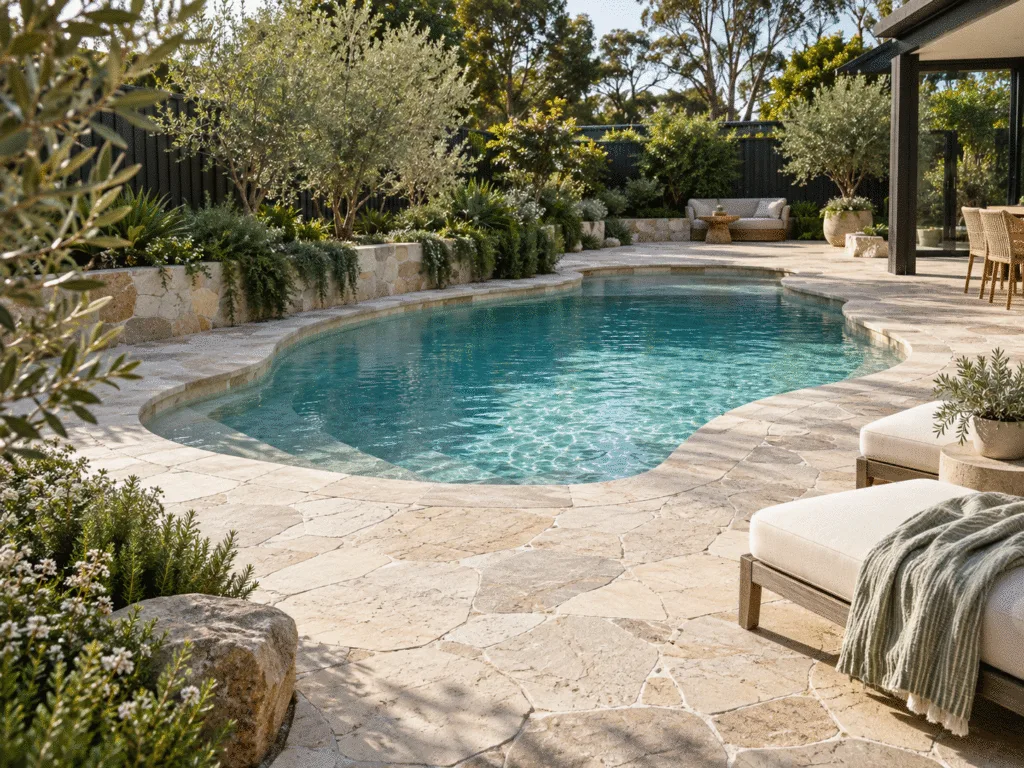
Crazy paving is frequently selected for pool surrounds because it offers an informal stone appearance with a continuous layout.
Suitable natural stone finishes can provide wet-area grip, but slip resistance must be confirmed for the specific product rather than assumed from the paving style.
Consider drainage, water exposure, pool chemicals and surface temperature.
4. Courtyards
Both options can suit courtyards.
Large flagstones with planting between them create a softer garden appearance.
Closely fitted crazy paving may be more appropriate where most of the courtyard serves as an outdoor living area.
5. Driveways
Some crazy paving products can be suitable for vehicle traffic, particularly where the stone and installation system have been specified for that purpose.
However, not every irregular paving product is driveway-rated.
Always confirm the material, thickness and engineered base requirements before proceeding.
What About Maintenance and Cleaning?
Flagstone and crazy paving generally need similar maintenance when made from the same natural stone.
The material and finish have a greater influence on cleaning requirements than the name of the paving format.
Routine maintenance usually includes sweeping debris, removing leaves and cleaning with a product compatible with the stone.
Acidic cleaning products should be avoided on acid-sensitive stones such as limestone, marble and travertine.
Joint maintenance is also important.
Crazy paving often has a greater network of irregular joints than large-format paving, which may create more areas where dirt and vegetation accumulate.
However, the actual maintenance requirement depends on joint width, jointing material and exposure conditions.
Sealing may improve stain resistance for some stone types, but it does not eliminate every maintenance requirement or prevent physical damage.
A suitable sealing product and maintenance schedule should be determined for the specific stone and installation.
Common Mistakes When Choosing Irregular Stone Paving
A visually attractive paving sample does not guarantee a successful installation.
Avoid these common mistakes:
- Choosing by appearance alone: Confirm the stone’s suitability for foot traffic, wet conditions and any vehicle loads.
- Ignoring thickness: The correct thickness depends on the material, base and intended use.
- Using excessive joint widths: Large or inconsistent joints can affect appearance and walking comfort.
- Overlooking drainage: Outdoor paving needs appropriate falls and water management.
- Underestimating labour: Irregular paving requires skilled layout and fitting.
- Selecting an unsuitable finish: Wet-area grip and surface comfort vary between stone finishes.
Poor drainage and inadequate preparation can lead to problems regardless of whether the surface is called flagstone or crazy paving.
Flagstone or Crazy Paving: Which Should You Choose?
The decision is less about choosing between two separate products and more about selecting the right paving format and layout.
| Your priority | Better starting point |
| Natural stepping stone pathway | Large individual flagstones |
| Continuous outdoor entertaining area | Crazy paving or closely laid flagstones |
| Informal garden appearance | Widely spaced flagstones |
| Decorative irregular patio | Crazy paving |
| Small courtyard with outdoor furniture | Continuous crazy paving surface |
| Pool surround | Suitable crazy paving or closely laid natural stone |
| Driveway | Specifically rated stone with an appropriate engineered base |
For Melbourne homeowners, the surrounding architecture also matters.
Larger pieces can give a garden a quieter appearance, while smaller irregular pieces create more texture and visual movement.
The best result comes from selecting the stone, piece size and joint layout together rather than treating them as separate decisions.
Frequently Asked Questions About Flagstone and Crazy Paving
Is Flagstone the Same as Crazy Paving?
Sometimes. Flagstone generally refers to flat natural stone slabs, while crazy paving describes an irregular laying pattern. Australian suppliers frequently use both terms for the same products. Large individual flagstones can also be arranged into a crazy paving surface.
Is Crazy Paving Cheaper Than Regular Pavers?
Not necessarily. Some irregular stone materials may be competitively priced, but crazy paving can require more installation labour because each piece must be fitted. The final cost depends on the material, base preparation, cutting, jointing and site conditions.
What Is the Best Stone for Crazy Paving?
Bluestone, travertine, limestone, marble and porphyry can all be suitable for crazy paving in appropriate applications. The best choice depends on appearance, durability, exposure and the required surface finish. The specific product must be suitable for its intended use.
Can You Use Flagstones Around a Swimming Pool?
Yes, provided the selected stone, finish and installation are suitable for pool surrounds. Check wet slip resistance, drainage, coping details and compatibility with the pool environment. Wide gaps between individual flagstones may be less practical around a frequently used pool.
Does Crazy Paving Need Sealing?
Some natural stone crazy paving benefits from sealing, especially where staining is a concern. The need for sealing depends on the material, finish and exposure. Use a compatible product and follow the manufacturer’s guidance rather than assuming every stone requires the same treatment.
How Long Does Flagstone or Crazy Paving Last?
Well-specified natural stone paving can provide decades of service, but longevity depends on the stone, installation quality, foundation, drainage and maintenance. Neither format guarantees durability without appropriate construction.
Explore Natural Stone Crazy Paving at Splendour in Stone
Flagstone and crazy paving offer similar natural character, but the best layout depends on how the outdoor space will be used.
Large individual flagstones can create relaxed garden paths with planting between the stones. Crazy paving is particularly useful when you want a continuous patio, courtyard or pool surround with irregular shapes and natural variation.
Before deciding, compare the actual stone material, size distribution, surface finish, thickness and installation requirements.
Splendour in Stone offers natural stone paving options in bluestone, travertine, marble and porphyry, with products suited to different residential landscaping applications.
Explore the crazy paving collection or visit the Mitcham showroom to compare samples and discuss your project requirements.