Herringbone paving is a laying pattern where rectangular pavers are arranged in an interlocking zigzag formation, usually at either 45 or 90 degrees. It is popular for driveways, garden paths, courtyards, patios and entrances because it creates strong visual movement while helping the paved surface feel structured and secure.
The key is choosing the right paver shape, the right stone and the right layout for the space. Herringbone looks simple once finished, but the best results come from careful set-out, accurate cuts and a suitable base.
In this guide
- What Is a Herringbone Paving Pattern?
- 45-Degree vs 90-Degree Herringbone Paving
- What Does Herringbone Paving Look Like?
- Herringbone vs Chevron Paving
- Herringbone vs Other Paving Patterns
- Where to Use Herringbone Paving
- Why Herringbone Is a Strong Pattern for Driveways
- What Pavers Work Best for a Herringbone Pattern?
- Best Natural Stone Materials for Herringbone Paving
- What Are the Disadvantages of Herringbone Paving?
- How Is Herringbone Paving Laid?
- Can Herringbone Be Used for Walls and Cladding?
- Planning Herringbone Paving in Melbourne and Victoria
- Choose the Right Stone for Herringbone Paving
- FAQs
What Is a Herringbone Paving Pattern?
A herringbone paving pattern uses rectangular units laid at right angles to create a repeated zigzag effect. Each paver sits against the next in a way that gives the surface a woven, interlocking appearance.
The name comes from the resemblance to the bones of a herring fish. In paving, the effect is crisp, directional and highly detailed. It can look traditional, architectural or contemporary depending on the stone, colour, finish and border treatment.
Herringbone is most commonly created with rectangular pavers, clay paving bricks, setts or cobblestones. It does not suit every material format. Square pavers, large irregular pieces and crazy paving are better suited to other patterns.
| Herringbone variation | What it means | Best effect |
| Single herringbone | One rectangular paver turns against the next in a repeated zigzag | Clean, classic and suitable for most residential paving |
| Double herringbone | Two pavers are laid side by side before the direction changes | Bolder and more decorative |
| 45-degree herringbone | The pattern runs diagonally across the paved area | Dynamic, formal and ideal for statement areas |
| 90-degree herringbone | The pattern runs square to the edge or main line of the space | Structured, neat and easier to visually control |
45-Degree vs 90-Degree Herringbone Paving
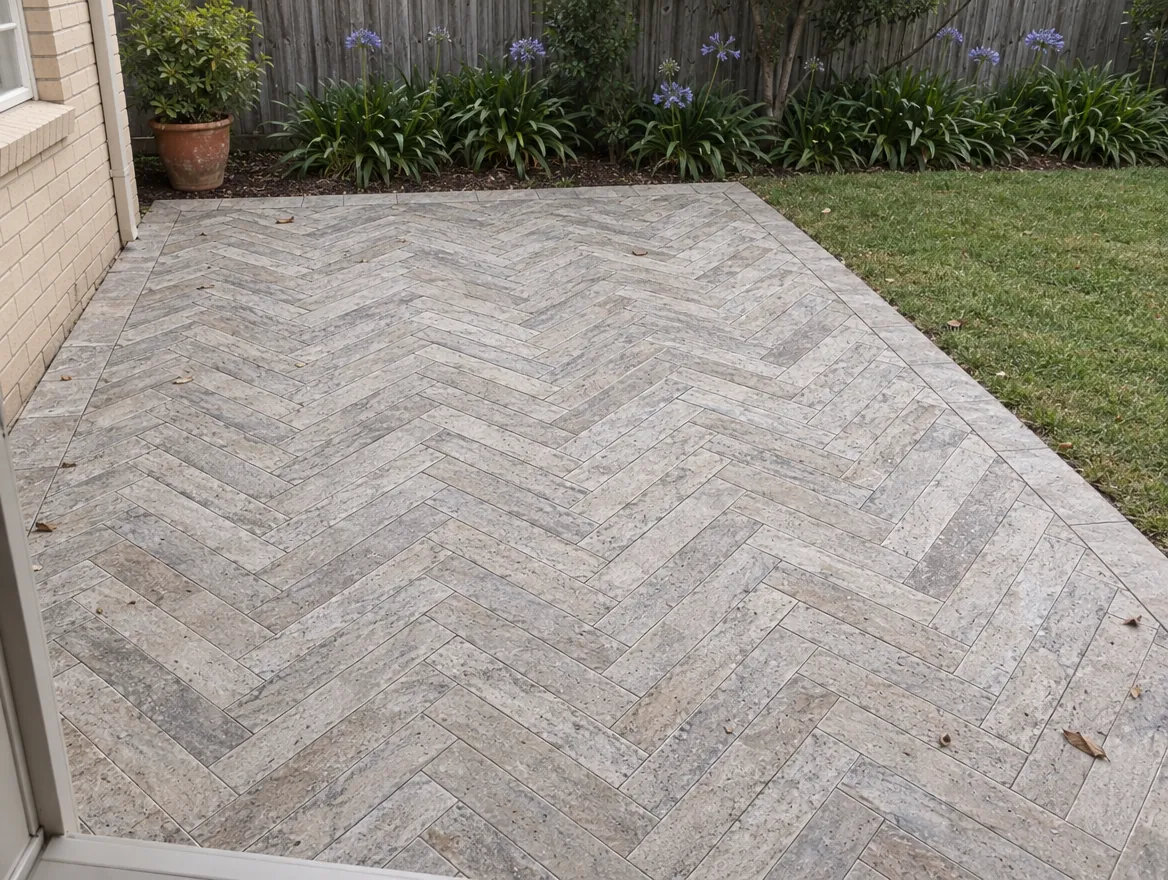
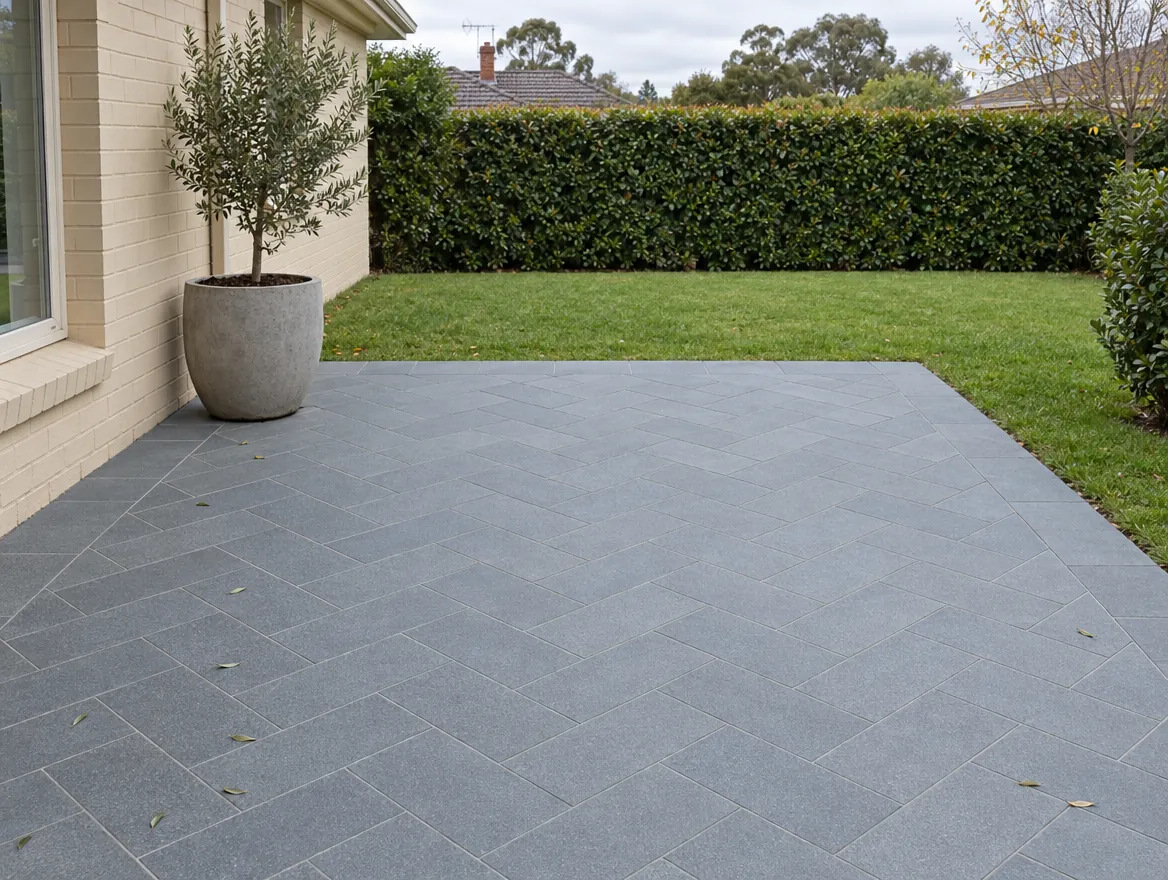
The main difference between 45-degree and 90-degree herringbone paving is the direction of the zigzag. A 45-degree pattern runs diagonally, while a 90-degree pattern sits square to the edge of the paved area.
A 45-degree herringbone pattern usually feels more dynamic. It draws the eye across the space and can make a driveway, entry path or courtyard feel more considered. It is often used where the paving itself is part of the design feature.
A 90-degree herringbone pattern feels more ordered and architectural. It suits courtyards, garden paths, patios and rectangular areas where you want the pattern to feel tidy rather than busy.
| Layout | Look | Best used for | Practical note |
| 45-degree herringbone | Diagonal, energetic and more decorative | Driveways, front paths, entrances and feature paving | Usually requires more angled edge cuts |
| 90-degree herringbone | Straight, structured and calmer | Courtyards, patios, walkways and compact areas | Often simpler to set out on square or rectangular spaces |
For Melbourne homes with clean architectural lines, a 90-degree herringbone in bluestone or granite can feel sharp and restrained. For driveways or wider paths, a 45-degree layout often creates a stronger sense of movement.
What Does Herringbone Paving Look Like?
Herringbone paving has a repeated zigzag look that adds rhythm, detail and direction to an outdoor surface. It is more decorative than running bond, but more structured than crazy paving.
The final look depends heavily on the material.
Dark stone, such as bluestone or charcoal granite, gives herringbone a bold architectural finish. Warm travertine or limestone makes the same pattern feel softer and more relaxed. Cobblestones or porphyry can give the layout a more rustic, European character.
A border course can make a major difference. A simple soldier course around the edge frames the pattern and gives the paving a cleaner finish. This is especially useful for courtyards, driveways and paths where the cut pieces need to be visually contained.
Herringbone works best when the pattern is allowed to be seen. It suits areas where the paving has room to become part of the design, such as:
Front entries: Creates a strong first impression.
Garden paths: Guides movement through the landscape.
Courtyards: Adds detail without relying on heavy styling.
Driveways: Gives a practical surface a more premium finish.
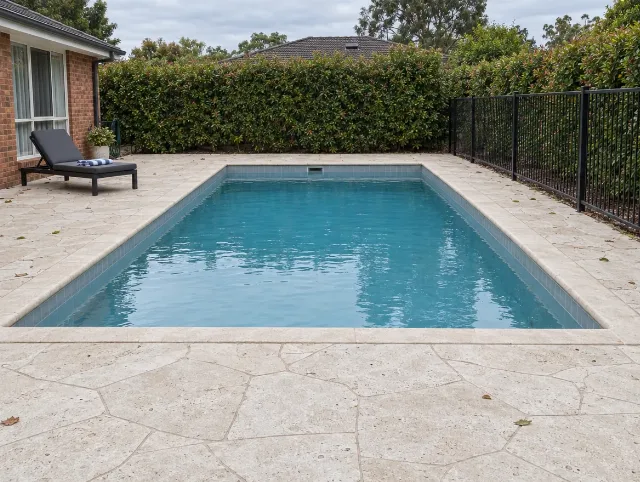
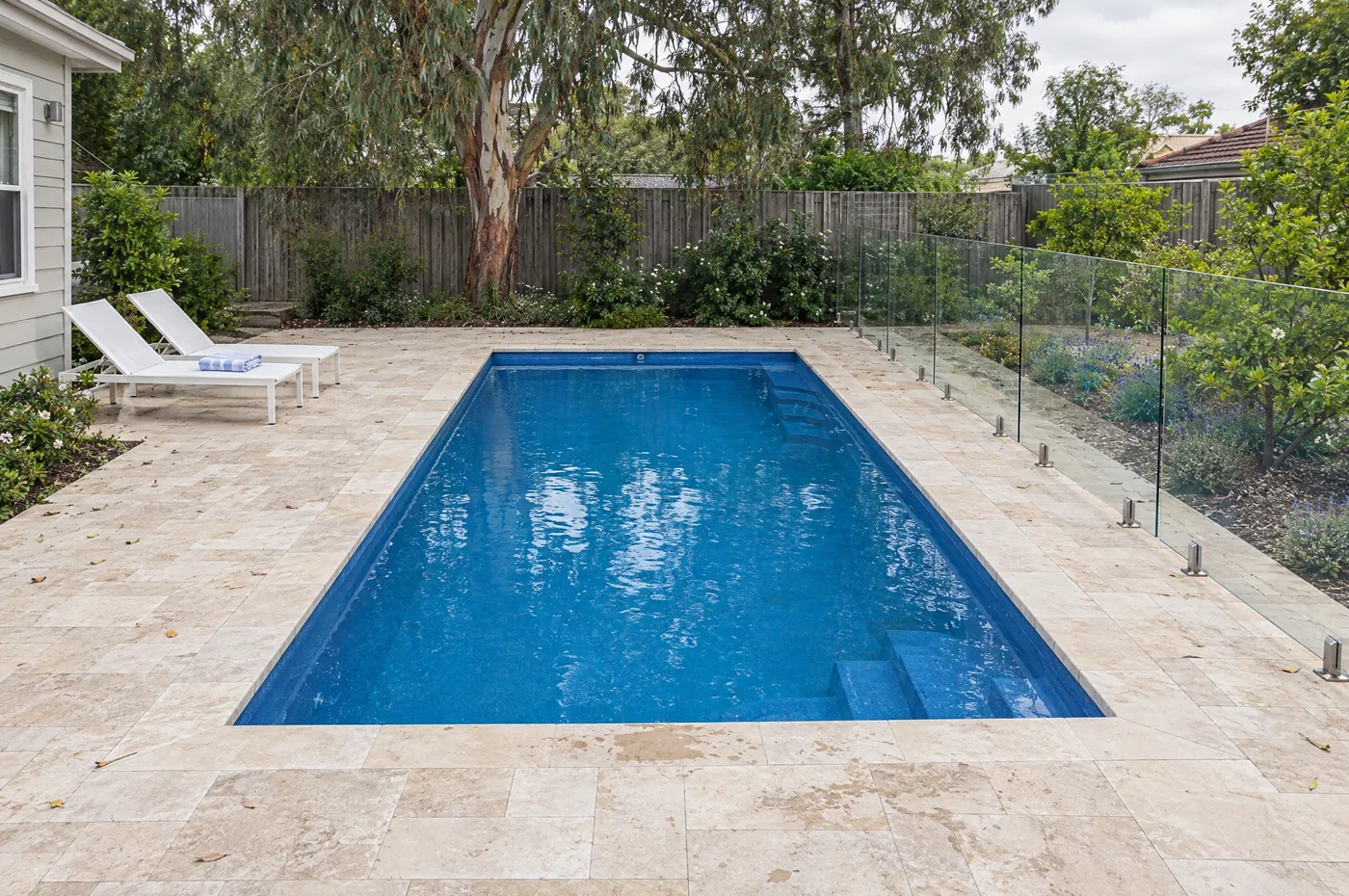
Pool surrounds: Can look refined when the stone finish and drainage are suitable.
Herringbone vs Chevron Paving
Herringbone and chevron are both zigzag patterns, but they are not the same. Herringbone uses rectangular pavers that meet at right angles. Chevron uses pieces cut at an angle so the ends meet in a continuous point.
In simple terms, herringbone has a broken zigzag. Chevron has a sharper arrow-like line.
| Pattern | How it is made | Look | Best for |
| Herringbone | Rectangular pavers laid at right angles | Classic, interlocking and textured | Driveways, paths, patios and courtyards |
| Chevron | Pavers cut at angled ends to form a point | Sleeker, sharper and more formal | Decorative feature paving and highly controlled designs |
Herringbone is usually more practical for outdoor paving because it can be created with standard rectangular units. Chevron can look beautiful, but it usually needs more precise cutting and set-out.
Herringbone vs Other Paving Patterns
Herringbone is one of the strongest visual paving patterns because it combines movement, interlock and design detail. It sits between simple linear patterns and more decorative layouts.
| Pattern | Look | Strength and stability | Best use |
| Herringbone | Zigzag, detailed and directional | Excellent interlock when installed properly | Driveways, paths, courtyards and feature paving |
| Running bond or stretcher bond | Linear and simple | Good for general foot traffic | Patios, paths and casual outdoor areas |
| Basketweave | Traditional and decorative | Moderate, depending on installation | Heritage-style courtyards and garden paths |
| Stack bond | Modern grid layout | Less forgiving if movement occurs | Low-traffic patios and contemporary spaces |
| Crazy paving | Organic and irregular | Depends on stone, base and jointing | Pool surrounds, garden paths and relaxed landscapes |
| Chevron | Sharp V-shaped lines | Highly dependent on accurate cuts | Feature areas and formal designs |
If you want a calm, minimal look, running bond or stack bond may be better. If you want a natural, irregular look, crazy paving may suit the project more. If you want a structured pattern with strong design presence, herringbone is usually the better choice.
Where to Use Herringbone Paving
Herringbone paving works best in outdoor areas where the pattern can add structure, movement or strength. It is especially useful when the paving needs to do more than simply cover the ground.
Driveways
Herringbone is one of the best-known patterns for driveways because the interlocking layout helps the pavers work together as a surface. This is useful in areas where vehicles turn, brake or apply pressure to the paving.
For driveways, the stone, thickness, base, bedding, jointing and edge restraint all need to be suitable for vehicle loads. The pattern helps, but it does not replace proper construction.
Natural stone options such as granite and suitable cobblestones are often considered for high-wear driveway settings. If you want a stronger, more textured driveway finish, the cobblestones range is a natural place to start.
Garden Paths and Walkways
Herringbone works beautifully on paths because it naturally guides the eye forward. A narrow garden path can feel more intentional when the pattern runs along the direction of movement.
For a clean modern look, bluestone or granite can work well. For a softer garden setting, limestone or travertine may feel warmer and more relaxed.
Patios and Alfresco Areas
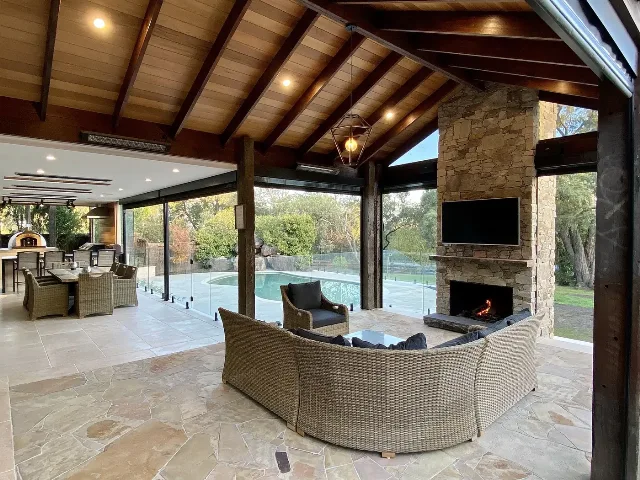
In patios and alfresco spaces, herringbone adds detail without needing strong colour contrast. This is useful in outdoor entertaining areas where the floor surface forms part of the design.
A rectangular paved area can sometimes feel plain in a simple linear pattern. Herringbone gives the surface texture and direction while still feeling organised.
Courtyards
Small courtyards often benefit from pattern. Herringbone can make a compact area feel designed, especially when paired with planting, built-in seating or a simple border.
The only caution is scale. In very small courtyards, a high-contrast herringbone pattern can feel busy. A softer stone colour or a tighter colour blend usually works better.
Pool Surrounds
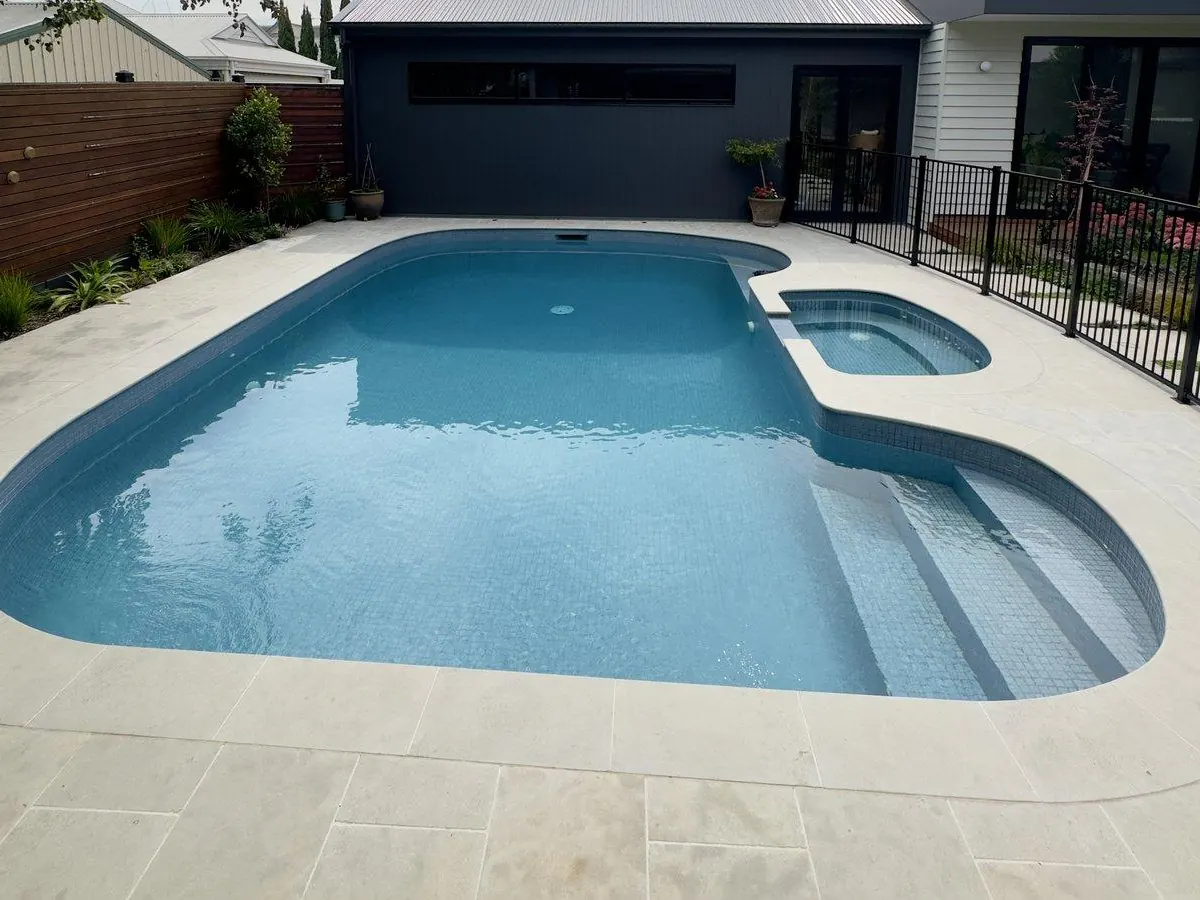
Herringbone can be used around pools, but the pattern should not be the first decision. Around water, stone finish, slip resistance, drainage, sealing and maintenance are more important.
Light limestone, travertine or selected natural stone pavers can create a refined poolside look when specified correctly. The paver needs to suit wet outdoor use, and the installation should allow water to move away safely.
Entrances
Herringbone is a strong choice for front entrances because it gives the approach to the home a deliberate finish. It can make a path, porch or landing feel more premium without using overly decorative materials.
A framed herringbone layout in natural stone can work especially well with contemporary, heritage and Mediterranean-inspired homes.
Why Herringbone Is a Strong Pattern for Driveways
Herringbone is strong for driveways because the interlocking pattern helps the pavers resist movement from vehicle traffic. When cars turn, brake or reverse, they create forces across the paved surface. A fully interlocked pattern helps spread those forces across multiple units.
Paving authority Pavingexpert notes that areas carrying vehicles, such as driveways and access roads, should use a fully interlocked paving pattern, with 45-degree and 90-degree herringbone among the most popular options.
For driveways, 45-degree herringbone is often chosen because it gives excellent visual movement and can run with the direction of travel. A 90-degree layout can also work well, especially where the driveway is square, rectangular or closely aligned to the house.
The pattern is only one part of the system. A driveway still needs:
Suitable pavers: The stone must be appropriate for vehicle traffic.
Correct base preparation: The base must suit the ground and expected load.
Strong edge restraint: The outer edges help stop the pattern from spreading.
Accurate jointing: Joints help lock the paving together.
Drainage fall: Water should move away from buildings and paved surfaces.
For a driveway, always confirm suitability before ordering stone. The best material choice depends on the site, vehicle use, finish, thickness and installation method.
What Pavers Work Best for a Herringbone Pattern?
Herringbone paving works best with rectangular pavers that have consistent dimensions. The pattern relies on repeated right angles, so the cleaner the paver format, the cleaner the finished layout.
The best options are usually:
Rectangular natural stone pavers: Ideal for clean, architectural herringbone layouts.
Clay paving bricks: A traditional option for herringbone brick paving.
Stone setts: Useful for driveways, paths and textured outdoor surfaces.
Cobblestones: Suitable for durable, character-rich paving when the format supports the layout.
Elongated stone formats: Useful for linear movement, although irregular sizing can create a more rustic result.
The less suitable options are:
Square pavers: These do not create the classic herringbone effect.
Large irregular pieces: These are better suited to crazy paving.
Highly varied stone pieces: These make crisp alignment harder.
Oversized formats: These can make the pattern feel heavy unless the area is large enough.
If the project needs a refined finish, choose a consistent rectangular format. If the project needs a more rustic or hand-laid feel, setts, cobbles or elongated stone may be more suitable.
Best Natural Stone Materials for Herringbone Paving
The best stone for herringbone paving depends on where it will be used and how formal you want the surface to feel. The pattern can work with several natural stones, but the shape and finish matter as much as the stone type.
Splendour in Stone’s natural stone paving range includes limestone, travertine, marble, bluestone, granite and porphyry options, giving homeowners, builders and landscapers several directions to consider.
Bluestone
Bluestone is a strong choice for modern herringbone paving because its blue-grey tone feels architectural and calm. It suits front paths, entries, courtyards and contemporary outdoor areas.
A sawn or flamed bluestone finish can make the herringbone pattern feel clean and structured, especially when paired with a simple border.
Granite
Granite is well suited to high-use areas where strength and durability are priorities. Charcoal or grey granite can give herringbone paving a crisp, modern finish.
For driveways, granite may be considered where the format, thickness and installation system are suitable for vehicle traffic.
Limestone
Limestone gives herringbone paving a softer and more natural look. It can work well in courtyards, garden paths and relaxed outdoor entertaining spaces.
Its neutral tones are useful when the pattern itself already brings enough visual detail.
Travertine
Travertine brings warmth and texture to herringbone paving. It can suit patios, alfresco spaces and poolside areas when the selected finish is suitable for the application.
Travertine herringbone often works well in Mediterranean, coastal and resort-style landscapes.
Cobblestones
Cobblestones are a natural fit for driveways, garden paths and textured outdoor areas. Their smaller format can create a durable, character-rich finish.
For homes that need a more robust or old-world look, natural stone cobblestones can give the herringbone idea more depth and texture.
Porphyry Filetti
Filetti Porphyry has a slender, elongated stone format with natural variation in length, width and thickness. It brings strong visual movement to garden paths, courtyards and driveways.
Because Filetti has a rustic, variable format, it should be approached differently from a crisp rectangular paver. It can create strong linear movement and may suit custom herringbone-inspired layouts, but a very precise herringbone pattern is easier to achieve with consistent rectangular pavers.
What Are the Disadvantages of Herringbone Paving?
The main disadvantages of herringbone paving are extra cutting, more careful set-out and higher installation complexity compared with simpler patterns. It is a beautiful and practical pattern, but it is not always the cheapest or simplest option.
Key drawbacks include:
More edge cuts: 45-degree herringbone usually needs more angled cuts around the perimeter.
More labour: The installer needs to maintain alignment across the whole surface.
Not suitable for every paver: Rectangular units work best. Square and irregular pieces do not.
Can look busy: Small spaces or high-contrast stones may feel visually crowded.
Harder to correct: Alignment issues are more visible because the pattern repeats so clearly.
Needs good edging: Without strong edge restraint, the pattern can lose its clean finish over time.
These drawbacks do not mean herringbone is a bad choice. They simply mean it should be planned properly. For a feature path, entry, courtyard or driveway, the extra effort can be worth it.
How Is Herringbone Paving Laid?
Herringbone paving is laid by setting a clear base line, placing rectangular pavers at right angles, checking alignment regularly and cutting edge pieces to fit. The exact method depends on whether the pattern is 45 degrees or 90 degrees.
A simple overview looks like this:
- Prepare the base: The sub-base, bedding layer and drainage must suit the site and use.
- Choose the layout direction: Decide whether the pattern will run at 45 degrees or 90 degrees.
- Set string lines: Straight lines help stop the pattern from drifting.
- Lay the full pavers first: The main body of the pattern is usually established before edge cuts are added.
- Check alignment often: Small errors can become obvious across a herringbone surface.
- Cut the edge pieces: Border cuts complete the pattern against walls, garden beds or edge courses.
- Add edge restraint and jointing: This helps hold the paving in place.
Herringbone is not the hardest paving pattern, but it is less forgiving than running bond. For driveways, pool surrounds and large feature areas, it is usually worth using an experienced installer.
Can Herringbone Be Used for Walls and Cladding?
Yes, herringbone can also be used as a wall or cladding pattern, but this is different from herringbone paving. On walls, the pattern is used for visual texture rather than surface traffic.
Traditional herringbone brick paving is usually created with clay paving bricks. For vertical applications, reclaimed bricks can also create a strong herringbone-style feature wall.
Splendour in Stone’s reclaimed bricks are suited to interiors, exteriors and feature walls, giving this pattern a more character-rich architectural feel. For stone textures, the walling and cladding range gives another way to add natural material to vertical surfaces.
The important distinction is simple: paving products should be selected for ground use, while walling and cladding products should be used for vertical applications.
Planning Herringbone Paving in Melbourne and Victoria
Planning herringbone paving starts with choosing a suitable rectangular paver, confirming the area of use and checking how the pattern will look in the actual space. Melbourne homes vary widely in style, from heritage properties and garden courtyards to contemporary builds and large outdoor entertaining zones.
Before choosing the stone, think about:
The space: Is it a driveway, path, patio, courtyard, pool surround or entry?
The look: Do you want formal, rustic, soft, architectural or traditional?
The paver shape: Is the unit rectangular and consistent enough for herringbone?
The finish: Does the surface suit the intended use?
The border: Will a soldier course or edge frame improve the final result?
The installation: Does the area need a pedestrian base or a vehicle-rated base?
If you are choosing stone for a Melbourne or Victorian project, it helps to view colours and textures in person. Splendour in Stone’s project gallery can help you compare the feel of different natural stone applications, while the Melbourne and Victoria service areas page is useful for checking local project coverage.
You can also order a free sample before making a final decision. Seeing the colour, texture and finish in natural light is especially important with herringbone, because the repeated pattern can make tone variation more noticeable.
Choose the Right Stone for Herringbone Paving
Herringbone paving can make a driveway, path, courtyard or entrance feel more structured and considered. The best result starts with the right rectangular paver, the right base and a layout that suits the space.
For a natural stone herringbone project, start with the paving range, compare samples in natural light, then request a quote once you know the area, use and preferred finish.
FAQs
What is a herringbone paver pattern?
A herringbone paver pattern is a zigzag layout made by placing rectangular pavers at right angles to one another. It creates an interlocking effect that looks structured, decorative and directional.
Is herringbone paving good for driveways?
Yes, herringbone paving is one of the best pattern choices for driveways when the paver, base and edge restraint are suitable for vehicle traffic. The interlocking layout helps the surface resist movement from turning and braking forces.
What are the disadvantages of herringbone paving?
The main disadvantages are extra cutting, more labour and the need for careful alignment. Herringbone is more complex to lay than running bond, especially around borders and edges.
What is the difference between herringbone and chevron?
Herringbone uses rectangular pavers that meet at right angles, while chevron uses angled-cut pieces that meet in a continuous point. Chevron looks sharper, while herringbone is more traditional and usually more practical for standard paving units.
What materials can be laid in a herringbone pattern?
Rectangular natural stone pavers, clay paving bricks, setts and some cobblestones can be laid in a herringbone pattern. Square pavers, irregular crazy paving and highly varied stone pieces are not ideal for classic herringbone.
Is herringbone paving more expensive to lay?
Herringbone paving can cost more to lay than simpler patterns because it usually needs more set-out time and more edge cuts. The final cost depends on the stone, area size, base preparation, cuts and installer.
Is 45-degree or 90-degree herringbone better?
45-degree herringbone is better for a more dynamic, directional look, while 90-degree herringbone is better for a cleaner and more structured finish. Both can work well when planned correctly.