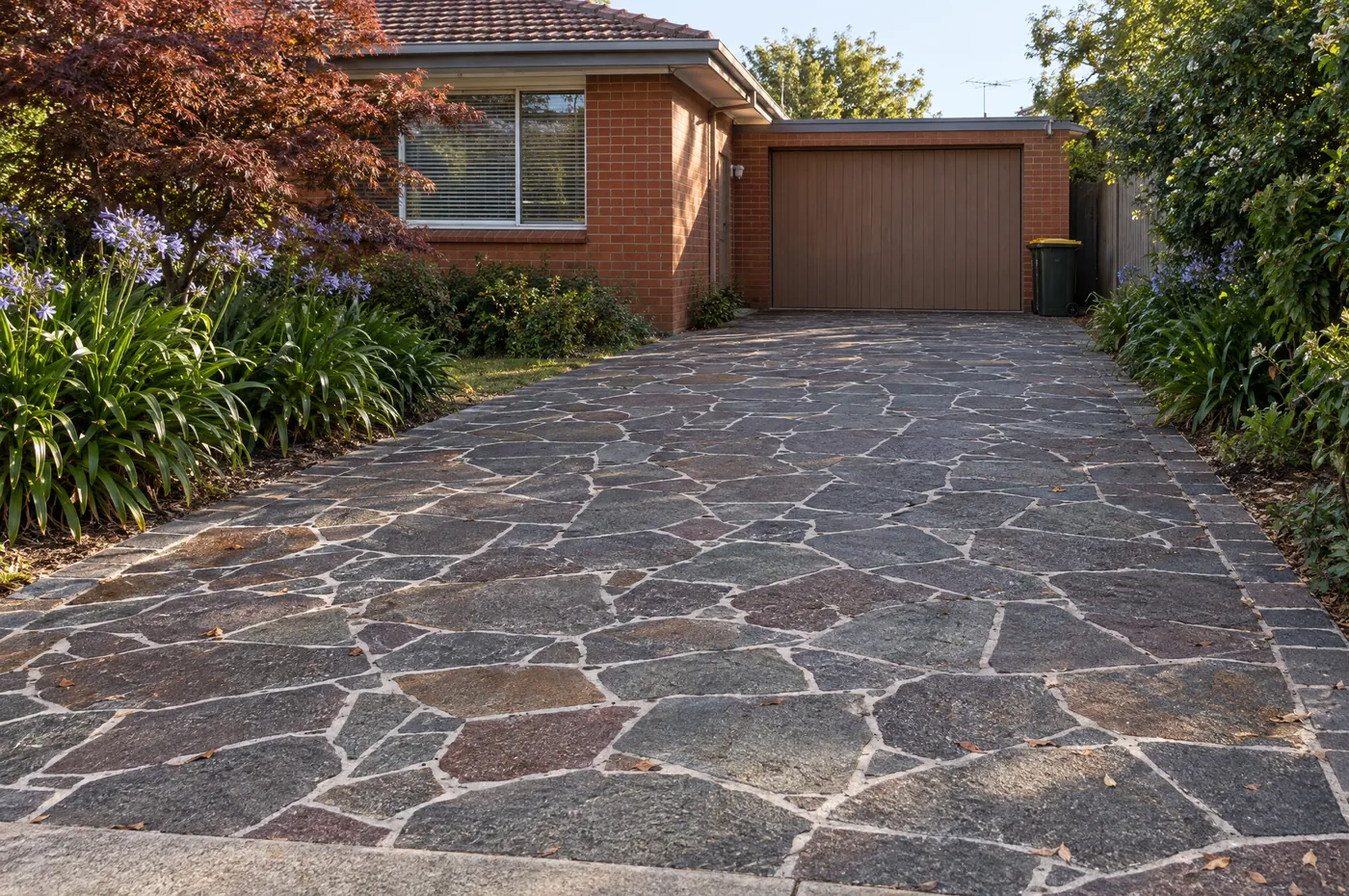
Porphyry crazy paving is irregular, random-cut paving made from porphyry, a hard volcanic stone prized for its density and long service life. It is one of the hardest-wearing natural stones you can specify for crazy paving, which makes it a strong choice for driveways, high-traffic paths, and other surfaces that need to take a beating and still look good for decades.
Porphyry is less familiar than travertine or sandstone, so this guide starts with what the stone actually is and why it lasts, then covers its natural colour range, the best places to use it, what drives the cost, and how it compares with other stones.
Splendour In Stone works with porphyry across paving and cobblestones, so the guidance here is grounded in a stone we supply and install every day.
In this guide
What is Porphyry Crazy Paving?
Porphyry crazy paving is paving laid from irregular, naturally shaped porphyry pieces fitted together in a random, jigsaw-style pattern rather than a regular grid. Porphyry itself is a fine-grained volcanic (igneous) rock that formed from cooled lava, which gives it a dense, hard structure and the flecked, multi-toned appearance the stone is known for.
The “crazy paving” part refers only to the format, the random-cut, irregular-edged look, not to a different material. Combined, you get a surface with the organic, unstructured character of crazy paving and the durability of one of the hardest natural stones on the market. SIS supplies porphyry in this format as Crazy Porphyry, cut in random sizes.
Why Porphyry is Hard-wearing
Porphyry is hard-wearing because it is a dense, fine-grained volcanic rock, which makes it naturally resistant to wear, weathering, and heavy use. Its tight mineral structure means it absorbs little water and stands up well to freeze-thaw cycles, foot traffic, and vehicle loads, which is why it has been used for European roads, laneways, and public squares for centuries.
A few properties make the difference for outdoor paving:
- Density and low porosity: as a tightly formed igneous stone, porphyry takes on relatively little water, which helps it resist frost damage and staining compared with more porous stones.
- Abrasion resistance: the hard mineral grain holds up to constant foot and vehicle traffic without polishing smooth or wearing down quickly.
- Weather stability: porphyry copes well with heat, cold, and rain, so colour and surface hold up over time in an exposed setting.
- Naturally textured surface: the split, riven face gives grip underfoot, which is useful around water and on sloped ground.
According to Geoscience Australia, igneous rocks like porphyry form from cooled magma or lava and are typically hard and durable, which is the geological reason the stone performs the way it does outdoors.
As a general guide, porphyry sits among the harder natural paving stones, well above soft, porous options such as some sandstones. For any project with a specific engineering requirement, confirm the tested figures for the exact stone rather than relying on category-level claims.
Colours and Style
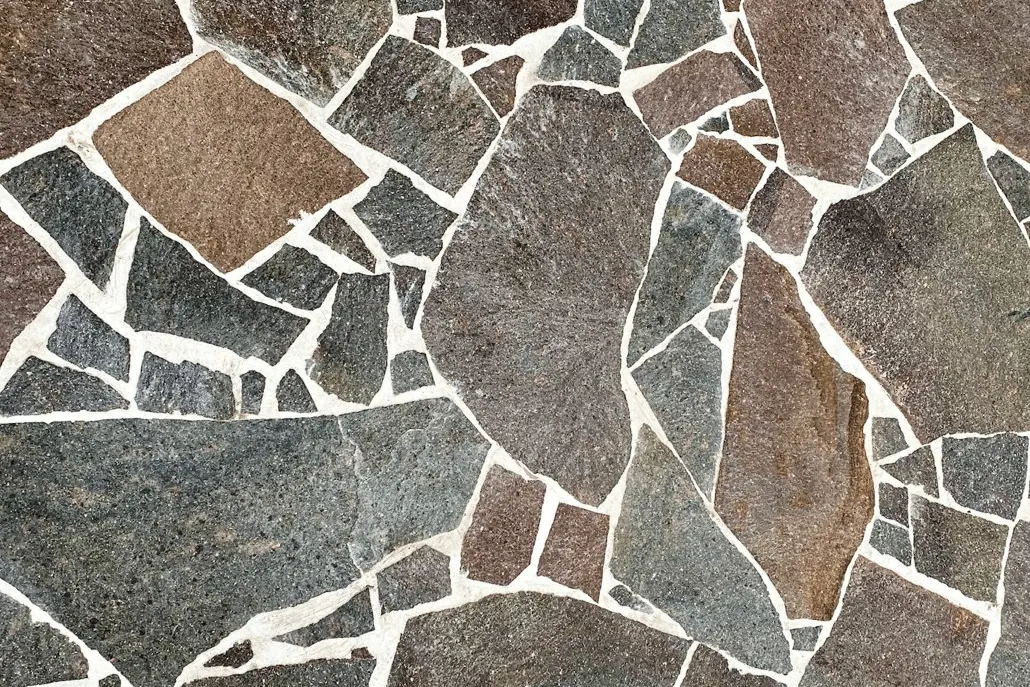
Porphyry crazy paving sits in a warm, earthy palette of natural greys, reds, browns, and plum tones, often blended within a single area for a rich, tonal finish. Because the colour comes from the stone’s mineral content rather than a coating, it is consistent throughout the piece and holds up well outdoors.
The SIS Crazy Porphyry range is described as bold, multi-toned stone in earthy reds, deep greys, and plum tones, with a textured surface that adds depth and a grounded, natural look. That tonal mix is part of the appeal: it reads as rustic and characterful in a country or heritage setting, yet the greyer pieces also suit a restrained, modern scheme.
The table below outlines the main tonal families in porphyry and where each tends to work best. Exact colour blends vary from batch to batch because this is a natural stone, so treat this as a style guide and confirm the current range with SIS.
| Colour family | Tone | Best setting |
|---|---|---|
| Natural grey | Cool, muted grey with flecks | Modern homes, contemporary courtyards, grey-toned facades |
| Earthy red | Warm terracotta to brick-red | Rustic, heritage and country-style gardens; warm brick homes |
| Brown and tan | Mid to warm brown | Natural, landscaped settings; blending with timber and greenery |
| Plum and mixed | Blended reds, greys, and purple-browns | Feature paving, driveways and paths where a rich, varied look is wanted |
Best uses
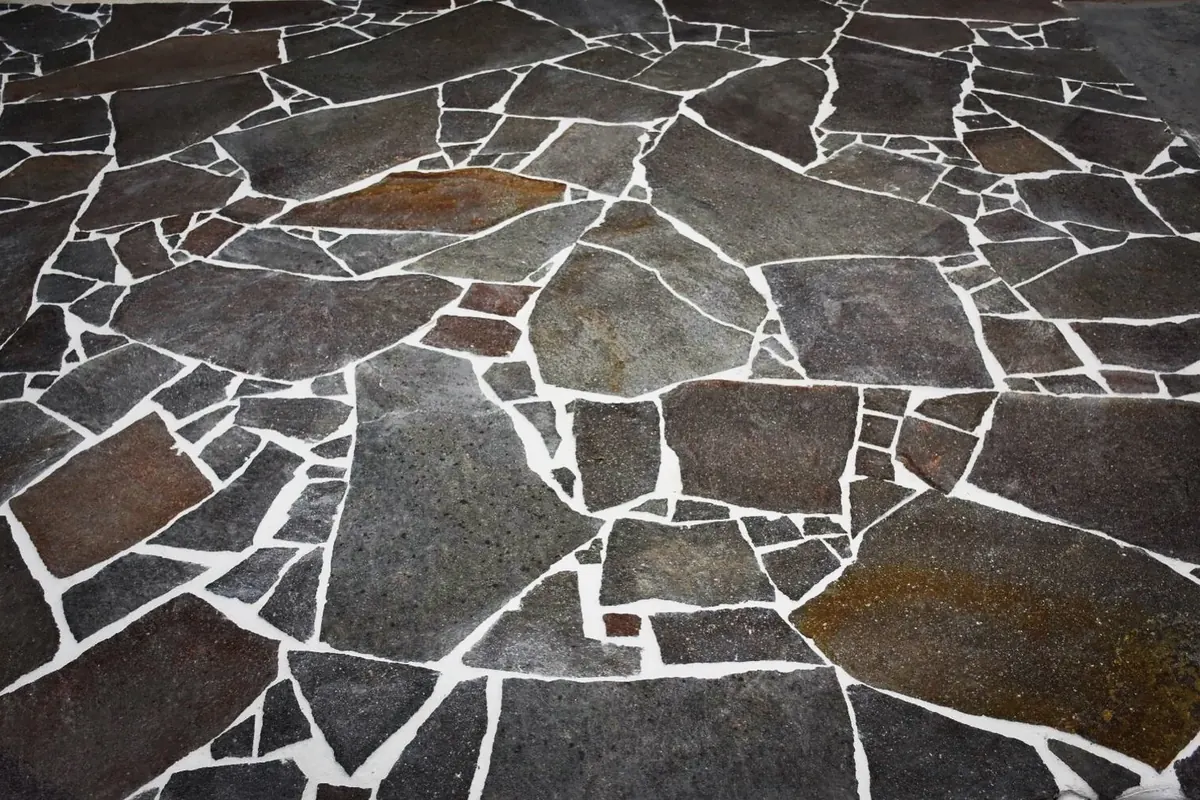
Porphyry crazy paving suits almost any outdoor surface, and it is one of the few crazy paving materials genuinely hard enough for driveways and heavy-traffic areas. Its durability and natural grip make it a practical choice where softer stones would struggle, while the tonal colour keeps it looking like a premium, characterful finish.
1. Driveways and High-traffic Areas
Porphyry is one of the better natural stone choices for a driveway because it is dense and hard enough to take vehicle weight and constant use. Laid over a properly engineered base and mortar-set with the right paver thickness, a porphyry driveway can handle daily traffic while keeping the informal, organic look of crazy paving.
For the full details on materials, base build-up, and laying for vehicle traffic, see our guide on crazy paving driveways.
2. Pool Surrounds
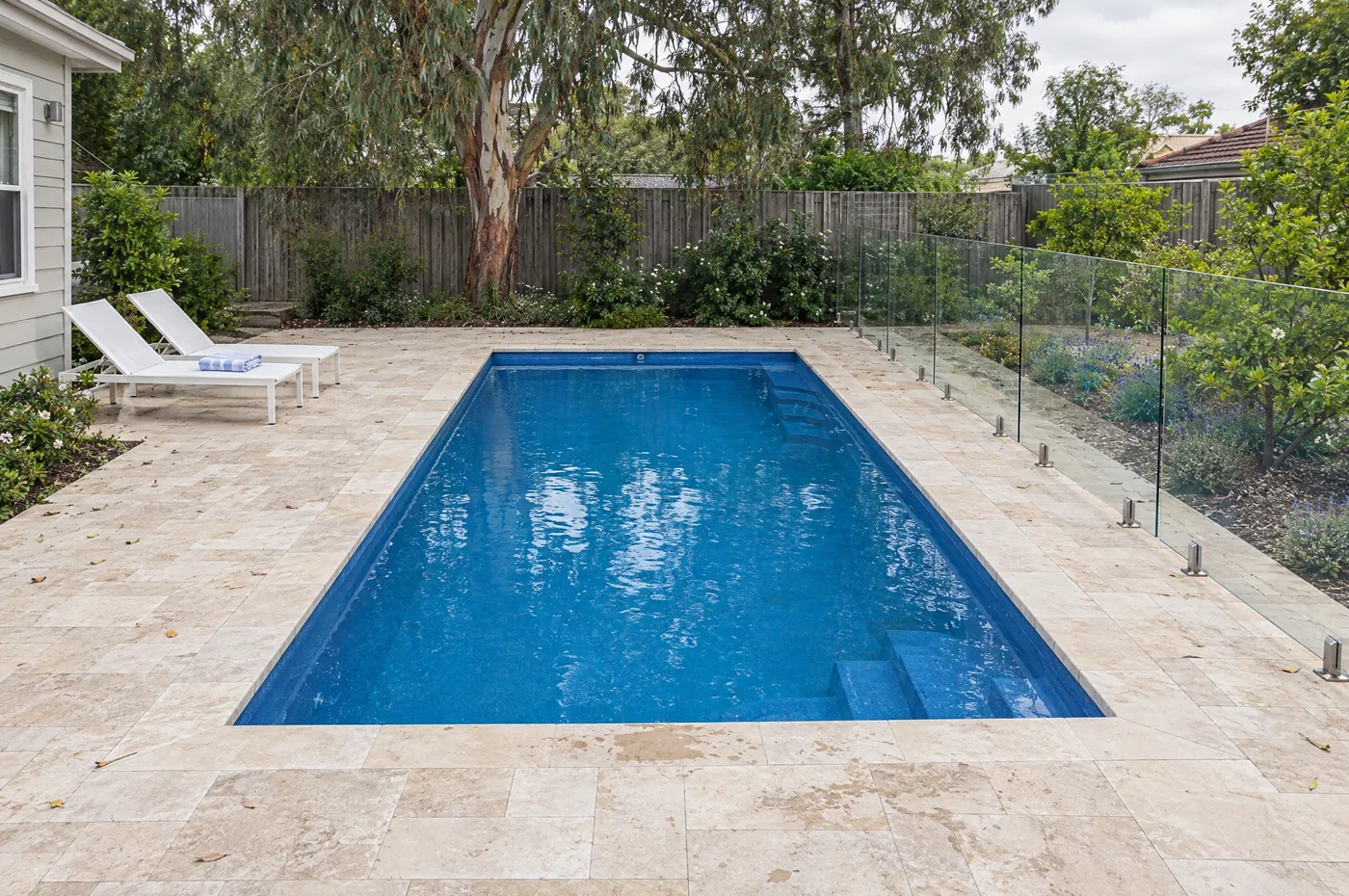
Porphyry works well around pools because its naturally textured, riven surface gives grip underfoot in wet conditions and its low porosity helps it cope with splash-out. The warm, earthy tones also soften the look of a pool zone compared with cooler stones. As with any pool paving, sealing, and correcting falls for drainage matters, slip performance should be confirmed for the specific product and finish.
3. Patios and Paths
For patios, alfresco areas, courtyards, and garden paths, porphyry crazy paving delivers a hard-wearing, low-fuss surface with a lot of character. The random-cut format suits curved paths and irregular spaces where a regular grid would look forced, and the durability means these areas stay presentable with minimal intervention over the years.
Cost and What Affects It
The cost of a porphyry crazy paving project depends on the stone, the site, and the installation, so the best way to get an accurate figure is a quote based on your specific area. Porphyry is a hard, imported natural stone, which typically places it above budget concrete or softer local stone, but its longevity often makes it a good value over the life of the paving.
The main factors that move the price are:
- Area and quantity: Total square metres and how much cutting and wastage the layout involves.
- Base and preparation: Driveways and high-traffic areas need a stronger, deeper base than a light-use path, which adds to the build.
- Laying method: Mortar-set installation on a concrete base costs more than a simple sand-set path, and crazy paving is more labour-intensive to lay than uniform pavers because each piece is fitted individually.
- Site access and conditions: Slope, drainage, existing surfaces, and access for materials all affect labour.
- Sealing and finishing: Sealing the stone and finishing the joints adds material and time.
Rather than work from a generic per-metre figure, it is worth getting a measured quote. You can request a free quote from Splendour In Stone for your area and intended use, and the team can advise on the right stone and build for the job.
Porphyry vs Travertine vs Sandstone
Porphyry is the most durable of these three stones, which is why it is the pick for driveways and heavy use, while travertine and sandstone are chosen more for their softer colours and comfort underfoot in lighter-use areas. The right choice depends on where the paving is going and how hard it will work.
| Feature | Porphyry | Travertine | Sandstone |
|---|---|---|---|
| Hardness and durability | Very hard, dense volcanic stone | Moderate; softer, acid-sensitive | Moderate to soft; porous |
| Colour range | Greys, reds, browns, plum | Ivory, silver, latte, cream | Earthy, golden, grey tones |
| Driveway suitability | Well-suited with a correct base | Better for lighter traffic | Generally not for vehicle traffic |
| Look | Rustic and characterful, or modern in greys | Soft, pale, Mediterranean | Warm, natural, earthy |
| Maintenance | Low; sealing recommended | Sealing needed; avoid acids | Sealing needed; watch staining |
Travertine crazy paving suits pool surrounds and patios where pale, cool-toned stone and comfort underfoot are the priority; you can read more in our guide to travertine crazy paving.
Sandstone crazy paving offers a warm, natural look for paths and patios but needs careful sealing and is not usually a driveway stone, covered in our sandstone crazy paving guide. If durability and traffic are the deciding factors, porphyry is usually the answer.
Conclusion
A crazy paving can deliver lasting strength and a distinctive natural finish when the stone, thickness, base and installation method are all specified for vehicle traffic. Hard stones such as porphyry, granite and bluestone provide the strongest options, but proper drainage, full mortar bedding and sealing remain essential. Compare the available driveway paving options and confirm the final specification before ordering.
Frequently Asked Questions
Is porphyry good for driveways?
Yes, porphyry is one of the best natural stones for a driveway because it is a dense, hard volcanic stone that copes well with vehicle weight and constant use. It needs to be laid on a properly engineered base and mortar-set at a suitable thickness to perform, so a driveway build differs from a light-use path. The SIS Crazy Porphyry range is cut 20 to 40 mm thick in random sizes; confirm the right specification for your driveway with the team.
Is porphyry crazy paving slippery?
Porphyry has a naturally textured, riven surface that generally provides good grip underfoot, including in wet areas such as pool surrounds. Slip performance still depends on the specific piece, its finish, and how the surface is maintained, so it is best to confirm suitability for wet or sloped areas for the exact product rather than assume a rating. Keeping the surface clean of algae and grime also helps maintain grip over time.
How does porphyry compare to granite?
Both porphyry and granite are hard, durable igneous stones well suited to high-traffic paving and driveways, so the choice often comes down to look and format. Porphyry has a warm, earthy, multi-toned palette and a naturally split, textured face, while granite is typically supplied in more uniform tones and finishes. For a random-cut, characterful surface with strong durability, porphyry crazy paving is a natural fit; SIS also supplies porphyry as cobblestones for a more structured look.
How much does porphyry crazy paving cost?
The cost depends on the area, the base and preparation required, the laying method, and site conditions, so there is no single per-metre price that fits every job. Porphyry is a hard, imported natural stone, so it usually sits above concrete or softer stones, but its long service life can make it a good value over time. The most reliable approach is a measured quote; you can contact Splendour In Stone for pricing on your project.
Does porphyry paving need sealing?
Sealing porphyry paving is recommended to help protect the surface, ease cleaning, and preserve the stone over the long term, even though porphyry is naturally dense and low in porosity. Splendour In Stone recommends sealing all natural stone to preserve its longevity, and can advise on suitable sealing and cleaning products. Reseal in line with the sealer manufacturer’s guidance and the level of traffic the paving sees.