

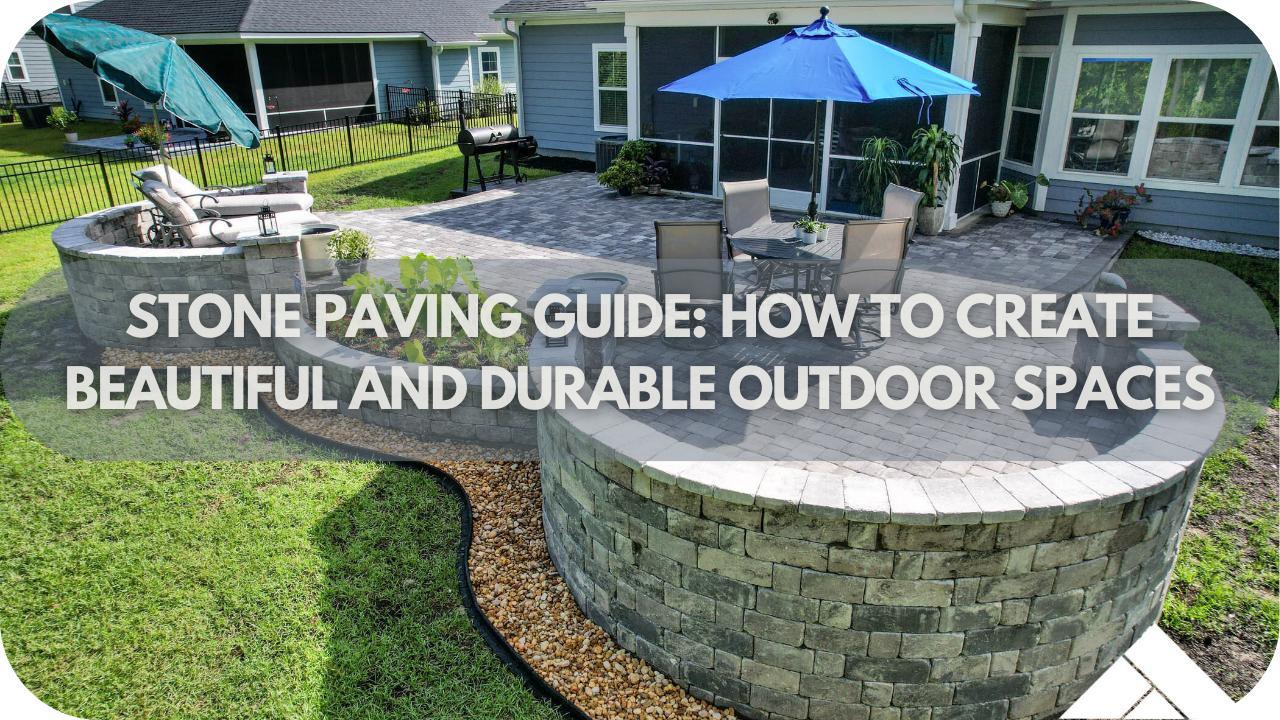
Stone paving remains a reliable choice for outdoor spaces where durability, appearance, and long-term performance matter. Used across patios, pathways, pool surrounds, and driveways, natural stone provides a finish that feels established and purposeful rather than temporary or trend-driven.
When chosen correctly, natural stone performs consistently in outdoor environments. It withstands weather exposure, temperature changes, and regular foot traffic while offering natural grip and structural strength for long-term use.
This guide explains what stone paving is, how it compares to other materials, which stones and finishes suit different areas, how to plan and install it correctly, and how to maintain long-term performance and appearance.
What Is Stone Paving and How Is It Used Outdoors?
Stone paving refers to the use of natural stone that has been quarried, cut, and finished for outdoor surfaces. Common materials include Granite, Bluestone, Limestone, Travertine, and Quartzite, each offering different strengths, textures, and visual characteristics. Unlike manufactured options, natural stone retains variation and depth that develops character over time.
Outdoors, stone paving is widely used for patios, courtyards, pathways, pool surrounds, and driveways. Its versatility allows it to function in both practical and decorative settings, supporting foot traffic while enhancing the space’s overall design. Correct stone selection ensures safety, durability, and visual balance.
When properly planned and installed, stone paving creates connected outdoor areas that feel cohesive and purposeful. It supports long-term use, adapts well to changing conditions, and enhances the experience of outdoor spaces throughout the year.
Why Choose Natural Stone Pavers for Outdoor Areas?
Here are the key reasons natural stone pavers remain a preferred outdoor surface: they combine performance, visual appeal, and long-term return on investment across residential and commercial spaces.
1. Long-Term Durability and Structural Strength
Natural stone pavers are formed under extreme geological pressure, giving them inherent strength that suits demanding outdoor conditions. When specified and installed correctly, they withstand heavy foot traffic, weather exposure, and temperature changes, reducing the risk of cracking, failure, or premature replacement over time.
2. Strong Return on Investment and Property Value
Stone paving contributes directly to perceived property value by delivering a premium, permanent finish. Its durability reduces replacement costs, while its visual appeal improves resale and rental appeal, making it a practical investment rather than a purely aesthetic upgrade.
3. Natural Visual Appeal and Material Character
Each stone paver features natural variation in colour, texture, and surface detail. This variation creates depth and authenticity that manufactured alternatives cannot replicate, allowing outdoor spaces to feel intentional and high quality while ageing gracefully rather than showing visible wear.
4. Proven Performance in Outdoor Conditions
Natural stone performs consistently in sun, rain, and seasonal temperature changes. Unlike coated or engineered surfaces, it maintains its structure and appearance without fading, warping, or surface breakdown, supporting long-term outdoor use with minimal performance loss.
5. Improved Safety and Slip Resistance
Many stone finishes are selected specifically for outdoor safety. Brushed, flamed, or textured surfaces provide natural grip underfoot, reducing slip risk around pools, pathways, and entertaining areas while maintaining a refined, non-industrial appearance.
6. Versatility Across Outdoor Applications
Natural stone pavers are suitable for patios, courtyards, pool surrounds, driveways, and garden paths. This versatility allows a single material palette to flow across different outdoor zones, improving visual cohesion while meeting varying load and safety requirements.
7. Longevity with Lower Ongoing Maintenance
Because natural stone is not surface-treated or colour-coated, it requires fewer repairs and less frequent replacement. With basic care and sealing where appropriate, stone paving continues to perform and look intentional, lowering long-term maintenance and lifecycle costs.
Best Natural Stone Pavers for Outdoor Use

Here are the most dependable natural stone pavers for outdoor use, selected for durability, surface performance, and visual consistency across residential and commercial applications.
1. Granite Pavers
Granite is one of the hardest-wearing natural stones used outdoors, making it suitable for driveways, high-traffic areas, and exposed environments. Its dense structure resists wear, staining, and weathering, supporting consistent performance over time.
Examples such as Charcoal Granite and Grey Granite are commonly specified for demanding applications, with flamed finishes used to improve grip while maintaining a clean, contemporary appearance.
2. Bluestone Pavers
Bluestone is widely used for outdoor paving due to its strength, durability, and refined grey tones. It performs reliably in patios, pathways, and pool surrounds where both slip resistance and structural stability are required.
Options including Honed Bluestone and Flamed Bluestone allow designers to balance surface texture with visual intent, making bluestone suitable for both modern and practical outdoor spaces.
3. Limestone Pavers
Limestone delivers a softer, more relaxed aesthetic suited to courtyards, alfresco areas, and lower-traffic outdoor spaces. When properly finished, it provides a comfortable underfoot feel with controlled texture and a consistent visual tone across large paved areas.
Examples such as Loch Limestone and Brooklyn Limestone are commonly specified for their neutral colour range and surface balance, allowing limestone to integrate easily with surrounding architecture while maintaining a calm, cohesive outdoor appearance.
4. Travertine Pavers
Travertine is valued for its natural layering and thermal comfort, making it well-suited to pool surrounds, patios, and outdoor entertaining zones. Its lighter tones help reduce heat absorption while delivering a refined surface that remains practical in warm conditions.
Common selections include Silver Travertine and Ivory Travertine, both chosen for their ability to balance slip resistance with visual softness and consistent performance in areas exposed to frequent foot traffic.
5. Marble Pavers
Marble provides a refined, architectural finish when specified correctly for outdoor use. Advances in finishing techniques allow marble to perform reliably in selected exterior environments while retaining clarity, veining definition, and surface integrity.
Examples such as Torro Marble and Maya Blue Marble are often used in statement paving areas where design impact, material presence, and controlled visual refinement are key considerations.
6. Porphyry Pavers
Porphyry is a dense, hard-wearing natural stone recognised for its durability in high-traffic and exposed outdoor environments. Its crystalline structure supports long-term performance under constant use and varying weather conditions.
Examples include Porphyry Crazy Paving and Filetti Porphyry, both specified where strength, texture variation, and a distinctive surface character are required for demanding outdoor applications.
7. Cobblestones
Cobblestones are characterised by their compact form and exceptional load-bearing capacity, making them suitable for driveways, pathways, and feature paving where long-term durability is critical.
Examples such as Bluestone Cobbles and Porphyry Cobbles are commonly selected for areas requiring structural reliability, surface grip, and visual definition across both residential and commercial settings.
How to Choose the Right Stone Pavers for Your Project
This is how to select stone pavers that suit your space, perform reliably outdoors, and deliver long-term value by matching material choice to use, conditions, and design goals.
1. Assess How the Area Will Be Used
Start by identifying how the space will function day-to-day. Walkways, patios, pool surrounds, and driveways all place different demands on stone pavers. Traffic levels, moisture exposure, and load requirements directly influence the type, thickness, and finish needed for safe, durable performance.
2. Match Stone Type to Performance Requirements
Different stones offer different strengths. Granite and Quartzite are suitable for high-traffic and structural areas, while Limestone and Sandstone work well in lower-load, design-focused spaces. Choosing a stone based on performance rather than appearance alone helps avoid premature wear and replacement costs.
3. Choose a Surface Finish for Safety and Comfort
Finish selection affects grip, comfort underfoot, and long-term maintenance. Textured finishes, such as brushed or flamed, provide better slip resistance in wet areas, while smoother finishes may suit covered or low moisture spaces. The right finish balances safety with visual intent.
4. Consider Colour, Tone, and Natural Variation
Stone colour influences heat retention, light reflection, and overall mood. Lighter stones stay cooler underfoot, while darker tones create contrast and depth. Natural variation between pavers should be expected and planned for to achieve a balanced, cohesive finish once laid.
5. Factor in Installation Method and Site Conditions
The installation approach impacts stone selection. Sand bed, concrete bed, and mortar-set methods all require different stone properties. Ground conditions, drainage, and edge restraint planning should inform material choice to ensure long-term structural stability.
6. Plan for Maintenance and Long-Term Value
Some stones require sealing or more regular cleaning, depending on location and finish. Understanding maintenance needs up front helps you choose stone pavers that align with your lifestyle, budget, and expectations for long-term performance and return on investment.
7. Select the Right Thickness and Size
Paver thickness must align with how the area will be used and how it will be installed. Thinner pavers may suit pedestrian zones, while thicker formats are required for driveways and structural areas. Correct sizing also improves stability and reduces movement over time.
Stone Paving Finishes and Surface Textures

Here are the most common outdoor stone paving finishes, each offering different surface textures, performance characteristics, and visual outcomes depending on the application.
1. Honed Stone Pavers
Honed stone pavers feature a smooth, matte surface achieved through controlled grinding. This finish delivers a clean, refined appearance and is suitable for covered outdoor areas or low-moisture environments. While comfortable underfoot, honed finishes are typically used in areas with limited water exposure and heavy foot traffic.
2. Brushed Stone Pavers
Brushed stone pavers are lightly textured to improve grip while maintaining a natural look. The brushing process enhances surface traction without creating an aggressive texture, making this finish suitable for patios, walkways, and pool surrounds where slip resistance and comfort need to work together.
3. Flamed Stone Pavers
Flamed stone pavers are created by exposing the surface to intense heat, resulting in a coarse, textured finish. This process significantly improves slip resistance and surface durability, making flamed finishes ideal for high-traffic areas, driveways, and spaces exposed to frequent moisture.
4. Tumbled Stone Pavers
Tumbled stone pavers are mechanically rounded to create an aged, worn-in surface. This finish suits courtyards, garden paths, and traditional settings where a weathered, established look is preferred. The softened texture also helps minimise the visual impact of wear over time.
5. Sawn Stone Pavers
Sawn stone pavers are cut using diamond saws to produce a flat, uniform surface with visible saw marks. This finish is typically used as a base finish before further treatment or in controlled outdoor areas where consistency and clean edges are prioritised over surface texture.
6. Sandblasted Stone Pavers
Sandblasted stone pavers are finished by blasting the surface with fine abrasive material to create an even, lightly textured finish. This process improves slip resistance while maintaining a consistent appearance, making sandblasted finishes suitable for Limestone and other softer stones used outdoors.
7. Bush Hammered Stone Pavers
Bush hammered stone pavers are mechanically textured using specialised tools to create a deeply dimpled surface. This finish delivers high grip and a strong visual texture, making it suitable for high-traffic zones, ramps, and areas where slip resistance is a primary performance requirement.
8. Polished Stone Pavers
Polished stone pavers feature a highly refined, glossy surface achieved through extensive grinding and buffing. While visually striking, polished finishes are generally reserved for covered or decorative outdoor areas due to reduced slip resistance when wet and higher maintenance requirements.
Buying Natural Stone Pavers: What You Need to Know
Buying natural stone pavers starts with understanding stone quality, not appearance alone. Factors such as density, strength, and surface consistency affect how the stone performs outdoors, particularly in areas exposed to weather and regular foot traffic. Inspecting samples helps set realistic expectations around variation.
Grading and thickness play a critical role in long-term performance. Thicker pavers are required for driveways and structural areas, while thinner formats may suit patios and pathways. Consistent sizing and calibrated thickness improve installation accuracy and reduce movement once laid.
Accurate quantity calculations help prevent delays and batch mismatches. Accounting for cutting, waste, and future repairs ensures sufficient stone is ordered upfront. Mixing pavers from multiple packs during installation also helps achieve balanced colour variation across the finished surface.Delivery, storage, and handling should be planned before purchase. Stone must be stored on level ground and protected from contamination. Working with experienced suppliers ensures accurate product selection, clear lead times, and guidance that supports reliable installation and long-term performance.
Natural Stone Pavers in Melbourne: Sourcing and Supply

Sourcing natural stone pavers in Melbourne requires consideration of local climate, project timelines, and material availability. Melbourne’s variable weather requires stone that is suitable for temperature fluctuations, moisture exposure, and long-term outdoor use. Choosing stone already proven in local conditions helps reduce performance risks.
Local supply offers practical advantages. Shorter transport distances minimise delays, reduce handling damage, and make it easier to source additional material if required. Access to samples also allows closer inspection of colour, finish, and variation before committing to larger quantities.
Consistent supply is essential for larger projects. Natural stone is quarried in batches, and colour variation can occur between shipments. Securing full quantities early helps maintain consistency and avoids mixing stone from different production runs later.
Working with experienced Melbourne suppliers provides access to technical guidance, clear lead times, and after-sales support. This ensures the selected stone matches the intended application, installation method, and long-term performance expectations.
Planning Your Stone Paving Layout
Here are the key layout considerations that help ensure stone paving performs correctly, appears balanced, and integrates smoothly with surrounding spaces before installation begins.
1. Measure and Set Out Accurately
Begin by measuring the full paving area and setting clear reference lines. Accurate setting out helps control alignment, joint spacing, and finished levels, reducing unnecessary cutting and preventing layout drift as installation progresses across larger outdoor areas.
2. Choose a Suitable Laying Pattern
Select a laying pattern that suits the stone size, shape, and the space’s visual intent. Patterns influence movement flow, cutting requirements, and material efficiency, while also affecting how natural variation appears across the finished surface.
3. Plan Drainage Falls and Water Run Off
Establish proper fall lines early to direct water away from buildings and prevent pooling. Proper drainage planning protects the paving base, reduces surface staining, and supports long-term structural performance in outdoor environments exposed to rain.
4. Allow for Edge Restraints and Boundaries
Identify where edge restraints, walls, or garden borders will be used to contain the paving. Proper boundary planning prevents lateral movement, maintains joint integrity, and ensures the paved area remains stable under regular use and environmental stress.
5. Anticipate Cuts and Transition Zones
Plan cut lines around steps, thresholds, drains, and adjoining surfaces. Thoughtful placement of transitions improves visual flow, reduces small offcuts, and helps maintain consistent joint widths across complex layouts.
6. Account for Natural Stone Variation
Expect variation in tone, texture, and veining across natural stone. Planning to blend pavers from multiple packs during installation helps achieve a balanced appearance and avoids concentrated colour patches within the finished layout.
Step-by-Step Guide: How to Lay Stone Pavers

This is how to approach stone paving installation methodically, ensuring correct levels, long-term stability, and a finished surface that performs as intended in real outdoor conditions.
Step 1: Mark Out the Area and Set Levels
Begin by clearly marking the paving area using pegs and string lines to define boundaries and alignment. Establish finished surface levels and required falls to manage water runoff effectively. Accurately setting out at this stage prevents uneven surfaces, drainage issues, and costly rework later in the installation process.
Step 2: Excavate to the Correct Depth
Excavate the area to a depth appropriate for the paving’s intended use and the expected load. Pathways, patios, and driveways all require different depths to accommodate base layers and paver thickness. Correct excavation supports structural stability and reduces the risk of future settlement or movement.
Step 3: Build a Stable Base
Install a compacted road base to provide a strong, level foundation for the paving. The base should be spread in layers and mechanically compacted to minimise movement under load. A well-prepared base is critical for long term performance and consistent load distribution across the paved surface.
Step 4: Add the Bedding Layer
Apply a bedding layer of crusher dust or sand over the compacted base to support the pavers. This layer is carefully screeded level to achieve consistent heights and joint spacing. Proper bedding allows fine adjustments during laying while maintaining overall surface alignment and finish quality.
Step 5: Lay the Stone Pavers
Begin laying pavers from a fixed reference point, working methodically across the area. Maintain consistent joint spacing and regularly check alignment and surface levels as work progresses. Mixing pavers from multiple packs during laying helps balance natural colour variation across the finished surface.
Step 6: Cut Pavers for Edges and Obstacles
Cut pavers as required to fit edges, curves, drains, and fixed obstacles within the layout. Clean, accurate cuts improve the overall visual finish and reduce weak points in the paving. Careful planning helps minimise small offcuts and maintain consistent joint lines throughout.
Step 7: Install Edge Restraints
Secure edge restraints along all open edges to contain the paving and prevent lateral movement. Edge restraints play a key role in maintaining joint integrity and surface stability over time. They are particularly important in high traffic areas or where paving meets garden beds or lawns.
Step 8: Joint and Lock In the Pavers
Fill joints using the appropriate jointing sand or grout based on the stone type and exposure. Jointing locks pavers together, distributes loads evenly, and limits individual movement. Compaction and top-up may be required to ensure joints are fully filled and stable.
Step 9: Clean Down and Inspect Levels
Clean the surface thoroughly to remove dust, residue, and excess jointing material. Inspect levels, alignment, and lippage across the entire paved area. Addressing minor issues at this stage prevents visible defects once the area is exposed to regular use.
Step 10: Seal if Required
Apply a suitable sealer once the paving has fully cured and dried, if sealing is recommended for the stone. Sealing can improve stain resistance and simplify maintenance when applied correctly. Always follow product guidance and allow adequate curing time before use.
Installation Methods and When to Use Them
Here are the most common stone paving installation methods, each suited to different ground conditions, load requirements, and long-term performance expectations in outdoor environments.
- Sand Bed Installation: This method involves laying stone pavers over a compacted road base with a sand or crusher dust bedding layer, making it suitable for patios, pathways, and courtyards where ground conditions are stable, and loads remain moderate.
- Concrete Bed Installation: Stone pavers are laid on a concrete base to provide additional structural strength, making this method suitable for driveways, ramps, and high-traffic areas where load-bearing capacity and long-term stability are critical.
- Mortar Set Installation: Mortar set installation uses a bonded mortar bed and adhesive to fix stone pavers in place, often used for pool surrounds, steps, and raised areas where precise levels, edge control, and reduced movement are required.
- Pedestal Installation Systems: This method uses adjustable pedestals to support stone pavers above the substrate, allowing drainage, service access, and level adjustment, and is commonly used in balconies, rooftops, and suspended outdoor spaces.
- Professional Installation Versus DIY: While smaller projects may suit experienced DIY installation, complex layouts, structural areas, and premium stone materials benefit from professional installation to ensure correct preparation, compliance, and long-term performance.
Jointing, Sealing, and Finishing Stone Pavers

Jointing is critical for locking stone pavers and distributing load across the surface. The correct jointing material depends on stone type, joint width, and exposure conditions, with options including jointing sand, polymeric sand, or grout for bonded installations.
Proper joint filling helps limit paver movement, reduces weed growth, and prevents water from undermining the base. Compaction during jointing is essential to ensure joints are fully filled and stable. Inadequate jointing is a common cause of shifting, lippage, and long-term performance issues.
Sealing is not always mandatory, but it can offer benefits depending on the stone and application. Sealers may enhance stain resistance, moisture control, and ease of cleaning, particularly in high-use or spill-prone areas such as pool surrounds and alfresco spaces.
Finishing steps include a final clean down and inspection once jointing and sealing are complete. Addressing residue, checking levels, and allowing appropriate cure times ensures the paving performs as intended and maintains a consistent appearance over time.
Outdoor Stone Paving Design Ideas
Here are practical outdoor stone paving design ideas that show how different layouts, stone types, and finishes can shape functional, well-balanced exterior spaces.
1. Pool Surrounds and Alfresco Areas
Stone paving around pools and alfresco spaces should prioritise slip resistance, comfort underfoot, and visual continuity. Light-toned stones such as Travertine and Limestone help manage heat, while textured finishes improve safety. Consistent layouts create seamless transitions between indoor and outdoor entertaining zones.
2. Courtyards and Entertaining Spaces
Courtyards benefit from stone paving that balances durability with atmosphere. Limestone, Bluestone, or Travertine can create relaxed or contemporary settings, depending on the finish and pattern. Thoughtful paving layouts help frame seating areas and encourage natural movement through the space.
3. Garden Pathways and Feature Zones
Stone paving can be used to guide movement through gardens while adding texture and structure. Porphyry, Cobblestones, or modular Stone Pavers introduce visual interest without overwhelming surrounding landscaping. Path widths and stone variation should feel organic rather than overly rigid.
4. Integrating Paving with Walling and Landscaping
Coordinating paving with Stone Walling, steps, and retaining elements creates a cohesive outdoor design. Matching tones or complementary finishes helps unify different stone surfaces, allowing paving to connect built elements with planting and natural surroundings.
5. Driveways and High Traffic Zones
Driveways and access areas require stone paving that prioritises strength, thickness, and surface grip. Materials such as Granite, Bluestone, and Porphyry perform well under vehicle loads while maintaining visual appeal. Structured laying patterns and durable finishes help manage wear and preserve long-term appearance.
Maintaining and Caring for Stone Paving

Here are the essential care practices that help natural stone paving retain its appearance, structural integrity, and long-term value in outdoor environments.
- Clean Regularly Using Suitable Methods: Routine cleaning removes dirt, organic matter, and surface debris before it becomes ingrained. Using stone-safe cleaners and gentle washing methods helps preserve surface texture while avoiding chemical damage and accelerated wear.
- Address Spills and Stains Promptly: Oil, food, and organic stains should be cleaned promptly to prevent absorption. Early treatment reduces the risk of permanent discolouration, particularly on lighter-coloured or porous stone surfaces used outdoors.
- Control Moss, Algae, and Organic Growth: Shaded or damp areas can encourage moss and algae growth. Periodic cleaning and improved drainage help limit buildup, maintaining both visual appearance and slip resistance across paved areas.
- Inspect Joints and Edge Restraints: Jointing materials and edge restraints should be checked periodically for wear or movement. Timely top-ups or repairs prevent paver shifting, lippage, and base exposure that can compromise surface stability.
- Reseal When Recommended: If the stone has been sealed, resealing may be required over time, depending on exposure and use. Maintaining an effective seal supports stain resistance and simplifies ongoing cleaning in high-use areas.
- Avoid Harsh Chemicals and Pressure Damage: Acidic cleaners, harsh chemicals, and excessive pressure washing can damage stone surfaces and jointing. Using appropriate products and controlled pressure preserves the finish and extends the paving’s lifespan.
- Repair Loose or Damaged Pavers Early: Promptly addressing loose, cracked, or uneven pavers prevents further damage and the spread of issues. Prompt repairs help maintain safety, visual consistency, and long-term performance of the paved area.
Why Choose Splendour in Stone for Natural Stone Paving
Here are the key reasons homeowners, designers, and builders choose Splendour in Stone for reliable supply, informed guidance, and natural stone paving that performs over the long term.
- Specialist Focus on Natural Stone Only: Splendour in Stone specialises exclusively in natural stone, allowing deep material knowledge across Limestone, Bluestone, Granite, Travertine, Marble, and Porphyry, with advice grounded in real performance rather than generic product selling.
- Curated Range Proven for Australian Conditions: Every stone offered is selected for suitability in Australian outdoor environments. This reduces risk around weather exposure, temperature variation, and long-term durability, helping clients choose materials that perform reliably once installed.
- Clear Guidance From Selection to Supply: Clients receive practical support in choosing stone types, finishes, and thicknesses for their applications. This guidance helps avoid costly mistakes and ensures materials align with installation methods and long-term use expectations.
- Consistent Quality and Batch Control: Attention is given to grading, calibration, and batch consistency to support clean installation outcomes. Securing appropriate quantities upfront helps maintain visual balance and reduces issues caused by mixing stone from different production runs.
- Strong Support for Builders and Installers: Builders, landscapers, and installers benefit from technical insights that ensure proper preparation and installation. This collaboration helps protect stone performance and ensures projects meet both design and structural requirements.
- Local Supply With Reliable Availability: Operating locally allows for efficient logistics, realistic lead times, and easier access to samples. This supports smoother project planning and reduces delays associated with long-distance sourcing or inconsistent stock availability.
- Long-Term Value Through Informed Material Choice: By prioritising performance, suitability, and lifecycle value, Splendour in Stone helps clients invest in paving that reduces maintenance, minimises replacement needs, and enhances property value over time.
Start Your Stone Paving Project
Stone paving is a long-term investment that shapes how outdoor spaces are used, maintained, and experienced over time. When the right stone, finish, and installation approach are chosen, paving delivers durability, safety, and visual clarity across a wide range of outdoor applications.
Understanding material performance, layout planning, and correct installation methods helps avoid common issues and ensures paving continues to look intentional as it ages. Natural stone rewards informed decisions with lasting value and consistent outdoor performance.
Speak with the team at Splendour in Stone to view suitable stone paving options, request samples, and get guidance tailored to your project requirements.
Frequently Asked Questions About Stone Paving
1. What stone paving works best in Melbourne weather?
Stones such as Bluestone, Granite, Porphyry, and selected Limestone perform well in Melbourne conditions due to their durability and stability. These stones handle temperature changes, moisture exposure, and regular outdoor use when correctly specified and installed.
2. Do natural stone pavers need sealing?
Natural stone pavers do not always require sealing, but sealing can provide added protection. It may help reduce staining, limit moisture absorption, and simplify cleaning, particularly in high-use areas or around pools and entertaining spaces.
3. How thick should stone pavers be for driveways?
Driveways require thicker stone pavers to support vehicle loads and prevent movement. The required thickness depends on the stone type, base preparation, and installation method, with structural areas needing professionally specified heavy-duty formats.
4. Is stone paving slippery around pools?
Stone paving can be safe around pools when the correct finish is selected. Textured finishes such as flamed, brushed, or sandblasted surfaces improve grip underfoot, helping reduce slip risk in wet and high-moisture areas.
5. How long does stone paving last outdoors?
When correctly selected, installed, and maintained, natural stone paving can last for decades. Its inherent strength and wear resistance allow it to age naturally while maintaining performance and appearance over the long term in outdoor use.



