Limestone vs. Sandstone Pavers: Which is Best for Your Project?

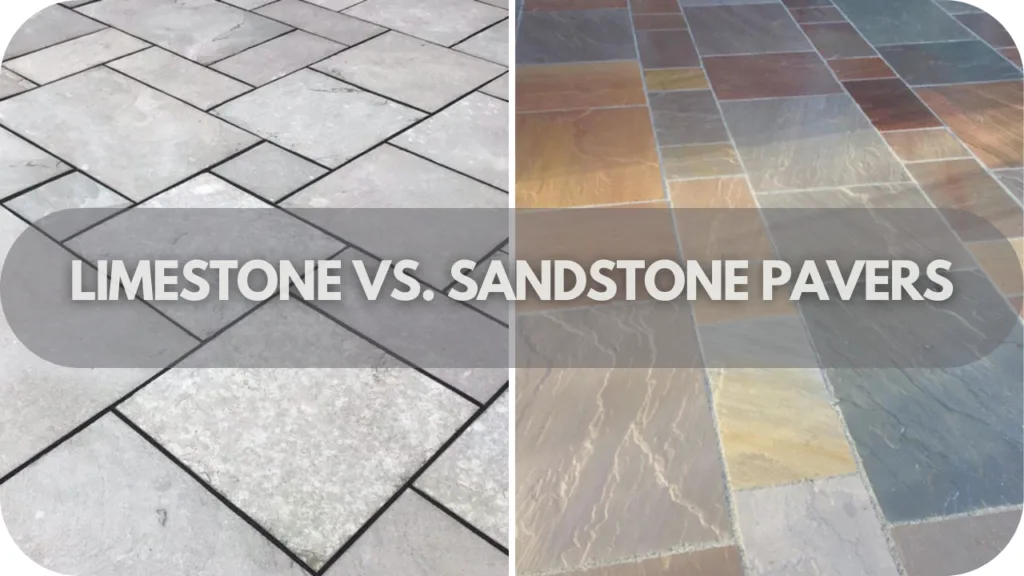
Limestone and sandstone are both popular natural stone pavers for Australian outdoor spaces. They suit patios, courtyards, pool areas, garden paths and alfresco zones, but they do not look or perform in the same way. Limestone usually feels more refined, consistent and understated. Sandstone often feels warmer, more textured and more rustic.
The best choice depends on the site, design style, foot traffic, maintenance expectations, budget and how the paving will be used every day.
In this guide
- Are Limestone or Sandstone Pavers Better?
- Limestone vs Sandstone Pavers at a Glance
- What Are Limestone Pavers?
- What Are Sandstone Pavers?
- Appearance: Which Stone Looks Better?
- Durability: Which Lasts Better Outdoors?
- Maintenance: Is Limestone or Sandstone Easier to Care For?
- Comfort Underfoot: Which Feels Better?
- Pool Areas: Limestone or Sandstone?
- Patios and Alfresco Areas: Which Works Better?
- Garden Paths and Landscape Areas: Which Is Better?
- Colour Choices: Limestone vs Sandstone
- Cost: Is Limestone or Sandstone More Affordable?
- Installation: What Changes Between Limestone and Sandstone?
- Common Mistakes When Choosing Between Limestone and Sandstone
- Limestone vs Sandstone Pavers: Which Should You Choose?
- Final Thoughts
- FAQs
Are Limestone or Sandstone Pavers Better?
Limestone pavers are usually better for projects that need a refined, consistent and modern finish. Sandstone pavers are often better for relaxed outdoor spaces that need warmth, texture and natural colour variation. Limestone suits patios, courtyards and elegant pool surrounds. Sandstone suits garden paths, informal entertaining areas and rustic landscapes.
- Choose limestone: For a cleaner, more refined look.
- Choose sandstone: For a warmer, more natural look.
- Choose limestone: When consistency matters.
- Choose sandstone: When texture and variation matter.
- Choose based on the site: Not just the stone colour.
Limestone vs Sandstone Pavers at a Glance
| Factor | Limestone Pavers | Sandstone Pavers |
| Appearance | Refined, smooth and consistent | Warm, textured and varied |
| Colour range | Usually softer neutrals, greys, creams and beiges | Earthy tones, golds, creams, browns and multi-tones |
| Best style | Modern, classic, coastal and refined homes | Rustic, relaxed, garden and natural landscapes |
| Texture | Usually smoother and more uniform | Usually more grainy and textured |
| Durability | Strong for many outdoor settings when properly selected | Durable, but performance varies by stone quality |
| Maintenance | Needs sealing and routine care | Needs sealing and more attention in exposed areas |
| Design feel | Elegant and understated | Natural and character-rich |
| Best use | Patios, courtyards, pool surrounds, alfresco areas | Garden paths, patios, courtyards and informal outdoor spaces |
Neither stone is automatically better. Limestone is often the stronger design choice for refined outdoor areas, while sandstone is often better when the project needs warmth and natural variation. The right paver is the one that suits the setting, not just the sample you like first.
What Are Limestone Pavers?
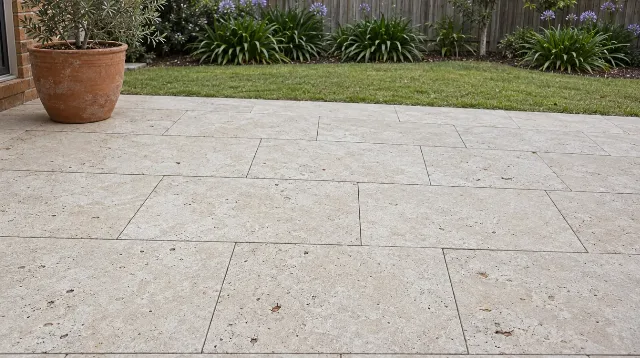
Limestone is a natural sedimentary stone known for soft tones, subtle movement and a refined finish. It often suits outdoor areas where the design needs to feel calm, consistent and premium.
Limestone pavers are commonly used in patios, courtyards, alfresco areas and pool surrounds. They work well with modern architecture, classic homes, coastal palettes and understated garden designs.
Because limestone often has a quieter appearance than sandstone, it can help create a more polished outdoor room. Options such as Loch Limestone and Brooklyn Limestone suit projects where the paving needs to feel elegant without becoming the loudest feature in the landscape.
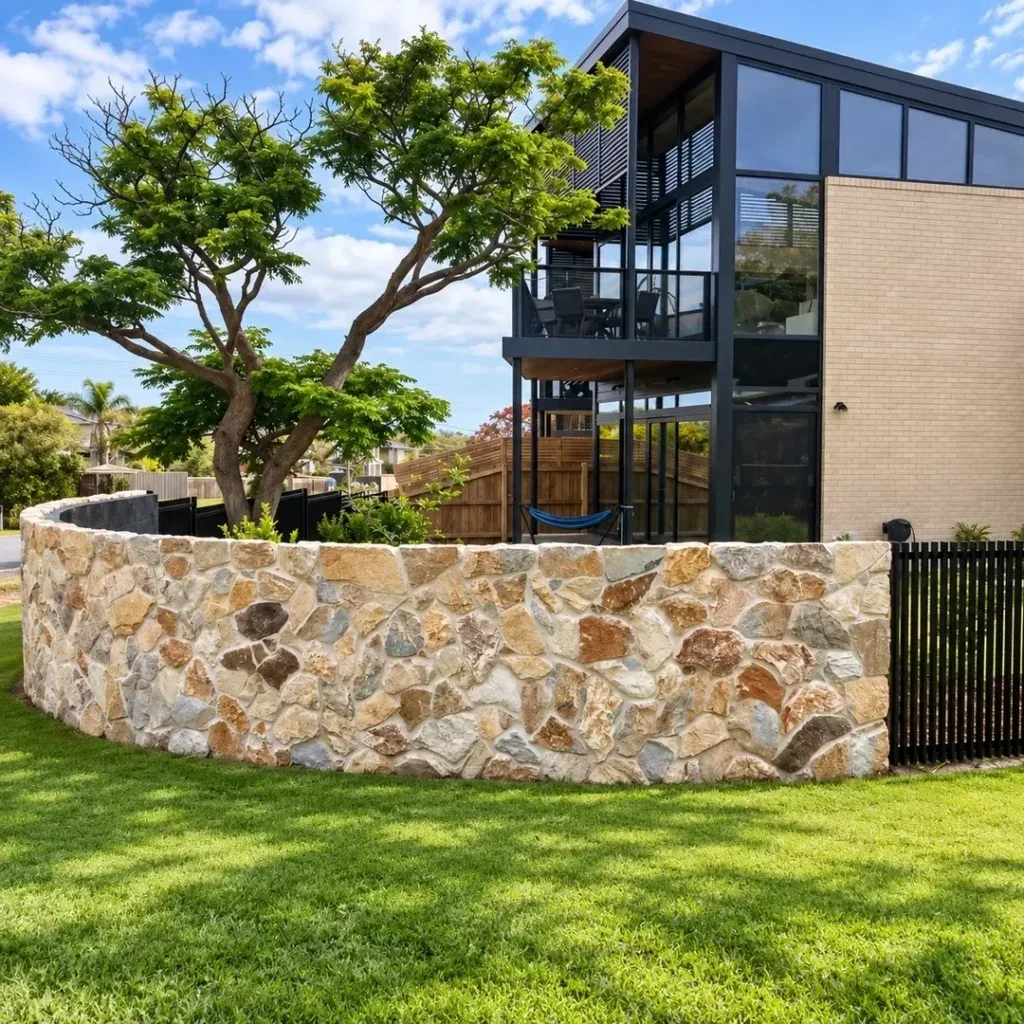
What Are Sandstone Pavers?
Sandstone is a natural stone with a grainy, layered character. It often has warmer colours and more visible variation than limestone, which gives it a relaxed and earthy appearance.
Sandstone pavers work well in gardens, informal paths, courtyards and casual entertaining spaces. They often feel more connected to planting, timber, brick and natural landscape materials.
In outdoor areas where the design calls for warmth and texture, sandstone options such as Hotham or Charlotte can bring a softer, more organic character than a highly uniform paving surface.
Appearance: Which Stone Looks Better?
“Better” depends on the design style. Limestone and sandstone both look natural, but they create different moods.
Limestone Has a More Refined Look
Limestone tends to look calmer and more consistent. It suits neutral palettes, clean architecture, rendered walls, timber accents, glass, steel and modern outdoor furniture.
For many Australian homes, limestone is a strong choice when the outdoor area needs to feel like a finished living space. It works especially well where the paving connects to a pool, alfresco area or courtyard that should feel refined and ordered.
Sandstone Has a More Natural Look
Sandstone usually has more earthy movement. Its tones can include cream, gold, buff, brown and mixed natural colours. This makes it well suited to gardens, relaxed landscapes, traditional homes and outdoor areas with a softer, more informal feel.
Sandstone pairs well with greenery, brick, timber, gravel and natural planting. It adds more character to the surface and can make a garden path or courtyard feel established.
Best Choice for Style
| Style Goal | Better Option |
| Clean modern patio | Limestone |
| Rustic garden path | Sandstone |
| Coastal courtyard | Limestone or light sandstone |
| Warm natural landscape | Sandstone |
| Elegant pool area | Limestone |
| Relaxed family alfresco | Sandstone or limestone, depending on finish |
Durability: Which Lasts Better Outdoors?
Both limestone and sandstone can last well outdoors when the right grade, finish and installation method are chosen. The stone type matters, but it is not the only factor.
Limestone can perform well in patios, courtyards and pool areas when it is suitable for the setting and cared for correctly. Sandstone can also perform well outdoors, but quality and density can vary, so product selection matters.
Outdoor durability depends on:
- Stone quality
- Paver thickness
- Surface finish
- Site drainage
- Installation method
- Sealing
- Cleaning routine
- Exposure to sun, rain, salt or pool water
If the project includes a patio, pathway, pool surround or outdoor entertaining zone, choosing the right stone paving means considering the whole site rather than comparing stone names alone. A strong paver can still underperform if drainage, base preparation or installation is poor.
Maintenance: Is Limestone or Sandstone Easier to Care For?
| Maintenance Factor | Limestone Pavers | Sandstone Pavers |
| Sealing | Recommended | Recommended |
| Cleaning | Usually simple with routine care | May need more attention due to texture |
| Stain resistance | Depends on finish and sealing | Depends on porosity, finish and sealing |
| Dirt visibility | Lighter tones may show marks | Textured surfaces can hold dirt |
| Long-term care | Regular cleaning and resealing as needed | Regular cleaning and resealing as needed |
Natural stone should not be sold as maintenance-free. Both limestone and sandstone need care. The right sealer, gentle cleaning and proper installation help both stones perform better over time.
Limestone can be easier to keep looking consistent in some settings because it often has a smoother, more refined surface. Sandstone may need more attention if its texture holds dirt, leaves or garden debris.
Good stone maintenance is simple but important: clean spills early, avoid harsh acidic cleaners, sweep regularly and follow sealing advice for the specific stone and finish.
Comfort Underfoot: Which Feels Better?
Comfort underfoot depends more on the finish than the stone name alone. A smoother limestone can feel refined and comfortable in patios and alfresco areas. A textured sandstone can feel more natural and grounded in garden paths or relaxed outdoor zones.
Around pools and barefoot areas, comfort, heat exposure and surface texture should all be considered. A surface should feel stable underfoot without becoming too rough for regular use.
Always check the actual finish before choosing. A honed, tumbled, sawn or textured surface can change how the paver feels, how it handles moisture and how it suits the space.
Pool Areas: Limestone or Sandstone?
Pool areas need extra care because the paving must handle water exposure, sealing, pool chemicals, heat and barefoot use. Coping profiles also matter, especially where the paving meets the pool edge.
Limestone is often chosen for elegant pool surrounds because it can create a calm, refined and neutral finish. Sandstone can work well in a warmer, more natural pool setting, especially when the pool is surrounded by planting, timber or relaxed landscape materials.
| Pool Area Goal | Better Direction |
| Elegant modern pool | Limestone |
| Warm relaxed pool setting | Sandstone |
| Soft neutral pool surround | Limestone |
| Natural garden pool | Sandstone |
| Cleaner architectural look | Limestone |
| Earthier landscape look | Sandstone |
If the pavers will run into the pool edge, the paving and pool coping should feel connected. A pool surround usually looks more resolved when the pool coping and paving are planned together instead of chosen separately.
Patios and Alfresco Areas: Which Works Better?
Patios and alfresco areas are outdoor living spaces, so the stone should match the way the area will be used. Limestone gives a more polished outdoor room feel. Sandstone gives a warmer, more informal effect.
The choice should work with the house facade, outdoor furniture, planting and surrounding materials.
- For a refined patio: Choose limestone.
- For a relaxed alfresco area: Choose sandstone or warmer limestone.
- For a minimalist design: Choose consistent limestone.
- For a garden-connected space: Choose sandstone.
- For mixed materials: Choose the stone that connects best with timber, render, brick or plants.
For broader outdoor planning, stone paving should be considered alongside walling, steps, edging, coping and surrounding garden materials.
Garden Paths and Landscape Areas: Which Is Better?
Sandstone often works well in garden settings because its earthy tones and natural texture blend easily with planting. It can make paths feel relaxed and established, especially in landscapes with gravel, timber, mulch, brick or informal garden beds.
Limestone can also work beautifully in garden paths, especially where the design is more structured or architectural. It suits homes where the garden path connects to clean lines, formal planting or a modern exterior.
Use sandstone for rustic garden paths. Use limestone for structured garden paths. Use sandstone near dense planting. Use limestone where the paving connects to modern architecture.
Colour Choices: Limestone vs Sandstone
Colour should be chosen in relation to the home, not in isolation. Always compare samples beside exterior walls, garden materials, furniture and surrounding paving.
Limestone Colours
- Cream
- Beige
- Grey
- Soft charcoal
- Pale neutral tones
Sandstone Colours
- Cream
- Gold
- Brown
- Buff
- Pinkish tones
- Mixed earthy tones
| Project Style | Best Colour Direction |
| Modern home | Grey, cream or soft neutral limestone |
| Coastal home | Light limestone or pale sandstone |
| Rustic garden | Gold, buff or earthy sandstone |
| Classic courtyard | Beige limestone |
| Natural landscape | Mixed-tone sandstone |
| Bold outdoor setting | Deeper limestone or textured sandstone |
Cost: Is Limestone or Sandstone More Affordable?
The cost of limestone and sandstone pavers varies by product, finish, size, thickness, availability and installation. Sandstone is often seen as a cost-effective option for relaxed outdoor spaces, while limestone may cost more depending on the selected product and finish.
However, the cheapest option is not always the best long-term choice. If a stone needs more maintenance, extra preparation or replacement sooner, the total value may change.
Cost factors include:
- Stone selection
- Paver size
- Thickness
- Finish
- Quantity
- Delivery
- Installation complexity
- Sealing
- Site access
- Waste allowance
A good comparison should include both material cost and the full project cost. That means preparation, installation, sealing, wastage, edging and future care.
Installation: What Changes Between Limestone and Sandstone?
Both limestone and sandstone need proper installation. Natural stone installation quality strongly affects the final result, especially outdoors.
Before installation, check:
- Is the base properly prepared?
- Is drainage planned?
- Is the right adhesive or bedding method being used?
- Are expansion and movement needs considered?
- Is the stone sealed correctly?
- Are edges, steps or pool coping included?
- Has the installer allowed for natural variation?
- Are spare pavers available for future repairs?
Limestone may need careful handling to protect its finish. Sandstone may need extra attention to variation, texture and sealing. In both cases, the surface preparation, bedding, jointing and drainage are just as important as the stone itself.
Common Mistakes When Choosing Between Limestone and Sandstone
- Choosing based only on colour. Colour matters, but it does not tell you everything about texture, maintenance or suitability. Always compare colour with finish, use and exposure.
- Ignoring the surface finish. A smooth finish and a textured finish behave differently outdoors. The finish affects comfort, cleaning and how the paving feels underfoot.
- Not thinking about water exposure. Pool areas, garden paths and shaded courtyards need careful stone selection. Moisture can affect maintenance needs.
- Forgetting sealing and maintenance. Both stones usually benefit from sealing. Care expectations should be clear before the pavers are installed.
- Choosing a stone that clashes with the house style. The paving should work with the facade, roof, wall colour, furniture and garden. A beautiful stone can still feel wrong if it does not suit the home.
- Not checking samples outdoors. Natural light changes stone colour. A sample viewed indoors may look different in full sun or shade.
- Ignoring drainage. Poor drainage can affect paving performance and appearance. This is especially important in gardens, pool surrounds and low-lying areas.
- Choosing the cheapest option without checking quality. Lower upfront cost does not always mean better value. Quality, thickness, finish and suitability matter.
- Forgetting about coping, steps and edges. Paving rarely sits alone. Edges, steps, pool coping and transitions should be planned before ordering.
- Treating all sandstone or limestone as the same. Natural stone varies by source, finish and density. Compare the actual product, not only the stone category.
Limestone vs Sandstone Pavers: Which Should You Choose?
| Choose Limestone If You Want | Choose Sandstone If You Want |
| A refined outdoor finish | A natural, rustic finish |
| Softer neutral tones | Warmer earthy tones |
| A modern patio or courtyard | A relaxed garden path or alfresco area |
| A more consistent surface | More natural variation |
| A calm pool surround | A warm landscape feel |
| A clean architectural look | A textured outdoor character |
The best choice is the stone that fits the project setting. Limestone is often better for refined, modern and elegant spaces. Sandstone is often better for relaxed, warm and natural spaces. Both can perform well when the right product, finish and installation method are selected.
Final Thoughts
Limestone is best for refined, modern and consistent spaces. Sandstone is best for warm, rustic and natural outdoor areas. Both can perform well when selected, sealed and installed correctly. The final choice should match the site, style, maintenance expectations and budget. Splendour In Stone can help you compare limestone and sandstone paving options for patios, pool areas, garden paths and outdoor living spaces.
FAQs
Are limestone pavers better than sandstone pavers?
Limestone is better for refined, modern and consistent outdoor spaces. Sandstone is better for warm, natural and rustic spaces. The best choice depends on the project, not only the stone type.
Is sandstone good for outdoor paving?
Yes, sandstone can be a strong choice for outdoor paving when the right quality, finish and installation method are used. It suits garden paths, patios and relaxed outdoor areas.
Is limestone good around pools?
Limestone can work well around pools when the correct finish, sealing and installation are used. It is often chosen for elegant and neutral pool surrounds.
Which is easier to maintain, limestone or sandstone?
Both need sealing and routine care. Limestone often has a more consistent surface, while sandstone’s texture can need more attention depending on exposure and use.
Which stone is better for a modern home?
Limestone is usually the stronger choice for modern homes because it has a cleaner and more refined appearance. It pairs well with render, timber, glass and simple outdoor furniture.
Which stone is better for a garden path?
Sandstone is often a strong choice for garden paths because its warm tones and natural texture blend well with planting and landscape features. Limestone can also work when the path is more formal or architectural.
Do limestone and sandstone pavers need sealing?
Yes, sealing is generally recommended for both. It helps protect the stone from moisture, stains and weather exposure. The right sealer depends on the stone, finish and location.