To clean bluestone pavers, sweep the surface, wet it down, apply a pH-neutral cleaner, work it with a soft or medium nylon brush, then rinse thoroughly and let it dry before judging the result. That handles routine dirt without any risk to the stone.
What matters more is what you keep away from it. Bluestone is durable, which leads people to treat it as bulletproof and reach for acid or a pressure washer. Both cause damage that cannot be undone on an outdoor paver.
In this guide
Why bluestone cleans differently
Bluestone is a basalt, formed from volcanic rock, and that gives it a dense, fine-grained structure with an even grey to blue-grey tone. It is harder than the calcium-based stones such as limestone and travertine, and it holds its colour well outdoors.
Density is not the same as immunity. Bluestone still has porosity, particularly in a sawn or flamed finish where the surface texture holds dirt in the grain, and it still marks from oil, rust and organic growth. It also shows cleaning damage clearly, because the even tone means any lightened patch or roughened band stands out against the surrounding surface.
The finish changes the job as much as the stone does. A honed surface cleans easily and shows scratching. A flamed or sawn surface hides light dirt but needs more brushing to get the grain clean.
Routine cleaning, step by step
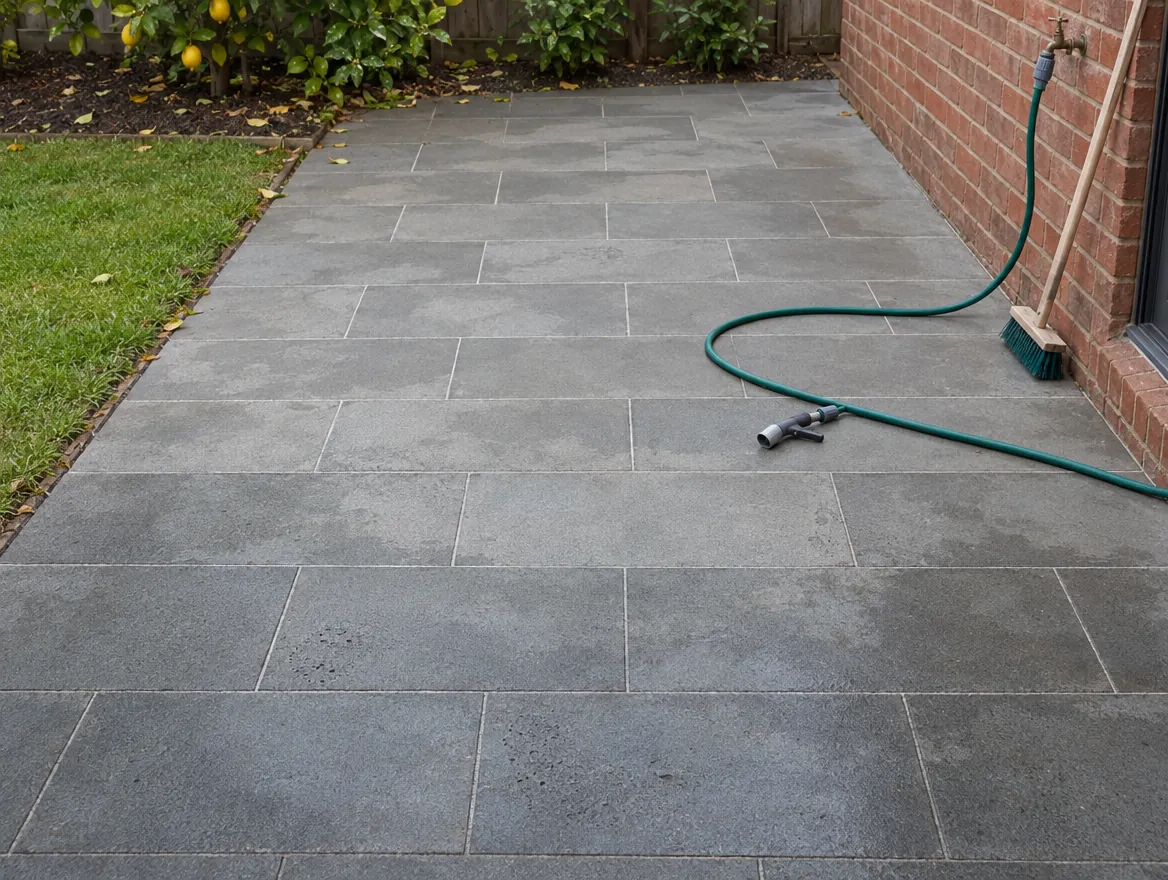
- Sweep or blow the surface clear. Loose grit becomes abrasive the moment water hits it, so remove it before anything else.
- Wet the paving down. Pre-wetting stops the cleaner soaking straight in and keeps it working on the surface where the dirt is.
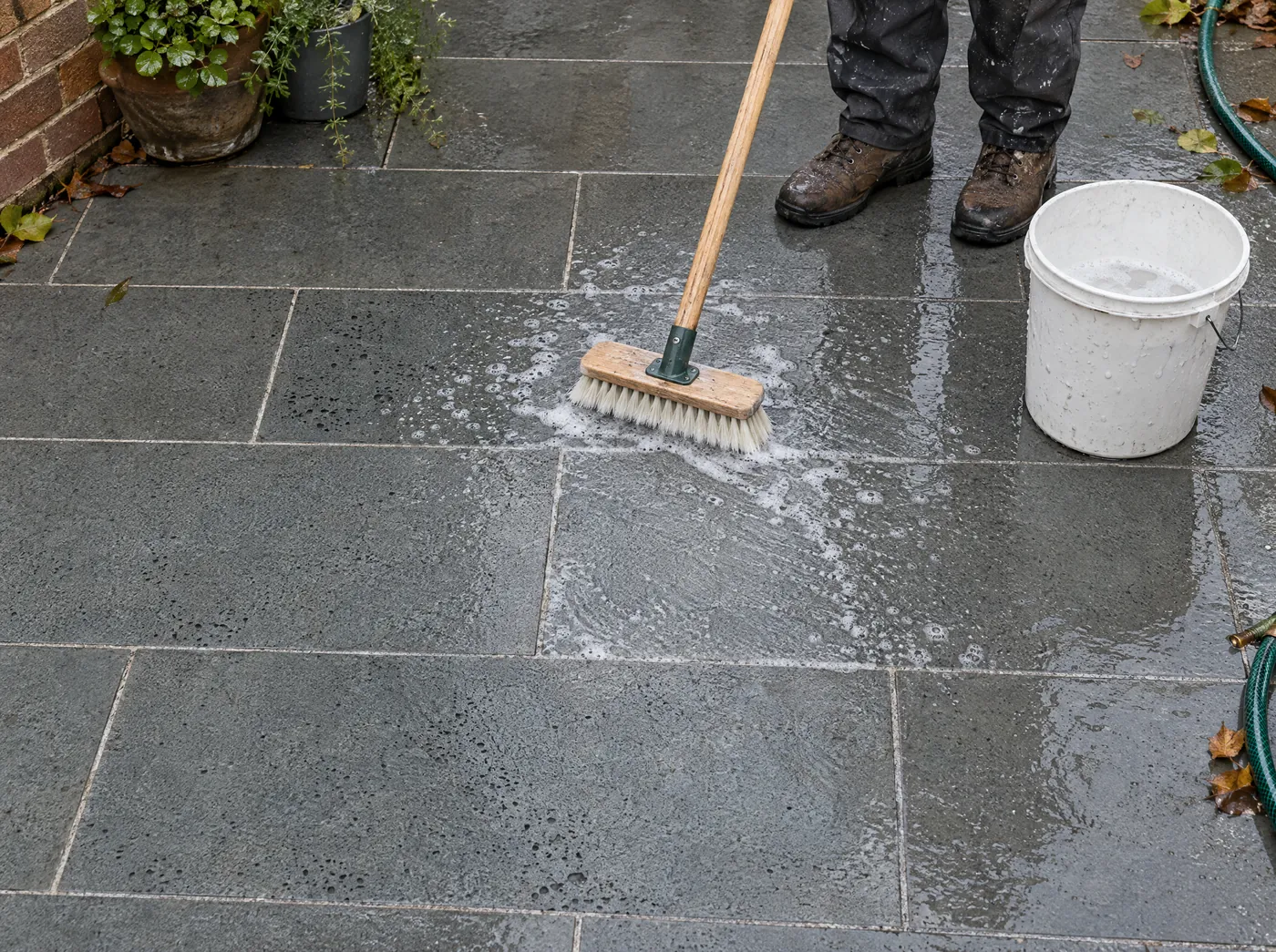
- Apply a pH-neutral cleaner at the dilution on the label, working in sections small enough that it does not dry before you rinse.
- Work it with a soft or medium nylon brush. Flamed and sawn finishes need more brushing than honed, because the texture holds dirt.
- Rinse thoroughly. Residue left behind attracts dirt and can mark as it dries, so rinse more than feels necessary.
- Let it dry fully before judging it. Bluestone looks considerably darker wet, and a surface that looks perfect damp can look patchy dry.
Anything still visible after this is a specific stain, and it needs a specific treatment rather than a stronger version of the same clean.
What not to use on bluestone
Acid is the one to be most careful about. It is often recommended for efflorescence and general brightening, and it damages the surface, increases porosity and leaves patchy discolouration that no amount of subsequent cleaning removes. The full case for why acid washing bluestone is a bad idea is worth reading before anyone talks you into it, including anyone selling the service.
Bleach is the second. It lightens stone unevenly, which on a surface as tonally consistent as bluestone shows up badly, and the runoff damages surrounding planting.
Salt is the third, and it gets recommended constantly for weeds in the joints. It draws into the stone and works back out as the surface dries, which contributes to efflorescence and to surface breakdown over time.
Wire brushes and abrasive pads are the fourth. On a honed bluestone surface the scratching is immediately visible and permanent.
Removing common bluestone stains
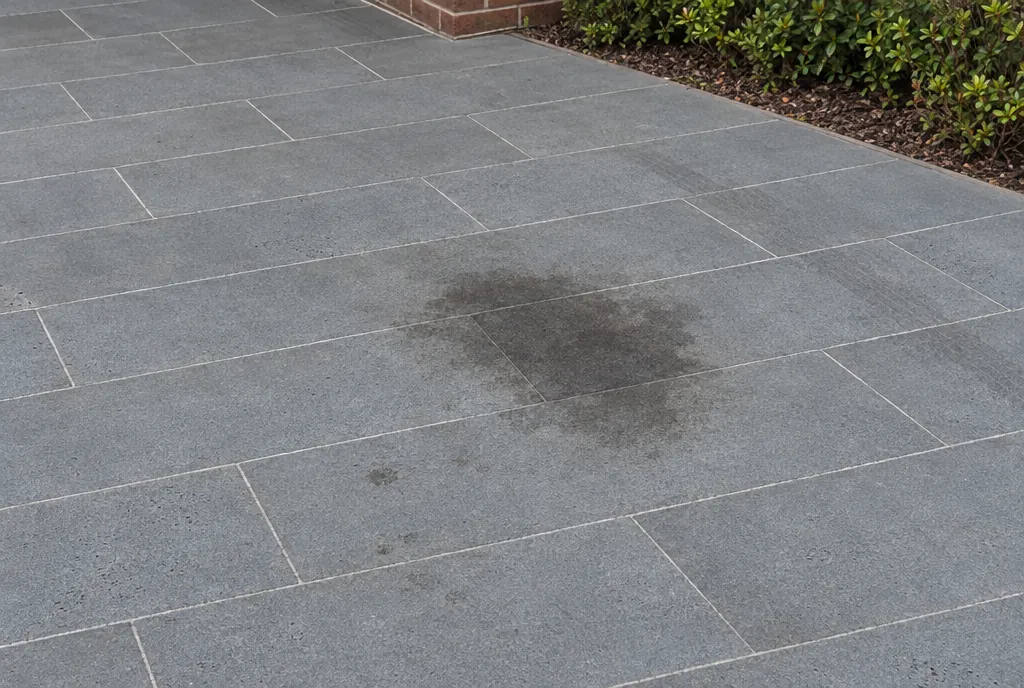
Oil and grease
Oil sits in the pores rather than on the surface, which is why scrubbing rarely shifts it. A poultice, an absorbent paste left on the mark to draw the oil back out, is the usual approach. Speed matters more than product choice: fresh oil lifts far more readily than oil that has sat through a summer.
Rust
Rust marks usually come from metal furniture feet, garden tools or a fixing left on the surface. Many commercial rust removers are acid-based, which puts them in the avoid list above, so check what is in the product before it goes anywhere near the stone and test it in a hidden area first.
Organic growth, moss and algae
Green and black growth on bluestone is a moisture problem before it is a cleaning problem. It appears where the surface stays damp, usually from shade, poor falls or a blocked drainage point. Clean it off with a pH-neutral or purpose-made outdoor cleaner and a brush, then fix the moisture if you want it to stay gone.
Efflorescence
Efflorescence is the white bloom that appears as salts move to the surface with moisture and are left behind as it evaporates. It is not dirt, and it is the mark most often treated with acid by mistake. Brush the dry deposit off, expect it to reduce over time as the salts work through, and treat the underlying moisture path if it persists.
Should you pressure wash bluestone?
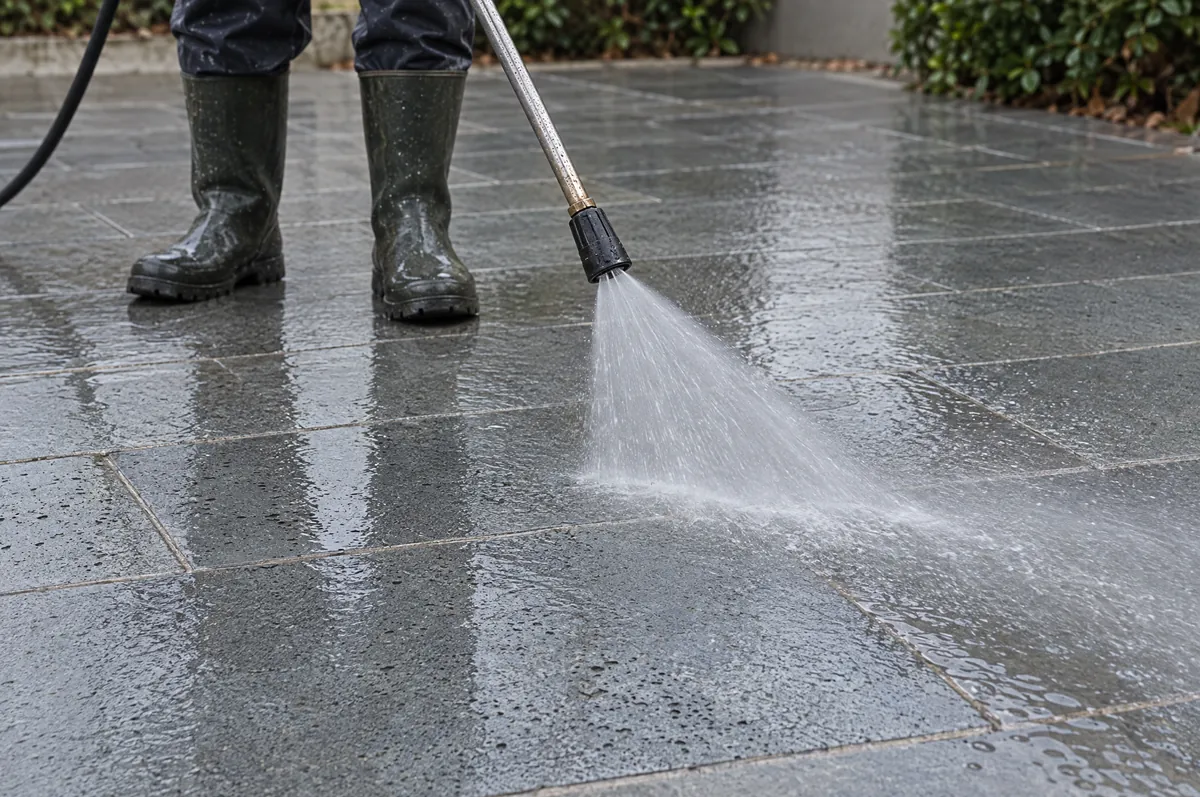
Bluestone tolerates pressure washing better than travertine pavers or limestone, but tolerating it and being improved by it are different things.
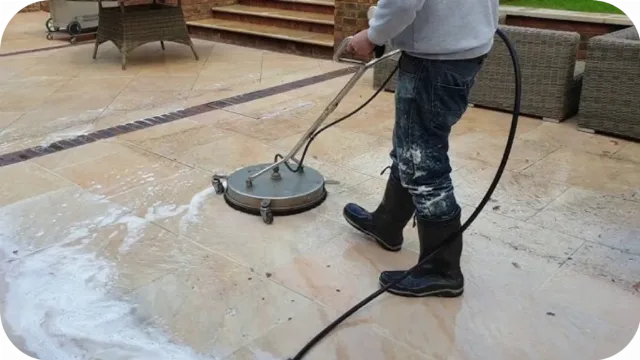
Used badly, a pressure washer leaves a lightened, roughened band where the nozzle passed too close, blasts the jointing sand out of the joints, and on a flamed or sawn surface can take the top off the texture. On an even-toned stone, every one of those marks is visible afterwards. Surface damage is the risk to watch here rather than breakage, which is a separate question covered in whether bluestone cracks easily.
If you use one, work at the lowest pressure that shifts the dirt, use a fan nozzle rather than a pencil jet, keep the nozzle well back and move at a consistent speed. Test on a hidden section first. And expect to refill the joints afterwards, because pressure washing removes jointing sand and open joints let weeds and water straight back in.
Keeping bluestone clean for longer
Sweep regularly, deal with spills quickly, and keep the paving draining properly, because standing water causes more staining problems than anything you track across the surface.
Sealing makes routine cleaning easier and gives spills less chance to set, and the process for sealing paving stones outdoors runs on its own schedule alongside cleaning. If you are looking after more than one material, the approach changes by stone, and there is a fuller breakdown of how to clean pavers by material covering travertine, limestone, sandstone and granite alongside bluestone.
Frequently asked questions
What is the best cleaner for bluestone pavers?
A pH-neutral cleaner made for natural stone is the safest and most effective choice for routine cleaning. Avoid general paver and driveway cleaners without checking the label, because many are acidic and formulated for concrete. For a specific stain, match the treatment to the stain rather than using a stronger general cleaner.
Can you use vinegar on bluestone?
Vinegar is acidic, so it belongs in the same category as any other acid treatment and is best avoided. It gets recommended as a natural option, but natural and safe are not the same thing where stone is concerned. A pH-neutral cleaner does the same job on general dirt without the risk.
Why does my bluestone look patchy after cleaning?
Patchiness after cleaning usually means one of three things: cleaner residue that was not rinsed off, uneven application where some sections had longer contact time than others, or the stone was judged while still drying. Rinse thoroughly, let it dry fully, and reassess. If the patchiness persists and the surface feels different to the touch in those areas, the cause is likely to be damage rather than dirt.
Does bluestone need sealing?
Bluestone is denser than the calcium-based stones and absorbs less, so sealing is a choice rather than a requirement in most settings. Sealing makes cleaning easier and reduces the chance of a spill setting into a stain, which is worth it in high-use areas such as outdoor kitchens and around barbecues. Confirm the recommendation for your specific bluestone and finish before applying anything.
Before you clean
Identify the finish as well as the stone, test anything new in a hidden section, and start with the gentlest method that might work. Bluestone is hard-wearing enough that patience almost always beats strength, and the damage from getting it wrong does not come out.