The best natural stone flooring ideas for Australian homes start with matching the stone to the room, then choosing the finish and the laying pattern that suit how the space is used. Limestone, travertine, marble, bluestone, granite, quartzite and sandstone each bring a different colour, texture and level of upkeep, and the ideas below are organised by room, by stone, by pattern and by finish so you can shortlist quickly. If the decision is whether a stone belongs inside or out, the practical differences between indoor and outdoor natural stone flooring are compared stone by stone in our article.
In this guide
- Which Natural Stones Work Best for Indoor Flooring?
- Natural Stone Flooring Ideas by Room
- Natural Stone Flooring Ideas by Stone
- Flooring Ideas by Pattern and Format
- Choosing a Finish: Honed, Tumbled, Brushed, Sandblasted or Polished
- Colour Directions for Stone Floors in 2027
- What Natural Stone Floors Need to Live Well
- Frequently Asked Questions
- Seeing the Stone Before You Decide
Which Natural Stones Work Best for Indoor Flooring?
Limestone, travertine, marble, bluestone, granite and quartzite are the natural stones most often used for indoor flooring in Australia, with sandstone used more selectively. The table gives the look, the rooms each suits and the one care point that matters most, so you can read the ideas that follow with the trade-offs already in view.
| Stone | Look | Best rooms | Typical indoor finish | Care point |
|---|---|---|---|---|
| Limestone | Soft, even tone from cream to grey, fine texture | Living, kitchen, hallway, bathroom | Honed, tumbled, brushed | Needs sealing; avoid acidic cleaners |
| Travertine | Warm, layered, with natural pitting (filled or unfilled) | Living, kitchen, bathroom | Honed and filled | Needs sealing; filled is easier to clean indoors |
| Marble | Veining, depth, light reflection | Entry, powder room, bathroom, formal living | Honed (polished for light-traffic rooms) | Etches with acids; honed hides marks better |
| Bluestone | Dark grey to charcoal, fine grain, modern or heritage | Living, kitchen, hallway, indoor-outdoor | Honed | Shows dust on dark tones; sealing helps resist marks |
| Granite | Speckled, dense, charcoal to grey | Kitchen, hallway, high traffic | Honed, flamed outside | Hardest wearing of the group; lowest upkeep |
| Quartzite | Crystalline, often with soft colour movement | Living, kitchen, bathroom | Honed, natural cleft | Very hard; confirm the finish for wet rooms |
| Sandstone | Warm, textured, coastal | Living, sunrooms, indoor-outdoor | Honed, sawn | Softer and more porous; sealing matters |
The finishes in this table are typical for the stone type. Confirm the finish, size and application of a specific product on its page or with our team, because a stone sold as an outdoor paver is not always offered in a size or finish intended for interiors.
Natural Stone Flooring Ideas by Room
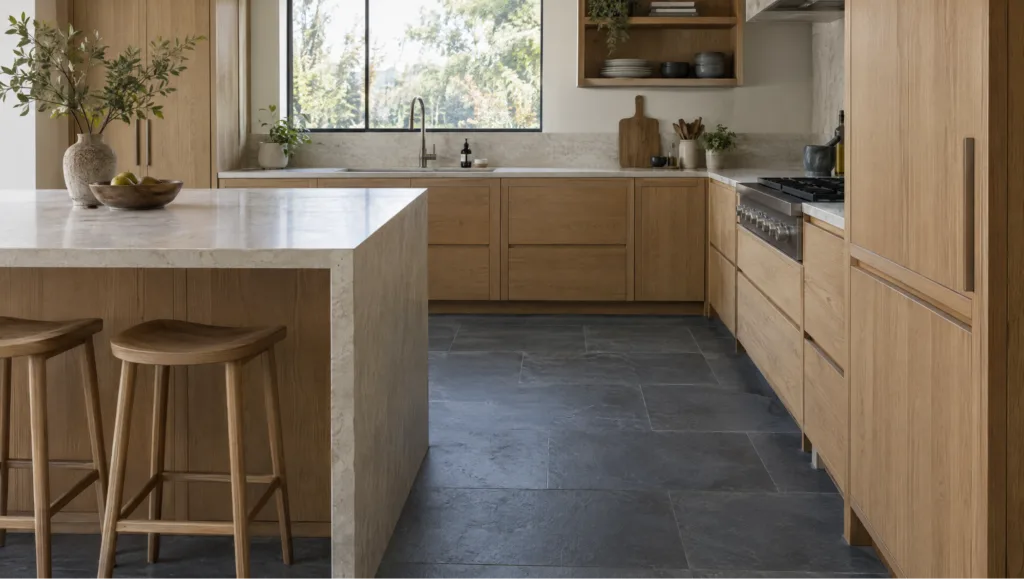
The right stone for a room depends on how the room is used, how much light it gets and how often it gets wet. These are the ideas that work most often in Australian homes, room by room.
1. Living Room
Large-format honed limestone is the living room idea that suits the widest range of Australian homes, because the pale, even tone makes a room feel larger and takes both timber and painted joinery well. Travertine in an ivory or silver tone gives a warmer, more textured version of the same effect. In a modern plan, honed bluestone grounds the room and makes rugs, timber and brass read sharply against it. Marble belongs in a formal living room where traffic is lighter and the veining can be the feature.
One practical note for living rooms: choose honed over polished for the main floor. Honed stone hides the everyday marks of a busy room, and it is the finish that works with underfloor heating and the thermal mass that stone gives a south-facing room in winter.
2. Kitchen and Open-Plan Living
Granite, quartzite and bluestone are the kitchen flooring ideas that stand up to the hardest use, because they are dense, resist scratching and take dropped pans and chair legs well. Honed limestone also works in a kitchen when it is sealed and the owners are comfortable wiping acidic spills promptly. The design move that makes a kitchen floor look considered is matching the floor tone to the benchtop and splashback, and the warm and cool stone tones that sit well together are worth settling before the floor is chosen.
In an open-plan room, the floor is the one surface that runs the whole length, so keep it to a single stone and let the kitchen joinery and the living room rug do the zoning.
3. Bathroom and Laundry
Tumbled or brushed finishes are the natural stone flooring ideas that suit bathrooms best, because their texture gives more grip underfoot when wet than a honed or polished surface. Small-format tiles and mosaics also help, because the extra grout lines break up the surface and allow the floor to fall properly to the drain. Marble in a powder room, where the floor rarely gets wet, is the place to use a polished finish and a dramatic vein.
For any wet area, ask for the product’s slip classification. In Australia, pedestrian surfaces are classified under AS 4586 using P ratings from P1 to P5, with the companion handbook HB 198 giving the minimum classification for different locations. Choose the finish on the basis of that classification rather than a general description, and seal porous stones so water and soap are slower to soak in.
4. Hallway and Entry
Dense, hard-wearing stones such as granite, bluestone and quartzite are the hallway flooring ideas that take grit, wheels and wet shoes without complaint. For a more decorative entry, a chequerboard of two limestone tones, or a French pattern in travertine, gives a traditional entrance a lot of character in a small area. Whatever the stone, a recessed mat at the door does more to protect a hallway floor than any sealer.
5. Alfresco and Indoor-Outdoor Flow
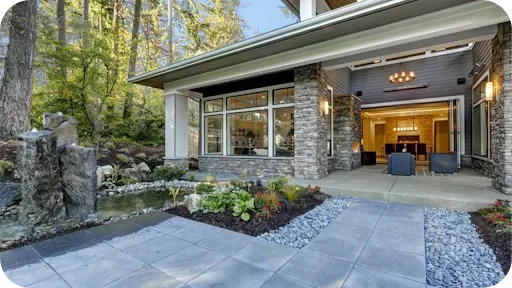
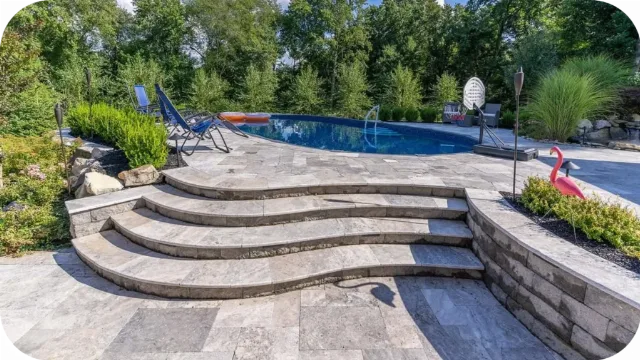
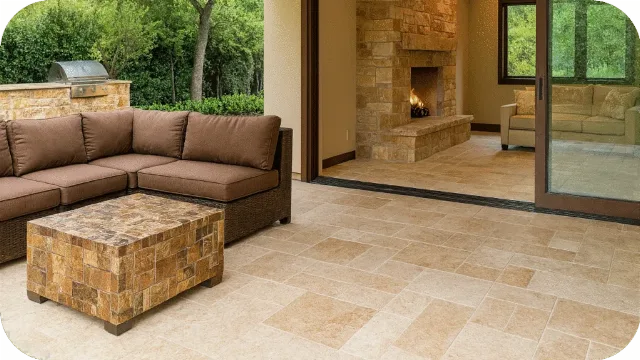
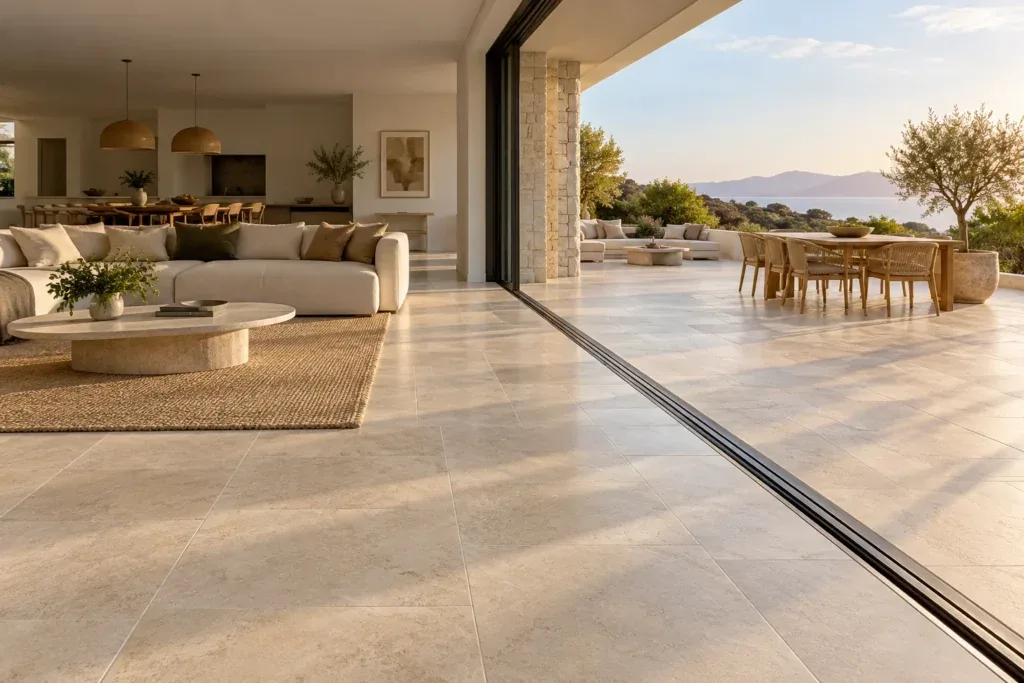
Running the same stone from the living room out to the alfresco is the signature Australian natural stone flooring idea, and it works when the finish changes at the threshold rather than the stone. Inside, a honed finish keeps the floor smooth and easy to clean; outside, a sawn, flamed, tumbled or sandblasted version of the same stone gives the grip a wet terrace needs. Bluestone, limestone and travertine are all available in both smooth and textured finishes for this reason.
The practical rules for blending indoor and outdoor stone are to use a thicker, exterior-rated version of the stone outside, to keep the joint lines aligned across the door track so the eye reads one floor, and to seal both sides.
Natural Stone Flooring Ideas by Stone
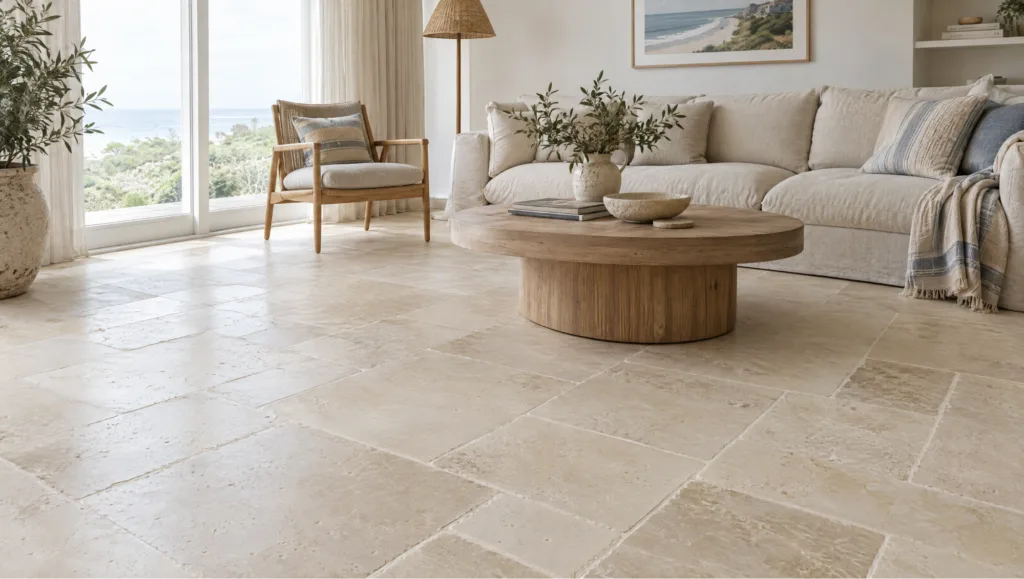
Each stone has a handful of ideas it does better than any other. These are the ones to start from.
1. Limestone Flooring Ideas
Limestone flooring is at its best in large formats and pale tones, where the even colour and fine texture make rooms feel calm and bigger than they are. A French pattern in a warm limestone suits a period home or a Hamptons-style plan, while a large square format in a grey limestone suits a contemporary build. The trade-off is that limestone needs sealing and the same acid-free cleaning routine as marble.
2. Travertine Flooring Ideas
Filled and honed travertine is the indoor version of the stone, with the natural pits filled so the floor is smooth and easy to clean. Ivory and classic tones suit relaxed, Mediterranean and coastal interiors; silver travertine gives a cooler, more contemporary read. The French pattern is the travertine idea most people picture, and laying it well depends on the set sizes and the order the pieces go down. Travertine needs sealing, and unfilled travertine is better kept for outdoors.
3. Marble Flooring Ideas
Honed marble is the marble flooring idea that works in a family home, because the matte surface hides the etching and fine scratches that show on a polished floor. Use polished marble where the reflection is the point and the traffic is light: a powder room, a formal entry, a bathroom floor paired with a matching vanity top. Let the veining be the feature and keep the walls and joinery quiet. Marble etches with acids, so the cleaning routine matters more than with any other stone here.
4. Bluestone Flooring Ideas
Honed bluestone indoors is the bluestone flooring idea that bridges heritage and modern homes, because the dark, fine-grained stone suits a Victorian terrace as well as a new build. Inside, keep it honed; outside, the sawn and flamed finishes of the same stone give grip and tie a courtyard to the living room. Dark floors show dust and footprints, so bluestone flooring suits owners who like the drama and accept a quick sweep.
5. Granite and Quartzite Flooring Ideas
Granite and quartzite are the flooring ideas for rooms that need to take punishment: kitchens, hallways, mudrooms and family rooms. Charcoal and grey granite in a honed finish gives a dense, speckled floor that reads modern and barely shows wear. Quartzite brings crystalline texture and soft colour movement, and it is among the hardest natural stones, so a quartzite floor stays looking new for a long time. Our quartzite range shows the colours available. Both stones ask less of their owners than limestone, travertine or marble.
6. Sandstone Flooring Ideas
Sandstone flooring suits coastal and relaxed interiors, sunrooms and the indoor side of an indoor-outdoor room, where its warm colour and visible grain feel right. Keep it to a honed or lightly textured finish indoors, seal it, and keep it away from the kitchen sink and the laundry, because sandstone is softer and more porous than the other stones here and shows water and oil marks more readily.
Flooring Ideas by Pattern and Format
The laying pattern changes the character of a stone floor as much as the stone does. These are the formats worth considering for interiors.
- Large format: the fewest joints and the calmest floor. Suits open-plan rooms and modern builds, and makes small rooms feel larger. Needs a flat, well-prepared substrate so tile edges sit level.
- French pattern: a repeating set of four sizes, traditional in travertine and limestone. Suits period homes, Hamptons and Mediterranean styles, and hides minor variation in the stone.
- Herringbone: a lively, directional pattern that works in hallways and smaller rooms, and it needs careful setting out from the centre line to look right.
- Chequerboard: two tones of limestone or marble in alternating squares, best in entries and bathrooms where the scale of the room suits it.
- Crazy paving and flagstone indoors: irregular pieces with filled joints, which give a rustic, cellar-like floor in a sunroom or an indoor-outdoor room. Keep the joints narrow and the surface honed so the floor is comfortable to walk on.
- Mosaics and borders: small-format stone in wet areas for fall and grip, or as a border to frame a large-format field.
Whatever the pattern, the quality of the floor comes from the substrate and the laying. Natural stone tiles are laid on a rigid, level base with a full bed of adhesive, and a professional stone tiler is the right choice for interiors.
Choosing a Finish: Honed, Tumbled, Brushed, Sandblasted or Polished
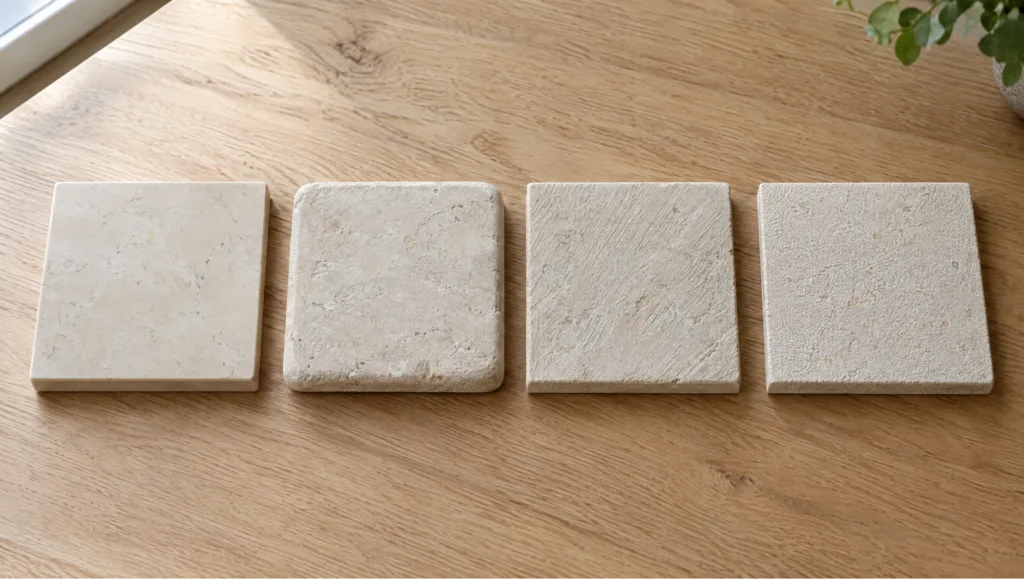
The finish decides how a stone floor looks in light, how it feels underfoot and how much grip it offers, so it deserves as much thought as the stone. The differences between tumbled, honed and sandblasted finishes are easiest to judge on samples of the same stone; the summary is below.
| Finish | Look | Effect on light and colour | Where it suits indoors |
|---|---|---|---|
| Honed | Smooth, matte | Softens colour, no reflection, hides marks | Main floors, kitchens, living rooms, bathrooms with a suitable slip classification |
| Polished | Glossy, reflective | Deepens colour, shows veining and every mark | Powder rooms, formal entries, low-traffic rooms |
| Tumbled | Rounded edges, aged surface | Mutes colour, rustic | Bathrooms, Mediterranean and country interiors |
| Brushed | Soft, lightly textured | Slight sheen, hides marks | Living areas, bathrooms, where a tactile floor is wanted |
| Sandblasted | Fine, even texture | Lightens colour, matte | Indoor-outdoor rooms, laundries, wet areas with the right classification |
Honed is the default for most interiors. Textured finishes earn their place in wet rooms and at the threshold to outdoors.
Colour Directions for Stone Floors in 2027
The colour directions that suit Australian homes now are warm neutrals, soft greys, deep greens and charcoal, and they come from how people are using their homes rather than from a trend report. Open-plan rooms that run outside favour pale, warm stones that keep the space bright and connect to the garden. Modern builds with dark joinery and black steel windows take a charcoal bluestone or granite floor for contrast. Green and dark marbles are being used in small doses, in a powder room or a bathroom, where a strong vein can be the whole design.
- Warm neutrals: cream and ivory limestone and travertine, which suit timber, linen and terracotta and keep rooms light.
- Soft greys: grey limestone and silver travertine for a cooler, contemporary read that still feels natural.
- Deep green and dark marble: as a feature floor in a small room, paired with brass or chrome.
- Charcoal and black: honed bluestone and charcoal granite for contrast against pale walls and timber.
Bold stone colours work best in small rooms or as a single plane, where a strong tone can be the whole scheme without overwhelming it.
What Natural Stone Floors Need to Live Well
A natural stone floor needs sealing, acid-free cleaning, a well-prepared substrate and the right finish for wet rooms, and those four things are the honest answer to the question of downsides. None of them is onerous, but all of them matter.
Sealing slows how fast water and oil soak into porous stones such as limestone, travertine, marble and sandstone, and it is reapplied when water stops beading on the surface. Cleaning is a soft broom or vacuum and a pH-neutral stone cleaner, because vinegar, bleach and bathroom sprays etch calcium-based stones; the same natural stone care routine applies to every stone in this article.
Thermal mass is a benefit in a cool climate, because stone holds the warmth of a sunny room or an underfloor system and releases it slowly, though underfloor heating with natural stone has its own costs and installation demands to weigh first. Slip in wet areas is managed by choosing a finish with a suitable classification under AS 4586, not by hoping a smooth stone will do.
Installation should be by a stone tiler, because a level substrate and a full adhesive bed are what keep a stone floor flat and crack-free for decades.
Frequently Asked Questions
What is the best natural stone for flooring?
Granite and quartzite are the hardest-wearing natural stones for flooring, while honed limestone and filled travertine are the most popular for living areas because of their pale, warm tones. The best choice depends on the room: dense stones for kitchens and hallways, textured finishes for bathrooms, and honed marble where the look matters more than heavy traffic.
What are the downsides of natural stone flooring?
The downsides are that porous stones need sealing, calcium-based stones etch with acids, some finishes are slippery when wet, and installation needs a skilled stone tiler and a well-prepared base. Each one is managed by choosing the right stone and finish for the room and keeping to a simple cleaning routine.
Is natural stone flooring expensive?
The cost of natural stone flooring is driven by the stone type, the format and finish, the laying pattern and the substrate preparation, as much as by the price per square metre. Large formats and simple patterns cost less to lay than French pattern or herringbone, and a flat, sound substrate avoids expensive levelling. Ask for a quote on the specific stone and size rather than relying on a general figure.
Which natural stone flooring is the most durable?
Granite and quartzite are the most durable natural stone floors, followed by bluestone. All three are dense, resist scratching and need less sealing than limestone, travertine or marble.
Can I use the same stone inside and outside?
Yes, and it is one of the strongest design ideas for an Australian home. Use the honed version of the stone inside and an exterior-rated, textured version of the same stone outside, align the joints across the threshold and seal both sides.
Does natural stone flooring work with underfloor heating?
Yes. Stone conducts and holds heat well, so it suits hydronic and electric underfloor systems and keeps releasing warmth after the system switches off. The floor should be warmed gradually and installed over a sound, level base, and porous stones should be sealed.
Seeing the Stone Before You Decide
The right natural stone flooring idea is the one that suits the room, the light and the way the house is used, and the only way to be sure is to see the stone at full size in your own space. Browse installed projects in the Splendour In Stone gallery, order stone samples in the finishes you are weighing up, or visit the Melbourne showroom to compare them side by side.