Best Stone for Pool Coping and Paving: How to Choose the Right Material

Choosing the best stone for pool coping and paving is not only about appearance. Pool areas need materials that feel comfortable underfoot, provide grip when wet, and withstand sun, water, salt, chlorine and regular foot traffic.
The right stone can make your pool area safer, easier to maintain and more visually connected to the rest of your outdoor space. The wrong choice can lead to slippery surfaces, heat discomfort, staining or early wear.
This guide explains how to choose the right material for pool coping and paving, including the best natural stones, finishes, coping profiles, installation tips and care advice.
In this guide
- What Are Pool Coping and Pool Paving?
- What Makes a Stone Suitable for Pool Areas?
- Best Stones for Pool Coping and Paving
- Pool Coping Profiles to Consider
- Best Stone Finishes for Pool Areas
- How to Choose the Right Pool Stone
- Design Tips for a Cohesive Pool Area
- Installation Tips for Pool Coping and Paving
- Maintenance Tips for Pool Stones
- Choosing Pool Stone That Lasts
- FAQs
What Are Pool Coping and Pool Paving?
Pool coping and pool paving work together to create a safe, finished and functional pool area. Coping forms the edge around the pool, while paving creates the surrounding surface used for walking, lounging and outdoor living.
Good pool paving should feel comfortable under bare feet, provide grip when wet and handle constant exposure to sun, water and outdoor conditions. If you are planning a full outdoor upgrade, it also helps to review different outdoor paving ideas in Australia to see how materials work across larger spaces.
What Is Pool Coping?
Pool coping is the stone or material that frames the top edge of the pool. It creates a clean border between the pool shell and the surrounding surface, while helping protect the pool structure from water movement and edge damage.
It also improves safety by creating a more comfortable edge for swimmers to hold, sit on or step around.
What Is Pool Paving?
Pool paving refers to the surface installed around the pool area. This includes the space used for walking, sun lounges, outdoor furniture, garden access and general movement around the pool.
Good pool paving should feel comfortable under bare feet, provide grip when wet and handle constant exposure to sun, water and outdoor conditions.
Why They Should Work Together
Pool coping and paving should be selected together, not separately. Matching or complementary materials help create a more polished design, while consistent texture and finish improve safety, comfort and visual flow around the pool.
What Makes a Stone Suitable for Pool Areas?
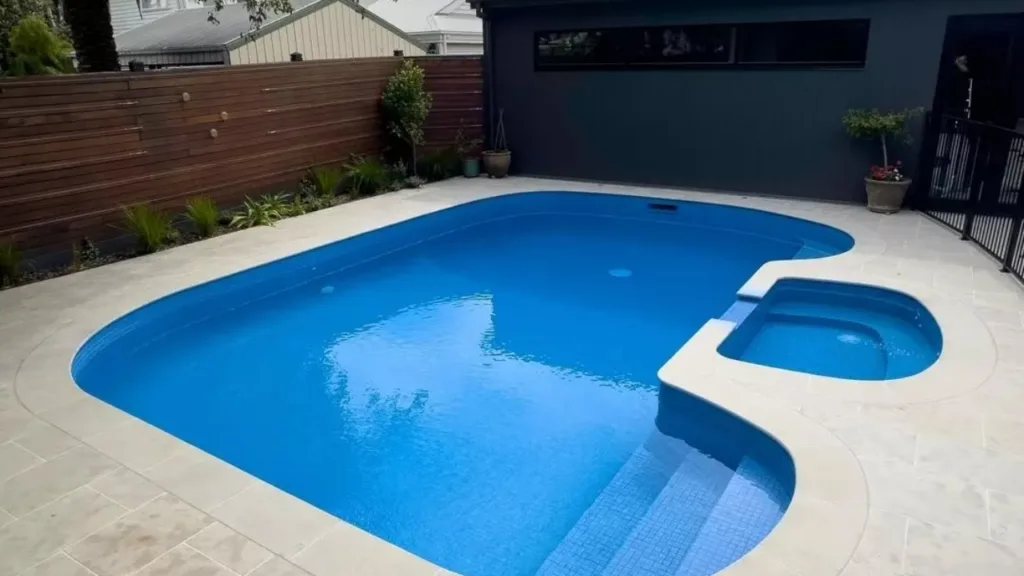
A suitable pool stone needs to do more than look good. It must stay safe underfoot, handle constant water exposure and perform well in outdoor conditions without becoming difficult to maintain.
Slip resistance, durability and finish all play a role here. For a deeper look at how surface treatments affect performance, see our guide to types of natural stone finishes
Slip Resistance
Pool areas become wet quickly, so surface grip is one of the most important factors. A textured finish helps reduce slipping while still feeling comfortable for bare feet.
Avoid highly polished surfaces around active pool zones, as they can become unsafe when wet.
Heat Comfort
Pool paving should stay as comfortable as possible under direct sun. Lighter stones such as travertine, limestone and pale sandstone usually reflect more heat than darker surfaces.
This is especially important around north-facing pools or exposed outdoor areas used during summer.
Salt and Chlorine Resistance
Pool stones are regularly exposed to saltwater, chlorine and chemical residue. Dense natural stones, or properly sealed porous stones, are better suited to these conditions because they resist surface breakdown and staining.
Durability
The area around a pool handles foot traffic, outdoor furniture, splashing, weather and regular cleaning. A good stone should resist cracking, fading and wearing down under repeated use.
Low Maintenance
Pool areas should be easy to clean. Choose a stone that can be swept, rinsed and resealed when needed without requiring constant upkeep.
Visual Compatibility
The stone should suit the pool, home exterior, landscaping, fencing and nearby paving. A consistent colour palette and finish will make the whole outdoor area feel more polished and intentional.
Best Stones for Pool Coping and Paving
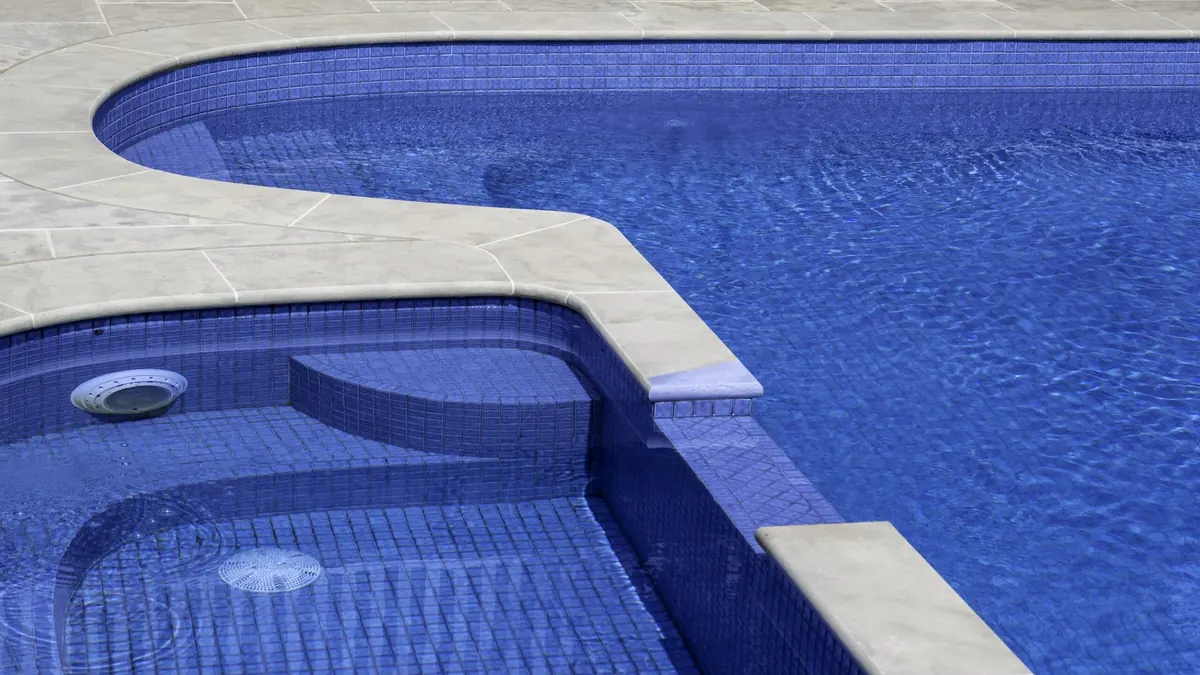
The best stone for pool coping and paving depends on how the area will be used, how much sun it receives, the style of the home and how much maintenance you want to manage. For most Australian pool areas, natural stone is preferred because it offers durability, texture and a premium finish that works well around water.
Travertine
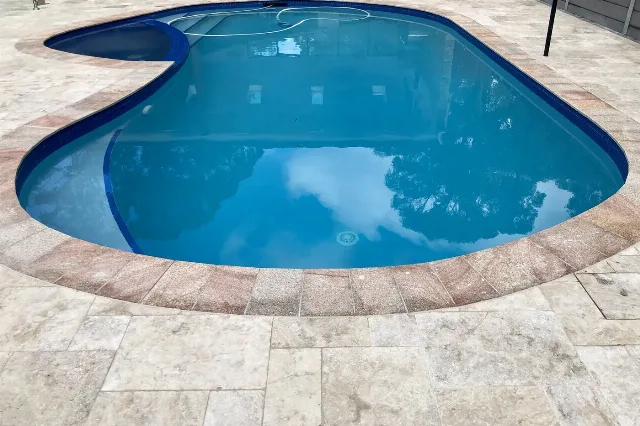
Travertine is one of the best all-round stones for pool coping and paving. It stays comfortable underfoot, has a naturally textured surface and creates a relaxed, resort-style look around the pool.
Its soft tones, including ivory, beige, silver and warm neutral shades, work well with timber, greenery, rendered walls and modern landscaping. Travertine is especially suitable for family pool areas because it balances grip, comfort and visual warmth.
Limestone
Limestone is a refined and versatile choice for pool areas. Its lighter tones help create a calm, elegant look while also improving comfort under direct sun.
This stone works well for pool coping, paving, patios and surrounding outdoor areas where a softer, more natural finish is preferred. Limestone suits coastal, classic and contemporary homes, especially when paired with clean garden design and neutral exterior finishes.
Granite
Granite is ideal for pool areas that need maximum strength and long-term durability. It is dense, hard-wearing and highly resistant to scratches, weather exposure and regular foot traffic.
For pool coping and paving, granite should be used with a textured finish such as flamed, sandblasted or bush-hammered. These finishes improve grip and make the stone more practical around wet areas. Granite is a strong option for modern homes, high-use pools and premium outdoor designs.
Bluestone
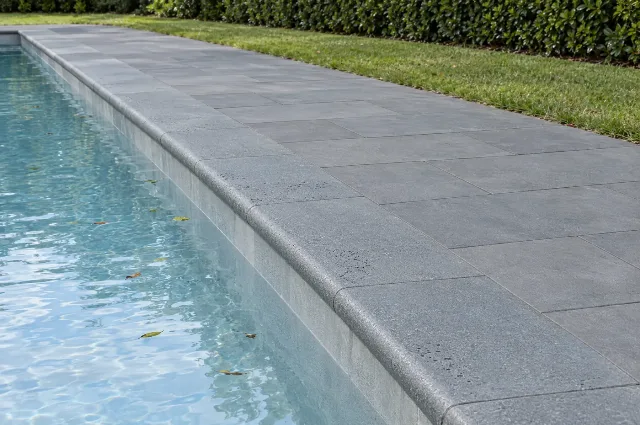
Bluestone is a strong choice for homeowners wanting a bold, architectural pool area. Its darker colour and dense surface create a modern look that works well with contemporary homes, concrete, steel, glass and structured landscaping.
Because darker bluestone can retain more heat, it is best used carefully in exposed areas. A textured or sawn finish can improve safety around the pool while keeping the design clean and refined.
Porphyry
Porphyry is a durable and textured stone that works well as an accent material around pools. It is often better suited to pathways, borders, transition areas and garden edges rather than large barefoot pool surrounds.
Its natural variation and rugged texture make it useful where extra grip and character are needed. Porphyry can also help connect the pool area with surrounding landscape features.
Sandstone
Sandstone offers a warm, relaxed and natural look, making it suitable for coastal, tropical and informal pool settings. Its earthy tones work well with planting, timber, gravel and organic landscape designs.
Because sandstone can be more porous than some other stones, correct sealing is important around pools. With the right finish and care, it can create a soft, welcoming poolside surface.
Marble
Marble can create a luxurious pool area, but it is usually best reserved for special-use spaces. It may suit shaded areas, decorative coping or lower-traffic pool zones where appearance is the main priority.
For active family pools, marble often needs more care than travertine, limestone, granite or bluestone. It can be more sensitive to chemicals, staining and surface wear, so it should be chosen carefully.
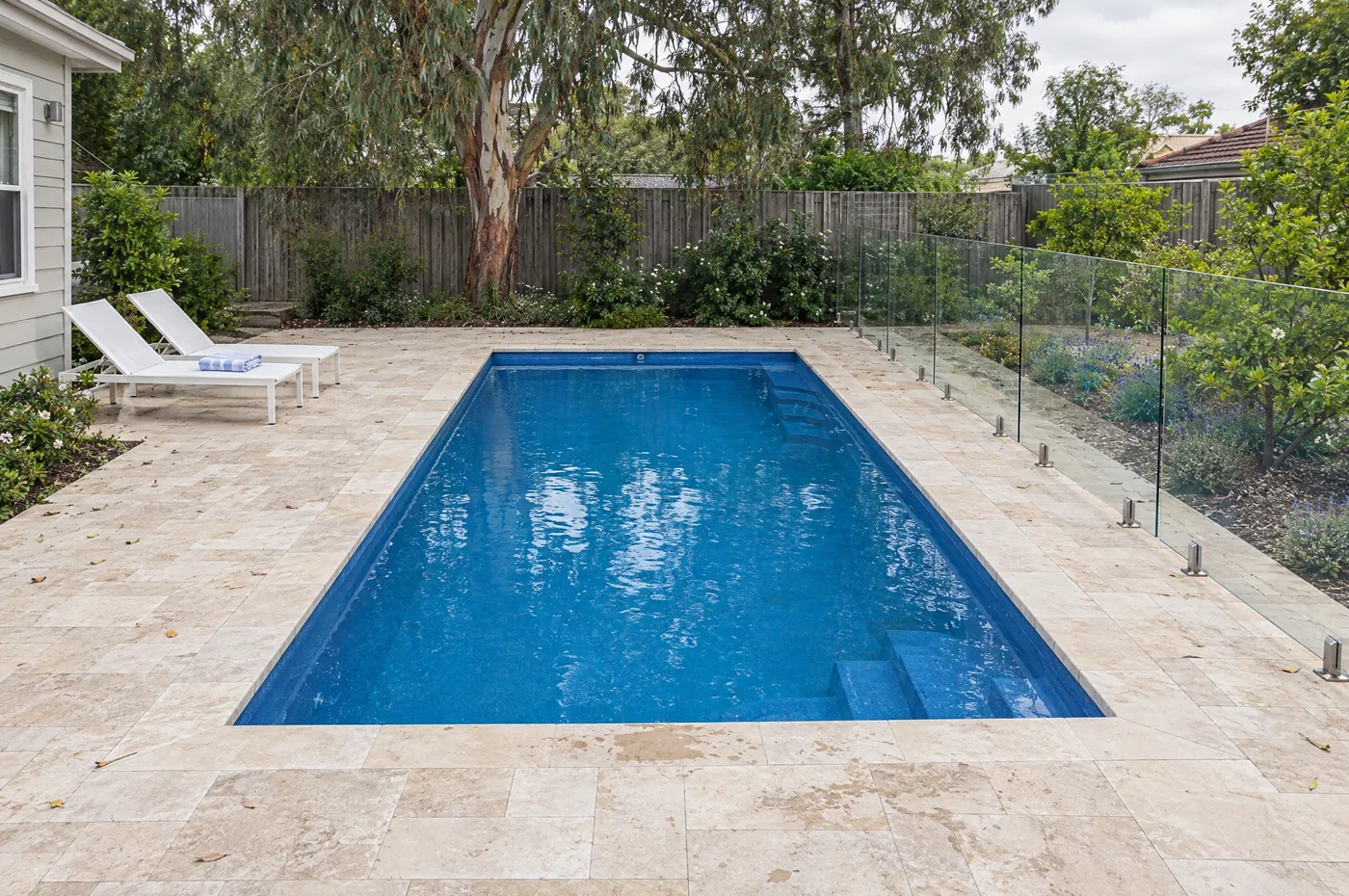
Pool Coping Profiles to Consider
The coping profile shapes the edge of your pool and affects both comfort and style. Some profiles create a soft family-friendly edge, while others deliver a sharper architectural finish. The best option depends on the pool design, surrounding paving and the look you want to achieve.
- Square edge coping: This profile creates a clean, straight edge that suits modern pools and minimalist outdoor spaces. It works well when you want a sharp, structured look that blends neatly with surrounding paving.
- Bullnose coping: Bullnose coping has a rounded front edge, making it comfortable to grip, sit on or move around. It is a practical choice for family pools because the softer edge improves comfort and safety.
- Drop face coping: Drop face coping creates the look of a thicker stone edge by extending vertically down the pool wall. It gives the pool a sleek, floating appearance and works especially well in premium modern designs.
- Rebated edge coping: Rebated coping creates depth while reducing unnecessary stone weight. It is useful when you want a substantial visual edge without using a full thick slab throughout the pool surround.
- Pencil edge coping: Pencil edge coping has a subtle, rounded finish that softens the pool edge without changing the clean look of the design. It suits contemporary pools where you want comfort and neat detailing.
- Custom coping: Custom coping is best for curved pools, unusual shapes, matching paver layouts or specific architectural details. It allows the coping to be cut, shaped and finished to suit the project properly.
For most pool areas, the coping profile should feel comfortable underfoot, suit the pool shape and match the surrounding paving for a seamless finish.
Best Stone Finishes for Pool Areas
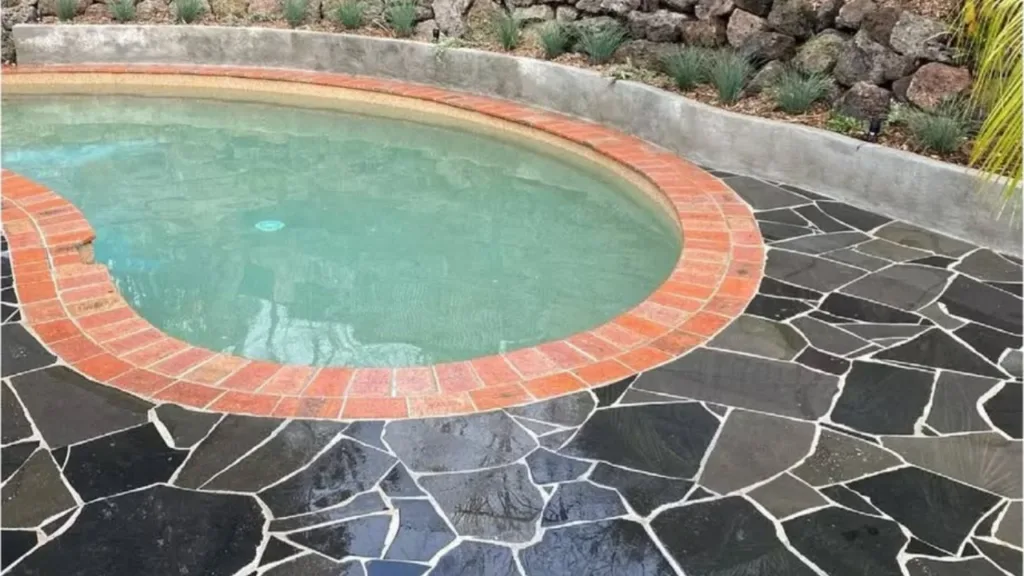
The finish is just as important as the stone itself. Around pools, the surface needs to provide grip, feel comfortable under bare feet and support the overall design style.
- Tumbled finish: A tumbled finish softens the edges and surface of the stone, creating a relaxed look with gentle texture. It works well for travertine, limestone and rustic pool designs where comfort is important.
- Sandblasted finish: Sandblasting creates a fine, grainy texture that improves traction without making the surface feel too rough. It suits modern pool areas that need a clean, refined finish with practical grip.
- Brushed finish: A brushed finish adds light texture while keeping the surface comfortable. It is a good option for family pool areas where the paving needs to feel safe, soft and easy to walk on.
- Flamed or exfoliated finish: This finish is created using high heat to produce a rougher, more slip-resistant surface. It works especially well with dense stones such as granite and bluestone in wet outdoor areas.
- Honed finish: Honed stone has a smooth, matte look that feels refined and modern. It should be used carefully around wet areas because smoother finishes may offer less grip than textured options.
- Sawn finish: A sawn finish has a clean-cut surface with slight natural texture. It is suitable for modern pool designs where you want a neat, consistent look without a highly polished surface.
- Natural split finish: This finish creates a rugged, organic texture. It is better suited to nearby paths, garden edges and feature areas rather than main barefoot pool surrounds.
For most pool coping and paving, choose a finish that balances slip resistance, comfort and easy cleaning. Highly polished finishes should generally be avoided around pools because they can become slippery when wet.
How to Choose the Right Pool Stone
Choosing the right pool stone starts with how the space will be used. A family pool, luxury entertaining area, shaded courtyard pool and exposed backyard pool all need slightly different materials, finishes and colours.
1. Start with safety
Choose a stone finish that provides grip when wet. Textured finishes such as tumbled, sandblasted, brushed or flamed stone are usually better around pools than smooth or polished surfaces.
2. Think about heat comfort
Pool areas are often used barefoot, so heat matters. Lighter stones such as travertine, limestone and pale sandstone are usually more comfortable in direct sun than darker materials.
3. Match the stone to the pool type
Saltwater and chlorinated pools can affect stone over time. Dense stones such as granite and bluestone perform well, while more porous stones need proper sealing to protect against moisture and chemical exposure.
4. Consider maintenance needs
Some stones need more care than others. Travertine, limestone and sandstone may need regular sealing, while granite and bluestone are generally harder-wearing and easier to maintain.
5. Choose a colour that suits the whole space
The stone should work with the pool water, home exterior, fencing, garden beds and nearby paving. A consistent colour palette creates a cleaner and more polished outdoor design. That face does not have to stop at one wall, and there is a strong case for limestone across the wider home exterior, from cladding through to steps and pool coping.
6. Plan for drainage
Good drainage helps prevent puddles, algae growth and long-term surface damage. The paving should fall away correctly so water does not sit around the pool edge.
7. Choose coping and paving together
Pool coping and paving should look connected. Matching stone creates a seamless finish, while complementary stone can add contrast without making the pool area feel disjointed.
Design Tips for a Cohesive Pool Area
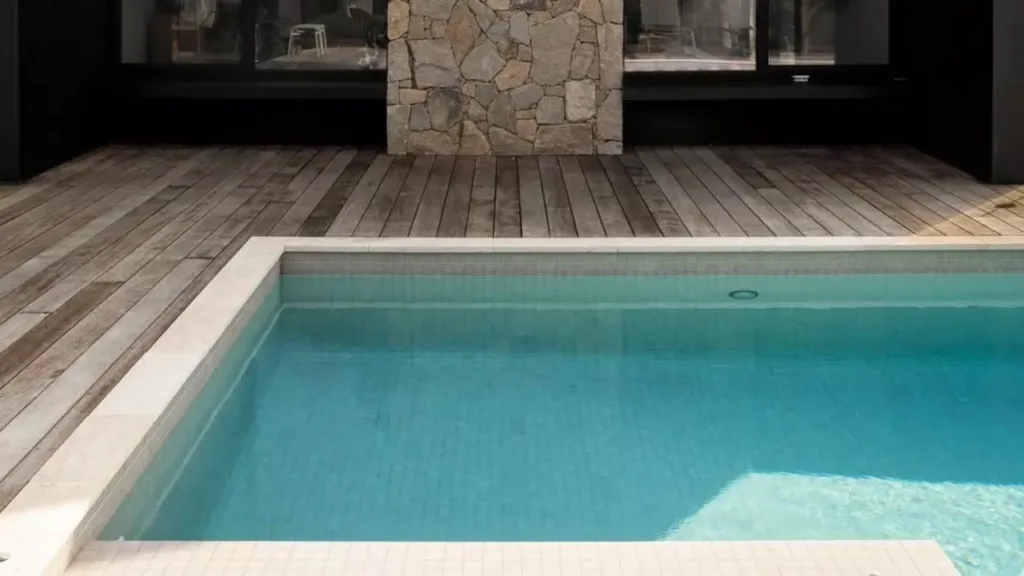
A well-designed pool area should feel connected to the home, garden and surrounding outdoor spaces. Each one is worked through in more depth, with the marble varieties that suit it, in the creative ways to use marble pavers in landscaping.The stone you choose for coping and paving should support the full design, not just the pool edge. To improve layout and visual flow, you can also explore different paving patterns used in Australia when planning your pool surrounds.
- Match the home’s architecture: Use natural stone that suits the property style. Travertine and limestone work well with coastal, classic and relaxed homes, while bluestone and granite often suit modern architectural designs.
- Keep the colour palette consistent: Choose tones that connect with nearby paving, walling, fencing, garden beds and outdoor furniture. Too many competing colours can make the pool area feel visually busy.
- Balance texture carefully: Pool areas need grip, but the surface should still feel comfortable under bare feet. Avoid mixing too many finishes, as this can make the space feel uneven or poorly planned.
- Use coping to frame the pool: A well-chosen coping profile creates a clean border between the water and surrounding paving. It can make the pool feel more polished and intentional.
- Connect with landscaping: Pair pool stone with planting, gravel, retaining walls, garden edging or soft lighting. These details help the pool area feel like part of a complete outdoor setting.
Installation Tips for Pool Coping and Paving
Even the best pool stone can underperform if it is installed poorly. Pool areas need accurate levels, stable base preparation and correct drainage because water, movement and outdoor exposure can affect the surface over time.
Check out our stone paver installation guide to understand base preparation, drainage and jointing requirements.
1. Prepare a stable base
A strong base helps prevent sinking, shifting and uneven paving. The area should be properly excavated, compacted and prepared with suitable base material before the stone is laid.
2. Allow for proper drainage
Pool paving should be installed with the correct fall so water moves away from the pool edge and does not sit on the surface. Good drainage helps reduce staining, algae growth and long-term moisture damage.
3. Use the right jointing material
Pool areas need jointing materials that can handle water exposure, movement, salt and chlorine. Flexible, pool-safe jointing helps keep the surface stable and reduces the chance of cracking.
4. Install coping with precision
Coping frames the pool, so alignment matters. Each piece should sit evenly, follow the pool shape properly and create a safe, comfortable edge around the water.
5. Seal before heavy use
Most natural stone benefits from sealing before regular pool use. A suitable sealer helps protect against water, salt, chlorine, sunscreen, organic stains and general outdoor wear.
6. Use professional installation
Pool coping and paving should be installed by experienced professionals, especially for curved pools, drop face coping, large-format pavers or detailed stone layouts. Proper installation improves safety, durability and the overall finish.
Maintenance Tips for Pool Stones
Natural stone pool coping and paving can last for years with the right care. The key is to keep the surface clean, protect it from salt and chlorine residue, and address small issues before they become costly repairs.
- Clean regularly: Sweep leaves, dirt and debris from the surface before they settle into the stone or joints. A quick clean helps prevent stains, algae and surface buildup.
- Use pH-neutral cleaners: Avoid acidic or harsh chemical cleaners, as they can damage natural stone. Use a stone-safe cleaner with water for routine washing.
- Rinse after heavy pool use: Saltwater, chlorine, sunscreen and body oils can leave residue on the stone. Rinsing the area after heavy splashing helps protect the surface over time.
- Reseal when needed: Most pool stones benefit from sealing every 1 to 3 years, depending on the stone type, finish and exposure. Porous stones such as travertine, limestone and sandstone usually need more consistent sealing.
- Treat stains early: Sunscreen, food, drinks, leaves and organic marks should be cleaned quickly before they penetrate the surface. Early cleaning reduces the risk of permanent staining.
- Watch for algae and mould: Shaded or damp areas can develop slippery buildup. Clean these spots early to keep the pool area safer underfoot.
- Check joints and coping edges: Inspect grout, jointing material and coping stones for cracks, movement or loose sections. Fixing small issues early helps protect the structure and appearance of the pool surround.
With simple routine care, quality pool stone will stay safer, cleaner and more attractive through changing weather, regular swimming and everyday outdoor use.
Choosing Pool Stone That Lasts
The best stone for pool coping and paving should balance safety, comfort, durability and style. Travertine, limestone, granite and bluestone are all strong options, but the right choice depends on your pool design, sun exposure, finish preference and maintenance needs.
A well-chosen stone will make your pool area safer, more comfortable and more visually refined for years.
For expert advice, premium samples and natural stone options, speak to the team at Splendour in Stone.
FAQs
What is the best stone for pool coping and paving?
Travertine is one of the best all-round choices because it stays comfortable underfoot, offers natural grip and suits many pool styles. Limestone, granite and bluestone are also strong options. The best choice depends on your pool design, sun exposure, maintenance needs and preferred finish.
Is travertine good for pool coping?
Yes, travertine is excellent for pool coping because it has a naturally textured surface, comfortable feel and timeless appearance. Its soft neutral tones suit relaxed, coastal and resort-style pool areas. It also works well for both coping and paving when sealed and installed correctly.
Is limestone suitable around pools?
Limestone is suitable around pools when the right finish and sealer are used. It offers a refined look, lighter colour options and a comfortable surface feel. Its natural tones work especially well in elegant, coastal and classic outdoor spaces where a softer appearance is preferred.
What stone is best for hot Australian pool areas?
Lighter stones are usually best for hot Australian pool areas because they reflect more heat than darker materials. Travertine, limestone and pale sandstone are strong choices for exposed spaces. Darker stones such as bluestone or charcoal granite can look striking but may feel warmer in direct sun.
What is the safest finish around pools?
Tumbled, sandblasted, brushed and flamed finishes are usually safer around pools because they provide better grip than polished surfaces. The best finish should improve traction while still feeling comfortable under bare feet. Highly polished stone should generally be avoided in wet pool areas.
Do pool coping and paving stones need sealing?
Most natural stone pool coping and paving benefits from sealing. A quality sealer helps protect the stone from moisture, salt, chlorine, sunscreen, stains and UV exposure. More porous stones such as travertine, limestone and sandstone usually need more regular sealing than denser stones like granite.
Should pool coping match the paving?
Pool coping does not always need to match the paving, but it should complement it. Matching stone creates a seamless look, while a contrasting coping can frame the pool beautifully. The key is to keep the colour, texture and overall design style consistent.