Choosing stone cladding for your home starts with more than picking an attractive colour. The stone needs to complement your home’s architecture, suit the wall it’s being installed on and withstand the conditions around it.
Limestone, sandstone, granite and other natural stones each have their own appearance, texture and practical requirements. Choosing the wrong material or overlooking installation details can lead to unnecessary costs.
Here’s how to choose stone cladding in seven practical steps, from selecting the right material to calculating how much you’ll need.
In this guide
- How to Choose Stone Cladding in 7 Steps
- 1. Decide Where the Stone Cladding Will Go
- 2. Check Whether Your Wall Can Support Stone Cladding
- 3. Choose the Right Natural Stone
- 4. Compare Stone Cladding Profiles
- 5. Match the Stone Colour to Your Home
- 6. Test Samples Before Making Your Decision
- 7. Calculate How Much Stone Cladding You Need
- Frequently Asked Questions
- Find the Right Stone Cladding for Your Home
How to Choose Stone Cladding in 7 Steps
| Step | What to consider |
| 1. Location | Interior or exterior application |
| 2. Wall suitability | Structural support and installation |
| 3. Stone type | Material, texture and maintenance |
| 4. Profile | Ledge stone, free form or ashlar |
| 5. Colour | Matching existing exterior finishes |
| 6. Samples | Natural variation and lighting |
| 7. Quantity | Wall measurements, corners and waste |
1. Decide Where the Stone Cladding Will Go
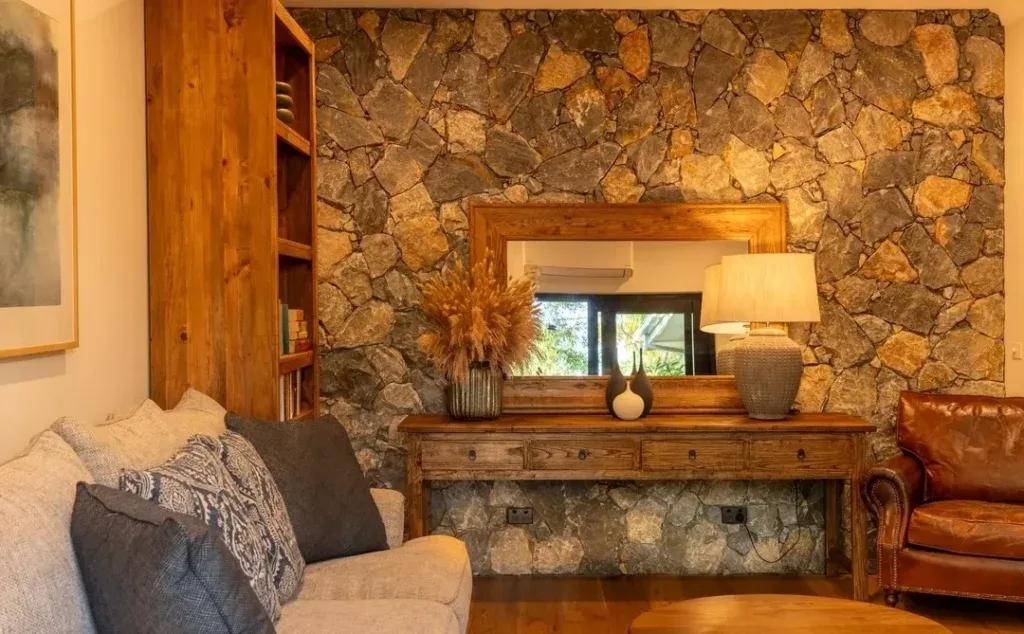
Start with the location. An exterior facade needs different considerations from an indoor feature wall or fireplace surround.
For outdoor applications, weather exposure, moisture and drainage matter. Interior cladding is generally less exposed to these conditions, but the wall structure and finish still need attention.
Common applications include:
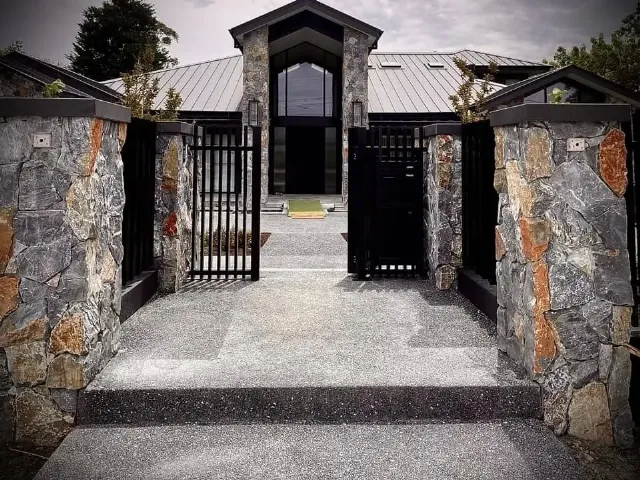
- Exterior facades: Choose stone suited to weather exposure and the building’s wall system.
- Entry pillars: Consider matching corner pieces for a clean finish.
- Garden walls: Account for drainage, moisture and retaining wall requirements.
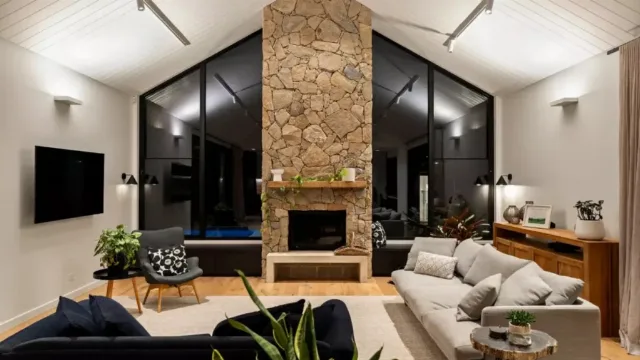
- Interior walls: Consider texture, lighting and the wall’s load capacity.
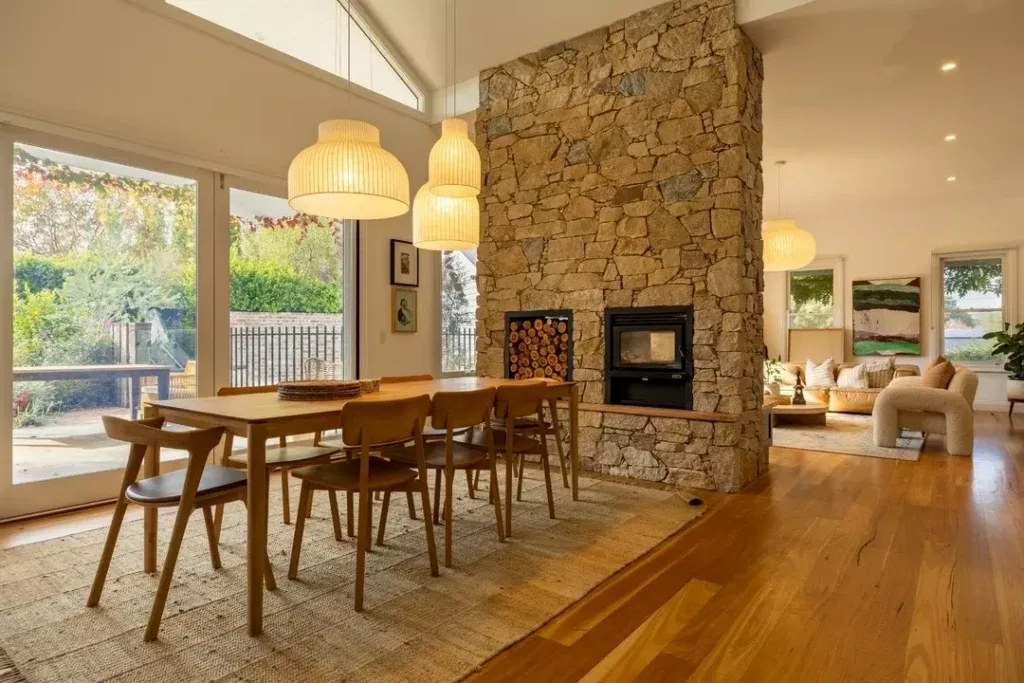
- Fireplaces: Check the firebox manufacturer’s clearance and installation requirements.
For exposed walls, exterior stone cladding offers different natural stone profiles and finishes to suit residential designs.
2. Check Whether Your Wall Can Support Stone Cladding
Natural stone adds weight to a wall, so checking the existing structure is essential.
Brick, concrete and blockwork can provide suitable substrates when properly prepared. Painted brick, damaged render and lightweight framed walls may require additional work or a purpose-designed fixing system.
Before installation, confirm:
- The wall can support the cladding’s weight.
- The surface is sound and appropriately prepared.
- The fixing system suits the stone and substrate.
- Exterior walls have suitable moisture management and drainage details.
For existing masonry, stone cladding over brick may be possible without rebuilding the wall, provided the substrate and fixing method are suitable.
Have a qualified builder or structural engineer assess the wall before ordering. Depending on the project, permits may also be required.
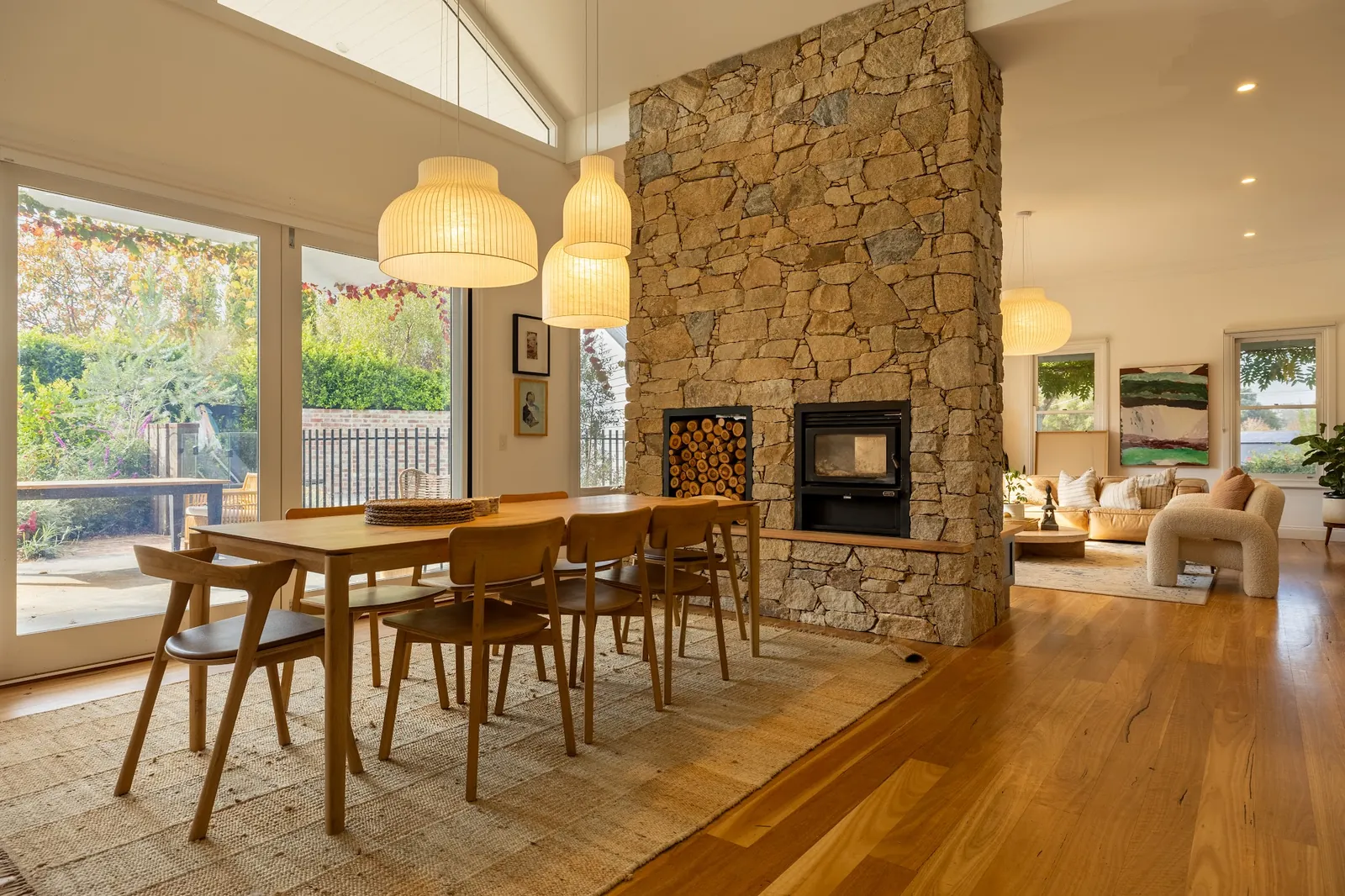
3. Choose the Right Natural Stone
Different stones offer different colours, textures and maintenance requirements. The best option depends on your home’s style, the installation location and the finish you want.
| Stone type | Appearance | Common applications |
| Limestone | Soft cream, grey and earthy tones | Facades, feature walls, pillars |
| Sandstone | Warm colours and natural grain | Garden walls, entrances, facades |
| Granite | Distinctive grain and textured finishes | Exterior walls, architectural features |
| Quartz | Varied colours and pronounced textures | Feature walls, exterior cladding |
| Travertine | Cream and neutral tones with natural variation | Feature walls, decorative cladding |
For example, limestone wall cladding can complement light render, timber and contemporary architecture. Sandstone may be better suited to a warmer, more rustic appearance.
Each stone also has different porosity and care requirements. Confirm its suitability for your intended application rather than choosing on appearance alone.
4. Compare Stone Cladding Profiles
The profile determines how the individual stones are arranged and how the finished wall looks.
Three popular styles are:
Ledge Stone
Long, narrow pieces arranged horizontally create a layered appearance with strong shadow lines. Ledge stone works particularly well on contemporary facades and feature walls.
Free Form
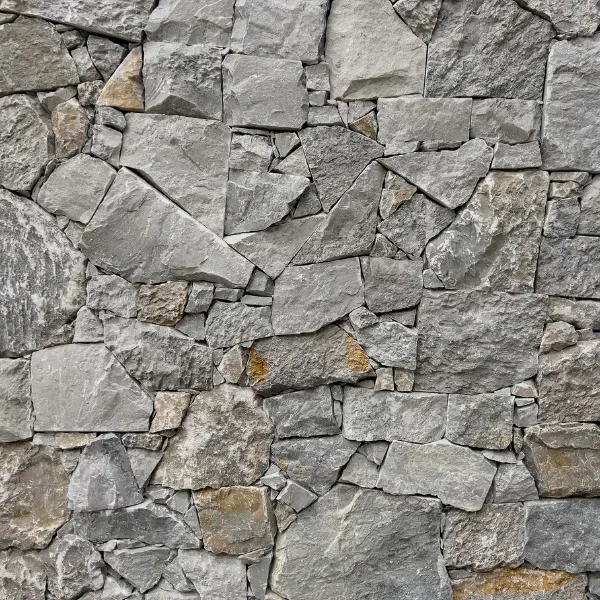
Irregular pieces of varying sizes create a more organic appearance. Free-form cladding suits rustic designs, garden walls and traditional homes.
Ashlar
Rectangular stones arranged in structured courses create a clean, architectural finish. Ashlar works well on modern homes and formal entrance features.
Joint style also affects the result. Tight, dry-stacked joints create a more continuous textured surface, while visible mortar joints produce a traditional masonry appearance.
Not every stone is available in every profile, so check the options within your preferred range.
5. Match the Stone Colour to Your Home
Stone cladding should complement the finishes already on your house, particularly those you’re not planning to change.
Look at your roof, brickwork, render, window frames and surrounding paving before selecting a colour.
For example:
- White render and black frames: Grey or charcoal stone can create a defined contrast.
- Timber and neutral render: Cream or warm limestone can produce a softer finish.
- Traditional brick homes: Earthy sandstone tones can complement existing materials.
- Coastal homes: Pale stone with subtle colour variation can support a relaxed appearance.
Texture also influences the result. Rough split-face stone creates stronger shadows, while flatter profiles produce a more restrained look.
For a coordinated exterior, consider how natural stone colour palettes work with the materials already in your home.
6. Test Samples Before Making Your Decision
Natural stone varies in colour, veining and texture. One small sample or an online photograph may not represent how an entire wall will look.
Before ordering:
- Shortlist two or three stones that suit your home.
- View each sample in morning and afternoon light.
- Compare the colours against existing brick, render and window frames.
- Check how exterior stone looks when wet.
- View larger displays or completed installations to understand natural variation.
You can request natural stone samples from Splendour in Stone or compare finishes at the showroom.
It’s also worth looking at completed stone cladding projects to see how different profiles and colours work across larger surfaces.
7. Calculate How Much Stone Cladding You Need
Measure the width and height of each wall in metres, then multiply them to calculate the total area.
Subtract windows, doors and other openings that won’t be clad.
For example:
| Measurement | Area |
| Front wall: 8 m × 2.7 m | 21.6 m² |
| Side wall: 3 m × 2.7 m | 8.1 m² |
| Less windows and doors | −4.8 m² |
| Net wall area | 24.9 m² |
In this example, the starting area is 24.9 m² before allowing for cutting waste and corner pieces.
Measure external corners separately and confirm how they are supplied. Your installer or stone supplier can advise on the appropriate waste allowance for your chosen profile.
What Affects Stone Cladding Costs?
The final cost depends on more than the stone’s price per square metre.
Wall preparation, installation labour, corner pieces, access equipment and delivery can all affect the budget. A straightforward ground-floor feature wall will generally have different installation costs from a two-storey exterior facade.
For Melbourne projects, Splendour in Stone offers an on-site measure and quote service to help determine material quantities and project requirements.
Frequently Asked Questions
What is the best stone for exterior wall cladding?
There is no single best stone. Limestone, granite, sandstone, quartz and travertine offer different appearances and characteristics. Choose a product suited to the wall’s exposure, structure and maintenance requirements.
Can you install stone cladding over existing brick?
Yes, provided the brickwork is structurally sound and correctly prepared. Painted, sealed or damaged surfaces may need additional treatment before installation.
Does natural stone cladding need sealing?
Some porous stones benefit from sealing, particularly in exposed or moisture-prone locations. Requirements vary by product, so follow the supplier’s recommendations.
How much stone cladding should I order?
Calculate the net wall area by subtracting openings, then allow for external corners and installation waste. Confirm the final quantities with your supplier or installer before ordering.
Find the Right Stone Cladding for Your Home
The right stone cladding should look good, suit your existing walls and perform well in its intended location.
Start by checking the wall, comparing stone types and profiles, and testing samples against your home’s existing finishes.
Splendour in Stone offers a wide selection of natural stone walling for Australian homes, with options for facades, feature walls and outdoor spaces.
Compare the available finishes and speak with the team about the right stone and quantities for your project.