Travertine Walling Stone Patterns & Layouts: Unleashing Your Creativity

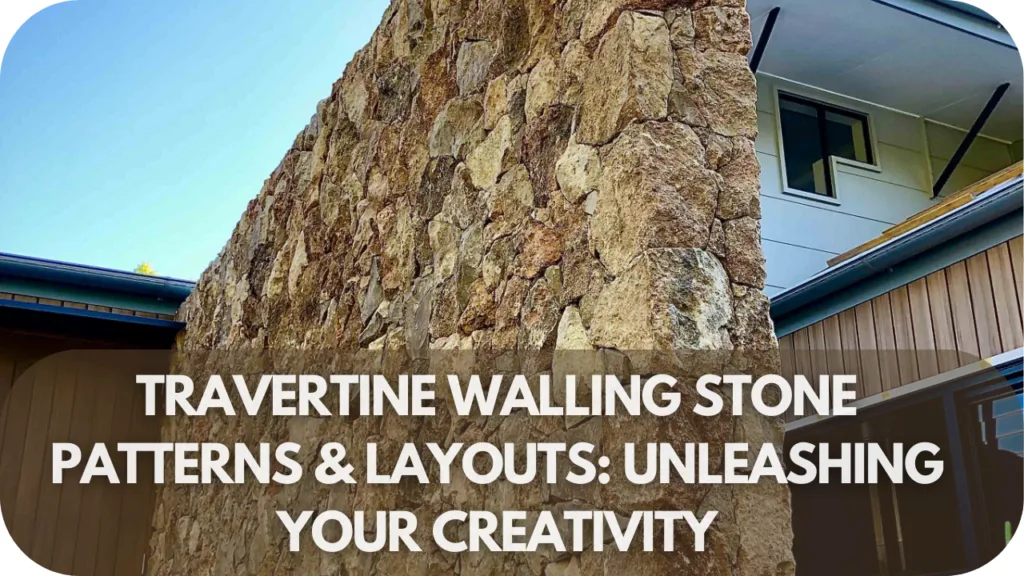
The pattern you choose for travertine walling changes how the whole wall reads, from a tight, modern drystack to a warm random ashlar that looks like it has stood for a century. Travertine carries both moods well, which is why you see it on minimalist feature walls and rambling country facades alike.
Most people pick the stone first and the pattern as an afterthought. It pays to do it the other way around. The layout, the joint, and the direction of the courses do as much work as the colour, and they are far harder to change once the wall is up. This guide covers the main patterns, where each one earns its place, and the layout calls that quietly make or break the result.
In this guide
What are the main travertine walling patterns?
The most common travertine walling patterns are random ashlar, coursed ashlar, drystack (ledgestone), running bond, and stack bond, with interlocking panels as the fast modern option. Each one strikes a different balance between rustic warmth and clean contemporary lines.
1. Random ashlar
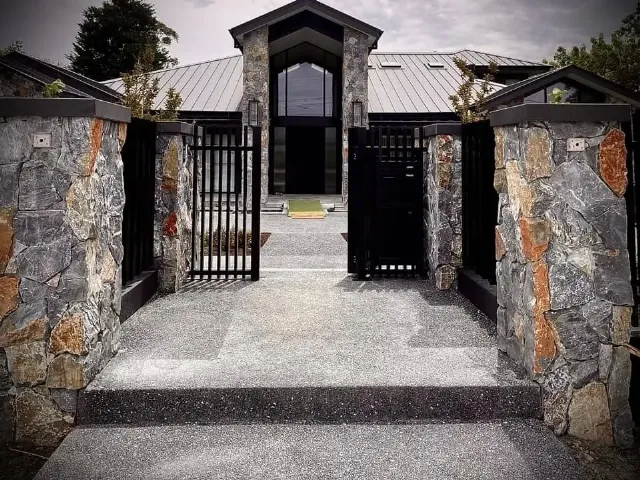
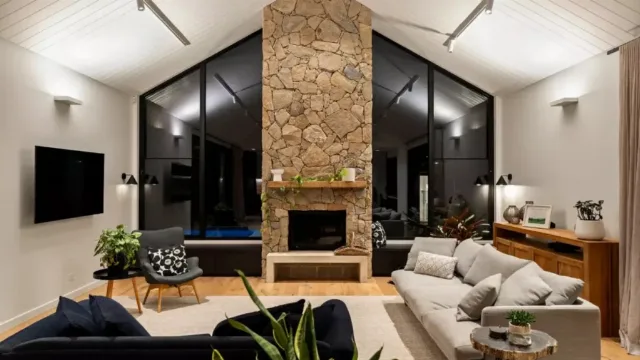
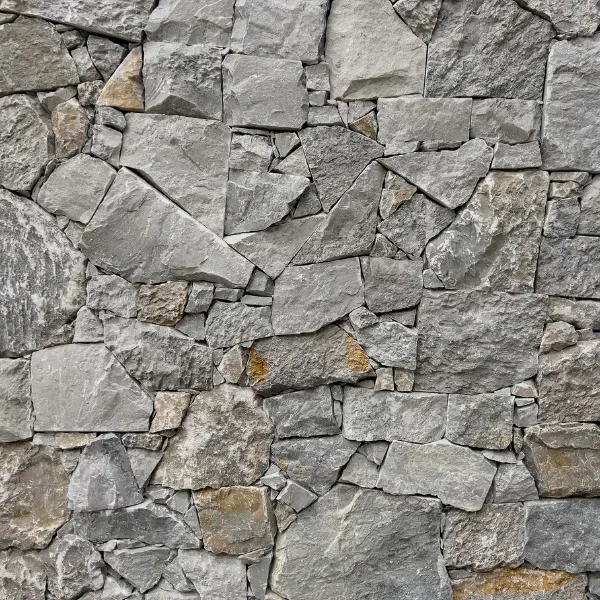
Rectangular pieces in mixed sizes, fitted together so no two courses line up the same way. This is the pattern most people picture when they think of a natural stone wall: relaxed, organic, full of character. It hides slight irregularity well, which makes it forgiving to lay, and it suits feature walls, fireplaces, and facades that want to feel established rather than brand new.
2. Coursed ashlar
The same rectangular blocks, but aligned into even horizontal rows. It reads as ordered and classic rather than rustic, and it sits comfortably on formal or heritage-style exteriors where you want structure without going fully minimal.
3. Drystack, or ledgestone
Thin, linear pieces stacked tight with no visible mortar joint, so the wall reads as a run of horizontal lines and shadow. It is the look behind most modern stone feature walls right now: textured, dimensional, and quietly dramatic under raking light. Travertine split-face panels are made for exactly this.
4. Running bond
Uniform pieces offset by half, the way bricks are laid. Clean, familiar, and easy to read. It is the safe, orderly choice when you want stone texture without a pattern that draws attention to itself.
5. Stack bond
Uniform pieces aligned so the joints line up vertically and horizontally into a strict grid. Very modern, very minimal, and unforgiving: any variation in the stone or the setting-out shows immediately. Best on interiors and statement walls where precision is the point.
6. Interlocking panels
Engineered travertine cladding panels that clip or bond together for a faster, more uniform install across large areas. You trade some of the hand-laid character for speed and consistency, which can be the right call on a big facade or a tight program.
Drystack or grouted: the joint sets the mood
Before the pattern, settle the joint, because it changes the whole feel more than the pattern does.
A grouted joint gives a traditional, defined look, with each stone outlined and the wall reading as separate pieces. It suits random and coursed ashlar, and it is more practical outdoors, where the joint helps shed water and lock the stones together.
A drystack joint, with the stones butted tight and no visible mortar, gives the clean, continuous, modern surface most feature walls are after. It is beautiful, but it asks more of the install and of the stone, since there is no grout line to absorb variation. For external drystack work especially, the setting-out and the substrate need to be right.
How do you choose the right pattern for your wall?
Match the pattern to the room or the building, not to a trend. A few rules of thumb:
- For a warm, lived-in feel, random ashlar in a tumbled finish is hard to beat.
- For a sharp, modern facade or feature wall, drystack ledgestone or stack bond does the heavy lifting.
- For a formal or heritage exterior, coursed ashlar keeps the order without feeling cold.
- For a large area on a deadline, interlocking panels save time and keep the look consistent.
| Pattern | Look | Typical joint | Best suited to |
| Random ashlar | Warm, organic, established | Grouted | Feature walls, facades, fireplaces |
| Coursed ashlar | Ordered, classic | Grouted or tight | Formal and heritage exteriors |
| Drystack / ledgestone | Linear, textured, modern | No visible joint | Contemporary feature walls, pillars |
| Running bond | Clean, familiar | Grouted | Simple, uniform walls |
| Stack bond | Minimal, grid-like | Tight | Modern interiors, statement walls |
| Interlocking panels | Uniform, fast | Concealed | Large facades, quick installs |
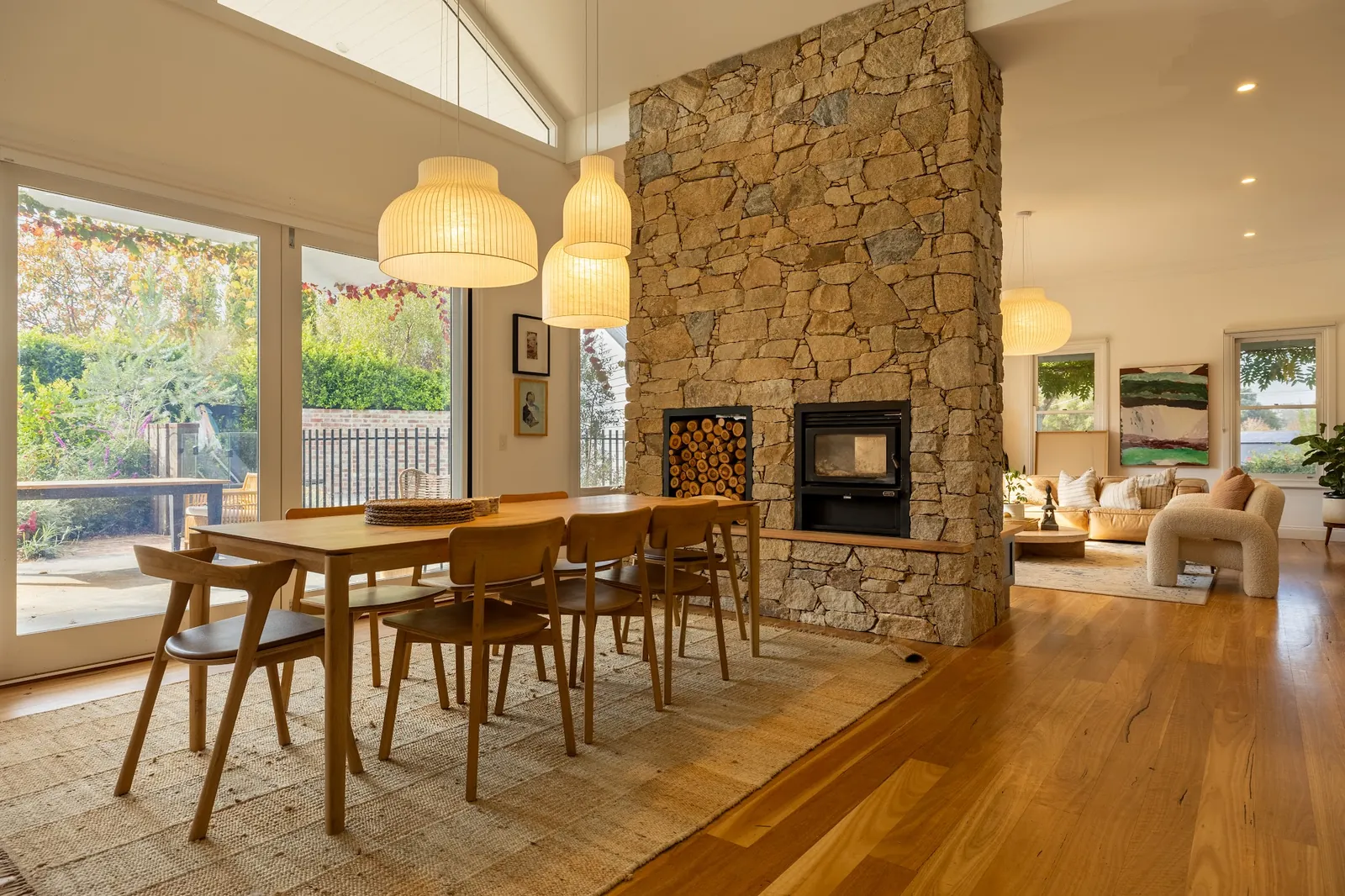
Colour and finish change the pattern as much as the layout
The same pattern looks like two different walls depending on the travertine you run it in. Our range covers Ivory for soft, near-white warmth, Classic for the familiar beige and tan, Silver for cooler grey tones that read modern, Walnut for deep brown character, and Cashmere for a muted middle ground. Pale tones like Ivory open up a small or shaded space; darker Walnut adds weight and drama to a feature wall.
Finish matters just as much. Tumbled travertine has soft, rounded edges and an aged look that flatters random ashlar. Honed gives a smooth, matte face that suits orderly patterns and interiors. Split-face is dimensional and rugged, and it is what gives drystack its shadow and texture. Run a stack bond in split-face and a stack bond in honed and you would not guess they were the same pattern.
Getting travertine walling right outdoors
Travertine is a sedimentary stone with natural voids, and a couple of things follow from that. The stone is supplied filled (voids filled for a smoother face) or unfilled (voids left open for more texture); filled tends to suit interiors and formal work, unfilled leans rustic and reads well outdoors.
Because travertine is porous, external walling should be sealed with a penetrating sealer to resist staining and water uptake, and resealed periodically depending on exposure. On exterior drystack in particular, get the substrate, fixing, and any drainage right, since a tight, jointless wall has less tolerance for movement and trapped water.
Which travertine walling pattern is right for you?
The pattern, the joint, and the finish together decide whether a travertine wall reads as rustic and established or clean and modern, and travertine is rare in pulling off both convincingly. Settle the mood first, then choose the pattern and finish to suit it. If you want to see the tones and textures in person before you commit, Splendour in Stone supplies travertine walling across the full colour range, with samples and advice on the right pattern for your project. Get in touch for a quote.
FAQs
What is the most popular travertine wall pattern?
Random ashlar is the most popular for a warm, natural look, while drystack ledgestone leads for modern feature walls. The choice comes down to mood: random ashlar feels established and organic, drystack feels sharp and contemporary. Both suit travertine, so the deciding factor is usually the rest of the room or facade.
Can travertine be used for exterior walls?
Yes. Travertine works well on facades, fences, and outdoor feature walls. Because it is porous, exterior travertine should be sealed with a penetrating sealer and resealed periodically. Choose a grouted pattern or a well-detailed drystack so the wall sheds water and copes with movement, and confirm the fixing system suits the substrate.
Should you grout travertine walling or dry-stack it?
Grouting gives a traditional, defined look and is more forgiving outdoors. Drystack gives a clean, modern, jointless surface but demands precise setting-out and a sound substrate. Indoors, either works on look alone. Outdoors, grouted is the safer default unless the drystack detailing is done properly.
Does travertine walling need sealing?
Outdoors, yes. Travertine is porous, so a penetrating sealer helps it resist staining, water uptake, and weathering, and it should be reapplied periodically based on exposure. Indoors, sealing is optional but still worthwhile in areas prone to splashes or grease, such as a kitchen feature wall.
What is the difference between filled and unfilled travertine?
Filled travertine has its natural voids filled for a smoother, more uniform face, which suits interiors and formal patterns. Unfilled travertine leaves the voids open for more texture and a rustic character that reads well outdoors. The look is different, and so is the upkeep, since open voids can collect more debris.
Is travertine good for a feature wall?
It is one of the better choices. Travertine offers a wide tonal range, takes finishes from smooth honed to rugged split-face, and suits both rustic and minimal patterns, so it adapts to almost any interior. For a feature wall, a drystack ledgestone in Silver or Walnut, or a random ashlar in Classic, are reliable starting points.