Silver travertine walling is a natural stone cladding valued for its silver-grey banding, soft tonal variation and premium outdoor appeal. It works well for feature walls, facades, alfresco areas and landscape walls when the stone is selected, sealed and installed correctly.
Its appeal comes from balance. It feels refined without looking flat. It adds texture without becoming too heavy. It can sit beside modern architecture, coastal palettes, warm timber and garden planting with ease.
If you are considering travertine wall cladding, the real question is not only whether it looks good. It is whether the material suits the wall, the exposure, the fixing method and the level of care you are happy to maintain over time.
In this guide
- Is Silver Travertine Good for Walls?
- What Is Silver Travertine?
- 7 Benefits of Silver Travertine Walling
- 1. A Distinctive Silver-Grey Appearance
- 2. Versatile Across Modern, Coastal and Classic Designs
- 3. A Durable Natural Stone When Installed Correctly
- 4. Light Tones That Help Brighten a Space
- 5. A Premium Natural Finish for Feature Walls and Facades
- 6. Flexible Across Walling, Tiles and Design Formats
- 7. Pairs Beautifully With Other Materials
- Where to Use Silver Travertine Walling
- What to Consider Before You Choose Silver Travertine
- Silver Travertine Walling vs Other Wall Cladding Options
- Final Thoughts
- Frequently Asked Questions
Is Silver Travertine Good for Walls?
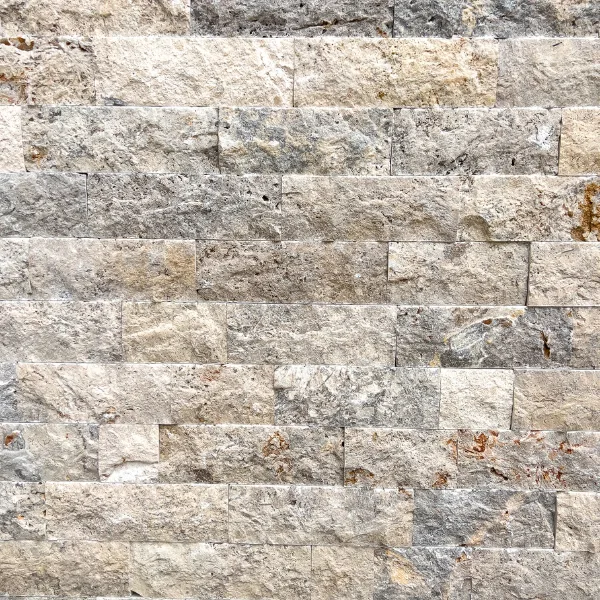
Yes, silver travertine is good for walls where you want a natural stone surface with soft grey movement, texture and a premium finish. It suits interior feature walls, facades, alfresco walls and selected outdoor applications when the substrate, fixing system and sealing approach are right.
Travertine is a porous natural stone, so it should not be treated as maintenance-free. But with proper sealing, correct installation and sensible care, silver travertine walling can create a long-lasting wall surface with depth and character.
| Benefit | Why It Matters |
| Distinctive silver-grey colour | Adds natural movement without overpowering the design |
| Works across styles | Suits modern, coastal, Mediterranean and classic spaces |
| Strong outdoor appeal | Performs well on exterior walls when installed and sealed properly |
| Light-reflective tones | Helps brighten walls and outdoor living areas |
| Premium natural finish | Gives facades and feature walls a more refined look |
| Flexible design use | Can work across feature walls, facades, alfresco spaces and garden walls |
| Easy to pair | Sits well beside timber, render, glass, steel, plants and other stone |
What Is Silver Travertine?
Silver travertine is a natural travertine stone with grey, silver, beige and charcoal-toned movement. Like other travertines, it forms from limestone deposits associated with mineral-rich water, which gives the stone its layered texture and natural pits.
The silver variation is popular because it feels more contemporary than cream or beige travertine. It still has warmth, but the grey movement gives it a cooler and more architectural character.
In walling, that makes it useful for spaces where you want texture and natural detail without a heavy rustic look. Silver Travertine walling can bring that layered stone character into feature walls, facades and outdoor zones where a plain rendered surface would feel too flat.
7 Benefits of Silver Travertine Walling
1. A Distinctive Silver-Grey Appearance
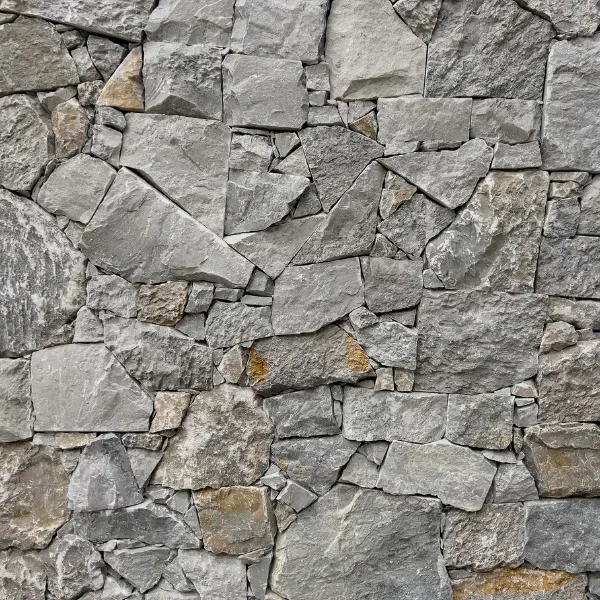
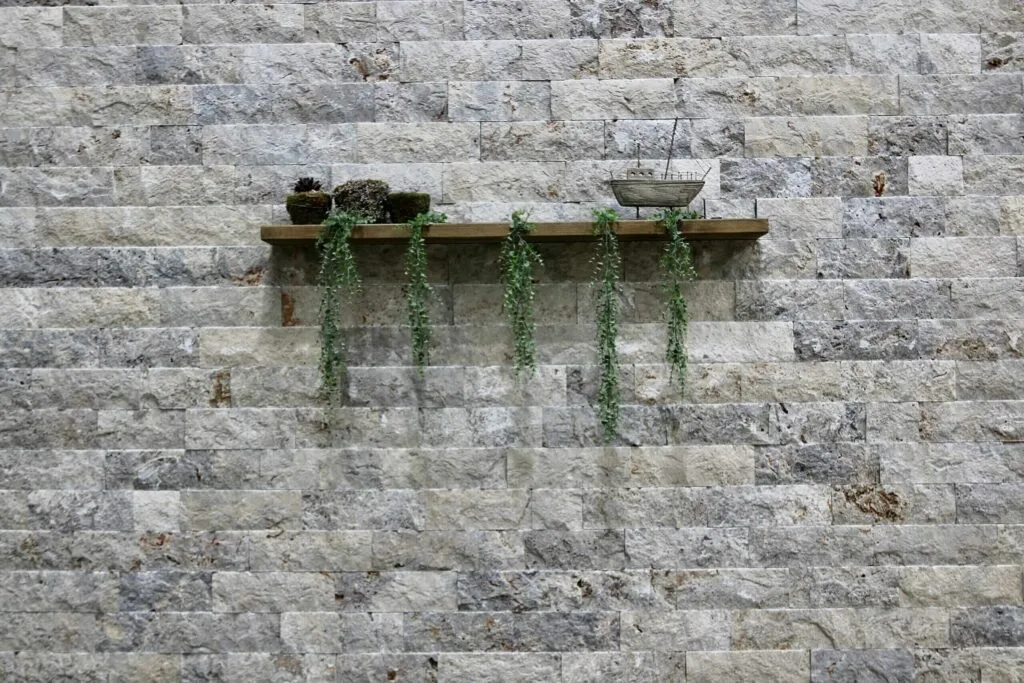
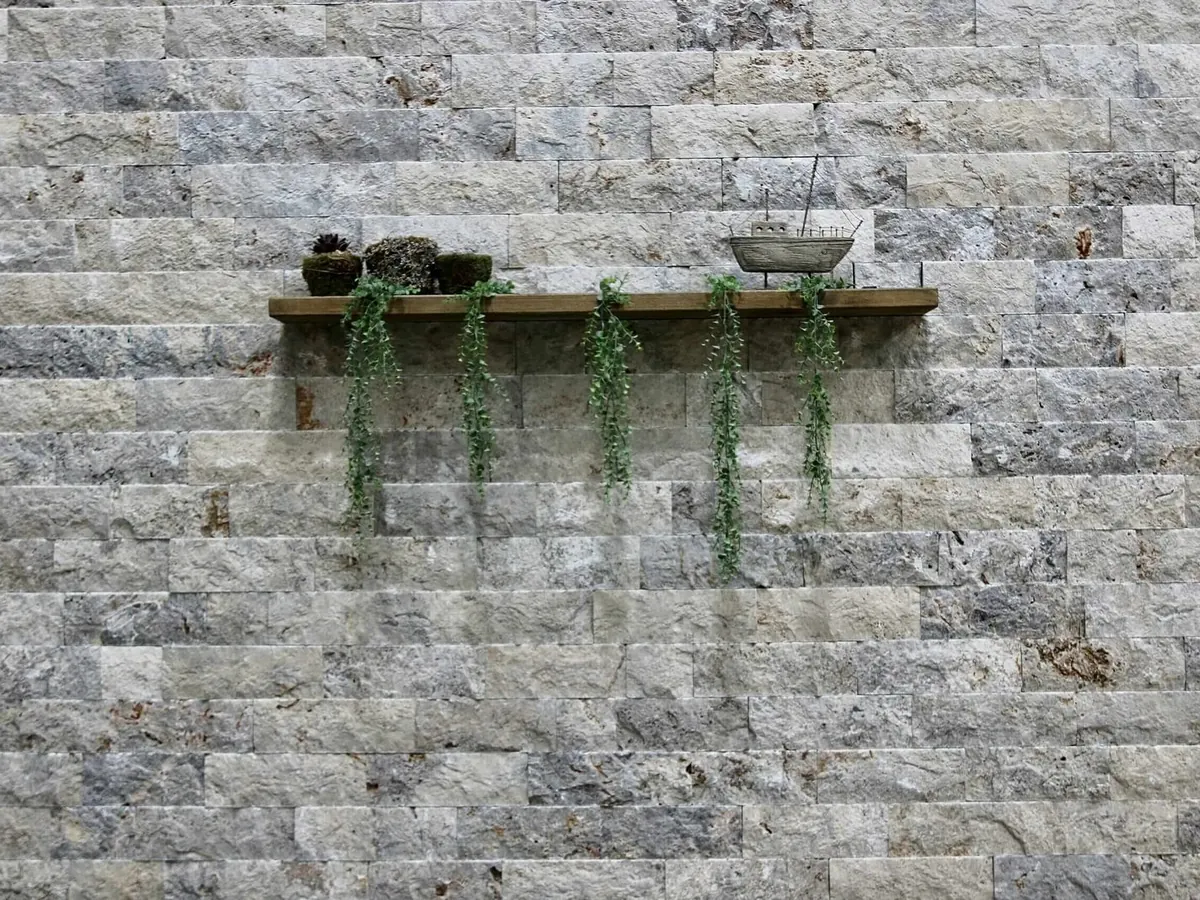
Silver travertine walling gives a wall natural movement through its silver, grey, beige and charcoal tones.
That variation is one of its strongest design advantages. Manufactured cladding can look consistent, but it often lacks the subtle banding and mineral movement that make natural stone feel alive.
Silver travertine works especially well when you want the wall to become a design feature without dominating the whole space. It has enough detail to draw the eye, but the muted grey palette keeps it calm and sophisticated.
This makes it a strong choice for:
- Entry walls
- Outdoor feature walls
- Courtyard backdrops
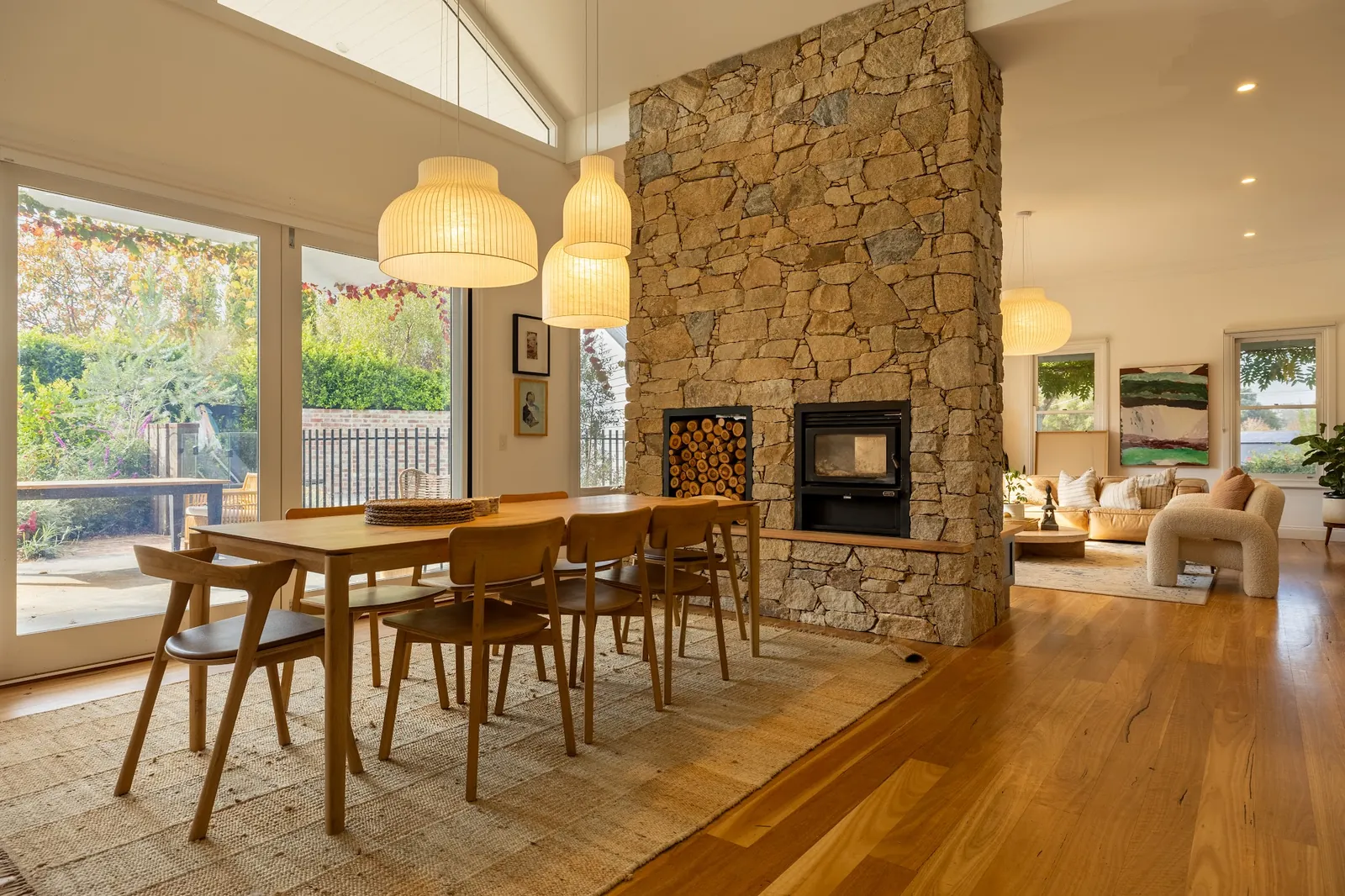
- Fireplace surrounds
- Facade sections
- Garden and pool-area walls
The finished look depends on the batch, finish and layout. For best results, view real samples in natural light before making the final selection.
2. Versatile Across Modern, Coastal and Classic Designs
Silver travertine is versatile because its colour sits between warm and cool. It is not as creamy as classic travertine, and not as dark as bluestone or charcoal granite. That middle ground gives it wide design range.
In a modern home, it can soften clean lines and glass-heavy architecture. In a coastal home, the silver and beige movement can sit comfortably beside pale timber, white walls and relaxed outdoor furniture. In a Mediterranean-style courtyard, it brings a natural stone texture that feels layered and grounded.
It can also bridge different materials. Render, timber, steel, brick, greenery and water all work well beside silver travertine when the palette is balanced.
For broader wall design planning, natural stone wall cladding is often the right category to compare if you are still choosing between travertine, quartzite, sandstone, granite and limestone.
3. A Durable Natural Stone When Installed Correctly
Silver travertine walling can perform well on exterior and interior walls when it is installed on the right substrate, fixed correctly and sealed where needed.
The important phrase is “when installed correctly.” Walling and cladding are not only about the stone face. The system behind the stone matters just as much. Substrate preparation, adhesive selection, mechanical fixing where required, drainage, expansion allowance and exposure all influence long-term performance.
Travertine is a natural limestone-based stone, so it should be protected from poor installation and trapped moisture. It also benefits from sealing, especially in outdoor areas or zones exposed to moisture, food, pool chemicals or frequent handling.
If the project involves vertical stone installation, the fixing method should be matched to the wall, stone weight and site conditions. The details behind stone cladding adhesive are worth getting right before the first piece is installed.
4. Light Tones That Help Brighten a Space
Silver travertine can help brighten walls because its pale grey and beige tones reflect more light than many darker cladding materials.
This is useful in courtyards, narrow side passages, alfresco walls and shaded outdoor spaces where dark walling can make the area feel smaller. A silver-toned stone can add texture while keeping the space open and breathable.
In sunny areas, lighter stone also tends to feel visually softer than very dark cladding. It should not be described as heatproof or always cool, but it can be a practical choice when you want a wall material that does not visually absorb as much heat as deep charcoal or black surfaces.
That makes silver travertine especially appealing for:
- Poolside walls
- Covered patios
- North-facing outdoor entertaining zones
- Courtyards with limited space
- Garden walls behind seating areas
5. A Premium Natural Finish for Feature Walls and Facades
Silver travertine walling can make a feature wall or facade look more considered because it is a genuine natural stone surface.
Paint and render can look clean, but they do not have the same depth. Manufactured cladding can add pattern, but it often repeats. Silver travertine gives the wall natural variation from piece to piece, which makes the surface feel more layered and high-end.
This is why it works well in areas where the wall is meant to be seen and appreciated, not simply covered.
Strong use cases include:
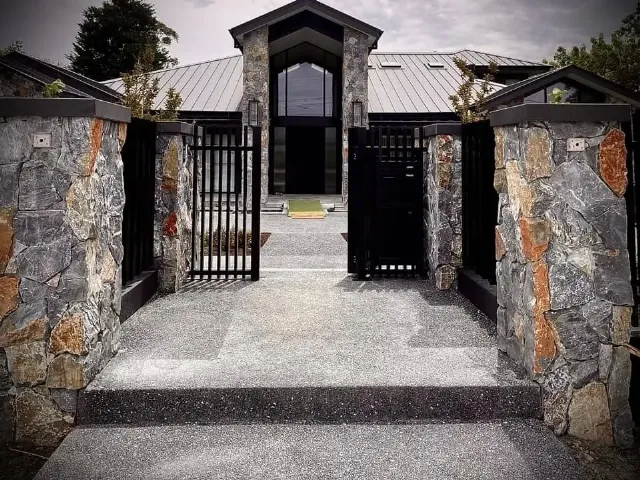
- A front entry wall that creates a first impression
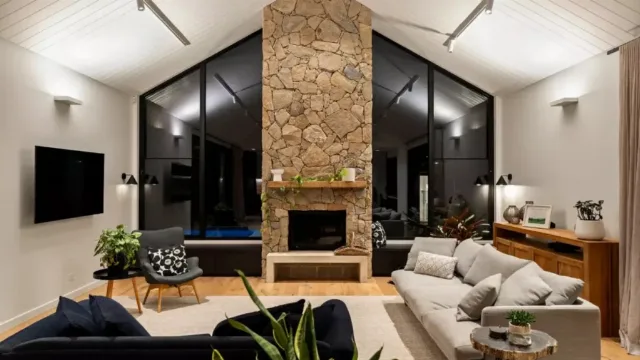
- A fireplace wall that needs texture and warmth
- A courtyard wall that becomes a backdrop for planting
- A facade section that breaks up flat render
- An alfresco wall behind an outdoor kitchen or dining area
If you are still deciding whether a feature wall should be stone, brick, render or tile, feature wall materials can help frame the choice before you narrow it down to a specific stone.
6. Flexible Across Walling, Tiles and Design Formats
Silver travertine can suit different wall styles depending on the product format, finish and layout. Some projects call for a textured cladding look. Others need a cleaner tile-style face or a more refined architectural finish.
This flexibility matters because not every wall should look the same. A facade may need stronger shadow lines. An interior feature wall may need a cleaner finish. A garden wall may need more texture to sit naturally in the landscape.
Before final selection, confirm the current product format, finish, thickness and fixing requirements. That prevents the design from being based on a look that does not suit the installation.
Silver travertine can be considered for:
- Split-face style texture where a more tactile wall is wanted
- Tile-style layouts where a cleaner surface is preferred
- Outdoor walling where natural variation matters
- Feature panels where a single wall needs visual impact
- Pool-area walls where colour, sealing and exposure must be reviewed carefully
The broader walling and cladding range is useful when silver travertine is one option among other natural stone wall finishes.
7. Pairs Beautifully With Other Materials
Silver travertine walling pairs well with other materials because its colour is layered but not loud. It can work as the main feature or as a quiet supporting surface.
It looks especially strong with:
- Timber: adds warmth against the grey stone.
- White or off-white render: keeps the look clean and bright.
- Black steel or aluminium: gives contrast in modern homes.
- Glass: suits pool fencing, balconies and contemporary facades.
- Green planting: softens the stone and brings out its natural tone.
- Bluestone or granite paving: creates a grounded outdoor palette.
- Warm lighting: highlights the texture and banding at night.
This is one reason silver travertine suits outdoor living areas. It can connect the wall to the rest of the landscape rather than making the wall feel separate.
For homes with a contemporary direction, natural stone can help avoid a space becoming too flat. The same principle applies when trying to achieve a modern look with natural stone cladding without losing texture and warmth.
Where to Use Silver Travertine Walling
Silver travertine walling can work in several areas, but the stone, finish and installation method should suit the exposure level.
| Application | Suitability Notes |
| Interior feature wall | Strong option where texture and natural movement are wanted |
| Exterior facade | Suitable when fixed and sealed correctly for exposure |
| Alfresco wall | Works well behind outdoor dining, seating or kitchens |
| Fireplace feature wall | Can create a warm natural backdrop, subject to heat and installation requirements |
| Pool-area wall | Can suit the look, but sealing and exposure should be reviewed carefully |
| Garden or retaining wall | Suitable in selected designs when drainage, fixing and moisture are managed |
| Entry wall | Good option for a refined first impression |
Silver travertine is best used where its natural pattern can be appreciated. A small wall section, entry zone or courtyard backdrop can often make more impact than trying to cover every surface.
For fireplaces, stone can add texture and permanence, but the material and fixing system must suit the heat conditions. The design thinking behind fireplace stone feature walls can also apply to travertine when the installation is specified correctly.
What to Consider Before You Choose Silver Travertine
Silver travertine is a premium walling option, but it should be chosen with realistic expectations. Natural stone performs best when the design, installation and care all work together.
Travertine Is Porous
Travertine is porous, so sealing is usually recommended. This helps reduce moisture absorption and staining, especially outdoors or around entertaining areas.
Sealing does not make travertine stain-proof. It simply helps protect the stone and makes ongoing care easier. The question of whether travertine needs sealing should be resolved before installation, not treated as an afterthought.
Installation Quality Matters
Wall cladding must be installed correctly. The wall surface, adhesive, fixing method and expansion details all need to match the stone and site.
Poor installation can lead to movement, drummy sections, staining, moisture issues or stone failure. This is especially important outdoors, where rain, heat, wind and seasonal movement can affect the wall over time.
Efflorescence and Moisture Need Attention
Efflorescence can appear when moisture carries salts to the surface. It is not limited to travertine, but natural stone walls can be affected when moisture is not managed properly.
Good drainage, suitable substrate preparation and correct installation reduce the risk.
Cost Depends on More Than the Stone
Silver travertine walling cost depends on the product, format, finish, wall area, substrate, access, labour and fixing requirements. Do not compare it only with the price of manufactured cladding panels.
A natural stone wall may cost more upfront, but it can deliver a stronger design outcome when the project calls for real texture and long-term visual value.
Outdoor Use Needs the Right Detail
Exterior walls need more planning than interior feature walls. Exposure, sealing, drainage, fixing, wind load and surrounding materials all matter.
A covered alfresco wall is different from a fully exposed facade. A poolside wall is different from an entry feature. The stone should be chosen for the actual conditions, not only the colour.
Silver Travertine Walling vs Other Wall Cladding Options
Silver travertine is not the only walling option. It sits among several natural and manufactured materials, each with a different look and performance profile.
| Material | Look | Best For | Main Consideration |
| Silver travertine | Grey, silver and beige natural banding | Feature walls, facades, alfresco walls | Needs sealing and correct installation |
| Limestone walling | Softer, warmer natural tones | Garden walls, classic homes, textured facades | Can be softer and more porous depending on type |
| Quartzite walling | Strong texture and colour movement | Statement walls and rugged exteriors | May create a bolder, more dramatic look |
| Porcelain cladding | Clean and consistent | Low-maintenance modern walls | Less natural depth than real stone |
| Brick feature walls | Structured and familiar | Contemporary or industrial designs | Repetition can feel more uniform |
Silver travertine is strongest when you want a wall that feels natural, refined and textured without becoming too dark or too rustic.
Final Thoughts
Silver travertine walling is worth considering if you want a natural stone wall with silver-grey movement, soft texture and a premium architectural feel. It works across feature walls, facades, alfresco spaces and landscape settings when the design and installation are handled properly.
Its biggest strengths are its colour, natural variation and ability to pair with other materials. Its main considerations are sealing, fixing, moisture control and cost. Those trade-offs are normal for natural stone, but they should be understood before the product is chosen.
For projects where a plain wall would feel too flat, silver travertine can bring depth, warmth and understated luxury. Compare the current Silver Travertine option with the broader walling range, confirm the finish and installation details, then shape the quote around the actual wall conditions.
Frequently Asked Questions
Is travertine good for wall cladding?
Yes, travertine can be good for wall cladding when the correct product, substrate, fixing system and sealing approach are used. Silver travertine is especially popular where a grey natural stone feature is wanted.
Can silver travertine be used on outdoor walls?
Yes, silver travertine can be used on outdoor walls when it is suitable for the exposure and installed correctly. Exterior applications should account for sealing, drainage, substrate preparation and weather conditions.
Does travertine cladding need sealing?
Travertine cladding usually benefits from sealing because travertine is porous. Sealing helps reduce moisture absorption and staining, especially in outdoor areas, poolside zones and entertaining spaces.
What colours does silver travertine come in?
Silver travertine usually includes silver, grey, beige and charcoal movement. The exact tone varies by batch, finish and product selection, so real samples should be checked before ordering.
Is silver travertine walling expensive?
Silver travertine walling can cost more than some manufactured cladding options because it is a natural stone and requires proper installation. The final cost depends on the product, wall size, format, fixing method, labour and site conditions.
How is travertine wall cladding installed?
Travertine wall cladding is installed over a suitable substrate using the correct adhesive or fixing system for the stone, wall and exposure. Some applications may require extra mechanical support, so the installation method should be confirmed before work begins.
Is silver travertine good for feature walls?
Yes, silver travertine is a strong feature-wall option because its natural banding and grey tones add texture without overwhelming the space. It works well for entries, alfresco walls, courtyards, fireplaces and selected interior walls.