

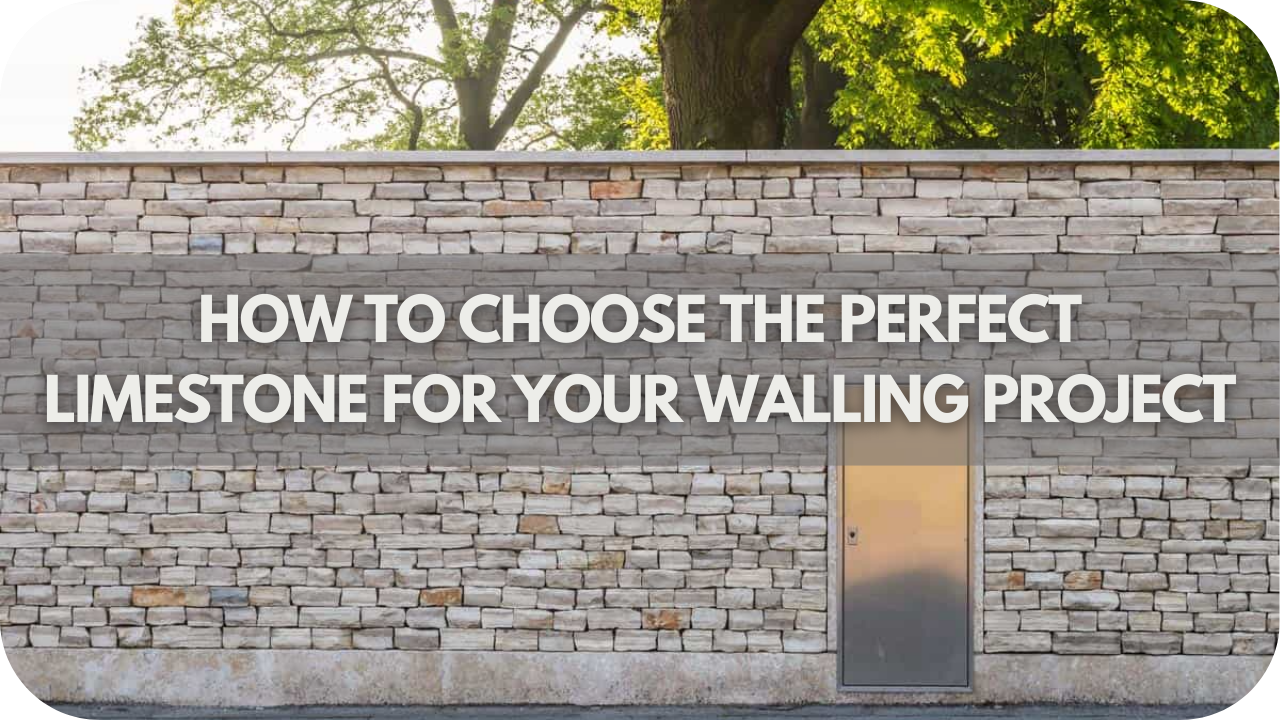
Limestone walling can make a home feel grounded, refined and timeless. It brings natural texture into facades, fireplaces, garden walls and interior feature spaces without overpowering the design. But not every limestone suits every wall.
The best choice depends on where the wall is located, how exposed it is, the colour and format you prefer, and how the stone will be installed and maintained.
What Limestone Should You Choose for Walling?
Choose limestone walling based on the wall location, exposure level, architectural style and installation method. Exterior walls need durable limestone with a suitable finish and proper moisture detailing. Interior feature walls allow more focus on colour, texture and mood. Fireplaces, facades, garden walls and retaining wall faces need extra care because the stone must suit the substrate, heat, moisture and long-term conditions.
- For facades: Choose durable limestone with strong weather suitability.
- For feature walls: Choose limestone with colour and texture that suits the room.
- For fireplaces: Choose limestone only after checking heat, substrate and installation needs.
- For garden walls: Choose limestone that suits outdoor moisture, drainage and planting.
- For modern homes: Choose cleaner lines and more consistent tones.
- For rustic homes: Choose more textured or irregular limestone walling.
Limestone Walling at a Glance
| Project Type | Best Limestone Style | Key Consideration | Best Recommendation |
| Home facade | Consistent limestone cladding or ashlar walling | Weather exposure and installation | Choose durable exterior-grade limestone |
| Internal feature wall | Split-face, honed or textured limestone | Colour, mood and lighting | Prioritise visual softness and texture |
| Fireplace wall | Suitable limestone cladding | Heat, clearances and substrate | Get professional advice before selecting |
| Garden wall | Textured or mixed-tone limestone | Moisture, soil and planting | Choose an outdoor-suitable format |
| Boundary wall | Full-depth or strong cladding format | Exposure and long-term wear | Plan drainage and fixing carefully |
| Alfresco wall | Refined textured limestone | Outdoor grime and moisture | Match with paving and furniture tones |
| Retaining wall face | Limestone facing or cladding | Structural wall behind the face | Do not confuse facing with engineering |
| Commercial wall | Durable, consistent limestone | Scale, maintenance and repeatability | Choose for performance and supply consistency |
| Entry wall | Feature limestone walling | First impression and lighting | Use texture and colour intentionally |
Why Choose Limestone for Walling?
Limestone is popular for walling because it brings warmth, texture and softness into a design without feeling too busy. It can suit modern homes, classic architecture, coastal projects, garden settings and refined interiors.
Unlike some stones that create a bold or rugged effect, limestone often feels calm and architectural. It pairs well with timber, render, steel, glass, brick and natural paving. This makes it especially useful when a wall needs to feel connected to the wider home rather than treated as a separate feature.
A well-planned limestone wall can also create continuity between interior and exterior areas. For example, a limestone entry wall can relate to outdoor paving, garden walls or a fireplace feature inside the home.
Key benefits include:
- Natural warmth: Limestone softens hard architectural lines.
- Design flexibility: It can suit classic, coastal, modern and rustic homes.
- Texture: It adds depth without needing bold colour.
- Timelessness: Limestone does not rely on short-term trends.
- Material continuity: It can connect walls, paving and landscape features.
Where the wall is part of a broader facade or exterior upgrade, the limestone should be considered alongside the home’s overall stone cladding approach, not chosen as an isolated finish.
What Type of Wall Are You Building?
The right limestone depends first on the wall type. An internal feature wall, garden wall and exterior facade all need different levels of performance.
Limestone for Exterior Facades
Exterior facades need limestone that can handle weather exposure, temperature changes, moisture and movement. The colour and texture matter, but the stone also needs to suit the wall system.
A facade may require careful wall preparation, drainage detailing, mechanical fixing, adhesive selection or professional installation. Colour consistency can also matter more on a facade because the wall is viewed as one large surface.
For contemporary homes, limestone can bring softness to strong architectural lines. In larger exterior walls, luxury stone wall cladding works best when the stone scale, jointing and tone are planned together.
Limestone for Internal Feature Walls
Interior feature walls can focus more on texture, colour and atmosphere. They are not exposed to the same weather conditions as exterior walls, so the decision often comes down to the room style and lighting.
Good locations for limestone feature walls include:
- Living rooms
- Hallways
- Dining rooms
- Bedrooms
- Stairwells
- Entry foyers
A softly textured limestone wall can make a room feel warmer without adding heavy colour. In darker interiors, lighter limestone can reflect light and make the wall feel more open. In larger rooms, a stronger texture can add depth.
If the wall is meant to become the focal point of the space, a stone feature wall should be planned with furniture, flooring and lighting in mind.
Limestone for Fireplaces
Fireplace walling needs extra care because heat, substrate, clearances and fixing method all matter. Limestone can create a beautiful fireplace surround or feature wall, but the product must suit the setting.
Before choosing limestone for a fireplace, check:
- Heat exposure
- Required clearances
- Substrate suitability
- Fixing method
- Stone thickness
- Finish and cleaning needs
- Soot and mark visibility
A fireplace wall is not the same as a standard internal feature wall. The stone needs to work with the fireplace type, whether it is wood-burning, gas or electric. In rooms where the fireplace is a major design feature, stone fireplace planning should come before final stone selection.
Limestone for Garden Walls
Garden walls need limestone that can work with outdoor moisture, soil, planting and organic matter. They are often exposed to irrigation, drainage issues, leaves, mulch and changing weather.
For garden settings, textured limestone can feel natural and grounded. Mixed tones can also work well because they sit comfortably with planting and landscape variation.
Drainage is especially important. If water is trapped behind or around the wall, staining, moisture marks or surface changes can become more noticeable over time.
Limestone for Retaining Wall Faces
A limestone retaining wall face is not the same as a structural retaining wall. Limestone can be used to create a refined finish on the visible side of a retaining wall, but the wall behind it may need professional design, drainage and engineering advice.
This matters for higher walls, sloped sites and areas holding back soil. The stone may be decorative, while the retaining structure does the load-bearing work. In these projects, the finish should be selected after the wall system has been confirmed.
For landscape projects, limestone can pair well with broader stone retaining walls planning, especially when the wall needs to connect with paving, steps or garden beds.
Limestone Walling Formats: Which One Suits Your Project?
The format affects the look, wall depth, installation time and total project cost. A smooth ashlar pattern feels different from a rough split-face wall, even when both use limestone.
| Limestone Format | Look | Best For | Buying Note |
| Random limestone walling | Natural and varied | Garden walls, rustic homes, landscape features | Variation should be planned before installation |
| Stacked limestone | Linear and textured | Feature walls, fireplaces, alfresco walls | Creates strong shadow lines |
| Split-face limestone | Textured and dimensional | Facades, entry walls, feature walls | More texture can mean more dust collection |
| Ashlar limestone | Structured and architectural | Modern facades and formal entries | Needs careful layout planning |
| Limestone cladding panels | Efficient and consistent | Renovations and feature walls | Good where installation speed matters |
| Limestone blocks | Solid and substantial | Garden walls and structural-style designs | Weight and handling need planning |
| Limestone slips | Slim and lightweight | Internal walls and renovations | Useful where full-depth stone is not practical |
For walls where texture, colour and pattern are the main design decisions, limestone walling should be selected with limestone walling stone finishes in mind from the start.
How to Choose the Right Limestone Colour
Limestone colour has a major effect on the final result. The same wall format can feel coastal, contemporary, rustic or classic depending on the tone.
Cream and Beige Limestone
Cream and beige limestone suit warm homes, coastal projects, Mediterranean-inspired spaces and classic facades. They pair well with timber, white render, soft paving tones and natural planting.
A warmer limestone such as Sienna Limestone can suit projects where the wall needs to feel soft, welcoming and connected to warmer exterior finishes.
Grey Limestone
Grey limestone suits contemporary, architectural and neutral exterior palettes. It can work well with steel, glass, dark window frames and modern landscaping.
A softer grey limestone can create a calm facade or feature wall without the darker presence of bluestone or granite. For understated exterior projects, Loch Limestone is the kind of neutral stone that can sit comfortably with modern materials.
White or Light Limestone
White and light limestone can make a wall feel bright, refined and elegant. It works well in interiors, entry walls and homes with a softer palette. In exposed outdoor areas, lighter limestone may show marks more easily, so cleaning and sealing expectations should be considered.
Mixed-Tone Limestone
Mixed-tone limestone suits rustic, landscape-led and garden-focused settings. Variation can help the wall feel more natural, especially when surrounded by planting, gravel, timber or aged brick.
Best Colour Choice
- Modern exterior: Grey or consistent neutral limestone.
- Warm family home: Cream or beige limestone.
- Garden wall: Mixed-tone or textured limestone.
- Feature wall: Choose based on lighting and surrounding materials.
- Fireplace: Choose a tone that works with flooring and cabinetry.
Texture and Finish: Smooth, Split-Face or Rustic?
The finish controls how the wall catches light, collects dust, feels up close and suits the architecture.
| Finish | Appearance | Best Use | Practical Note |
| Sawn limestone | Clean and controlled | Modern facades and refined walls | Strong for clean-lined designs |
| Honed limestone | Smooth and soft | Interiors and feature walls | Shows a more refined surface |
| Split-face limestone | Textured with shadow | Facades, fireplaces and entries | Adds depth and movement |
| Tumbled limestone | Aged and softened | Rustic or traditional homes | Works well in relaxed settings |
| Rock-face limestone | Bold and rugged | Garden and boundary walls | Can feel heavier visually |
| Natural textured limestone | Organic and varied | Outdoor walls and landscapes | Needs realistic cleaning expectations |
Smooth finishes often suit refined interiors, while split-face finishes add shadow and depth. Rustic finishes work well in garden walls and traditional homes. Highly textured finishes can collect more dust or grime outdoors, so the finish should match both the design and maintenance expectations.
Limestone Walling for Modern vs Traditional Homes
Choose Limestone for a Modern Home If You Want
Limestone can suit modern homes when the colour, format and jointing are kept controlled.
Choose limestone for a modern home if you want:
- Clean lines
- Soft neutral colour
- Minimal visual noise
- Large-format walling
- Consistent texture
- A refined facade or entry wall
Modern limestone walls often look best when paired with simple landscaping, dark window frames, timber details or smooth render.
Choose Limestone for a Traditional Home If You Want
Traditional homes can use limestone in a more textured, irregular or warm-toned way.
Choose limestone for a traditional home if you want:
- More variation
- Natural irregularity
- Rustic texture
- Warm colour
- Garden character
- A softer heritage-inspired finish
A traditional limestone wall can feel established and grounded, especially when paired with planting, brick, gravel paths or timber.
Interior vs Exterior Limestone Walling
| Factor | Interior Limestone Walling | Exterior Limestone Walling |
| Main design priority | Mood, texture and visual warmth | Weather suitability and durability |
| Moisture exposure | Usually lower | Higher, especially in exposed locations |
| Surface finish | Can be smoother or more refined | Needs to suit weather and maintenance |
| Installation complexity | Depends on wall height and substrate | Often more complex |
| Maintenance | Dusting and gentle cleaning | Cleaning, drainage and weather care |
| Sealing | Product dependent | Often more important |
| Best applications | Feature walls, fireplaces, entries | Facades, garden walls, alfresco walls |
| Professional advice needed | Recommended for fireplaces and high walls | Strongly recommended for facades and exterior walls |
Interior limestone can focus more on atmosphere, while exterior limestone needs stronger attention to water, weather and installation. A wall exposed to rain, soil, irrigation or pool water needs more careful product advice than a hallway feature wall.
Limestone Walling Thickness and Weight
Thickness and weight affect installation, structure, freight, handling and cost. A full-depth limestone wall creates a substantial look, but it may need more structural support. Limestone cladding can be more practical for renovations, existing walls and areas where weight needs to be managed.
Before choosing a stone, consider:
- Wall support
- Fixing system
- Project location
- Wall height
- Substrate condition
- Labour requirements
- Freight and handling
- Whether corners and returns are needed
When Lightweight Cladding May Be Better
Lightweight limestone cladding may suit:
- Renovation projects
- Existing walls
- Fireplace surrounds
- Internal feature walls
- Areas where full-depth stone is too heavy
- Projects where installation speed matters
When Full-Depth Stone May Be Better
Full-depth limestone may suit:
- New builds
- Garden walls
- Landscape walls
- Structural-style designs
- Projects where depth and shadow matter
What to Ask Before Buying Limestone Walling
Use these questions before choosing limestone for a walling project:
- Is this limestone suitable for interior or exterior use?
- Is it suitable for my wall type?
- What format is available?
- What thickness does the stone come in?
- What is the expected colour variation?
- Can I see a sample?
- Does it need sealing?
- What fixing method is recommended?
- Is professional installation required?
- How should it be cleaned?
- Is it suitable near fireplaces?
- Can it be used around garden moisture or soil?
- Is it available in enough quantity for my project?
- Are corner pieces available?
- What lead times and delivery options apply?
Common Mistakes When Choosing Limestone Walling
- Choosing limestone only by colour: The wall location and exposure matter just as much.
- Ignoring the wall location: Interior and exterior walls have different performance needs.
- Using interior stone outside without checking suitability: Not every format suits exterior exposure.
- Forgetting moisture exposure: Garden walls, facades and alfresco areas need careful water management.
- Not checking thickness and weight: Wall support and installation method can change the right choice.
- Not asking about sealing: Limestone care depends on the product, finish and setting.
- Choosing a finish that is hard to clean: Highly textured finishes may collect more dust or outdoor grime.
- Not planning corners and edges: Returns, corners and openings affect the final look.
- Mixing batches without checking variation: Natural stone needs batch planning.
- Treating a fireplace wall like a standard wall: Heat and clearances need professional advice.
- Ignoring drainage on garden walls: Moisture can affect appearance and long-term performance.
- Not ordering samples: Limestone should be viewed in the actual project light.
- Not getting professional advice for facades or high walls: Larger walls need proper specification.
Limestone Walling vs Other Natural Stone Walling
Limestone is not the only walling option, but it has a distinct look. It is usually chosen for warmth, subtle texture and natural refinement.
| Stone Type | Best For | Strengths | Considerations |
| Limestone | Refined facades, garden walls and feature walls | Soft colour, warmth and architectural texture | Needs correct product selection for exposure |
| Sandstone | Rustic, warm and landscape-led walls | Natural warmth and variation | Can be more rustic in appearance |
| Granite | Strong, durable and bold walls | Dense and hard-wearing | Can feel heavier visually |
| Bluestone | Blue-grey architectural walls | Strong colour character | Darker tones may feel more dramatic |
| Travertine | Warm, textured and relaxed walls | Soft Mediterranean character | Product suitability depends on setting |
| Slate | Dark feature walls and textured surfaces | Strong colour and layered texture | May not suit every architectural style |
Limestone works best when the project needs natural elegance rather than heavy contrast. It is especially effective when the design calls for warmth, softness and quiet texture.
How to Match Limestone Walling With Other Materials
Limestone With Timber
Timber adds warmth and pairs well with cream, beige and grey limestone. This combination works beautifully in alfresco areas, entry walls and interiors where the stone should feel natural rather than cold.
Limestone With Render
Rendered walls can make limestone feel clean and architectural. Soft grey or cream limestone can break up large rendered surfaces and add depth without creating a busy exterior.
Limestone With Brick
Brick and limestone can work well when the tones are balanced carefully. Warm limestone can soften red or brown brick, while cooler limestone can sit comfortably beside grey or charcoal brick. For homes using reclaimed brick details, the limestone should complement the aged texture rather than compete with it.
Limestone With Metal and Glass
Metal and glass give limestone a sharper contemporary contrast. This pairing suits modern facades, entry walls and commercial exteriors where the stone needs to feel refined but not rustic.
Limestone With Stone Paving
Limestone walling often looks best when the surrounding paving is considered at the same time. Related tones can create continuity, while slight contrast can stop the space from feeling flat. In outdoor rooms, stone paving and walling should work together through colour, scale and texture.
Maintenance: How to Keep Limestone Walling Looking Good
Limestone is a natural material, so it needs the right care. The maintenance level depends on whether the wall is indoors or outdoors, how textured the surface is, and how exposed it is to moisture, dirt or soot.
Simple maintenance habits include:
- Use pH-neutral cleaners.
- Avoid acidic cleaners.
- Remove dirt before it builds up.
- Ask about sealing.
- Clean spills or marks early.
- Keep exterior drainage working.
- Trim plants away from walls where needed.
- Check for movement or moisture issues over time.
Outdoor limestone walls should not be left to collect soil, leaf litter or moisture for long periods. Interior limestone walls may only need gentle dusting and occasional cleaning, unless they are near a fireplace or kitchen.
Best Limestone Walling Choice by Project Type
| Project | Best Limestone Choice | Why |
| Modern facade | Consistent grey or neutral limestone cladding | Creates a clean architectural finish |
| Fireplace wall | Suitable limestone cladding with professional advice | Heat and substrate need checking |
| Internal feature wall | Split-face, honed or lightly textured limestone | Adds depth without overwhelming the room |
| Garden wall | Textured or mixed-tone limestone | Works naturally with planting and soil tones |
| Boundary wall | Durable exterior-grade limestone | Needs weather suitability and good drainage |
| Alfresco wall | Soft neutral limestone | Connects indoor and outdoor spaces |
| Entry wall | Refined limestone with controlled variation | Creates a strong first impression |
| Retaining wall face | Limestone facing over suitable structure | The structure and drainage matter first |
| Commercial exterior | Consistent durable limestone | Supports scale, repeatability and longevity |
| Heritage-style home | Warm or irregular limestone | Suits softer, more traditional architecture |
Choosing Limestone Walling With Splendour In Stone
If you are planning a limestone walling project, Splendour In Stone can help you compare colour, texture, format and project suitability before you choose your stone.
The right limestone should suit the wall location, surrounding materials, installation method and long-term maintenance expectations. Whether the project is a facade, fireplace, garden wall, alfresco feature or internal wall, choosing the stone carefully will help the final result feel natural, refined and built to last.
FAQs
1. Is limestone good for walling?
Yes. Limestone can be an excellent walling stone when the right type, finish and installation method are chosen for the project.
2. Can limestone be used for exterior walls?
Limestone can be used for exterior walls, but the stone must be suitable for weather exposure and installed with correct wall preparation and moisture detailing.
3. Is limestone good for feature walls?
Limestone is well suited to feature walls because it adds soft colour, natural texture and visual depth without looking too heavy.
4. Can limestone be used around fireplaces?
Limestone may be suitable for fireplace walling, but heat exposure, clearances, substrate and fixing method should be checked by a professional.
5. What colour limestone is best for walling?
Cream, beige and grey limestone are common walling choices. The best colour depends on the home style, lighting and surrounding materials.
6. Does limestone walling need sealing?
Many limestone walling products benefit from sealing, especially in exterior, fireplace or moisture-exposed areas. Ask your supplier for product-specific advice.
7. Is limestone better than sandstone for walling?
Limestone often gives a softer and more refined look, while sandstone can feel warmer and more rustic. The better choice depends on the project style and exposure.
8. Is limestone walling expensive?
Limestone walling cost depends on stone type, format, thickness, finish, quantity, delivery and installation complexity.
9. Can I install limestone walling myself?
Small internal decorative projects may be possible for skilled DIYers, but facades, fireplaces, exterior walls and high walls should usually be installed by professionals.
10. How do I choose limestone walling?
Start with the wall location, then compare colour, format, finish, thickness, installation method and maintenance needs.



