
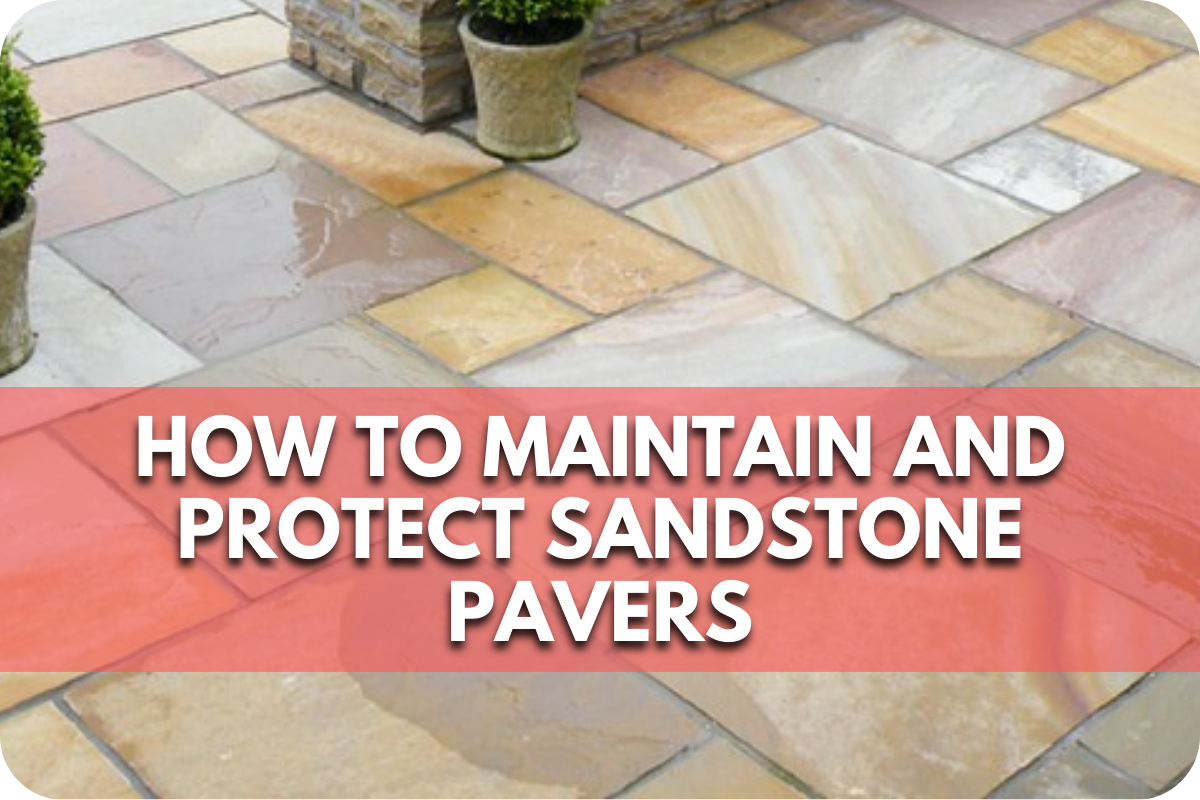
Sandstone pavers stay in good condition on a simple routine: sweep and wash with a pH-neutral cleaner, treat stains and growth as they appear, keep water moving off the surface, and renew a penetrating sealer every few years.
Sandstone is one of the more porous paving stones, which is why sealing and drainage matter more here than they do for granite or bluestone.
This guide covers the cleaning routine, stain treatments by type, sealing done properly, drainage, an Australian seasonal calendar and the repairs worth doing early.
Why Sandstone Needs Its Own Maintenance Approach
Sandstone is a sedimentary stone made of compressed sand grains, so it is more porous and softer-faced than igneous stones; the geology is covered in what is sandstone. Porosity means liquids, tannins and salts can get in if the surface is unsealed, and the softer face means gentle tools beat aggressive ones every time.
None of this is a flaw; it is just the maintenance logic, and the payoff for following it is decades of service; the long-game view is in maximising the lifespan of outdoor sandstone features.
How to Clean Sandstone Pavers
- Sweep with a soft-bristle broom as needed, weekly in leafy areas, to keep grit from grinding underfoot.
- Wash with a pH-neutral stone cleaner diluted to label rates. Never use acidic or harshly alkaline products on sandstone; acids attack the stone’s natural cement and can drag rust-coloured iron marks to the surface.
- Scrub gently with a soft brush or microfibre mop, letting the cleaner sit a few minutes on grimy patches.
- Rinse thoroughly with clean water so no residue dries into the pores.
On pressure washers: a low-pressure setting with a wide fan tip held well off the surface is acceptable on sound, sealed sandstone, but high-pressure strips jointing sand and can scar a soft or flaking face. If in doubt, hose and brush. The all-stone version of this routine is in the paver cleaning and maintenance guide.
How to Remove Stains from Sandstone
Match the treatment to the stain; the wrong product sets the mark instead of lifting it.
| Stain type | Looks like | Treatment |
| Organic and tannin | Brown shadows from gum leaves, bark, and mulch | pH-neutral cleaner and soft brush; persistent marks respond to an alkaline stone cleaner used to label rates |
| Oil-based | Dark patches from BBQs, cars, and sunscreen | Absorb fresh spills immediately, then a poultice (below) |
| Rust and metal | Orange-brown marks under furniture or fixings | Stone-safe rust remover only, never acid; remove the metal source |
| Biological | Green or black film in damp, shaded spots | Gentle stone-safe outdoor cleaner and a stiff nylon brush; improve sun and drainage so it stays away |
| Efflorescence | White powdery bloom after wet weather | Dry-brush it off and fix the moisture source; no liquid treatments needed |
For stubborn embedded stains, use the poultice method: mix an absorbent powder such as baking soda with the appropriate cleaner into a paste, spread it over the stain, cover with plastic wrap for 24 hours, then lift, rinse and let it dry. Gentle, low-chemical approaches that protect surrounding plants are covered in eco-friendly sandstone care.
Should You Seal Sandstone Pavers?
Outdoors, almost always yes. A penetrating (impregnating) sealer soaks into the stone and blocks water and oils from getting comfortable, without changing the natural look or the surface grip.
Topical film sealers add sheen and stronger stain resistance, but on external sandstone, they can trap moisture, wear unevenly and turn slippery when wet, so penetrating sealers are the default recommendation for paving. Reseal every three to five years, and as often as every two years in coastal or high-traffic positions.
The test is simple: if water no longer beads on the surface, the sealer is done; the same check works on any stone, as covered in how to tell if your stone is porous. Apply to clean, completely dry pavers in mild, dry weather and follow the product’s recoat window.
Keep Water Moving: Drainage and Joints
Standing water is sandstone’s main enemy, feeding stains, growth and efflorescence.
- Paving should fall away from the house at roughly 1 in 80 to 1 in 100, so puddles never linger.
- Keep gutters and downpipes discharging clear of paved areas, and keep drainage channels free of leaves.
- Sit pots and planters on risers; permanent wet contact patches stain and hold moisture.
- Keep joints topped up and stable so water sheds across the surface instead of washing underneath; methods are in the paver joint filling and sealing guide.
Seasonal Sandstone Care for Australian Conditions
- Summer: Watch oil-based marks (BBQ fat, sunscreen near pools) and adjust irrigation so sprinklers are not soaking the paving daily.
- Autumn: Gum and deciduous leaves left wet on sandstone print tannin shadows within days; sweep often and clear drains before the rain arrives.
- Winter: Damp shade grows moss and algae; treat the first green film early rather than the established mat later, and prune back what’s blocking the sun.
- Spring: Inspect the whole area, wash off pollen and wattle dust, and use the dry window to reseal if water has stopped beading.
For heatwaves, storms and the rest of the extremes, see protecting your stone patio from weather extremes.
Repairing Wear, Chips and Cracks
Handle small problems while they are small. A loose or rocking paver is a bedding problem: lift it, correct the bed and relay it rather than packing the joint. Chips and minor cracks take a stone-matched epoxy or repair compound, shaped to the original profile and sealed once cured; the technique is the same as for repairing chips and cracks in sandstone.
Widespread movement or cracking across the area is a base problem, not a stone problem, and patching the surface won’t fix it.
Keep It Simple, Keep It Sealed
A sound routine is fifteen minutes a month plus a resealing weekend every few years, and sandstone repays it for decades. The whole-property version lives in the stone maintenance and care guide, and if you are still choosing your stone, sandstones such as Charlotte and Stirling show what a well-kept surface looks like years in.
FAQs
1. Can you pressure wash sandstone pavers?
Carefully, yes: low pressure, a wide fan tip, and the nozzle kept well back from the surface, working with the joints rather than across them. Avoid pressure washing soft, flaking or unsealed faces entirely; a hose and stiff brush achieve the same result without the risk.
2. How often should sandstone pavers be sealed?
Every three to five years for most areas, and as often as every two in coastal or high-traffic positions. Skip the calendar and use the water test: when droplets stop beading and start soaking in, reseal.
3. Why is my sandstone going green or black?
That film is algae, moss or lichen establishing in damp shade. Clean it off with a stone-safe outdoor cleaner and a stiff nylon brush, then make the spot less hospitable: more sun, better drainage, less overspray.
4. What is the white powder on my sandstone?
Efflorescence: mineral salts carried to the surface by moisture, left behind as a white bloom when the water evaporates. Brush it off dry, find and fix the moisture source, and it stops returning; washing it with more water feeds the cycle.

