

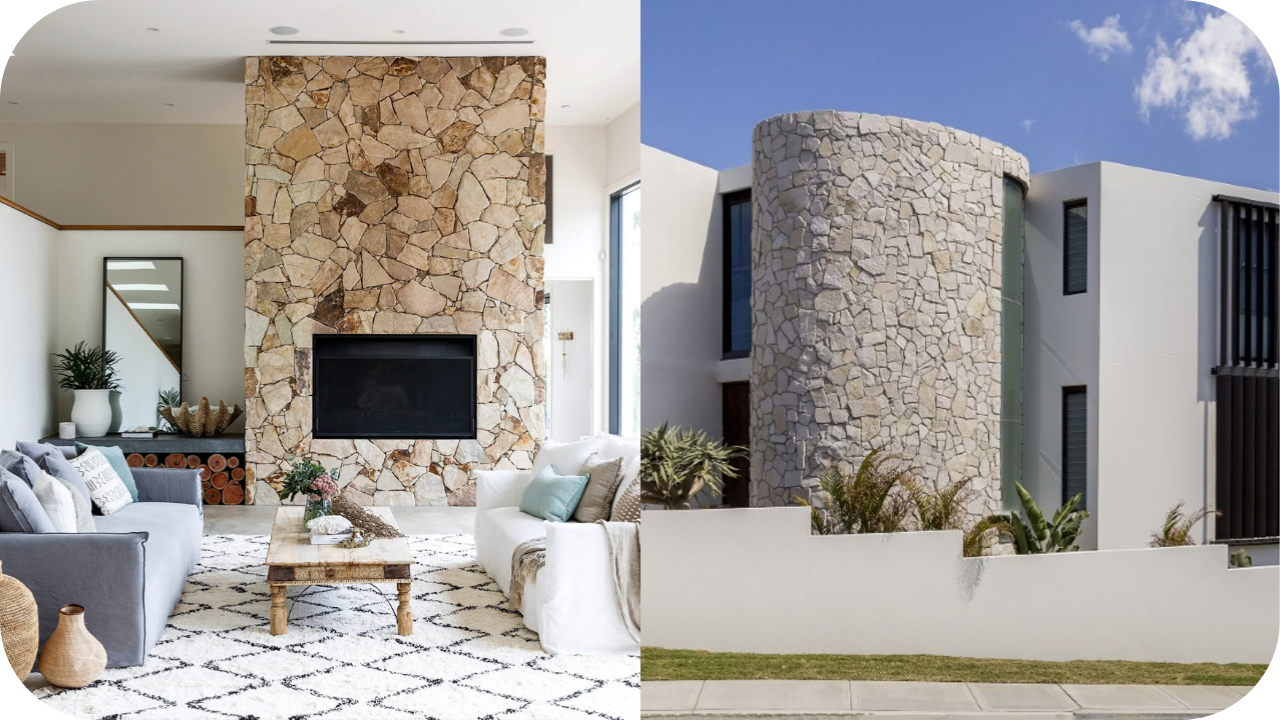
Stone feature walls can work beautifully indoors and outdoors, but they are not planned the same way. Indoor walls are usually chosen for texture, colour, lighting and interior style. Outdoor walls need stronger attention to weather exposure, drainage, durability and installation.
The right stone depends on where the wall is placed, how it will be viewed, and how it needs to perform over time.
What Is the Difference Between Indoor and Outdoor Stone Feature Walls?

Indoor stone feature walls are mainly chosen for texture, warmth and interior impact. Outdoor stone feature walls must also handle weather, moisture, sunlight, temperature changes and structural conditions. Both can use natural stone, but outdoor walls need more careful planning around stone durability, substrate preparation, sealing, drainage and installation.
- Indoor walls: Focus on design, lighting, scale and room style.
- Outdoor walls: Focus on weather resistance, drainage, fixing method and long-term durability.
- Both: Need the right stone type, profile, colour and installer.
- Best result: Choose stone based on location first, then style.
What Is a Stone Feature Wall?
A stone feature wall is a wall designed to stand out through natural texture, colour and depth. It can become the focal point of a living room, fireplace, entryway, staircase, facade, garden wall or alfresco area.
Feature walls are often built with natural stone cladding, stacked stone, ledgestone, split-face stone or free form walling. These formats create texture without always needing full-depth stone, which makes them useful across renovations, new builds and design-led upgrades.
Because many feature walls use cladding rather than full-depth stone, natural stone wall cladding affects the wall depth, fixing method, weight and finished look.
Indoor vs Outdoor Stone Feature Walls at a Glance
| Factor | Indoor Stone Feature Wall | Outdoor Stone Feature Wall |
| Main purpose | Adds texture, warmth and visual focus | Adds architectural impact and durability |
| Design priority | Colour, texture, lighting and room style | Weather resistance, scale and long-term performance |
| Common locations | Living rooms, fireplaces, stairwells, entries, wine rooms | Facades, garden walls, alfresco areas, boundaries, pool zones |
| Stone choice | Softer tones and refined profiles often work well | Denser, more durable stone is often preferred |
| Maintenance | Usually lower exposure and easier upkeep | Needs more attention to moisture, dirt and weathering |
| Installation focus | Wall preparation, alignment and interior finish | Substrate, drainage, fixing method and exposure |
| Lighting impact | Artificial lighting can highlight texture | Sunlight and shade change the stone’s appearance |
The same stone can look very different indoors and outdoors. Inside, lighting is more controlled. Outside, sunlight, shade, rain and surrounding landscape materials all change the way the stone appears.
Where Indoor Stone Feature Walls Work Best

Indoor stone feature walls work best when they add texture without overwhelming the room. They can soften modern interiors, warm up large open-plan spaces or create a focal point in areas that would otherwise feel plain.
Common indoor uses include:
- Living rooms: Creates a textured focal point behind seating or a media wall.
- Fireplaces: Adds warmth and depth around the hearth.
- Entryways: Gives the home a stronger first impression.
- Stairwells: Turns a plain vertical space into a design feature.
- Dining areas: Adds texture without relying on artwork.
- Wine rooms or bars: Creates a natural, premium backdrop.
Indoor stone works best when it supports the wider interior stone design instead of competing with flooring, cabinetry, furniture and lighting.
Where Outdoor Stone Feature Walls Work Best
Outdoor stone feature walls need to look good and perform well. They may be exposed to rain, sun, wind, garden moisture, pool water, irrigation or outdoor grime, so the stone and installation method need to suit the setting.Those settings are where outdoor design has been heading, and the outdoor stone trends increasingly run the same material from the wall through to the paving and pool surround.
Common outdoor uses include:
- Front facades: Adds street appeal and architectural weight.
- Garden walls: Helps the landscape feel more established.
- Alfresco areas: Connects outdoor living spaces with natural materials.
- Boundary walls: Gives privacy walls a more refined finish.
- Pool areas: Adds texture around water and paving.
- Retaining or landscape walls: Helps built elements blend into the garden.
Outdoor walls work best when the walling, paving, planting and drainage are planned together. In landscaped areas, stone wall ideas for gardens and exteriors can shape how the feature wall connects with the rest of the outdoor space.
Best Stone Types for Indoor and Outdoor Feature Walls
Different natural stones create different effects. Some are soft and refined. Others are bold, textured or highly architectural.
| Stone Type | Best Indoor Use | Best Outdoor Use | Look and Feel |
| Limestone | Soft living rooms, fireplaces and entries | Sheltered feature walls and facades | Calm, natural and refined |
| Travertine | Warm feature walls and relaxed interiors | Alfresco walls and Mediterranean-style exteriors | Warm, textured and timeless |
| Granite | Strong modern interior accents | Durable exterior walls and facades | Dense, bold and premium |
| Quartz | Dramatic interior feature walls | Strong exterior statement walls | Textured, layered and striking |
| Bluestone | Modern fireplaces and dark feature walls | Contemporary facades and landscape walls | Deep, grounded and architectural |
| Sandstone | Rustic or warm interior walls | Garden walls and relaxed outdoor settings | Natural, earthy and textured |
Limestone Feature Walls
Limestone suits soft, calm interiors where the wall needs texture without visual heaviness. It works well in living rooms, entries, fireplaces and refined facades where a quieter stone is preferred.
Light limestone can make a room feel brighter, while grey or beige limestone can connect well with timber, render, natural flooring and soft furnishings.
Travertine Feature Walls
Travertine adds warmth and variation. It suits relaxed interiors, alfresco walls and homes that lean towards Mediterranean, coastal or earthy design.
Its natural texture can make a wall feel settled and inviting. Outdoors, the product and finish should be checked for exposure, sealing and moisture suitability.
Granite Feature Walls
Granite creates a stronger, denser and more architectural look. It suits outdoor facades, modern entries, commercial-style exteriors and spaces that need a durable stone presence.
Indoors, granite is best used carefully because its visual weight can feel strong. It works well when balanced with clean lines, strong lighting and simple surrounding materials.
Quartz and Bluestone Feature Walls
Quartz and bluestone can create more dramatic feature walls. They suit contemporary spaces where contrast, depth and shadow are part of the design.
These stones can work well around fireplaces, entries, garden walls and exterior facades. Darker tones need enough light, especially indoors, so the wall does not feel too heavy.
Sandstone Feature Walls
Sandstone has a warmer, earthier character. It suits relaxed outdoor settings, garden walls and rustic interiors where the stone should feel natural and grounded.
It can pair well with planting, gravel, timber and softer landscape materials.
Design Differences: Indoor Walls Need More Control
Indoor feature walls are viewed up close. This means colour, texture and profile need to be more controlled than they might be outdoors.
A texture that looks subtle on a large exterior wall may feel too busy in a small living room. A dark stone that looks strong outside may feel heavy behind a TV or fireplace if the room has limited natural light.
Use these design tips:
- Use light stone to keep the room open.
- Use warm stone to soften modern interiors.
- Use dark stone only when the room has enough light.
- Use a cleaner profile for minimalist spaces.
- Use more varied stone for rustic or organic interiors.
Layered stone can work especially well indoors when the wall needs depth, shadow and movement. In living rooms and fireplaces, stacked stone interior walls can make a plain wall feel more architectural without relying on bold colour.
Performance Differences: Outdoor Walls Need More Planning

Outdoor feature walls face more demanding conditions than indoor walls. They may be exposed to moisture, weather, soil, wind, pool splash, garden irrigation or full sun.
Before choosing outdoor stone, check:
- Is the stone suitable for exterior exposure?
- Will the wall face full sun, shade, wind or rain?
- Is drainage needed behind or around the wall?
- Is the wall substrate suitable?
- Does the fixing method suit the stone and location?
- Will the stone need sealing?
- Can dirt, leaves or water sit against the wall?
- Will the wall be near a pool, garden bed or irrigation?
- Are matching corners or capping pieces needed?
- Has the installer allowed for movement and moisture?
Outdoor walls should be planned for long-term performance, not just the first impression. The stone, fixing method and drainage details all affect how the wall holds up over time.
Colour and Lighting: Why the Same Stone Can Look Different Indoors and Outdoors
Stone changes depending on light. Indoors, lighting is controlled. Warm downlights can make beige and cream stone look richer. Cool lighting can make grey stone feel sharper. Natural light from windows can shift the tone throughout the day.
Outdoor light is stronger and less predictable. Full sun can make pale stone look brighter or washed out. Shade can make dark stone feel heavier. Rain can temporarily deepen the colour and make texture more noticeable.
Always view samples in the actual location where possible. A stone that looks perfect in a showroom may look warmer, cooler, lighter or darker on site.
Texture and Profile: What Works Best Inside vs Outside?
Stone profile affects the whole wall. A clean ledgestone profile feels more controlled, while free form or random walling feels more organic.
| Stone Profile | Best Indoors | Best Outdoors | Why |
| Ledgestone | Yes | Yes | Clean, layered and controlled |
| Stacked stone | Yes | Yes | Adds depth and shadow |
| Free form stone | Select rooms | Strong option | More organic and natural |
| Random walling | Better for larger spaces | Strong option | Suits landscape and exterior walls |
| Smooth cladding | Modern interiors | Sheltered exteriors | Cleaner and more refined |
Indoor walls usually need more restraint because they are viewed closely. Outdoor walls can often carry stronger texture because they are viewed from farther away and sit among larger materials such as paving, planting and facade finishes.
For walls where profile, depth and stone format are still undecided, walling styles can help clarify whether a cleaner or more organic finish suits the project.
Maintenance: Indoor vs Outdoor Stone Feature Walls

Natural stone is durable, but it is not maintenance-free. Indoor walls usually need lighter upkeep, while outdoor walls need more attention to moisture, dirt and weather exposure.
| Maintenance Factor | Indoor Wall | Outdoor Wall |
| Dust and dirt | Light dusting is usually enough | Dirt, leaves and weather marks may build up |
| Moisture exposure | Usually limited | Higher exposure from rain, irrigation or pool areas |
| Sealing | May be recommended depending on stone and use | Often more important in exposed areas |
| Cleaning frequency | Lower | Higher |
| Staining risk | Depends on location | Higher near gardens, BBQs, pools or traffic areas |
| Long-term care | Mostly visual upkeep | Needs more regular inspection |
Indoor walls may only need gentle dusting and occasional cleaning. Outdoor walls need more regular checking, especially if they are near soil, trees, pools, BBQ areas or damp garden beds.
Good stone maintenance and care comes down to simple habits: avoid harsh acidic cleaners, remove dirt before it builds up, keep drainage working and follow stone-specific sealing advice.
Installation: Why Location Changes the Process
The location of the feature wall affects how it should be installed. An interior wall, fireplace wall and outdoor facade all have different preparation needs.
Key installation differences include:
- Indoor walls: Focus on wall flatness, layout, alignment and clean finishing.
- Fireplace walls: May need extra planning around heat clearances and surrounding materials.
- Outdoor walls: Need stronger attention to moisture, drainage and exposure.
- Large walls: May need professional assessment before material selection.
- Corners and returns: Should be planned before ordering stone.
Installation quality is a major part of the final look. Uneven surfaces, poorly planned corners or mismatched pieces can make even high-quality stone look unfinished.
Cost Factors to Consider
The cost of an indoor or outdoor stone feature wall depends on more than the stone itself. Wall preparation, installer labour and finishing details can change the total project cost.
Common cost factors include:
- Stone type
- Wall size
- Profile complexity
- Substrate preparation
- Indoor or outdoor access
- Corner pieces
- Sealing
- Installer labour
- Waste allowance
- Delivery
The cheapest stone is not always the most cost-effective choice if the wall needs extra preparation, sealing or detailed edge work. A slightly better-suited stone can be better value if it reduces installation difficulty or long-term maintenance issues.
Common Mistakes to Avoid
- Choosing stone based only on colour. Colour matters, but texture, location and performance matter just as much. A stone that looks good in a sample may not suit the wall size or exposure.
- Using an indoor-focused stone in a harsh outdoor setting. Outdoor walls need stone that can handle weather and moisture. Always check suitability before installing stone outside.
- Ignoring lighting changes. Stone can look different under warm light, cool light, full sun or shade. Samples should be checked in the actual location.
- Choosing a texture that overwhelms a small room. Heavy texture can make small rooms feel busy. Finer profiles and lighter tones often work better indoors.
- Forgetting about drainage outdoors. Outdoor walls need to manage water properly. Poor drainage can affect both appearance and long-term performance.
- Not checking samples on site. Natural stone varies. Viewing a sample in the project space helps avoid surprises.
- Ignoring corner and edge details. Exposed edges, returns and corners affect the finished result. These should be planned before ordering.
- Mixing too many strong materials in one space. Stone, timber, brick, metal and concrete can work together, but one material should usually lead the design.
- Treating installation as an afterthought. The wall surface, fixing method and installer skill all affect the final finish.
- Assuming all natural stone needs the same care. Different stones and finishes have different maintenance needs. Product-specific care advice matters.
Which Stone Feature Wall Is Right for Your Project?

| Project Goal | Best Direction |
| Add warmth to a living room | Light limestone, travertine or soft stacked stone |
| Create a bold fireplace wall | Dark quartz, bluestone or strong ledgestone |
| Improve street appeal | Durable exterior cladding in a tone that suits the facade |
| Build a garden feature | Sandstone, free form stone or textured walling |
| Create a modern alfresco wall | Travertine, limestone or clean linear stone |
| Add luxury to an entryway | Refined ledgestone or natural stone cladding |
| Keep the look subtle | Lighter tones and finer texture |
| Make the wall the hero | Darker tones, stronger texture or larger variation |
Final Thoughts
Indoor and outdoor stone feature walls have different priorities. Indoor walls focus on design, scale, texture and lighting. Outdoor walls need extra planning around weather, moisture, durability and installation. The right stone should suit the location first, then the style. Splendour In Stone can help you compare natural stone walling options for indoor feature walls, outdoor spaces and full architectural projects.
FAQs
1. Can the same stone be used indoors and outdoors?
Sometimes, but it depends on the stone, finish, exposure and installation method. A stone that works well indoors may not suit a wall exposed to rain, pool water, soil or full sun. Always choose based on the wall location first.
2. What is the best stone for an indoor feature wall?
Limestone, travertine, ledgestone and stacked stone are strong options for indoor feature walls. The best choice depends on the room size, lighting, flooring, furniture and the level of texture you want.
3. What is the best stone for an outdoor feature wall?
The best outdoor feature wall stone is a durable natural stone suited to exterior exposure. The right choice depends on the climate, wall position, moisture exposure, fixing method and maintenance expectations.
4. Do outdoor stone feature walls need sealing?
Many outdoor stone feature walls benefit from sealing, especially in exposed or high-use areas. Sealing needs depend on the stone type, finish and location, so product-specific advice is important.
5. Are stone feature walls hard to maintain?
Stone feature walls are generally durable, but outdoor walls need more upkeep than indoor walls. Indoor walls may only need dusting and gentle cleaning. Outdoor walls may need more regular cleaning, drainage checks and sealing.
6. Is stacked stone better indoors or outdoors?
Stacked stone can work well in both settings. Indoors, it adds texture and depth to fireplaces, living rooms and entries. Outdoors, it can create a strong architectural feature on facades, garden walls and alfresco spaces.
7. Should I choose light or dark stone for a feature wall?
Light stone softens and brightens a space. Dark stone adds drama, contrast and architectural weight. Room size, lighting and surrounding materials should guide the choice.



