

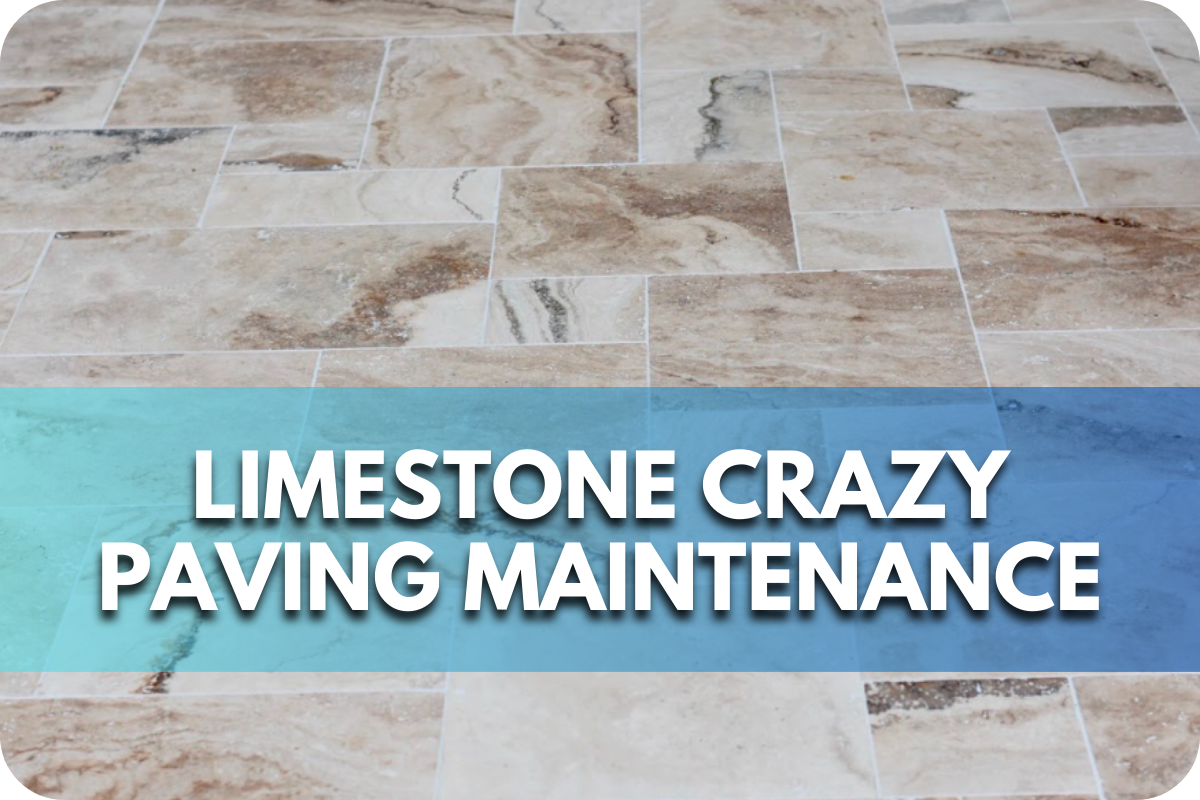
Limestone crazy paving stays beautiful on four habits: pH-neutral cleaning only (acid never touches limestone), prompt spill response, a breathable penetrating sealer renewed every few years, and joint care.
That last one is the crazy paving difference: the mortar joints between the irregular pieces make up a meaningful share of the surface, and they are usually the first thing to fail.
This guide covers the stone, the joints, the cleaning and sealing routine, the repairs worth doing early, and the one rule that protects everything else.
Why Limestone Crazy Paving Needs Specific Care
Two things shape the routine. The first is the stone: limestone is calcium carbonate, an alkaline stone that reacts with acid on contact, porous enough to take in spills when unsealed, and softer-faced than granite, so gentle tools win.
The second is the format: crazy paving is irregular pieces fitted like a mosaic and locked together with wide mortar joints, which means more edges, more pointing and more places for moisture to test than any uniform paver layout; the format itself is explained in what crazy paving means.
The Golden Rule: Nothing Acidic, Ever
Acid etches limestone on contact, leaving dull, lighter burn marks that no amount of cleaning undoes. That rules out vinegar, citrus-based products and many off-the-shelf “paver cleaners”, which are acid-based. It especially rules out hydrochloric (brick) acid, which trades sometimes use to strip mortar haze: on limestone, it eats the paving along with the haze. Use a pH-neutral stone cleaner and nothing else; even dish soap is worth skipping, since it leaves a residue film that dulls the surface and attracts dirt.
1. Routine Cleaning
- Sweep with a soft-bristle broom as needed, more often under trees, so grit and leaves don’t sit on the surface.
- Wash with a pH-neutral stone cleaner in warm water, applied with a soft brush or microfibre mop.
- Rinse thoroughly with a garden hose so no residue dries into the stone or joints.
- Blot spills immediately, especially wine, citrus and oil; on limestone, response time is the difference between a wipe and a poultice.
On pressure washers, default to no. The joints are the casualty: high pressure chews out pointing and forces water under the pieces. If you must use one on sound, sealed paving, keep it low, use a wide fan, stay well back and work along the stone, not the joints.
2. Removing Stains from Limestone
- Oil and grease: cover fresh spills with baking soda to absorb, then poultice if a shadow remains: baking soda and water paste, plastic wrap overnight, rinse.
- Tannin and organic marks (leaves, bark, berries, wine): pH-neutral cleaner and a soft brush; set-in marks respond to the same overnight poultice.
- Rust: a stone-safe rust remover formulated for natural stone, never an acid product, and removes the metal source or it returns.
- Green and black growth: a stone-safe outdoor biological cleaner, not bleach; the gentle methods are for removing moss and algae from limestone.
- White powdery bloom: efflorescence, common on newer crazy paving as the mortar joints release lime salts. Dry-brush it off and let it run its course; wet washing prolongs it.
3. Sealing Limestone Crazy Paving
Use a breathable, penetrating sealer: it soaks in, repels water and oils, and lets the stone release moisture naturally, all without changing the look or the grip. Film-forming sealers are the wrong tool outdoors; they trap moisture, wear patchily and get slippery.
On new paving, let the pointing cure for a few weeks before sealing, and always apply to clean, completely dry stone in mild weather.
Reseal every three to five years, sooner in high-traffic or coastal spots, and trust the water test over the calendar: when droplets stop beading, it’s time. The full case and method are in the benefits of sealing limestone exteriors.
4. Joint Care: The Crazy Paving Difference
The pointing between the pieces is structural, decorative, and the surface’s weak point, so give it an annual inspection of its own.
- Hairline crazing in the mortar surface is cosmetic; note it and watch it.
- Cracked, loose or missing pointing is a job for this season, not next year: open joints feed water straight under the paving, and that’s how loose pieces start.
- Moss colonises joints first, because mortar holds moisture in shade; treat the first green film early.
- Weeds in the joints are a symptom, not bad luck: established weeds mean the pointing has failed, and the fix is repointing, not just spraying.
- Repointing should match the existing joint colour and profile; mixes, colours and sealers are covered in the grout guide for stone and porcelain tiles.
Repairs: Loose Pieces, Chips and Cracked Pointing
A piece that sounds hollow (drummy) underfoot or rocks slightly has lost its bond: lift it, clean off the old bedding, and re-fix it on fresh stone adhesive or mortar before it cracks. Chips take a colour-matched stone epoxy, shaped flush and sealed once cured.
Cracked pointing gets raked out and repointed in sections. If hollowness or cracking is spreading across the area rather than appearing in single spots, the bedding or slab underneath is the problem, and that diagnosis belongs with a professional.
Seasonal Care for Australian Conditions
- Spring: the annual walk-over: tap-test for dry pieces, inspect every joint, wash off pollen, and use the dry window to reseal or repoint.
- Summer: watch oil marks around BBQs and outdoor kitchens, and redirect irrigation that wets the paving daily.
- Autumn: keep leaves moving off the surface before tannin shadows print, and clear drainage paths before the rain.
- Winter: treat the first moss in shaded joints immediately; it’s a ten-minute job in June and a weekend in September.
For storms, heatwaves and the rest of the forecast, see protecting your stone patio from weather extremes.
Keep the Joints Honest and the Acid Away
Do those two things, and limestone crazy paving is a low-effort surface that improves with age. If you’re still at the choosing stage, seecrazy paving stones in Melbourne for what’s available locally, or order samples to test tones at home.
FAQs
1. Can you use vinegar to clean limestone crazy paving?
No. Vinegar is acidic and etches limestone on contact, leaving permanent dull marks. The same goes for citrus cleaners and acid-based paver products; pH-neutral stone cleaner is the only safe default.
2. How often should limestone crazy paving be sealed?
Every three to five years with a breathable penetrating sealer, and as often as every two in high-traffic or coastal positions. Use the bead test: when water soaks in instead of sitting in droplets, reseal.
3. Why are weeds growing in my crazy paving joints?
Because the pointing has cracked or washed out, leaving moist pockets for seeds to take hold. Spraying kills this season’s weeds; repointing the failed joints stops next season’s.
4. Can I pressure wash crazy paving?
It’s the riskiest surface to pressure wash, because the jet destroys mortar pointing and drives water under the pieces. A hose, pH-neutral cleaner and a stiff nylon brush get the same result safely; if a machine is used at all, keep it low, wide and away from the joints.



