Many Aussie homes sit on sloped blocks, and more than 40% of them face drainage or stability issues that limit how the space can be used.
Uneven ground can feel frustrating. Water runs where it should not, soil shifts after heavy rain, and outdoor areas become harder to enjoy. It throws a real spanner in the works for anyone planning a beautiful garden or paved zone.
Smart paving choices and the right retaining walls can transform that tricky slope into a safe, practical, and visually appealing outdoor space. This guide walks you through the best options for Aussie conditions and how to make your block work in your favour.
Challenges of Sloped Blocks in Australia
Here are the key challenges that every Australian homeowner should understand before choosing paving or retaining wall solutions for a sloped block.
- Natural erosion and water runoff: Sloped blocks push water downhill, which increases erosion risks. Poor drainage leads to washed-out soil, unstable foundations and early damage to paved or landscaped areas.
- Restricted access and usability: Steep gradients limit safe movement around the property. Paths become harder to build, outdoor zones feel uneven, and creating functional entertainment or seating areas becomes challenging without proper design.
- Soil movement and instability: Australian soils often shift after rain or heat. On a slope, this movement becomes amplified, affecting retaining walls, paving stability and long-term structural performance across the landscape.
- Engineering and approval requirements: Sloped sites commonly need professional assessment, soil reports and council approval. Height limits, drainage rules and structural standards influence how retaining walls and paved areas must be built safely.
- Drainage System Complexity: Sloped blocks require layered drainage solutions, including ag pipes, gravel beds, and correct fall angles. These systems prevent water pressure behind walls and protect paved surfaces from saturation.
- Slip Hazards on Steep Surfaces: Sloped pathways, driveways, and outdoor living areas become slippery in wet conditions. Surfaces need correct slip ratings, heavier materials, and proper installation to ensure safe everyday use.
Best Paving Materials for Sloped Blocks in Australia
Here are the top paving materials that offer strength, safety, and long-lasting performance for creating stable outdoor spaces on sloped Australian blocks.
1. Granite Pavers
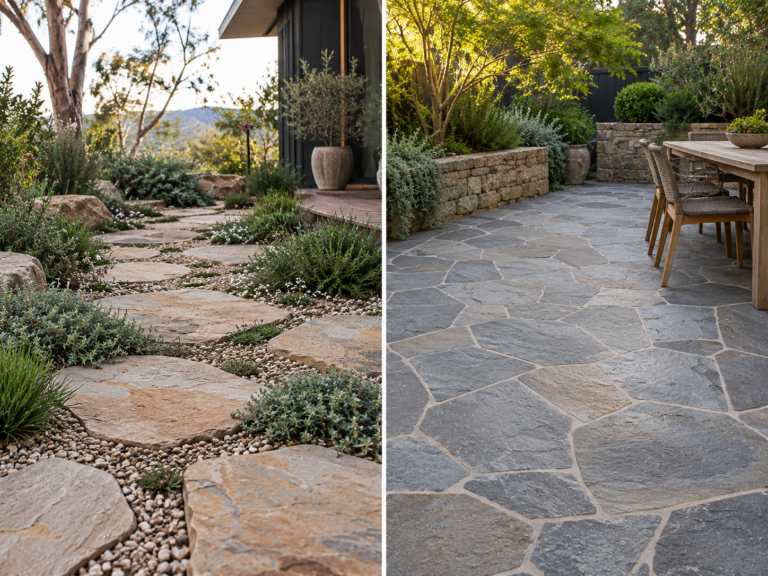
Granite is a premium choice for steep or high-traffic sloped areas because of its incredible hardness and natural slip resistance. It handles moisture, heat and heavy loads without losing its finish, which makes it ideal for challenging gradients.
The fine-grain texture supports safe footing, even in wet conditions. Varieties such as Charcoal Granite or Grey GraniteGranite also offer long-lasting colour consistency, giving outdoor spaces a polished, architectural appearance.
2. Bluestone Pavers
Bluestone is one of the most reliable choices for sloped Australian blocks because it offers strong grip, impressive durability, and a refined look that suits modern and classic homes.
Its dense composition resists weather changes, while its natural texture provides a safer footing on gradients. Bluestone, like Honed Bluestone or Flamed Bluestone, also handles high foot traffic with ease, making it ideal for stepped pathways, terraces and multi-level outdoor environments.
3. Limestone Pavers
Limestone offers a soft, natural colour palette that blends well with Australian landscapes while delivering dependable strength on sloped blocks. Its subtle texture improves grip, and its consistent density creates reliable stability across pathways and outdoor living areas.
Options such as Loch Limestone or Brooklyn Limestone are easy to shape for steps and tiered layouts, which adds flexibility for complex gradients. With the right sealing and maintenance, it performs well in varied climates.
4. Travertine Pavers
Travertine brings a warm, elegant finish that works beautifully on sloped sites when installed with proper fall and drainage. Its natural pores create a gentle texture underfoot, supporting slip resistance across open or shaded areas.
Homeowners often choose examples like Silver Travertine or Ivory Travertine due to their light tones and natural texture.
Traventine remains cool in the sun, which makes it ideal for Australian backyards. When sealed correctly, it withstands moisture, heat, and daily wear, providing a practical and visually appealing surface.
5. Cobblestones
Cobblestones provide exceptional grip and strength on steeper gradients due to their interlocking layout and smaller format. Their weight and thickness help resist movement, while their textured surfaces create reliable traction for vehicles and foot traffic.
Homeowners often choose options like Porphyry Cobbles or Bluestone Cobbles for their light tones and natural textures.
This makes cobblestones a standout choice for driveways and high-load areas. Their rustic character also brings charm and heritage appeal to Australian homes, especially in landscape designs with classic styling.
Best Retaining Wall Options for Sloped Blocks
Here are the retaining wall options that offer reliable strength, long-term stability, and visual appeal for managing soil and shaping outdoor spaces on sloped blocks.
1. Granite
Granite offers unmatched durability and long-term strength, making it ideal for challenging sloped landscapes that require maximum stability. Its tightly packed mineral structure resists erosion, soil movement, and harsh weather.
Granite blocks such as Buffalo and Hotham Granite create a premium, timeless appearance that suits luxury outdoor designs. Their reliable density ensures each block interlocks securely, forming a reinforced retaining system that performs exceptionally well on steep gradients where strength is vital.
2. Limestone
Limestone is a popular option for sloped blocks thanks to its uniform block structure and bright, elegant appearance. Its moderate density supports low to medium-height retaining walls effectively, provided proper drainage and base preparation are used.
Limestone options like Jasper and Jamieson Limestone create a softer visual finish that suits modern gardens, paved areas, and poolside designs. It remains an appealing choice for homeowners seeking a clean and light aesthetic combined with reliable performance.
3. Sandstone
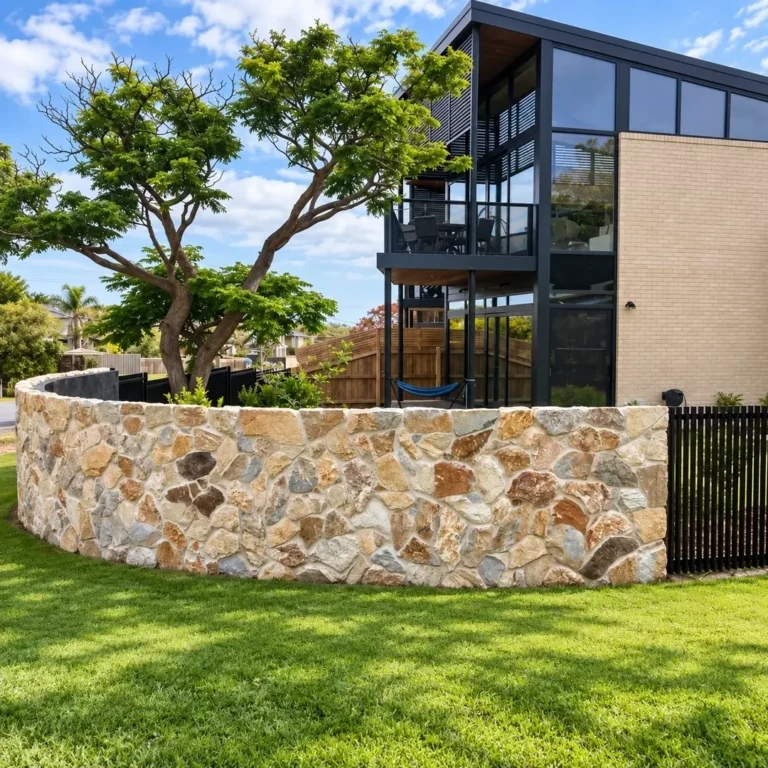
Sandstone introduces a warm, natural look to sloped gardens while still delivering dependable structural performance. Although softer than bluestone and granite, high-quality sandstone, like Charlotte and Australiana, provides good support for moderate slope retention.
Its workable nature makes shaping and placement easier, especially for curved or tiered walls. The textured surface blends beautifully with coastal gardens and bush settings, adding earthy tones that enhance natural landscapes while maintaining practical stability.
4. Travertine
Travertine offers a stylish, refined option for retaining walls on gentle to moderate slopes. While not as dense as granite or bluestone, its natural strength supports decorative and functional wall designs when installed with proper footings and drainage.
Options such as Classic Travertine and Silver Travertine bring soft patterns and timeless character to outdoor areas. Travertine works particularly well with Mediterranean-inspired gardens and light coloured paving.
5. Quartz
Quartz provides excellent structural strength for sloped retaining walls thanks to its dense composition and ability to resist moisture, pressure, and shifting soil. Its durability supports long-term stability across moderate and steep gradients.
Options such as Shoreham Quartz and Blue Ridge Quartz offer consistent sizing, clean edges, and attractive colour variation. Their refined finish suits gardens and architectural landscapes where both structural performance and visual appeal are essential.
Factors to Consider for Sloped Block Paving and Retaining Walls
Here are the essential factors that guide safe, durable, and visually balanced paving and retaining wall decisions for any sloped block in Australia.
- Drainage and water control: Effective drainage stops water from pooling or pushing against paved areas and walls. Without it, soil shifts, surfaces weaken, and long-term structural problems appear across the entire landscape.
- Soil stability and compaction: Sloped blocks need a solid, compacted base to hold weight and resist movement. Stable soil protects paving, strengthens retaining walls and reduces the risk of cracks or collapses over time.
- Material suitability for climate: The wrong stone can become slippery, fade or fracture. Choosing materials that handle heat, rain and heavy foot traffic ensures safe, durable and visually consistent results across the property.
- Council and engineering requirements: Retaining walls above certain heights require engineering approval. Local rules, load calculations and site conditions guide how structures must be built to stay compliant and safe on Australian slopes.
- Design Integration with the Slope: The layout must follow the land’s natural slope. Terracing, stepped levels, and reinforced platforms help create functional, visually balanced outdoor spaces on uneven sites.
- Retaining Wall Height and Load: The height of the wall determines engineering needs, council approval, and structural design. Higher walls carry greater soil pressure and need stronger foundations for long-term stability.
Installation and Maintenance
Proper installation and ongoing maintenance play a major role in how well paving and retaining walls perform on a sloped block.
- Correct base preparation: A strong foundation starts with proper excavation, soil assessment, and thorough compaction, because any weakness in the base eventually leads to shifting, cracking, or uneven surfaces.
- Accurate laying and drainage fall: Professional installers position each stone with the right fall to ensure water flows away from structures rather than pooling in areas that could cause long-term issues.
- Quality retaining wall support: Retaining walls require precise footing depths, suitable backfill materials, and dependable drainage systems, such as gravel layers and weep holes, to relieve pressure behind the wall.
- Consistent maintenance routines: Regularly clearing debris from drainage points, checking early signs of movement, topping up joint sand and sealing selected stone types help maintain strength and appearance.
- Simple upkeep for safety: Small tasks like clearing leaves or soil buildup on steps improve safety on steep gradients and support the long-term stability of sloped outdoor spaces.
Final Thoughts
Thoughtful paving and retaining wall choices can completely transform a sloped block, turning challenges into functional outdoor spaces with lasting visual appeal. Quality natural stone provides strength, stability and timeless style suited to Australian conditions.
With the right layout, drainage planning and material selection, your landscape becomes safer, more usable and far more inviting. If you are ready to improve your sloped block with durable, beautiful stone solutions. Reach out to Splendour in Stone for guidance and product recommendations tailored to your project.