Sandstone cladding is a thin layer of natural sandstone fixed over a wall to give it a stone face without building a solid stone wall behind it. It costs more to supply and install than fibre cement or render, and less than solid stone construction, and it suits facades, feature walls and garden structures where the warm, textured look is the point.
Its trade-offs are worth knowing before you commit. Sandstone is porous, it varies noticeably between varieties, and it is softer than granite. Handled properly those are manageable. Ignored, they are the reason a cladding job looks tired in five years.
In this guide
- Is sandstone cladding expensive?
- Sandstone compared with other cladding materials
- How sandstone cladding weathers in Australian conditions
- Where sandstone cladding works, and where it does not
- Fixing sandstone cladding to a substrate
- Sealing and maintaining sandstone cladding
- Frequently asked questions
- Choosing a sandstone for your wall
Is sandstone cladding expensive?
It sits in the upper half of the cladding market on supply cost, above fibre cement, render and most reconstituted stone, and below solid stone masonry or full-depth stonework. What moves the number is rarely the stone alone.
- The stone itself: variety, colour, format and thickness all affect supply cost, and imported and locally quarried sandstone price differently.
- Format and cut: loose or free-form stone, split-face panels and sawn tiles each carry different material and labour costs, and the labour difference is usually larger than the material one.
- The substrate: what the cladding is fixed to determines the preparation required, and remedial work to a wall that is not sound is the most common cost surprise.
- Corners, returns and openings: every external corner, window reveal and door return needs a cut or a purpose-made piece, so a broken-up facade costs more per square metre than a plain one.
- Access: anything above single-storey height brings scaffolding into the quote.
- Sealing: most porous stone is sealed on installation, which is a cost at the start and a recurring one later.
The comparison that matters is not the square metre rate against render, but the finished result against how long you want it to last and how it will look in ten years. For a current supply figure against a real area, most buyers narrow the choice with natural stone walling samples on site before asking for a quote.
Sandstone compared with other cladding materials
| Material | Look | Cost position | Maintenance | Where it suits |
|---|---|---|---|---|
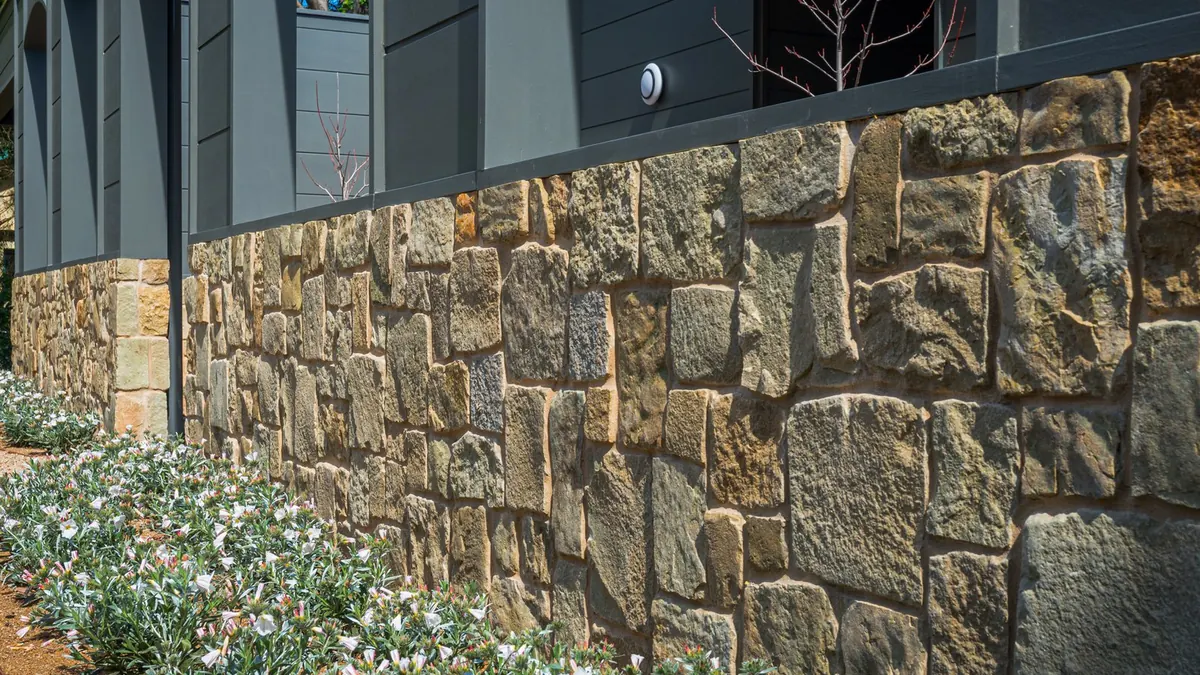
| Sandstone | Warm honey, gold and rust tones, visible grain | Upper middle | Porous, usually sealed | Facades, feature walls, garden structures |
| Limestone | Pale cream to soft grey, fine even grain | Upper middle | Porous, usually sealed | Facades, courtyards, refined exteriors |
| Granite | Dense, speckled, cool grey to black | Highest | Very low, absorbs little | High-traffic and high-exposure walls |
| Reconstituted stone | Uniform, repeating moulds | Lower | Low, but colour can fade | Budget-led projects, large plain areas |
| Fibre cement | Flat, painted, no natural variation | Lowest | Repainting on a cycle | Large areas where cost leads the decision |
The honest distinction between sandstone and reconstituted stone is repetition. Manufactured products are cast from a limited number of moulds, so the same face reappears across a wall and the eye picks it up on a large area. Natural sandstone has no two pieces alike. That is the thing you are paying for, and on a small feature wall it may not be worth the premium.
How sandstone cladding weathers in Australian conditions
Sandstone is a sedimentary stone, so its behaviour outdoors comes down to porosity and to how tightly the grains are bound. Both vary between varieties, which is why a general answer is less useful than a specific one about the stone you are considering.
Sun and UV are the easy part. Natural stone holds its colour under Australian UV in a way painted and manufactured finishes do not, and a sandstone facade will look much the same in a decade as it does on handover.
Moisture is the variable that matters. Porous stone absorbs water, and absorbed water carries dissolved salts that can move to the surface and be left behind as efflorescence. Shaded, south-facing and poorly drained walls stay damp longer and pick up organic growth sooner than exposed ones. This is a detailing question as much as a material one: flashing, weep holes and a drainage cavity behind the cladding do more for longevity than any product applied to the face.
Coastal exposure brings airborne salt, which is harder on porous stone than on dense stone. Whether a particular sandstone is suitable near the coast is a question for the supplier rather than a general rule, and it is worth asking directly rather than assuming.
Where sandstone cladding works, and where it does not
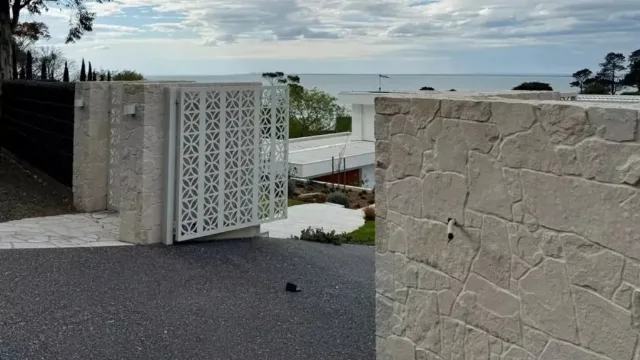
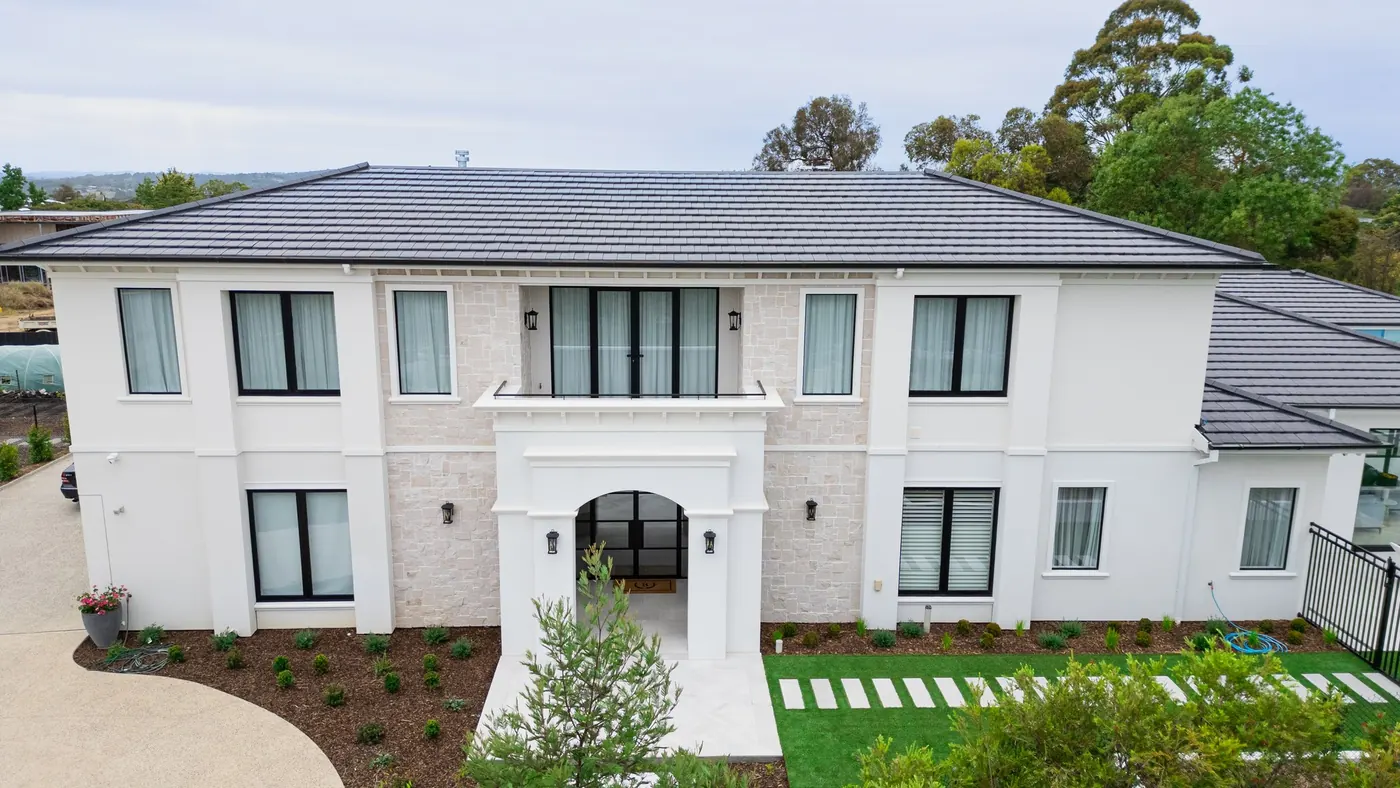
It works on house facades, where the warm tone reads well against render, timber and glass, and where the natural variation carries a large plain area that would otherwise look flat. It works on feature walls, both external and internal, where a single wall is meant to hold attention. And it works on garden and landscape structures, retaining wall faces, planter boxes and outdoor kitchen surrounds, where a softer, warmer stone suits the setting better than granite would.
It is a weaker choice where the wall takes physical wear, because sandstone is softer than granite and marks more easily at low level. It is a weaker choice in permanently damp or poorly drained positions, unless the drainage is fixed first. And it needs thought around fireplaces and heat sources, which is a separate specification question rather than a general prohibition.
The application decides the format. A facade, a low garden wall and an internal feature wall are three different jobs, and the format and thickness that suits one will not always suit another. The best stones for exterior wall cladding come down to exposure and wear as much as to look, and sandstone sits differently on that list depending on where the wall is.
Fixing sandstone cladding to a substrate
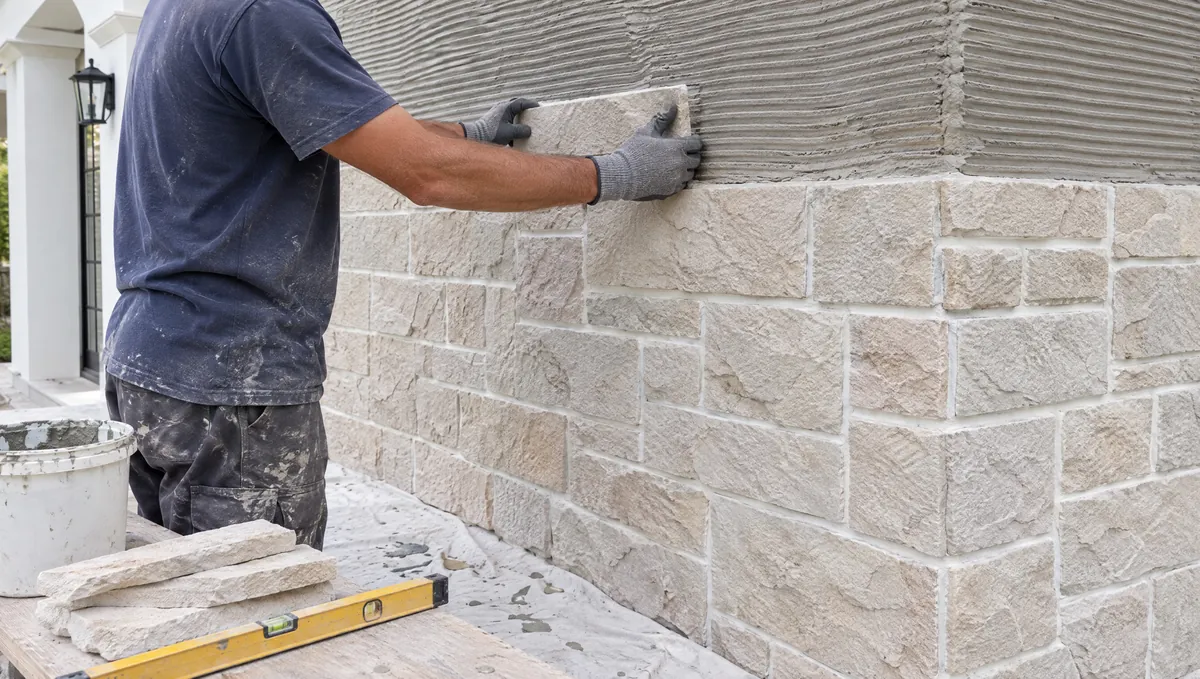
Cladding is not structural. The wall behind carries the load and the cladding carries the weather and the appearance, which means the substrate has to be sound and capable of holding the weight before anything goes on it.
What the cladding can be fixed to depends on both the substrate and the stone. Masonry, concrete and correctly prepared framed walls each need a different approach, and the fixing method varies between adhesive-only systems, mechanical fixing and a combination of the two. Thickness and weight per square metre drive that decision, and both are product specifications rather than general rules.
Get the adhesive specification right and most of the common failures disappear. Choosing the right adhesive for stone cladding is not a detail you leave to the day of installation, and it is one of the clearest arguments for using a professional installer rather than doing it yourself on anything above waist height.
Sealing and maintaining sandstone cladding
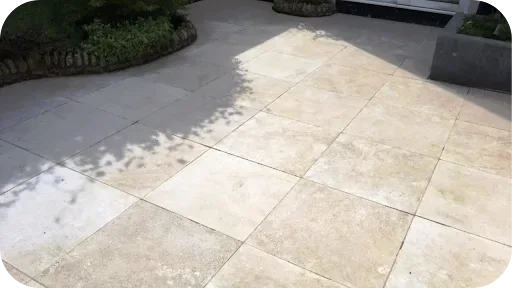
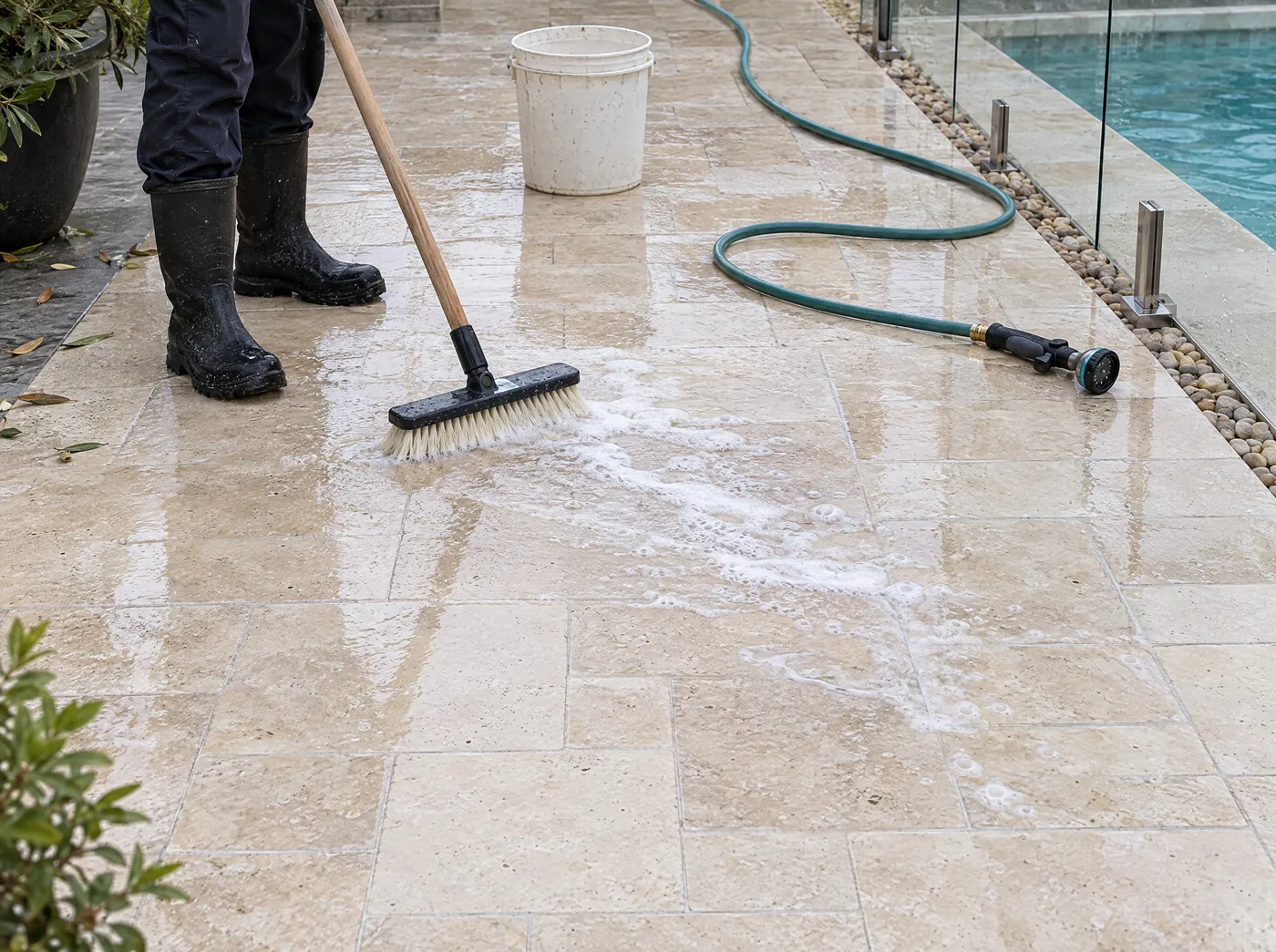
Porous stone is usually sealed on installation to reduce staining and slow organic growth, and resealing runs on a cycle rather than being a one-off. Routine care is a sweep or a rinse, a soft brush and a pH-neutral cleaner, and prompt attention to anything that runs down the face.
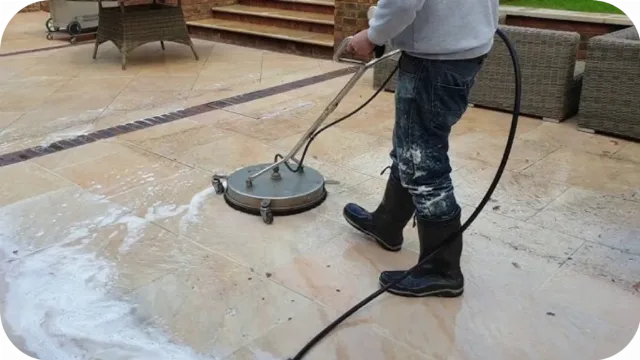
Two things to avoid: acid, which damages the surface and is often recommended for efflorescence when it makes the problem worse, and high-pressure washing at close range, which erodes the grain on softer sandstone.
Frequently asked questions
Is sandstone cladding expensive?
Sandstone cladding costs more than render, fibre cement and most reconstituted stone, and less than solid stone masonry. Installation is usually the larger share of the total, and the substrate condition, the number of corners and returns, and access above single-storey height move the figure more than the choice between one sandstone and another.
What is the cheapest exterior cladding in Australia?
Fibre cement is generally the cheapest to supply and install, followed by render and then reconstituted stone. Natural stone sits above all three. The cost comparison changes over a longer horizon, because painted and rendered finishes need recoating on a cycle while natural stone holds its colour, so the honest answer depends on how long you intend to keep the finish.
Does Bunnings sell faux stone cladding?
Manufactured and faux stone cladding products are widely available through hardware and tile retailers in Australia. They are cast from moulds, which makes them cheaper and lighter but also means the same face repeats across a wall, and the repetition becomes visible on larger areas. They are a reasonable choice for a small feature wall on a tight budget and a poor one for a full facade.
Is stone cladding a good idea?
It is a good idea where the wall is sound, the drainage is right and you want a finish that holds its appearance without recoating. It is a poor idea as a cosmetic fix over a wall with a moisture or structural problem, because cladding hides the symptom without addressing the cause. Fix the wall first, then clad it.
How thick is sandstone cladding?
Thickness varies by product and by format, and it matters because it determines both the weight the substrate has to carry and the fixing method. Split-face and free-form cladding is typically thicker and heavier than sawn cladding tiles. Check the thickness and weight per square metre for the specific product before the fixing method is decided.
Does sandstone cladding need sealing?
Sandstone is porous, so it is usually sealed outdoors to reduce staining and slow organic growth, particularly on shaded or damp walls. Sealing is a maintenance cycle rather than a single job at installation. Confirm the recommendation for the specific sandstone you are using, because porosity varies noticeably between varieties.
Choosing a sandstone for your wall
Start with the wall rather than the stone: what it is made of, which way it faces, how exposed it is and whether it drains. Those four answers narrow the format and the thickness before colour comes into it.
Sandstone varies enough between varieties that handling samples in daylight, against the render or brick they will sit beside, is worth doing before an order goes in. If you want the background on the material itself, what sandstone is and how it forms explains most of its behaviour on a wall.