Marble floors have a way of making a home feel calm and finished, and once they’re down, you want them to stay that way. The catch is that marble reacts to things most floors shrug off. A splash of lemon juice, a supermarket bathroom spray or the wrong scrubbing pad can leave a dull mark that no amount of wiping will lift. Learning how to clean marble floors is mostly about learning what to keep away from them.
The routine itself is refreshingly simple. Sweep or dry-mop first, then damp-mop with warm water and a pH-neutral stone cleaner, and dry the floor as you go. Leave vinegar, citrus, bleach and abrasive powders in the cupboard. Below, we walk through the everyday routine, the products that are safe, how to deal with stains and etch marks, and how to care for marble pavers outside and around the pool.
In this guide
- Why Does Marble Need Gentle Cleaning?
- How Do You Clean a Marble Floor Day to Day?
- What Should You Clean Marble Floors With?
- What Should You Never Use on Marble Floors?
- Does the Finish Change How You Clean Marble?
- How Do You Remove Stains and Etch Marks from Marble?
- How Do You Get a Marble Floor to Shine Again?
- How Do You Clean Outdoor Marble Pavers and Pool Areas?
- Should You Seal Marble Floors?
- How Do You Clean the Grout Between Marble Tiles?
- When Should You Call a Stone Professional?
- Choosing Marble That Suits the Way You Live
- Frequently Asked Questions
Why Does Marble Need Gentle Cleaning?
Marble needs gentle cleaning because it is made mostly of calcium carbonate, a mineral that reacts with acid on contact. It comes down to what marble is made of: the same mineral found in limestone and chalk, recrystallised by heat and pressure deep underground. When something acidic touches it, the surface is eaten away slightly, leaving a dull patch called an etch mark.
Marble is also a little porous, so liquids that sit on it can soak in and stain. And everyday grit, the fine sand and dust carried in on shoes, behaves like sandpaper underfoot. Gentle products and regular sweeping deal with all three.
How Do You Clean a Marble Floor Day to Day?
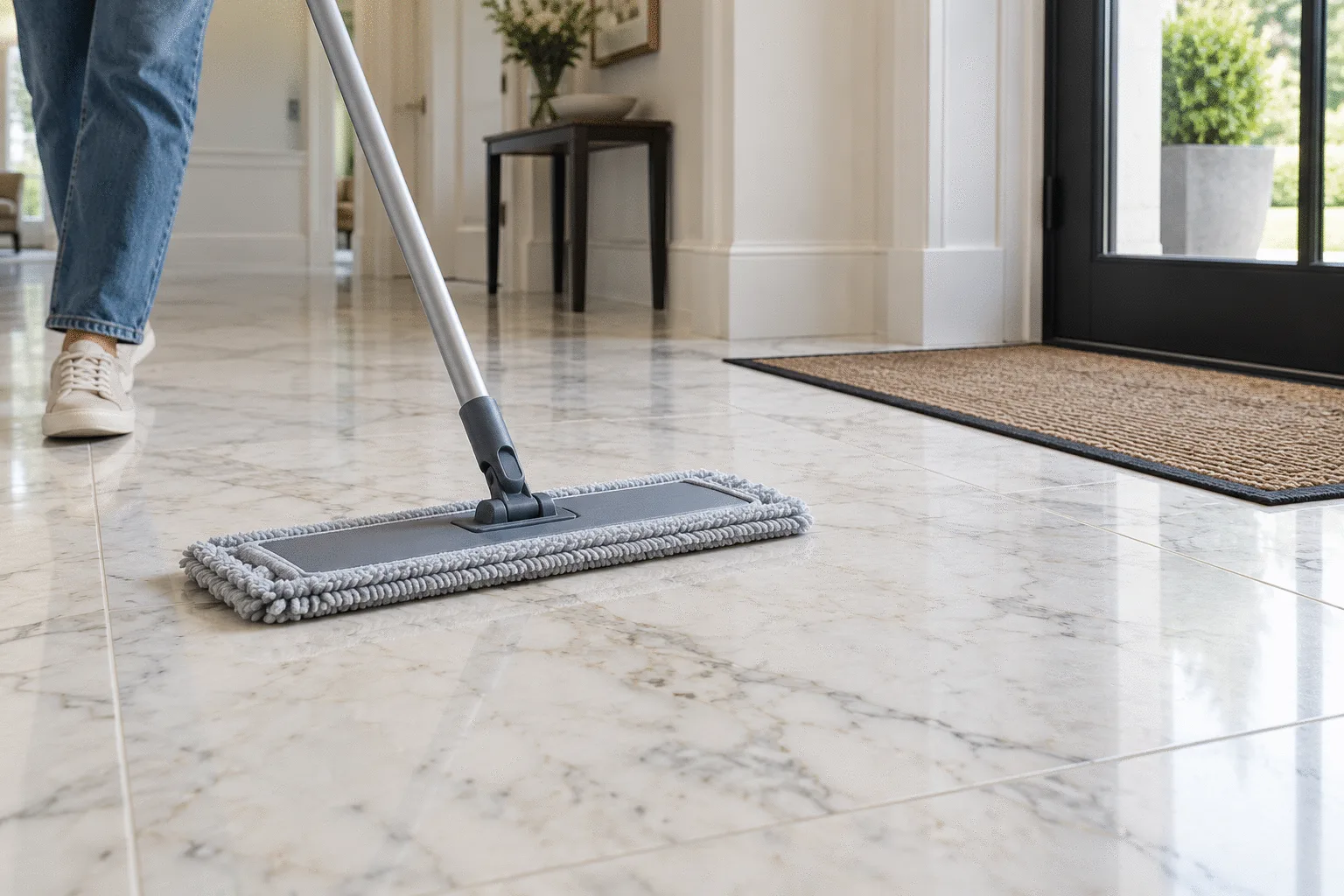
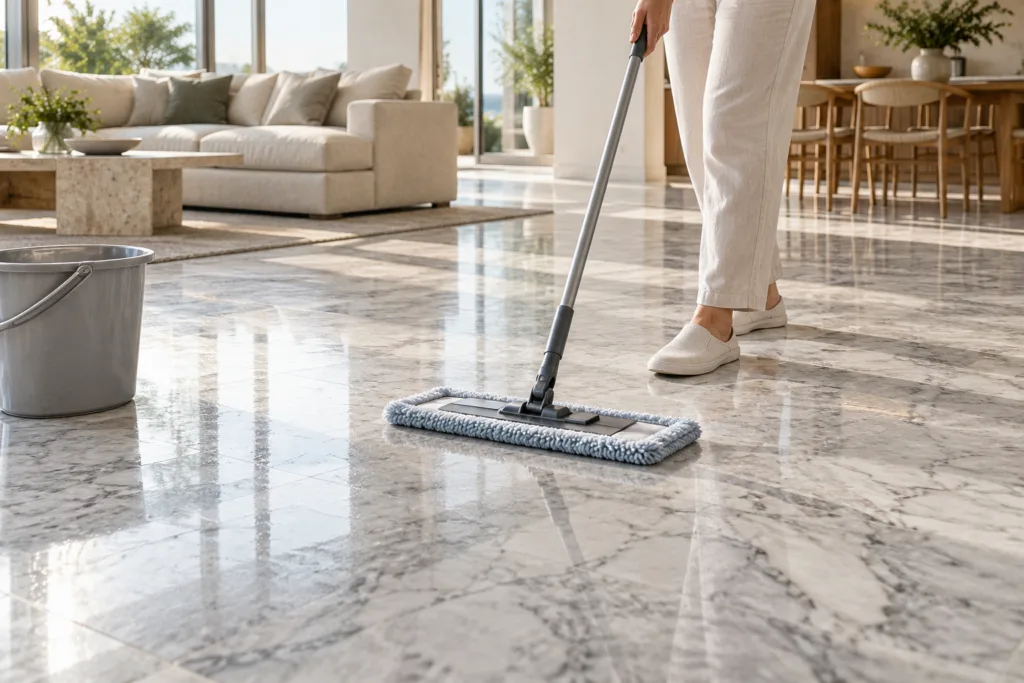
The everyday routine is to remove grit, damp-mop with a pH-neutral cleaner, and dry the floor. Here’s how to do it without leaving streaks or marks:
- Clear the grit first: Sweep with a soft broom, run a dry microfibre mop over the floor, or vacuum on a hard-floor setting without a spinning beater bar. Grit left on the floor is what scratches marble, so never skip this step.
- Mix a gentle solution: Add a pH-neutral cleaner made for natural stone to a bucket of warm water, at the dilution on the label. More cleaner isn’t better, as leftover residue is one of the most common causes of dull marble.
- Damp-mop, don’t flood: Wring the mop out well and work in small sections. Puddles can seep into grout joints and leave water marks as they dry.
- Rinse if the label says to: Some cleaners need a pass with clean water to lift any film.
- Dry and buff: Finish with a dry microfibre mop or cloth. It stops water spots forming and brings up the natural sheen of the stone.
How often you mop depends on how busy the room is. In a hallway or kitchen, a quick sweep most days and a damp mop once a week keeps marble looking good, while quieter rooms can go longer. Mats at entry doors, felt pads under chair legs and wiping up spills straight away do as much for marble as any cleaner.
What Should You Clean Marble Floors With?
The safest cleaner for marble floors is a pH-neutral product labelled as safe for natural stone, used with warm water and a soft microfibre mop. pH-neutral means it is neither acidic nor strongly alkaline, so it lifts dirt without attacking the stone or the sealer that protects it.
| Product | Safe on marble? | Why |
|---|---|---|
| Warm water | Yes | Fine for light everyday cleaning, especially with a microfibre mop |
| pH-neutral stone cleaner | Yes | Lifts grime without etching the stone or stripping the sealer |
| A few drops of mild, pH-neutral dish liquid | Occasionally | Works in a pinch, but can leave a film if overused, so rinse well |
| Vinegar, lemon or lime | No | Acidic, so it etches the surface |
| Bleach and ammonia | No | Can dull the surface and break down the sealer |
| General bathroom, tile and grout sprays | Only if labelled stone-safe | Many contain acids or harsh alkalis |
| Abrasive powders, cream cleansers and scourers | No | Scratch and dull the finish |
| Baking soda | Only in a stain poultice | Mildly abrasive, so not for routine scrubbing |
When you’re choosing a cleaner, look for “pH-neutral” and “safe for natural stone” or “for marble and limestone” on the label. If a product doesn’t say either, it’s safer to leave it on the shelf.
Can You Clean Marble Floors Naturally?
Yes, but “natural” doesn’t always mean safe for marble. Warm water and a microfibre mop are the gentlest natural option there is. Vinegar and lemon juice, the two ingredients most natural cleaning recipes rely on, are acids, and they’ll etch marble just as surely as a harsh chemical would. Baking soda is better kept for drawing out stains in a poultice than for everyday cleaning.
What Should You Never Use on Marble Floors?
Never use acidic, abrasive or harsh chemical cleaners on marble, because they etch, scratch or dull the surface. These are the ones to keep well away:
- Vinegar and citrus: Both are acids and leave dull, pale etch marks, often within minutes.
- Bleach and ammonia: They can dull the finish and wear down the sealer, leaving the stone more open to stains.
- All-purpose bathroom and tile sprays: Many are made to dissolve soap scum and limescale, which means they’re acidic.
- Abrasive powders and scourers: They scratch the surface, and the damage shows most on smooth finishes.
- Steam mops: The heat and moisture can break down sealer over time and push water into the stone, so a damp microfibre mop is the safer choice.
A lot of marble damage starts with good intentions: a cleaner that seemed mild, or a mark scrubbed a little too hard. The most common marble cleaning mistakes follow a pattern, and nearly all of them are easy to avoid once you know them.
Does the Finish Change How You Clean Marble?
Yes. The smoother and shinier the finish, the more easily etch marks and scratches show, and the more gently it needs to be treated. Textured finishes hide everyday wear far better.
| Finish | What it looks like | How visible etching is | Cleaning notes |
|---|---|---|---|
| Polished | Glossy and reflective | Very visible | Soft microfibre only, and dry well to avoid water spots |
| Honed | Smooth and matte | Less visible | Same routine, and rinse well, as residue can look patchy |
| Sandblasted | Fine, even texture | Hard to see | A soft broom or brush lifts dirt out of the texture |
| Flamed and tumbled | Rougher surface with softened edges | Hard to see | Soft brush, and rinse thoroughly |
This is why marble used outdoors usually has a textured finish. Splendour In Stone’s Torro, Serra and Maya Blue marble pavers have a sandblasted finish and Verde is flamed and tumbled, finishes that hide light wear and minor etching far better than a polished surface and give better grip underfoot than smooth marble. Whatever the finish, the advice for acidic spills stays the same: wipe them up quickly.
How Do You Remove Stains and Etch Marks from Marble?
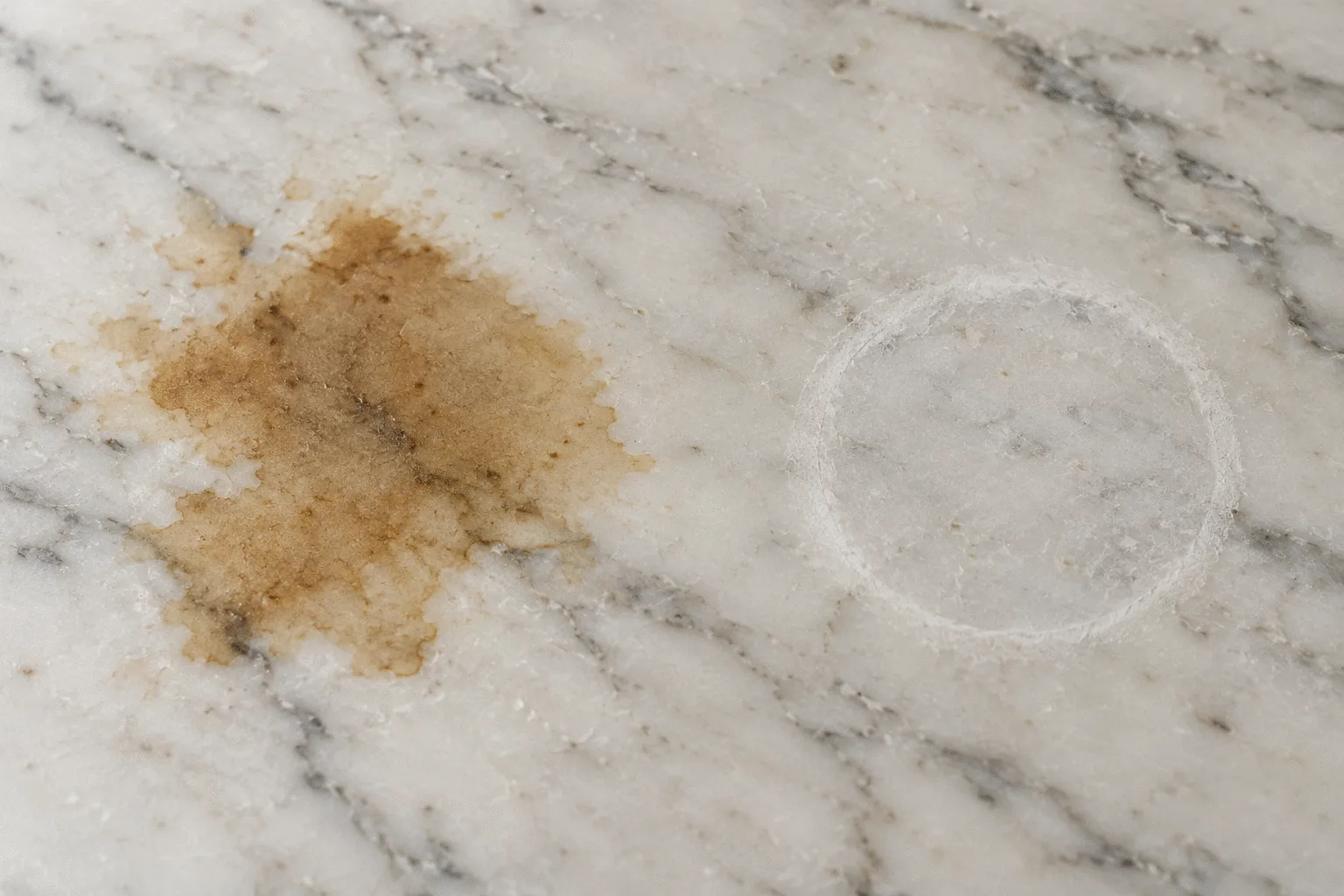
Before you treat a mark, work out whether it’s a stain or an etch, because they need opposite fixes. A stain is something that has soaked into the stone, so it usually looks darker than the marble around it. An etch is the surface itself being eaten away by acid, so it looks dull, pale or slightly rough, like a water mark that won’t wipe off.
| Mark | What it looks like | Likely cause | What to do |
|---|---|---|---|
| Oil or grease | Dark, spreading patch | Cooking oil, sunscreen, body lotion | Apply a poultice of baking soda and water, or a ready-made stone poultice |
| Organic stain | Brown or pinkish patch | Coffee, tea, wine, fallen leaves | Apply a poultice, or a little hydrogen peroxide on light marble only, after testing a hidden spot |
| Water spots | Cloudy rings | Hard water left to dry | Buff with a dry microfibre cloth, and dry the floor after mopping |
| Rust | Orange-brown marks | Metal furniture legs, pot plant bases | Call a stone professional, as most rust removers are acidic |
| Etch mark | Dull, pale patch | Lemon, vinegar, wine, acidic cleaners | Use a marble polishing powder on light etching on polished marble, or have it professionally honed |
A poultice works by drawing the stain back out of the stone. Mix it to a thick paste, spread it over the stain, cover it with plastic wrap taped at the edges, and leave it to dry for a day or two (or as long as the product directs) before removing it and rinsing. Stubborn stains may need a second round.
How Do You Get a Marble Floor to Shine Again?
Most dull marble comes down to one of three things: cleaner residue, etching or general wear, and each has its own fix.
- Cleaner residue: Mop with clean warm water, buff dry, and use less cleaner from then on. This alone often brings the sheen back.
- Etching: Light etch marks on polished marble can be buffed out with a marble polishing powder. Widespread etching needs professional honing and re-polishing.
- Wear in busy walkways: Years of grit slowly wear the surface down along the paths people walk. Restoring an even finish is a job for a stone professional.
Textured finishes such as sandblasted marble aren’t meant to shine, so a soft matte look there is normal rather than a sign of damage. If a polished floor has lost its gloss all over, polishing a marble floor properly is a bigger job, and it usually calls for professional pads and equipment.
How Do You Clean Outdoor Marble Pavers and Pool Areas?
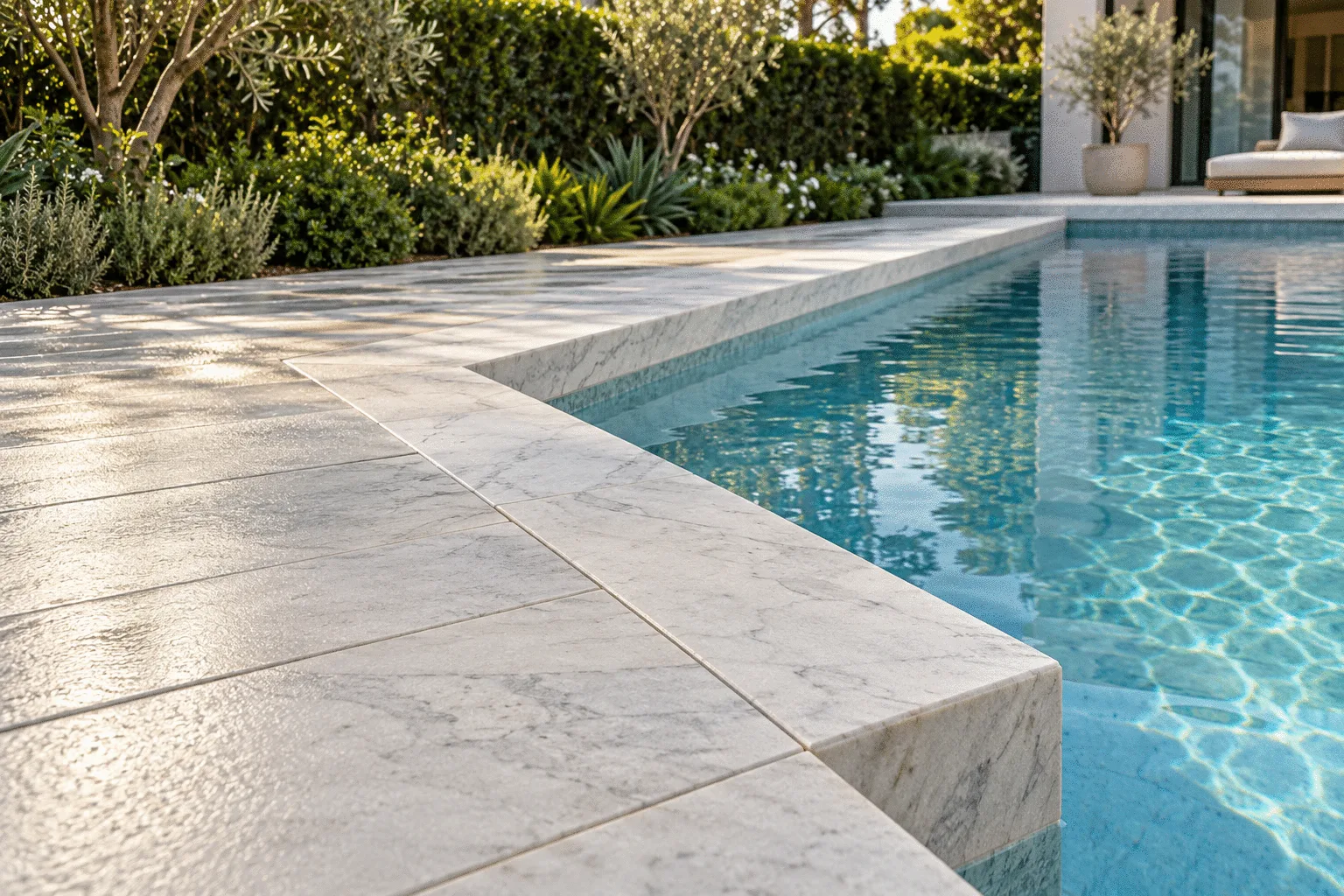
Outdoors, marble needs the same gentle approach, with a little more attention to leaves, grit and pool water.
- Sweep often: Leaves and dirt left sitting can stain, and marks show more on lighter marble such as Olympus or Glacier than on darker stone.
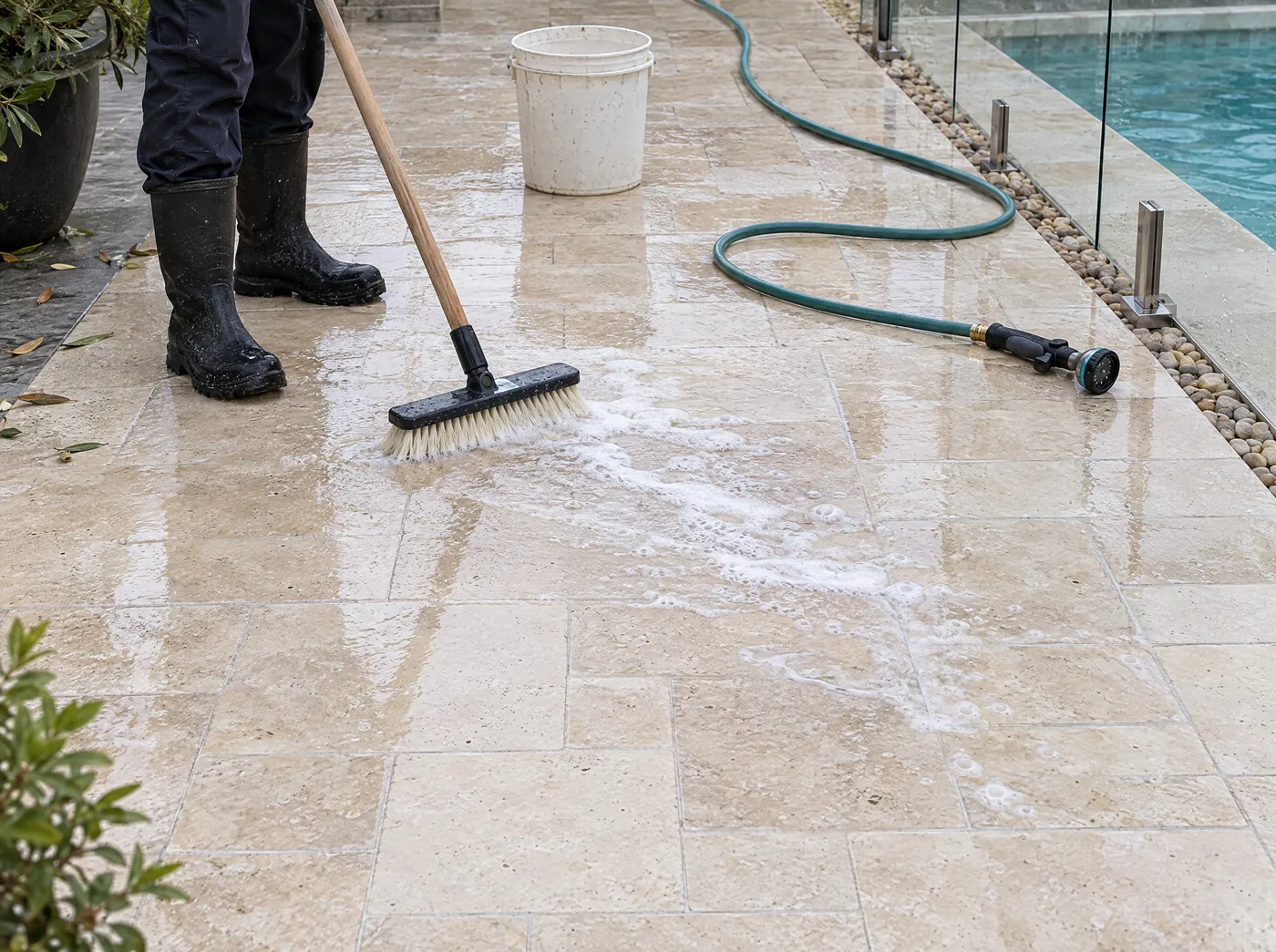
- Wash with a soft broom: Use warm water and a pH-neutral stone cleaner, then rinse well.
- Rinse off salt splash: Salt can be more aggressive on the surface than chlorinated water, so give coping and surrounds near a salt-water pool a fresh-water rinse now and then.
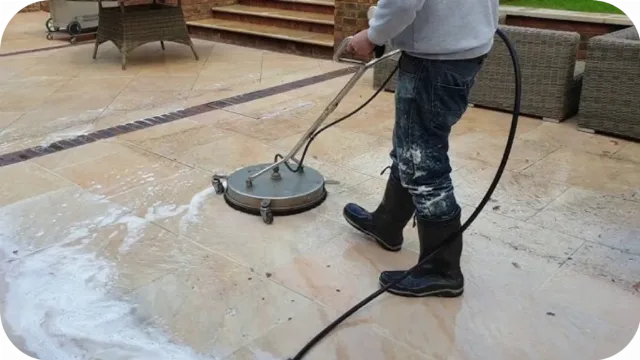
- Go easy with the pressure washer: A high-pressure washer held close to the surface can damage both the sealer and the stone. Use a low setting and keep your distance, if you use one at all.
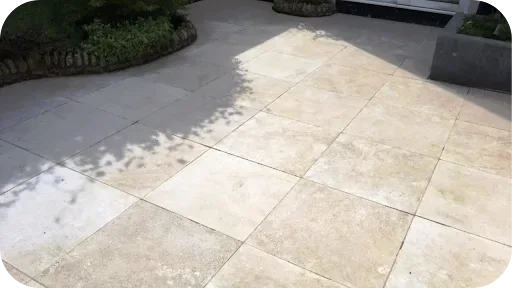
- Watch for white deposits: A white, powdery film is usually efflorescence on stone pavers, salts carried to the surface by moisture, and it needs a gentle clean rather than a harsh one.
None of this is unique to marble. It’s the same gentle routine that suits cleaning natural stone pavers of almost any kind.
Splendour In Stone’s marble pavers, including Torro, Serra, Maya Blue, Ocean Grey, Atmos, Provincial, Luna Grey, Atlantic, Verde, Olympus and Glacier, are all suited to both interior floors and outdoor paving. That means one care routine carries straight through from the living room to the pool deck.
Should You Seal Marble Floors?
Yes. A quality penetrating sealer slows down how quickly spills soak into marble, which gives you time to wipe them up before they stain. A penetrating sealer soaks into the stone rather than sitting on top, so it protects without changing the look of the surface. For outdoor marble pavers, Splendour In Stone recommends resealing every two to three years, with busy areas such as dining zones and pool surrounds at the shorter end of that range.
What a sealer can’t do is stop etching. Acid reacts with the stone itself, so even sealed marble needs acidic spills wiped up quickly. The steps for sealing marble pavers are straightforward, and the best time to do it is after a thorough clean, once the stone is completely dry.
To check whether your sealer is still working, try a simple water test:
- Pick two spots: Choose one in a busy area and one in a quiet corner.
- Add a few drops of water: Leave them for a few minutes.
- Read the result: If the water beads up, the sealer is still doing its job. If it darkens the stone or soaks in, it’s time to reseal.
It’s the same quick check used to judge how porous a stone is before it’s ever sealed.
How Do You Clean the Grout Between Marble Tiles?
Clean grout between marble tiles with a soft brush and the same pH-neutral stone cleaner you use on the floor. Work the cleaner into the joints, then rinse and dry. Steer clear of acidic grout cleaners and bleach-based sprays, as anything strong enough to blast grout clean will also etch the marble on either side of the joint.
When Should You Call a Stone Professional?
Call a professional when the damage goes deeper than everyday cleaning can reach. That usually means:
- Widespread etching or dullness: Restoring an even finish across a whole floor takes professional honing and polishing.
- Deep scratches, chips or cracks: These need filling or repair, not cleaning.
- Rust or stubborn stains: If a poultice hasn’t shifted a stain after a couple of attempts, a specialist has stronger options that are still safe for marble.
- Uneven tiles: Tiles sitting at different heights (known as lippage) need grinding flat by a professional.
Choosing Marble That Suits the Way You Live
If easy upkeep matters to you, the finish and colour of your marble make as much difference as how you clean it. Textured finishes such as sandblasted or flamed and tumbled marble hide wear and minor etching far better than polished stone. Lighter colours show stains more readily, while darker marble is more forgiving of marks but warms up more underfoot in summer sun.
Seeing the stone in your own light is the easiest way to decide, which is why Splendour In Stone sends free stone samples so you can compare finishes and colours at home before you commit.
Frequently Asked Questions
Can you use vinegar on marble floors?
No, vinegar should never be used on marble floors. It is an acid, so it reacts with the calcium carbonate in marble and leaves dull etch marks. Use warm water and a pH-neutral stone cleaner instead.
Can you steam mop marble floors?
It’s best to avoid steam mops on marble. The heat and moisture can break down the sealer over time and push water into the stone. A well-wrung microfibre mop with warm water and a pH-neutral cleaner is the safer choice.
Is a robot mop safe on marble floors?
A robot mop is generally fine on marble if it uses plain water or a stone-safe, pH-neutral solution and soft pads. Avoid cleaning solutions that aren’t labelled safe for natural stone, and check the manufacturer’s guidance for stone floors.
Does baking soda damage marble?
Baking soda can dull marble if you use it as an everyday scrub, because it is mildly abrasive. Mixed with water into a poultice and left to sit on an oil stain, it’s a common and gentle way to draw the stain out, as long as it’s rinsed off well afterwards.
How often should you mop marble floors?
In busy areas, a damp mop once a week with a quick sweep most days is usually enough. Quieter rooms can go longer between mops. Removing grit regularly matters more than mopping often.
Does sealing stop marble from etching?
No, sealing does not stop etching. A sealer slows down how quickly liquids soak in, which helps prevent stains, but acids still react with the surface of the stone. Wiping up acidic spills straight away is the only reliable way to prevent etch marks.