Natural stone pavers bring character, durability and versatility to outdoor spaces. Whether you’re updating a patio, paving a garden path or designing a pool surround, they offer a practical alternative to manufactured paving materials.
Limestone, travertine, bluestone and granite each have distinct colours, textures and performance characteristics. The right choice depends on where the pavers will be installed and how the area will be used.
Here are six benefits of natural stone pavers worth considering, along with the practical factors that can influence your decision.
In this guide
- 1. Durability That Stands Up to Everyday Use
- 2. Natural Colours and Textures That Add Character
- 3. Versatility Across Different Outdoor Spaces
- 4. Long-Term Value Beyond the Initial Cost
- 5. Surface Finishes for Different Outdoor Needs
- 6. Straightforward Maintenance With the Right Stone
- Natural Stone vs Concrete and Porcelain Pavers
- Are Natural Stone Pavers Worth It?
- Frequently Asked Questions
- Choosing Natural Stone Pavers for Your Home
1. Durability That Stands Up to Everyday Use
Natural stone can withstand years of foot traffic, changing weather and everyday outdoor activity when properly selected and installed.
Granite and certain bluestone products are particularly well suited to demanding paving applications, while limestone and travertine are popular for patios, courtyards and pool surrounds.
However, durability depends on more than the material. Paver thickness, foundation preparation, drainage and installation all influence performance.
For example, a driveway requires paving designed for vehicle loads, while a garden path generally has less demanding requirements.
The main advantage: Quality natural stone can provide a long-lasting outdoor surface without frequent replacement, provided the product and installation suit the application.
2. Natural Colours and Textures That Add Character
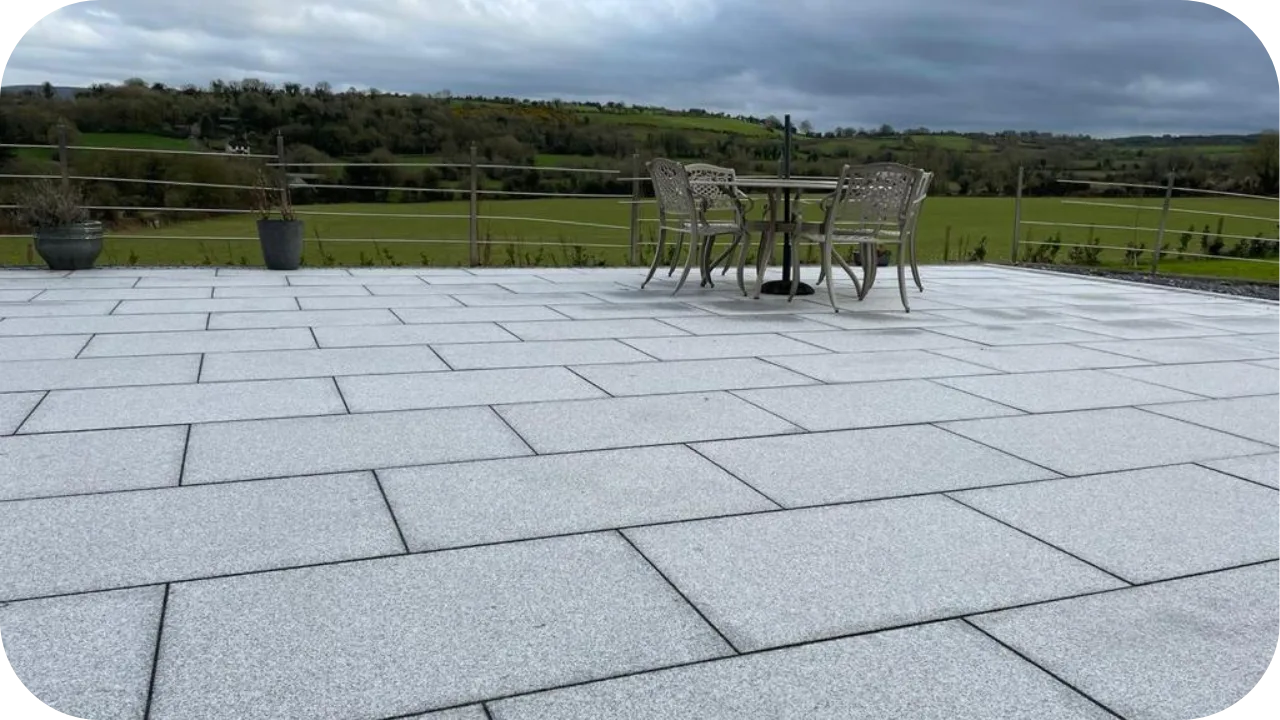
One of the biggest advantages of natural stone paving is its appearance.
Unlike manufactured pavers with repeated patterns, natural stone has individual colour variations, mineral markings and textures formed over time.
That variation gives outdoor spaces a distinctive finish.
Consider how different stones can change the appearance of a home:
- Limestone: Soft cream, beige and grey tones suit contemporary and coastal designs.
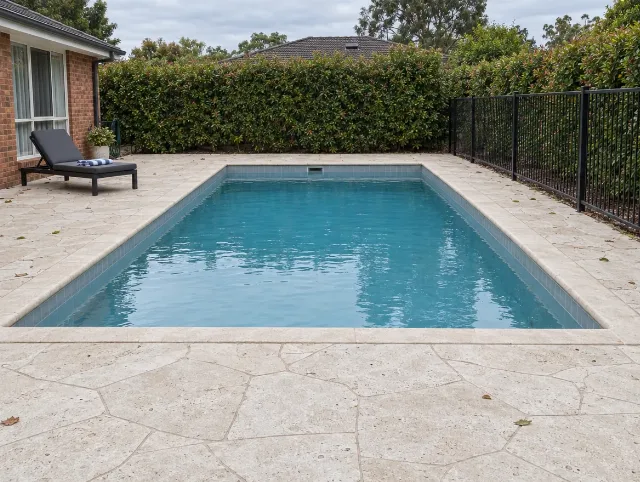
- Travertine: Warm, earthy colours complement Mediterranean-inspired courtyards and pool areas.
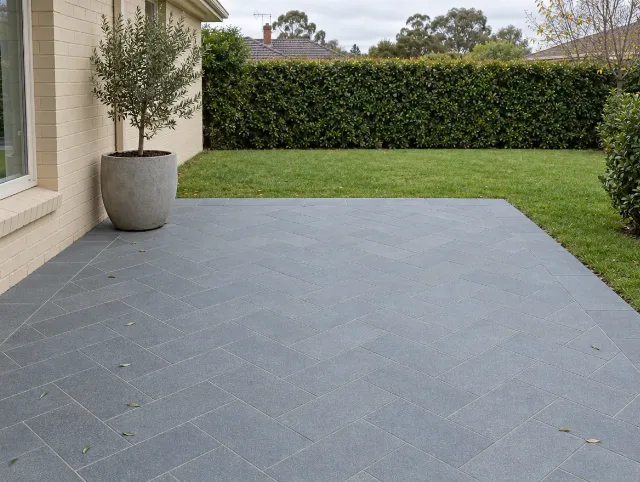
- Bluestone: Deep grey and charcoal tones work well with modern architecture.
- Granite: Natural grain and textured finishes suit structured outdoor spaces.
For instance, limestone pavers can soften the appearance of a courtyard surrounded by rendered walls, while darker bluestone creates contrast against light-coloured exteriors.
The result is a surface with natural variation rather than an identical pattern repeated across every paver.
3. Versatility Across Different Outdoor Spaces
Natural stone isn’t limited to patios. Different materials, sizes and finishes allow it to work across a wide range of residential applications.
Common uses include:
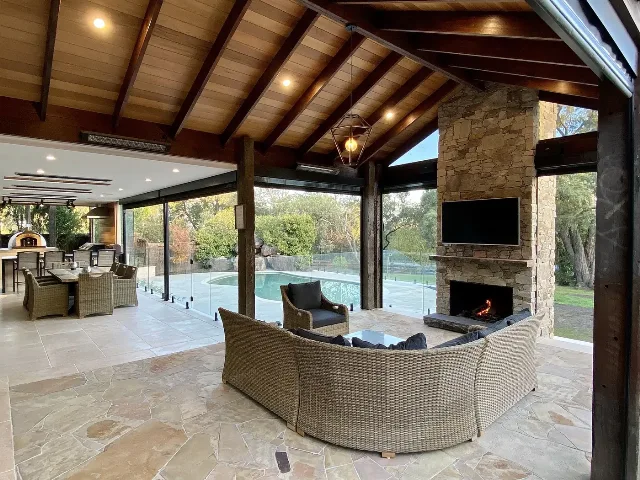
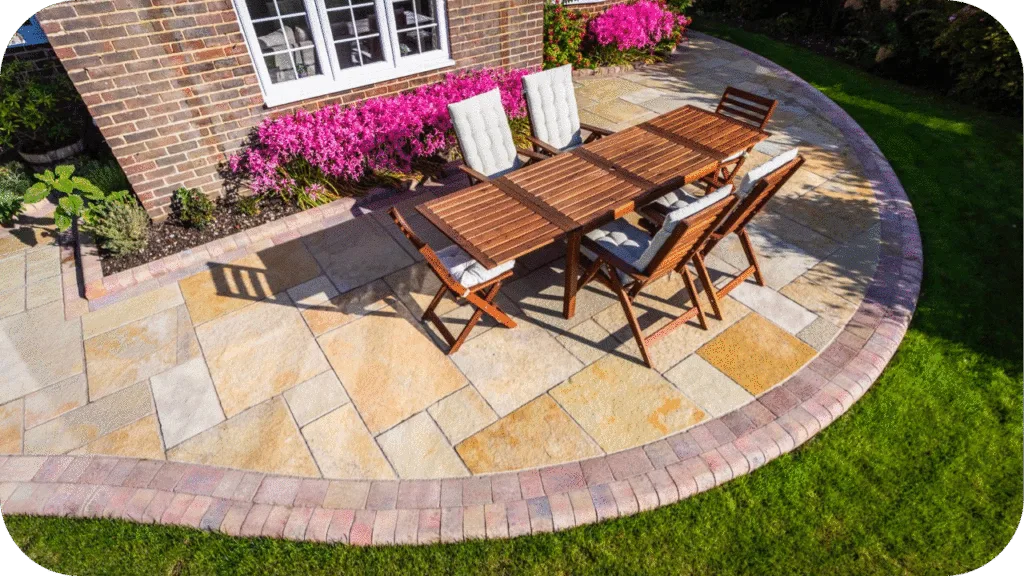
- Patios and courtyards: Create practical outdoor entertaining areas with a finish that complements the home.
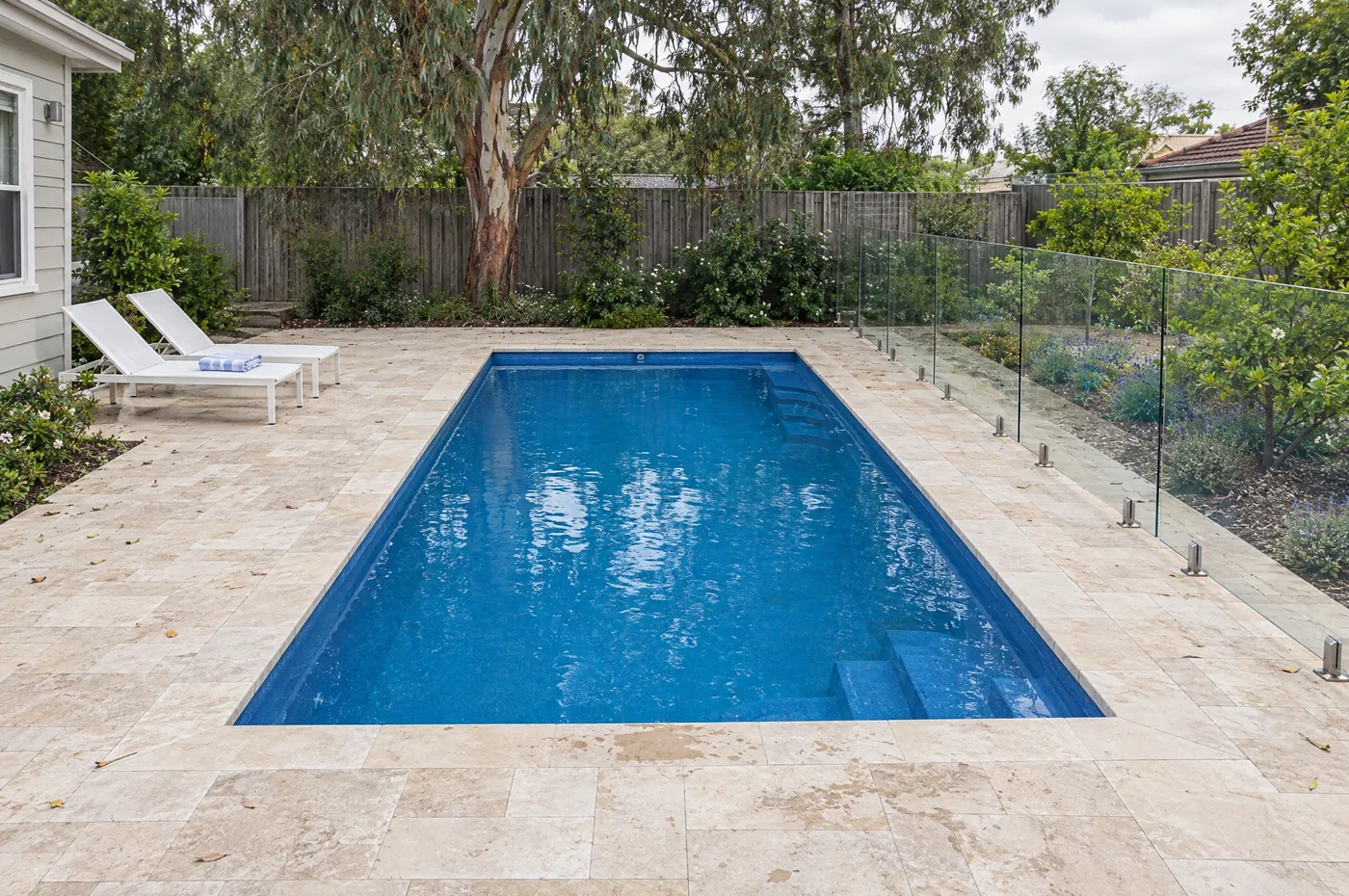
- Pool surrounds: Choose suitable textures and edge profiles for wet areas.
- Garden pathways: Connect landscaping features with natural-looking paving.
- Driveways: Use appropriately rated stone and thickness for vehicle traffic.
- Outdoor steps: Coordinate paving with matching treads or coping pieces.
A major benefit is the ability to carry a consistent stone colour or design through several outdoor areas.
For example, a patio can use the same stone family as adjoining paths and pool surrounds, provided each product is suitable for its location.
Many natural stone ranges also include matching bullnose or drop-edge pieces, helping create a coordinated finish around steps and pool edges.
4. Long-Term Value Beyond the Initial Cost
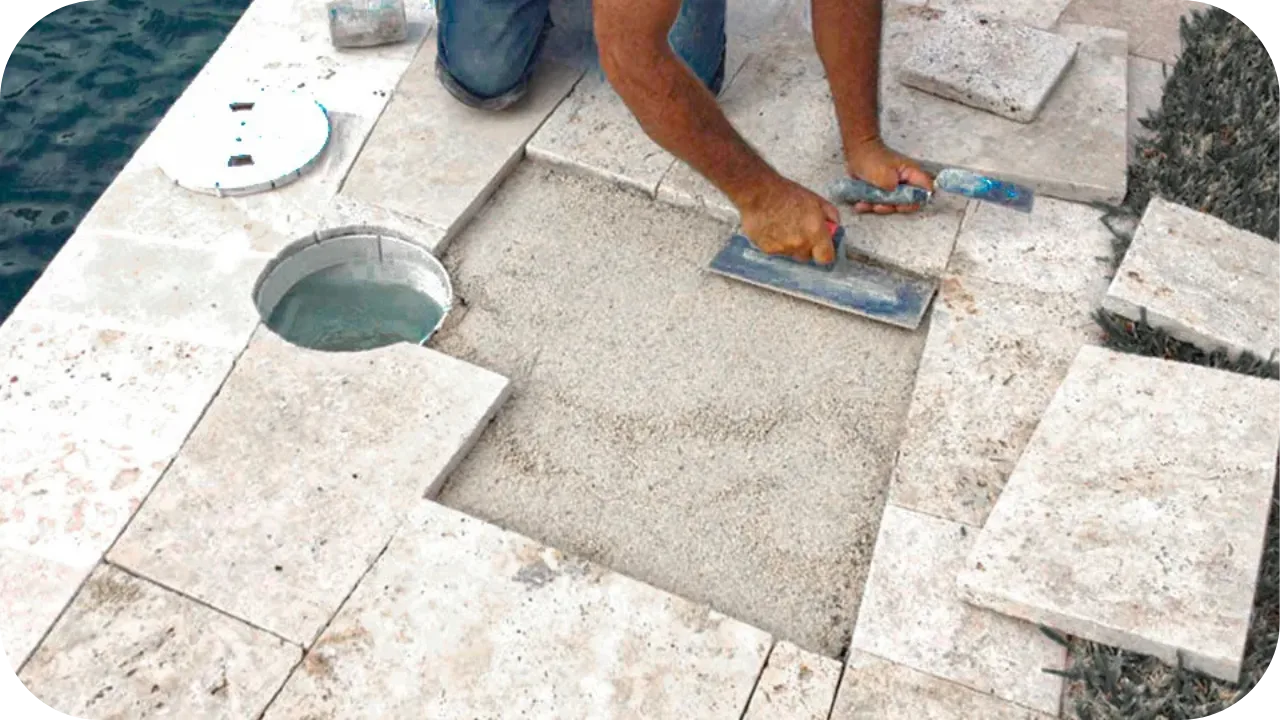
Natural stone often costs more upfront than basic concrete paving, but the initial purchase price doesn’t tell the whole story.
A properly installed stone surface can remain functional for decades. Its durability, appearance and potential for individual repairs are worth considering alongside the original material and installation costs.
Natural stone may also improve the visual appeal of entrances, gardens and outdoor entertaining areas.
That doesn’t guarantee an increase in property value, but attractive, well-maintained outdoor spaces can contribute to a home’s overall presentation.
What to compare: Look at the full installed cost, expected service life, maintenance requirements and likely repair needs rather than price per square metre alone.
5. Surface Finishes for Different Outdoor Needs
Natural stone comes in a range of surface finishes, allowing homeowners to balance appearance with practical requirements.
This is particularly important around pools, outdoor steps and frequently used pathways.
A polished surface may become slippery when wet, while appropriately textured finishes can provide better traction.
For example, bluestone pavers are available in finishes such as honed, sawn and flamed, each offering a different texture.
Colour also matters in sunny areas. Darker surfaces generally absorb more heat, while lighter stone can be more comfortable underfoot, although no paving material is guaranteed to stay cool during extreme summer temperatures.
The practical benefit: You can select a stone and finish suited to the location instead of using the same surface treatment everywhere.
Always check the product’s documented slip-resistance classification for the intended application.
6. Straightforward Maintenance With the Right Stone
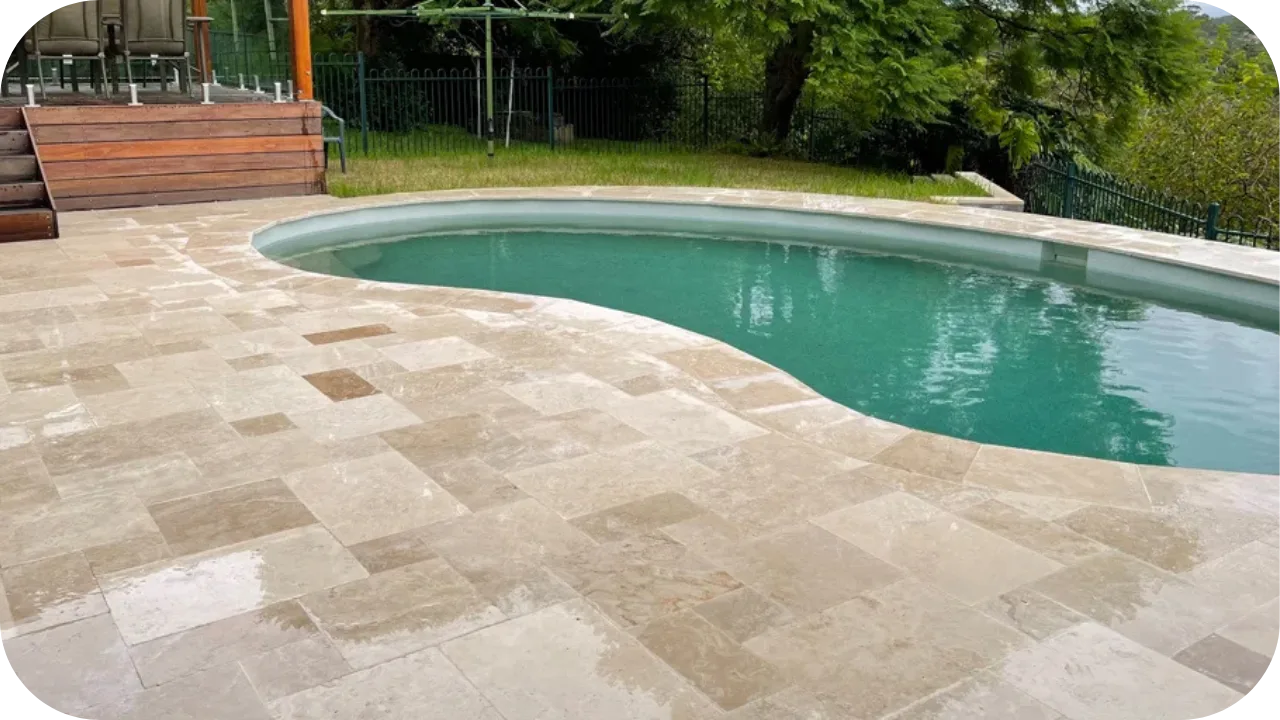
Natural stone paving doesn’t need complicated upkeep, but different materials require different care.
Regular sweeping removes dirt and debris, while occasional washing with a suitable pH-neutral cleaner helps maintain the surface.
Porous stones may also benefit from sealing to reduce moisture absorption and staining.
For everyday maintenance:
- Sweep away leaves, dirt and loose grit.
- Remove food, oil and other spills promptly.
- Use cleaning products suitable for the stone.
- Check joints and drainage periodically.
- Follow the supplier’s sealing recommendations.
Avoid acidic cleaners on limestone, travertine and marble, as they can damage the surface.
For more detail, cleaning natural stone pavers correctly helps prevent avoidable staining, etching and surface damage.
The benefit is that routine care is generally manageable when you understand your particular stone.
Natural Stone vs Concrete and Porcelain Pavers
Natural stone isn’t automatically the best option for every project. Concrete and porcelain also offer practical advantages, depending on your priorities.
| Feature | Natural stone | Concrete pavers | Porcelain pavers |
|---|---|---|---|
| Appearance | Unique natural variation | Consistent or textured finishes | Highly consistent designs |
| Durability | Varies by stone and installation | Varies by product and installation | Hard-wearing when correctly specified |
| Maintenance | Some stones need sealing | May require sealing and cleaning | Generally low water absorption |
| Cost | Often higher upfront | Usually more budget-friendly | Varies by quality and format |
| Main appeal | Authentic natural character | Affordability and versatility | Consistency and ease of cleaning |
If natural colour variation and authentic texture are important to you, stone may be worth the additional investment.
If consistent patterns, low absorption or a tighter upfront budget matter more, porcelain or concrete may be a better fit.
Are Natural Stone Pavers Worth It?
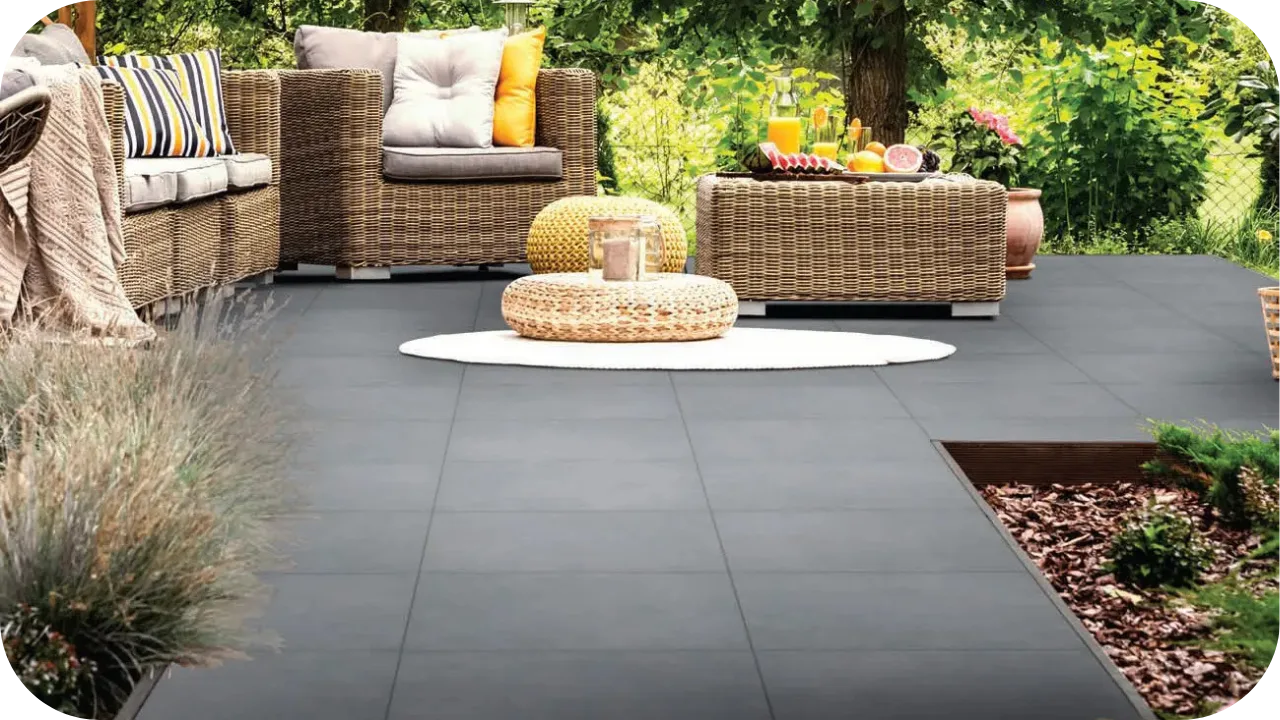
For many Australian homeowners, natural stone pavers are worth considering because they combine durability, design flexibility and distinctive natural textures.
They’re particularly appealing for patios, pool surrounds, garden pathways and entrances where appearance and long-term performance matter.
However, the benefits depend on choosing the correct material.
A porous stone in a heavily exposed area may need more maintenance than expected. Likewise, using paving that isn’t designed for vehicle traffic can create problems regardless of how attractive it looks.
Natural stone offers the best value when its appearance, physical properties and maintenance requirements match the intended space.
Frequently Asked Questions
Do natural stone pavers last longer than concrete pavers?
Natural stone can last for decades, but it doesn’t automatically outlast every concrete product. Longevity depends on material quality, thickness, installation, traffic and maintenance.
Do natural stone pavers need sealing?
Some porous stones benefit from sealing to reduce moisture absorption and staining. Sealing requirements depend on the material, finish and location. Follow the supplier’s recommendations rather than assuming every stone needs the same treatment.
Are natural stone pavers suitable for pool surrounds?
Yes. Limestone, travertine, bluestone and granite can be used around pools when the specific product and finish are suitable. Slip resistance, surface temperature, drainage and pool chemical exposure should all be considered.
Choosing Natural Stone Pavers for Your Home
The benefits of natural stone paving are easiest to appreciate when the material suits the space.
A well-chosen stone can bring lasting character to a courtyard, create a practical garden pathway or complement a contemporary pool area.
At Splendour in Stone, you’ll find natural stone paving options in limestone, travertine, bluestone, granite and other materials for Australian outdoor spaces.
Compare colours, finishes and sizes, and request samples before choosing the right paving for your project.