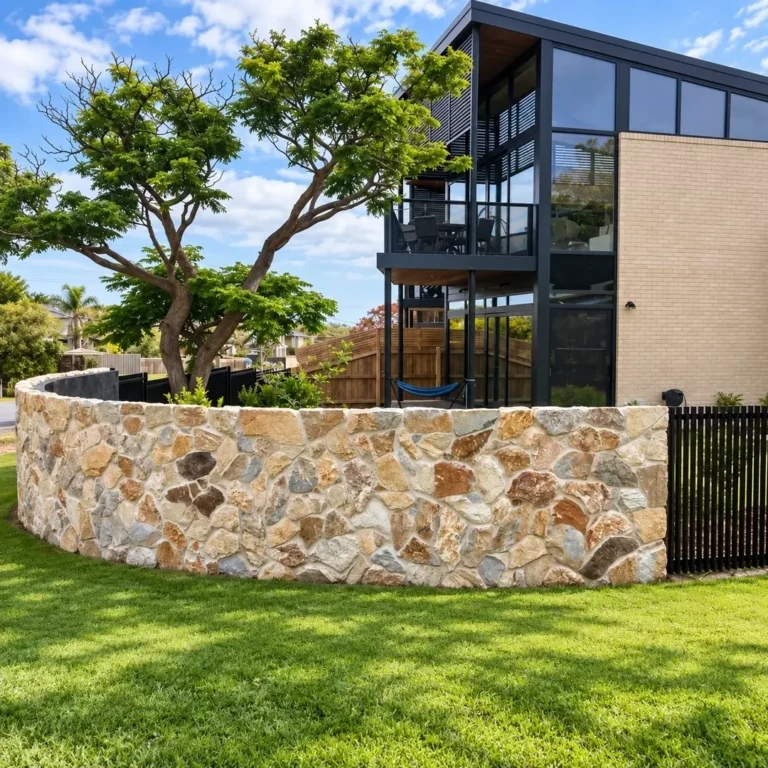
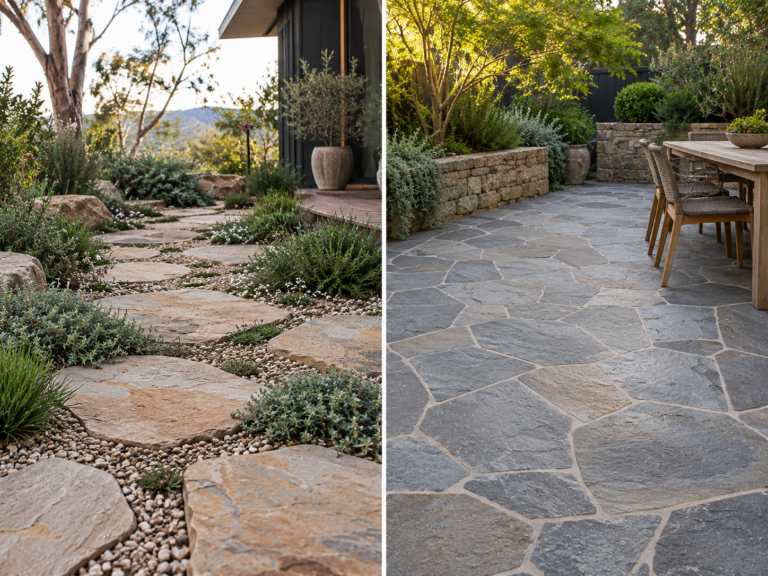
Granite flooring’s case starts with hardness: it is one of the most durable natural floor materials available, resisting scratches, chips, moisture, and heat, and lasting 50 years and more with basic care.
Its trade-offs are just as concrete: it is hard and cool underfoot, polished finishes get slippery when wet, and it needs the right substrate and periodic sealing.
This guide covers both sides honestly: the seven benefits that hold up, the drawbacks to plan around, and the rooms where granite floors earn their keep.
Is Granite a Good Flooring Choice?
Yes, provided the finish matches the room. Granite is an igneous stone packed with quartz and feldspar, which is what makes it so hard; the geology is covered in what is granite. As flooring, it suits high-traffic zones, kitchens, entries, and wet areas, and it is one of the few floor materials that runs indoors and outdoors in the same stone.
7 Benefits of Granite Flooring
1. Durability that outlasts the fit-out
Granite shrugs off foot traffic, furniture, claws and dropped objects that scratch or dent timber and vinyl. In entries, hallways and busy kitchens it simply does not wear out on a renovation timescale; it sits alongside the toughest options in our guide to stones for high-traffic spaces.
2. No two floors look the same
The speckle and veining in granite run through the stone, so the floor has a depth printed surfaces imitate but never match. Colour options span whites and greys through charcoals, reds and greens, and the finish changes the character again: the options are compared in types of finishes for stone surfaces.
3. Easy to live with day to day
Routine care is a sweep and a damp mop with a pH-neutral cleaner: no waxing, polishing cycles or specialty products. Granite’s very low porosity means spills sit on the surface rather than soaking in, and a penetrating sealer closes off the little absorbency the stone has.
4. Heat and fire don’t bother it
Granite is non-combustible and unaffected by the temperatures a home produces, which is why it is the traditional choice around fireplaces and hearths. In kitchens, a hot pot set down in the wrong place scorches timber and melts vinyl; granite ignores it.
5. Comfortable in an Australian summer
Stone’s thermal mass keeps floors noticeably cool through hot weather, a genuine comfort advantage in most of the country. In winter, the same property works in reverse with hydronic heating underneath: granite conducts and holds warmth evenly, covered in the pros and cons of underfloor heating with natural stone.
6. A healthier hard surface
Hard, smooth flooring gives dust mites, dander, and pollen nowhere to live, and granite releases no VOCs. For households with allergies or with animals whose claws ruin softer floors, it is one of the most practical surfaces going; see the best pet-friendly stone flooring options.
7. The lifecycle cost works in your favour
Granite costs more on day one than carpet, vinyl, or laminate, then refuses to participate in their replacement cycles. Over a few decades, the floor that never needed replacing is usually the cheaper one, and quality stone reads as a premium feature when the property sells.
The Drawbacks of Granite Flooring
Every one of these is manageable, but all of them belong in the decision.
- It is hard and unforgiving. Dropped glasses rarely survive, and long periods standing on stone are tiring; kitchens and living zones usually want mats or rugs in standing and sitting areas.
- It is cold in winter without heating. The thermal mass that cools summer cuts the other way on July mornings. Underfloor heating solves it completely, at a cost.
- Polished granite is slippery when wet. Specify honed, flamed, or textured finishes for bathrooms, laundries, and any floor that sees water; the options are covered in the best non-slip tiles for wet areas.
- It needs a rigid substrate. Stone tiles want a structurally sound, low-deflection base, which can mean subfloor work in older homes and makes installation a skilled trade rather than a weekend job.
- Sealing and grout are the upkeep. A penetrating sealer every few years (denser granites need it less) and grout-line care keep the floor at its best; joint sizing, colours, and sealers are covered in the grout guide for stone and porcelain tiles.
Where Does Granite Flooring Work Best?
- Kitchens. Honed granite handles heat, traffic, and spills in the hardest-working room of the house.
- Entries and hallways. Grit, wet shoes, and constant traffic are exactly what granite is for.
- Bathrooms and laundries. Use textured or honed finishes with a wet-area slip rating, never polished.
- Living areas. Granite plus underfloor heating and rugs gives durability without the hard-floor downsides.
- Indoor-outdoor flow. The same granite, honed inside and flamed outside, carries one surface from the living room to the alfresco; ideas are in granite outdoor ideas.
Granite vs Other Flooring Options
Against marble, granite is the harder, lower-maintenance stone: it resists scratching and acid etching that marble is sensitive to, while marble wins on classic veining. The kitchen-focused comparison is between granite vs marble.
Against bluestone, the other Australian high-traffic favourite, the choice is mostly aesthetic and contextual: granite’s speckle and colour range against bluestone’s uniform blue-grey. The decision points are in how to choose between bluestone and granite.
See Granite at Full Scale
Granite’s pattern only makes sense in large pieces, not swatches. Granites in the range, such as Hotham and Buffalo, show how different the stone can look, and a consultation is the fastest way to match one to your project.
FAQs
1. Does granite flooring need sealing?
Yes, periodically. Granite’s porosity is low but not zero, so a penetrating sealer is applied at installation and renewed every few years, depending on the stone’s density and the room’s traffic. A simple test: if water stops beading on the surface, it is time.
2. Is granite flooring slippery?
It depends entirely on the finish. Polished granite is slippery when wet and belongs in dry zones; honed, flamed, and textured finishes grip well and are the correct specification for bathrooms, laundries, and outdoor areas.
3. Is granite flooring cold?
Granite tracks the room’s temperature: pleasantly cool in summer, cold on winter mornings in unheated rooms. It pairs unusually well with hydronic underfloor heating, which turns the drawback into an asset.
4. What should I check before buying granite flooring?
Confirm the finish suits the room, see full-size pieces rather than small samples (granite’s pattern reads differently at scale), ask how the batch is graded for consistency, and confirm sealing requirements upfront. The common traps are covered in mistakes to avoid when buying granite.