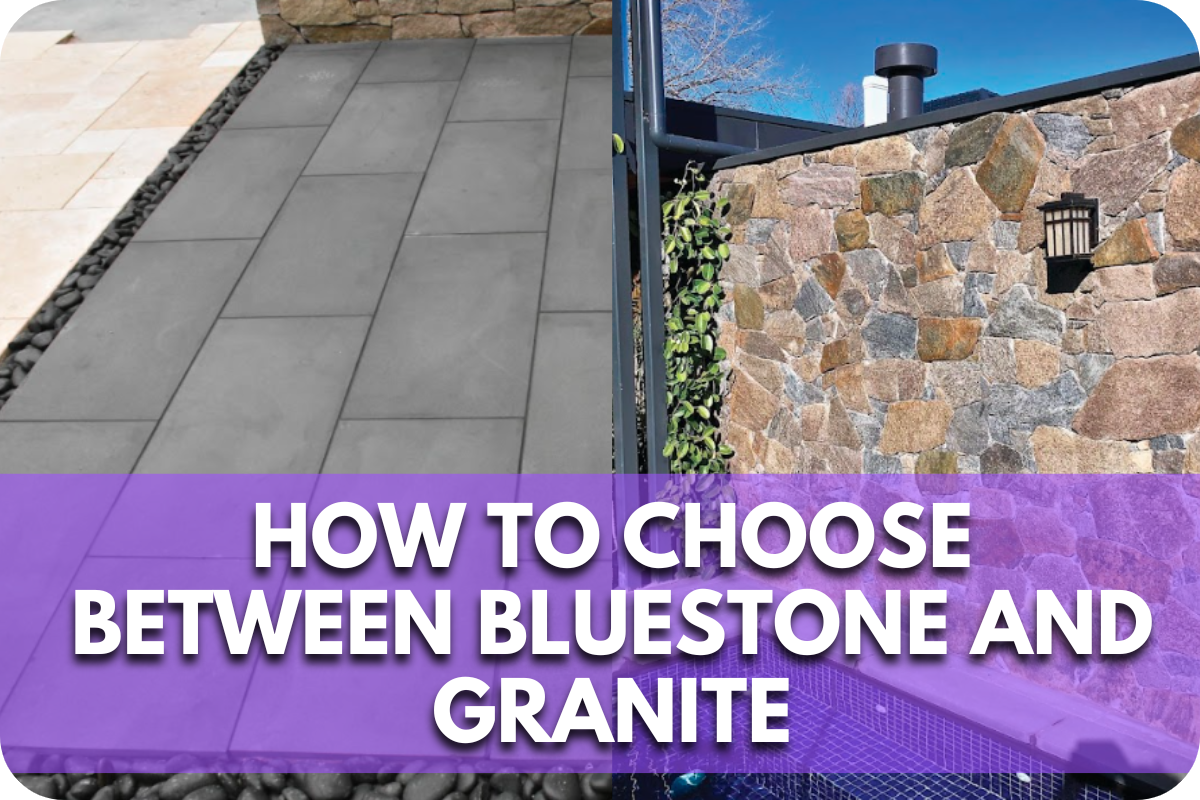
Bluestone and granite are both popular choices for outdoor paving, paths, courtyards and driveways. They can both create a premium result, but they do not suit every project in the same way. The right choice depends on where the stone will be used, how much traffic it needs to handle, the finish you prefer, and the overall look you want for your outdoor space.
Should You Choose Bluestone or Granite?
Choose granite if you need a dense, hard-wearing stone for driveways, high-use paving, commercial areas or outdoor zones that need strong long-term durability. Choose bluestone if you want a refined blue-grey paving stone for courtyards, paths, alfresco areas, garden zones and architectural outdoor spaces. Both can work well, but the best choice depends on traffic, finish, colour, maintenance and the project setting.
- Choose granite for: Driveways, high-traffic paving, commercial entries and heavy-use outdoor areas.
- Choose bluestone for: Courtyards, paths, alfresco areas, garden paving and architectural landscapes.
- Best for strength: Granite.
- Best for blue-grey character: Bluestone.
- Best for modern outdoor paving: Both, depending on the finish and design.
- Best overall choice: The stone that matches the use, finish and maintenance expectations.
Bluestone vs Granite at a Glance
| Factor | Bluestone | Granite | Best Choice |
| Appearance | Blue-grey, refined and architectural | Speckled, mineral-rich and strong | Depends on design |
| Durability | Durable for many outdoor areas | Very dense and hard-wearing | Granite |
| Driveway suitability | Product and thickness dependent | Strong choice for driveways | Granite |
| Patio suitability | Excellent for courtyards and alfresco areas | Excellent for durable outdoor paving | Both |
| Pool surround suitability | Depends on finish and heat comfort | Depends on finish and heat comfort | Depends on product |
| Maintenance | Manageable with correct care | Often easier for heavy-use areas | Granite |
| Heat feel | Dark tones can feel warm | Dark tones can feel warm | Depends on colour |
| Colour variation | Blue-grey tones with natural variation | Grey, charcoal and mixed mineral tones | Depends on preference |
| Modern design fit | Strong architectural appeal | Strong contemporary appeal | Both |
| Long-term value | Strong for design-led paving | Strong for heavy-use performance | Depends on use |
What Is Bluestone?
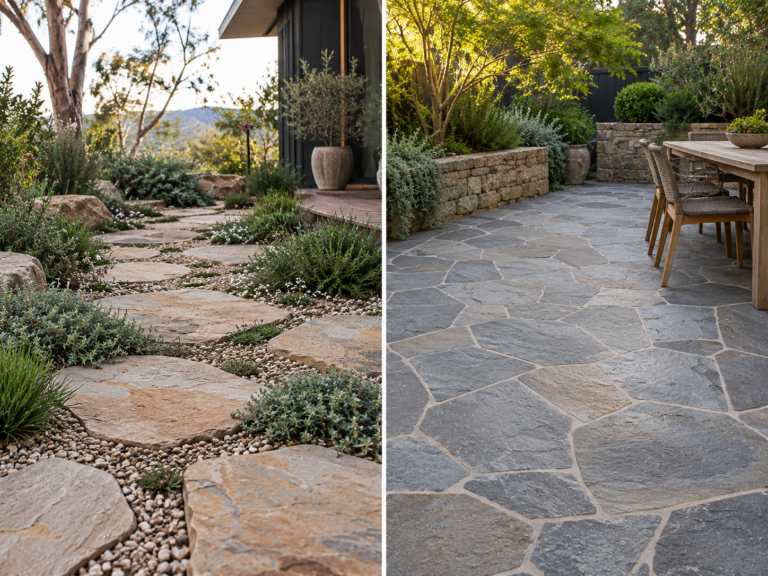
Bluestone is a natural stone valued for its blue-grey colour range and architectural appearance. It is commonly used in outdoor paving, landscaping, courtyards, paths and garden zones where the colour and finish are part of the design story.
Many homeowners choose bluestone because it works well with contemporary homes, classic facades, brick, timber, steel and rendered finishes. It can feel refined without looking too formal, making it a strong option for outdoor areas that need both structure and visual softness.
In Australian homes, bluestone is often selected for areas where the paving needs to feel calm, structured and architectural. This is one reason bluestone pavers are commonly used across courtyards, paths and outdoor living zones.
Best Uses for Bluestone
Bluestone is often used for:
- Courtyards
- Garden paths
- Alfresco areas
- Entry paving
- Steps
- Outdoor entertaining zones
- Feature paving
- Cobblestone-style applications
Smaller-format stone can also add texture and rhythm to outdoor designs. In garden paths, entries and feature paving, Bluestone Cobble can bring more visual detail than large-format pavers.
What Is Granite?
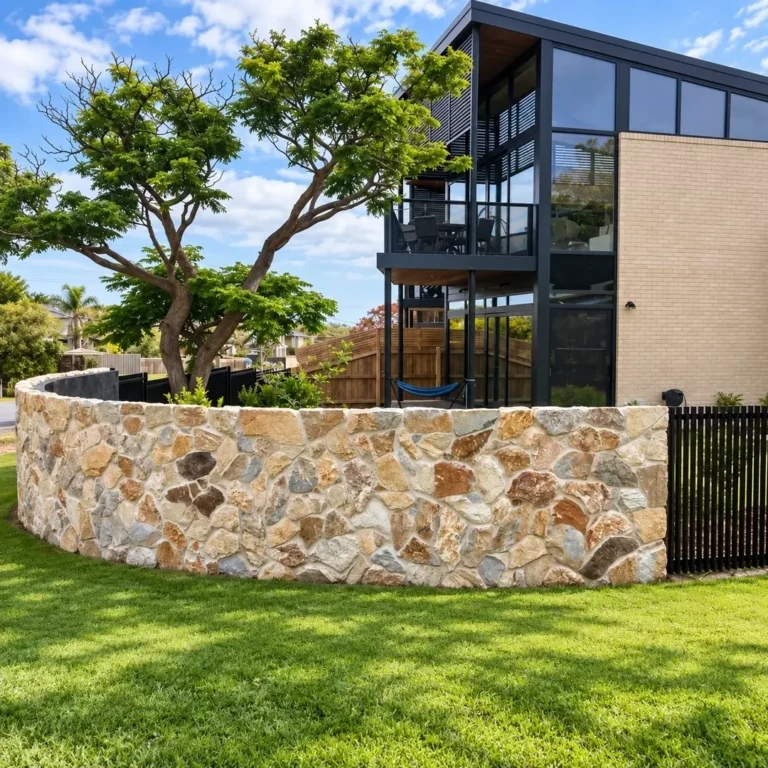
Granite is a dense natural stone known for strength and hard-wearing performance. It often has a speckled mineral appearance, with grey, charcoal and darker tones commonly used in outdoor paving and architectural landscapes.
Granite is often selected for heavy-use areas because it can handle frequent traffic when specified and installed correctly. It is especially useful for driveways, entries, commercial paving, paths and outdoor zones where long-term performance is a priority.
For outdoor spaces that need a dense surface with strong visual weight, granite pavers are often considered alongside bluestone, quartzite and other natural stone options.
Best Uses for Granite
Granite is commonly used for:
- Driveways
- Commercial entries
- High-traffic paths
- Courtyards
- Patio paving
- Stepping areas
- Outdoor entertaining zones
- Architectural paving projects
For darker exterior palettes, Charcoal Granite can create a bold, grounded surface, while Grey Granite suits projects that need a more neutral mineral finish.
Appearance: Blue-Grey Character vs Speckled Strength
Appearance is one of the biggest differences between bluestone and granite. Both can look premium, but they create different design effects.
Bluestone Appearance
Bluestone often gives a smooth, architectural blue-grey look. It works well with rendered homes, timber screens, steel framing, brickwork and minimalist landscapes. Its colour can feel calm and structured, which is why it is often used in courtyards, paths and refined outdoor rooms.
Bluestone is also useful when you want paving to feel connected to the architecture rather than highly decorative.
Granite Appearance
Granite usually has a more mineral-rich and speckled appearance. Charcoal and grey granite can suit contemporary homes, strong driveway designs and exterior schemes that need a durable, grounded finish.
Granite can look especially effective when paired with dark cladding, metal details, concrete, timber or bold landscaping.
Best Choice for Appearance
- For a soft blue-grey look: Bluestone.
- For a stronger speckled texture: Granite.
- For minimalist paving: Either, depending on the finish.
- For a bold driveway: Granite.
- For a refined courtyard: Bluestone.
Durability: Which Stone Handles Heavy Use Better?
Both bluestone and granite can be durable when the right product, finish, thickness and installation method are chosen. However, granite is usually the stronger option for heavy-use areas.
Driveways, commercial entries and high-traffic paving need stone that can manage frequent load and movement. Granite is often preferred in these settings because of its density and hard-wearing structure.
Bluestone can still perform well in pedestrian zones, courtyards, alfresco areas, garden paths and outdoor entertaining spaces. The key is to choose the correct product for the application.
Thickness, base preparation and installation matter just as much as the stone itself. Poor installation can cause movement, cracking or unevenness, even when the material is strong.
Best Choice for Durability
Granite is usually the better choice for heavy-use areas, driveways and commercial paving. Bluestone remains a strong option for paths, courtyards, alfresco spaces and pedestrian areas when the right product and finish are selected.
Bluestone vs Granite for Driveways
Driveways need careful stone selection. The surface must handle vehicle loads, turning pressure, weather exposure and regular use. This is where granite often becomes the safer choice.
Granite is dense, strong and well suited to heavy-use paving when installed correctly. It can be a smart option for modern driveways, commercial entries and front-of-home areas where durability matters as much as appearance.
Bluestone may suit some driveway applications, but only when the product, thickness and installation system are appropriate. The base must be prepared correctly, drainage needs to be planned, and the jointing method must suit vehicle traffic.
When the project needs to handle cars, turning movement or frequent access, the same thinking used for heavy-duty pavers should guide the specification.
Best Choice for Driveways
Granite is usually the safer choice for driveways because it is dense, strong and well suited to heavy-use paving when installed correctly.
Bluestone vs Granite for Patios, Courtyards and Alfresco Areas
Patios, courtyards and alfresco areas are more flexible than driveways because they usually handle pedestrian traffic rather than vehicle loads. This means both bluestone and granite can work well.
When Bluestone Works Best
Bluestone is a strong choice when:
- You want a clean blue-grey palette.
- The area is mainly pedestrian.
- The design is architectural or minimalist.
- The stone needs to pair with brick, render or timber.
- The project is a courtyard, path or alfresco space.
Bluestone works particularly well when the outdoor area is designed as an extension of the home.
When Granite Works Best
Granite is a strong choice when:
- The space gets frequent use.
- You want a darker or stronger stone presence.
- The area connects to a driveway or entry.
- You want a very durable paving option.
- The project needs a hard-wearing surface.
In patios and alfresco areas, the best result usually comes from matching the stone to the space rather than choosing by material name alone. A broader stone paving approach helps you compare surface texture, scale, colour and long-term care together.
Bluestone vs Granite Around Pools
Pool surrounds need more than a good-looking stone. The finish, texture, sealing advice and heat comfort all matter. A textured surface can support confident footing, while the right colour and finish can improve comfort in barefoot areas.
Bluestone can create a beautiful blue-grey pool surround, especially in architectural gardens and contemporary landscapes. Granite can also work well, particularly where a stronger or more mineral-rich surface is preferred.
Pool chemicals, water exposure, drainage and sealing should all be considered before choosing either stone. Your supplier should confirm whether the specific product is suitable for the pool setting.
Around pools, the stone needs to work with coping, paving, water exposure and barefoot use. That is why pool coping and paving should be considered together instead of treating the pool edge and surrounding surface as separate decisions.
Best Choice for Pool Surrounds
Either bluestone or granite may work around pools if the product, finish and installation method are suitable. The best option depends on surface texture, heat comfort, sealing requirements and the pool design.
Maintenance: Which Stone Is Easier to Look After?
| Maintenance Factor | Bluestone | Granite | Practical Note |
| Sweeping | Simple routine care | Simple routine care | Remove grit and debris regularly |
| Washing | Use mild, pH-neutral products | Use mild, pH-neutral products | Avoid harsh chemicals |
| Sealing | Often recommended | Often recommended | Ask for product-specific advice |
| Stain resistance | Depends on finish and sealing | Often more forgiving | Clean spills quickly |
| Algae or moisture marks | Can occur in damp areas | Can occur in damp areas | Good drainage helps |
| Outdoor grime | Needs routine cleaning | Needs routine cleaning | Frequency depends on exposure |
| Acidic cleaners | Avoid | Avoid | Use stone-safe cleaners |
| Long-term care | Manageable with routine upkeep | Generally practical for high-use areas | Maintenance depends on setting |
Neither stone should be ignored after installation. Outdoor stone needs sweeping, washing, occasional inspection and the right cleaning products. pH-neutral cleaners are safest, while harsh acidic products should be avoided.
Drainage also matters. Areas that stay damp for long periods can develop marks, grime or algae more quickly. Good stone maintenance and care starts with simple habits: keep debris off the surface, clean spills early and avoid products that can damage natural stone.
Heat, Colour and Outdoor Comfort
Darker stones can feel warmer in direct sun. This applies to both dark bluestone and dark granite, so the decision should not be based on stone type alone.
Colour, finish, surface texture and the surrounding materials can all affect outdoor comfort. A dark stone beside pale render, planting and shaded areas may feel different from the same stone in a fully exposed courtyard.
If the area will be used barefoot, such as around a pool or alfresco space, test samples in natural light and direct sun before committing.
Best Choice for Hot Outdoor Areas
The best choice depends on colour and finish, not just stone type. Dark bluestone and dark granite can both feel warmer in full sun, so samples should be tested in the project setting.
Cost and Value: Is Bluestone or Granite More Cost-Effective?
The cost of bluestone and granite depends on the specific product and project. It is better to compare total project cost rather than only material cost, because installation, base preparation and waste allowance can significantly affect the final budget.
Cost can vary based on:
- Stone type
- Finish
- Thickness
- Size
- Quantity
- Availability
- Freight
- Installation complexity
- Base preparation
- Waste allowance
Best Value Choice
Granite can offer strong value where durability and heavy-use performance matter most. Bluestone can offer strong value where the design needs a refined blue-grey paving finish without the project needing a heavier-duty stone.
Bluestone vs Granite by Project Type
| Project Type | Better Choice | Why |
| Driveway | Granite | Better suited to heavy-use paving |
| Front path | Either | Depends on design and finish |
| Garden path | Bluestone | Strong blue-grey character for landscapes |
| Courtyard | Either | Both can suit refined outdoor rooms |
| Patio | Either | Choose based on colour, texture and use |
| Pool surround | Depends on finish | Texture, heat comfort and sealing matter |
| Alfresco area | Either | Match the stone to the home and traffic |
| Commercial entry | Granite | Stronger heavy-use performance |
| Outdoor steps | Either | Product and finish dependent |
| Feature paving | Bluestone | Strong architectural appeal |
| Modern home exterior | Either | Both can suit modern designs |
| Traditional home exterior | Bluestone or granite | Depends on colour and surrounding materials |
Which Stone Suits Your Home Style?
Choose Bluestone If Your Home Style Is
Bluestone suits homes where the paving should feel refined, calm and architectural.
Choose bluestone if your home style is:
- Contemporary
- Minimalist
- Heritage-inspired
- Garden-focused
- Soft grey or blue-grey
- Brick and stone mixed material
- Courtyard-led
Bluestone can soften outdoor spaces while still keeping the design structured.
Choose Granite If Your Home Style Is
Granite suits homes where the paving needs a stronger, more hard-wearing presence.
Choose granite if your home style is:
- Modern architectural
- High-contrast
- Dark exterior palette
- Strong driveway-led frontage
- Commercial-inspired
- Minimalist with bold detail
- Durable family outdoor space
Granite is especially useful where the stone needs to look strong and perform under regular use.
Common Mistakes When Choosing Between Bluestone and Granite
- Choosing only by colour: Appearance matters, but the stone must suit the application.
- Ignoring the project use: A driveway and a garden path have different needs.
- Using pedestrian pavers in vehicle areas: Driveways need the right specification.
- Not checking thickness: Paver thickness affects performance.
- Forgetting heat comfort in sunny areas: Dark stones can feel warmer in full sun.
- Choosing a smooth finish for wet outdoor zones: Texture matters around pools and exposed areas.
- Not asking about sealing: Sealing needs vary by product and finish.
- Ignoring drainage: Poor drainage can affect long-term performance.
- Not ordering samples: Natural stone should be viewed in real outdoor light.
- Mixing batches without planning: Natural variation needs to be managed.
- Choosing before confirming installation requirements: Installation affects durability.
- Comparing material cost only: Total project cost includes preparation, installation and waste.
A strong stone can still underperform if the base, drainage or jointing is wrong. Proper stone paver installation is part of the product decision, especially for driveways and high-use outdoor areas.
How to Choose Between Bluestone and Granite
- Start with the application. Driveways, paths and pool surrounds need different stone qualities.
- Check traffic level. Vehicle areas usually need a stronger specification.
- Choose the colour direction. Bluestone gives a blue-grey look. Granite often gives a speckled mineral finish.
- Compare surface finishes. Texture matters outdoors.
- Think about heat. Darker stones can feel warmer in full sun.
- Ask about sealing. Maintenance needs vary by product and finish.
- Order samples. Natural stone can look different in outdoor light.
- Confirm thickness. Paver thickness must suit the use.
- Plan installation early. Base preparation affects performance.
- Choose long-term fit over trend. The right stone should suit the home for years.
Final Verdict: Bluestone or Granite?
Choose granite if your priority is heavy-use durability, driveway performance and a strong, hard-wearing outdoor surface. Choose bluestone if your priority is a refined blue-grey look, architectural paving and elegant outdoor areas such as paths, courtyards and alfresco spaces.
Both stones can be excellent choices when the finish, thickness and installation match the project.
- Best for driveways: Granite.
- Best for courtyards: Bluestone or granite.
- Best for blue-grey colour: Bluestone.
- Best for heavy-use areas: Granite.
- Best for garden paths: Bluestone.
- Best for modern paving: Both.
- Best choice overall: Depends on use, finish and design.
Choosing Bluestone or Granite With Splendour In Stone
If you are choosing between bluestone and granite for a path, courtyard, driveway, pool surround or outdoor renovation, Splendour In Stone can help you compare finishes, samples and project suitability before you commit.
From blue-grey bluestone pavers to charcoal and grey granite options, the right natural stone should support the way your outdoor space looks, feels and performs. Splendour In Stone works with homeowners, landscapers, architects, designers and builders to help match stone selection to the project.
FAQs
1. Is bluestone or granite better for paving?
Both are good paving stones. Granite is often better for heavy-use areas, while bluestone is popular for paths, courtyards and architectural paving.
2. Is granite stronger than bluestone?
Granite is usually the stronger and denser option, which makes it a common choice for driveways and high-traffic areas.
3. Is bluestone good for driveways?
Bluestone may suit some driveway projects, but the paver thickness, finish and installation method must be specified correctly. Granite is often the safer driveway choice.
4. Is bluestone or granite better around pools?
Either may work around pools if the finish, texture and sealing advice are suitable. The right choice depends on heat comfort, surface texture and pool design.
5. Which stone is easier to maintain?
Granite is often considered easier to maintain because of its dense structure. Bluestone can also perform well with the right sealing and care.
6. Does bluestone need sealing?
Many bluestone products benefit from sealing, especially in outdoor or moisture-exposed areas. Ask your supplier for product-specific advice.
7. Does granite need sealing?
Many granite pavers benefit from sealing, especially in outdoor or high-use areas. Sealing advice depends on the stone and finish.
8. Which stone looks more modern?
Both can look modern. Bluestone gives a clean blue-grey architectural look, while granite gives a stronger, mineral-rich finish.
9. Is bluestone cheaper than granite?
Pricing depends on the product, finish, thickness, availability, quantity and delivery. Compare total project cost, not just the material price.
10. Which stone should I choose for a family home?
Choose granite for heavy-use areas and driveways. Choose bluestone for paths, courtyards and outdoor areas where colour and design softness matter more.