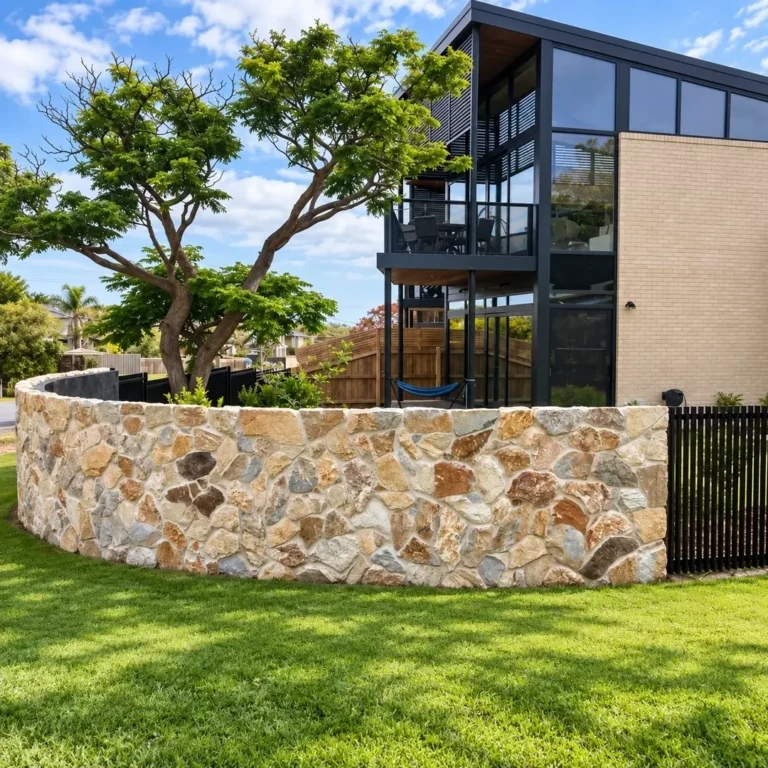
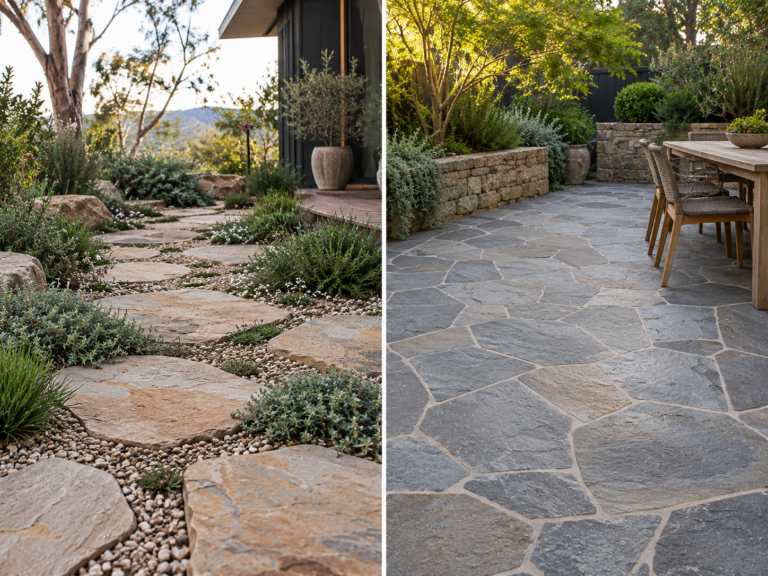
Choosing between natural stone and concrete is not only about price. Both can work well outdoors, but they create very different results in terms of appearance, durability, comfort, maintenance and long-term value.
That is why the natural stone vs concrete comparison matters for patios, pool surrounds, pathways, driveways, retaining walls and outdoor entertaining areas. A surface that looks affordable at first may not always perform best over time.
This guide compares natural stone and concrete across cost, installation, weather resistance, maintenance, heat comfort, sustainability and design appeal, so you can choose the right material for your outdoor project.
Natural Stone vs Concrete: Quick Answer
Natural stone is usually the better choice for premium outdoor projects where long-term beauty, texture, durability and property value matter. Concrete is usually better when upfront budget, speed, scale and a clean uniform finish are the main priorities.
Natural stone suits patios, pool surrounds, pathways, outdoor entertaining areas, feature walls and high-end landscape designs. It brings natural variation, depth and character, especially when used in a well-planned stone paving project where the surface needs to feel refined and durable.
Concrete is practical for large slabs, simple driveways, utility areas and structural surfaces where cost efficiency matters more than visual detail. It can still look polished with the right finish, but it may need more attention over time if cracks, fading or surface wear appear.
Natural Stone vs Concrete: Main Comparison Table
Natural stone and concrete can both perform well outdoors, but they suit different priorities. Natural stone is usually chosen for premium character, long-term value and natural texture. Concrete is often chosen for affordability, speed and large-scale surface coverage.
| Factor | Natural Stone | Concrete | Better Option |
| Appearance | Unique colour, texture and natural variation | Uniform, clean and controlled | Natural stone for premium character |
| Durability | Usually higher due to material and labour costs | Durable, but can crack over time | Natural stone |
| Installation | Requires skilled placement and more detail | Faster to pour across large areas | Concrete |
| Maintenance | Low to moderate with sealing when needed | May need sealing, crack repair or resurfacing | Natural stone |
| Upfront cost | Usually higher due to material and labour | Usually lower and faster to install | Concrete |
| Long-term value | Strong due to lifespan, ageing and visual appeal | Practical, but repairs can add cost over time | Natural stone |
| Heat comfort | Some stones stay cooler underfoot | Can retain heat, especially darker finishes | Natural stone |
| Repair options | Individual pieces can often be replaced | Patches can be visible or hard to match | Natural stone |
| Design flexibility | Natural, textural and high-end | Highly shapeable and customisable | Depends on style |
| Sustainability | Durable, reusable and minimally processed | Cement production has higher emissions | Depends on sourcing |
Key Differences Between Natural Stone and Concrete

Natural stone and concrete can both be used outdoors, but they create different results once installed. The main differences appear in appearance, durability, installation, maintenance, cost, comfort and environmental impact.
1. Appearance and Natural Character
Natural stone has a depth and variation that concrete cannot fully copy. Each piece carries its own colour movement, texture, veining and surface detail, which helps outdoor spaces feel more natural and refined. This makes it a strong choice for patios, pool surrounds, garden paths and feature areas where visual quality matters.
Concrete offers a more uniform and controlled look. It suits modern, minimalist or industrial spaces where clean lines are important. Stamped or coloured concrete can add interest, but it still lacks the authentic variation of stone.
2. Durability and Weather Resistance
Natural stone is formed under pressure over long periods, which gives many varieties strong outdoor durability. Stones such as granite, bluestone, travertine and sandstone can handle weather exposure well when matched to the right application, and bluestone outdoor paving is a good example of how material choice affects performance.
Concrete is also durable, but it is more likely to crack over time if the ground moves, drainage is poor or the surface is exposed to heavy loads. Once cracks appear, they can affect both appearance and performance. Natural stone often ages more gracefully because its colour and texture can hide minor wear.
3. Installation Process
Natural stone installation usually requires more skill and planning. Each piece needs to be selected, cut, positioned and laid with attention to spacing, levels and finish, which is why a proper stonepaver installation matters for irregular stone, detailed patterns and premium outdoor areas.
Concrete is generally faster to install across large spaces. It is poured into forms, levelled and finished before curing. This makes it practical for large slabs, driveways and utility areas. However, once concrete is poured, design changes or repairs are harder to make without affecting the whole surface.
4. Maintenance and Repairs
Natural stone is usually simple to maintain with regular sweeping, gentle cleaning and sealing when needed. A consistent stone maintenance and care routine helps preserve the surface, while natural variation can disguise small marks, weathering and everyday use.
Concrete may also need sealing, especially in exposed or decorative areas. The bigger challenge is repairs. Cracks, patches and resurfacing can be difficult to blend with the original finish. With stone paving, individual pieces can often be replaced more neatly if damage occurs.
5. Cost and Long-Term Value
Concrete is usually cheaper upfront because the material cost is lower and installation is faster. This makes it attractive for large surfaces where budget is the main concern.
Natural stone often costs more at the beginning, but it can offer stronger long-term value. Its durability, premium appearance and ability to age well can reduce the need for early replacement. In high-visibility areas, stone can also lift the overall presentation of the property.
6. Heat Comfort Underfoot
Heat comfort matters in Australian outdoor spaces, especially around pools, patios and alfresco areas. Some natural stones, such as travertine, limestone and sandstone, can feel more comfortable underfoot than darker concrete in full sun.
Concrete can absorb and hold heat, particularly when it has a dark finish or sealed surface. This can make outdoor areas less comfortable during hot weather. If the area will be used barefoot, surface colour, material choice and exposure should be considered early.
7. Sustainability and Environmental Impact
Natural stone is quarried, cut and transported, so sourcing matters. Locally sourced stone can reduce transport impact, and the material’s long lifespan can reduce replacement waste over time, which fits the broader value of sustainablenatural stone when it is chosen and installed carefully.
Concrete has a greater environmental concern because cement production is energy-intensive. Some modern concrete mixes use recycled aggregates or lower-carbon materials, which can improve sustainability. The best choice depends on sourcing, lifespan, transport distance and how well the material suits the project.
Natural Stone vs Concrete for Outdoor Entertaining Areas

For outdoor entertaining areas, natural stone is often the stronger choice when comfort, premium appearance and long-term value matter. Concrete is practical when budget, speed and a clean modern surface are the main priorities.
Best for Premium Alfresco Spaces
Natural stone brings texture, warmth and depth to alfresco spaces. It works especially well around outdoor kitchens, dining areas, poolside lounges and garden-facing patios where the surface needs to feel inviting, not purely functional.
The natural variation in stone also helps the entertaining area feel more refined. Materials such as travertine, limestone, sandstone, bluestone and granite can create a finish that connects beautifully with planting, timber, walling and outdoor furniture.
Best for Budget-Friendly Entertaining Areas
Concrete can be a practical option when you need to cover a larger entertaining area at a lower upfront cost. It is faster to install and can create a simple, usable surface for outdoor dining, seating or BBQ zones.
Decorative finishes such as exposed aggregate, colouring or stamping can improve the appearance. However, these finishes still need proper sealing and care, especially if the area is exposed to food spills, weather and regular foot traffic.
Best for Barefoot Comfort
Comfort underfoot matters in Australian outdoor spaces, especially during summer. Some natural stones, particularly lighter travertine, limestone and sandstone, can feel more comfortable in sunny areas, which is one reason travertine for pool coping remains popular around barefoot outdoor zones.
Concrete can become hot underfoot when exposed to direct sun, especially if the finish is dark or heavily sealed. For poolside entertaining, barefoot patios and lounge areas, stone often creates a more comfortable surface.
Best for Integration with Outdoor Features
Natural stone pairs well with timber pergolas, garden beds, pools, stone-clad fire pits, retaining walls and outdoor feature areas. It helps the entertaining space feel connected to the broader landscape.
Concrete works well with steel, aluminium, modern architecture and built-in seating or planters. For a more urban or minimalist design, it can create a clean and structured look.
Best Uses for Natural Stone and Concrete Outdoors
The best material depends on what the outdoor area needs to do. Some spaces need visual impact and comfort, while others need simple coverage, structural strength or budget-friendly installation.
| Outdoor Project | Better Option | Why |
| Premium patio | Natural stone | Adds texture, warmth and long-term visual appeal |
| Pool surround | Natural stone | Offers a more refined finish and better barefoot comfort with the right stone |
| Garden pathway | Natural stone | Provides natural texture, grip and character |
| Outdoor entertaining area | Natural stone | Creates a more inviting and high-end surface |
| Large plain slab | Concrete | Faster and more cost effective for simple coverage |
| Utility area | Concrete | Practical where appearance is less important |
| Driveway | Depends | Stone gives premium appeal, while concrete suits lower-budget coverage |
| Retaining wall | Depends | Stone adds character, while concrete supports structural simplicity |
| Feature area | Natural stone | Delivers stronger texture, individuality and design impact |
Natural stone is usually the stronger choice for visible outdoor areas where appearance, comfort and long-term value matter. It works especially well in patios, pool areas, paths, walling and spaces designed for everyday outdoor living.
Concrete still has a useful role. It suits large, plain or structural areas where the surface needs to be practical, affordable and quick to install.
Can Natural Stone and Concrete Be Used Together?

Natural stone and concrete can work well together when each material is used for the right purpose. Concrete can provide structure, scale and cost efficiency, while natural stone adds texture, warmth and a more premium finish in the areas people notice most.
This approach is useful when a full natural stone installation is not practical for the whole project. For example, concrete may be used in utility areas or as a structural base, while stone is used across patios, pool surrounds, entryways, garden paths or feature zones.
You can combine both materials in several ways:
- Concrete base with natural stone finish: A stable concrete base can support stone paving or cladding where a refined surface is needed.
- Stone borders around concrete: Natural stone edging can soften a plain concrete area and help connect it with garden beds or outdoor features.
- Feature zones within larger surfaces: Stone can highlight key areas such as outdoor dining spaces, fire pits, pool edges or entrance paths.
- Concrete for utility, stone for lifestyle areas: Concrete can suit side access paths or service zones, while stone is better for visible entertaining and relaxation spaces.
- Concrete structures with stone cladding: Retaining walls, steps and built forms can gain a warmer, more natural finish with stone cladding.
The best mixed-material designs feel intentional. Natural stone and concrete should be chosen with colour, texture, proportion and surrounding features in mind, so the finished space looks cohesive rather than patched together.
Pros and Cons of Natural Stone and Concrete
Natural stone and concrete both have clear advantages, but they serve different project goals. Stone is stronger when the surface needs to look premium and age well. Concrete is stronger when budget, speed and large-scale coverage are the main concerns.
| Material | Pros | Cons |
| Natural Stone | Premium appearance, unique colour variation, strong durability, natural texture, long-term value and strong visual appeal for patios, pool surrounds and pathways | Higher upfront cost, skilled installation required and sealing may be needed depending on the stone type and location |
| Concrete | Lower upfront cost, faster installation, clean uniform finish, flexible shaping and practical use across large slabs or structural areas | Can crack over time, may retain heat, repairs can be visible and it lacks the natural character of stone |
Natural stone is usually better when appearance, longevity and property value matter. It suits outdoor areas where the finish needs to feel considered, such as alfresco spaces, feature paths, pool surrounds and high-use entertaining zones.
Concrete is usually better when the project needs a simple, cost-effective surface installed quickly. It remains useful for utility areas, large plain slabs and structural applications, but it may need more attention over time if cracking, fading or surface wear appears.
How to Choose Between Natural Stone and Concrete
Choosing between natural stone and concrete starts with the role of the outdoor space. A surface used every day for entertaining, relaxing or welcoming guests needs a different level of finish from a side path, utility slab or service area.
1. Start with the Project Type
Patios, pool surrounds, pathways, driveways and retaining walls all place different demands on the material. Natural stone is usually better for areas where appearance, comfort and texture matter, such as alfresco spaces, pool edges and garden paths.
Concrete is often more practical for large slabs, utility zones and simple driveways where speed and budget are more important than natural detail.
2. Think About the Look You Want
Natural stone suits outdoor spaces that need character, depth and a premium finish. Its colour variation, surface movement and texture make the area feel more connected to the landscape.
Concrete suits cleaner and more controlled designs. It works well in modern spaces where a uniform surface, sharp lines or a minimalist finish is preferred.
3. Compare Upfront Cost with Lifetime Value
Concrete is usually cheaper to install, especially across larger areas. That makes it attractive when the project has a tight budget or needs quick coverage.
Natural stone often costs more upfront, but it can deliver stronger lifetime value through durability, visual appeal and better ageing. In high-visibility areas, that added value can make the investment worthwhile.
4. Consider Heat, Weather and Exposure
Outdoor materials need to handle sun, rain, moisture, foot traffic and temperature changes. In exposed areas, the wrong surface can become too hot, slippery, stained or worn before expected.
Some natural stones offer better heat comfort and surface character for Australian outdoor living. Concrete can still perform well, but colour, finish, drainage and sealing need careful planning.
5. Be Realistic About Maintenance
Natural stone needs the right cleaning method and may need sealing depending on the stone type and location. Once maintained correctly, it can age beautifully and hide minor wear well.
Concrete may seem simple at first, but cracks, fading and surface damage can become harder to manage over time. Decorative concrete can also be difficult to repair without visible patching.
6. Factor in Property Value
For visible outdoor areas, natural stone can create a stronger first impression. It often feels more premium around pools, patios, entrances, garden paths and entertaining spaces.
Concrete can still add value when it is well designed and maintained, but it rarely creates the same natural richness or high-end feel as stone. For projects where presentation matters, natural stone is usually the stronger choice.
Common Mistakes to Avoid When Choosing Natural Stone or Concrete
Choosing between natural stone and concrete should not be based on appearance or price alone. The wrong material, finish or installation method can lead to heat discomfort, cracks, stains, drainage issues and early surface wear.
- Choosing only on upfront cost: Concrete may look cheaper at the start, but repairs, resurfacing and visible patching can reduce those savings over time. Natural stone often costs more upfront, but can offer stronger long-term value in premium outdoor areas.
- Ignoring heat comfort: Outdoor surfaces can become uncomfortable in full sun, especially around patios, pool surrounds and alfresco spaces. Some natural stones stay cooler underfoot, while darker concrete can absorb and hold more heat.
- Using the wrong finish outdoors: Smooth surfaces can become slippery when wet. Pool areas, pathways and entertaining spaces need a finish that balances grip, comfort and visual appeal.
- Overlooking drainage: Poor drainage can damage both materials. Water pooling may cause staining, surface movement, cracking, algae growth or premature wear if the base and fall are not planned correctly.
- Assuming concrete is maintenance-free: Concrete still needs cleaning, sealing and crack monitoring. Decorative finishes may also need extra care to prevent fading and surface wear.
- Assuming every stone performs the same: Travertine, granite, limestone, bluestone and sandstone all behave differently outdoors. The stone type should match the location, exposure and use.
- Forgetting the wider design: The surface should work with garden beds, walling, edging, pools, furniture and outdoor structures. A material that clashes with the rest of the space can make the project feel disconnected.
Natural Stone vs Concrete: Which One Should You Choose?

Choose natural stone if you want a premium outdoor finish with natural texture, long-term durability and stronger visual value. It is often the better option for patios, pool surrounds, garden paths, alfresco areas, feature walls and outdoor spaces where the surface needs to feel refined, not just functional.
Natural stone also makes sense when the project is highly visible. Its colour variation, surface movement and organic character can lift the whole outdoor design. It works especially well when you want the paving, walling or feature area to connect naturally with planting, timber, water, outdoor furniture and architectural details.
Choose concrete if you need a lower upfront cost, faster installation or a large continuous surface. It is practical for utility areas, basic driveways, service zones and structural applications where simplicity matters more than natural character.
For most premium residential outdoor projects, natural stone is the stronger long-term choice. Concrete still has value when budget, scale and installation speed are the main priorities. The right decision comes down to how visible the surface is, how much use it will get and how you want the finished space to feel over time.
Why Choose Splendour in Stone for Premium Outdoor Projects?
Choosing the right outdoor material is easier when you understand how each stone will perform in real Australian conditions. At Splendour in Stone, we help homeowners, landscapers, builders and designers select natural stone that suits the project’s style, exposure, use and long-term maintenance needs.
Our range includes premium natural stone for paving, walling, pool surrounds, patios, pathways, alfresco areas and outdoor feature spaces. Whether your project needs the cool comfort of travertine, the strength of granite, the character of bluestone or the refined look of limestone, we can help you compare options with confidence.
Every outdoor project has different priorities. A pool surround needs grip and heat comfort. A patio needs durability and visual warmth. A feature wall needs texture and architectural impact. Our team can guide you through colour, finish, size, application and suitability, so the finished space looks considered and performs well.
With quality materials and practical advice, Splendour in Stone helps you create outdoor spaces that feel premium, natural and built to last.
Build an Outdoor Space That Lasts
Concrete is practical, affordable and efficient for large or simple outdoor surfaces. Natural stone offers stronger character, better long-term visual value and a more premium finish for spaces people use and notice every day.
The right choice depends on your project type, budget, exposure, maintenance expectations and design goals. A utility area may only need a clean concrete slab, while a patio, pool surround or entertaining space often deserves the texture and durability of natural stone.
For an outdoor space that feels refined and performs over time, speak with Splendour in Stone about natural stone options suited to your project.
FAQs
1. Is natural stone better than concrete for outdoor projects?
Natural stone is often better for premium outdoor projects where appearance, durability and long-term value matter. It works especially well for patios, pool surrounds, pathways, walling and entertaining areas. Concrete is better for large, simple or budget-sensitive surfaces where speed and lower upfront cost are the main priorities.
2. Is concrete cheaper than natural stone?
Yes, concrete is usually cheaper than natural stone upfront. It costs less to install across large areas because it can be poured and finished quickly. Natural stone often costs more at the start, but its durability, visual appeal and ability to age well can make it a better value over time.
3. Which lasts longer, natural stone or concrete?
Both natural stone and concrete can last for decades when installed correctly. Natural stone often ages better because its natural colour, texture and variation help hide minor wear. Concrete is durable, but it can crack, fade or need resurfacing if exposed to ground movement, poor drainage or heavy use.
4. Is natural stone better for outdoor entertaining areas?
Natural stone is often better for outdoor entertaining areas because it adds texture, warmth and a premium feel. It works well around patios, alfresco spaces, outdoor kitchens and pool areas. Some stones also feel more comfortable underfoot in hot weather, which matters in Australian outdoor living spaces.
5. Can you combine natural stone and concrete?
Yes, natural stone and concrete can be combined in the same outdoor project. Concrete can be used for structural or utility areas, while natural stone can highlight patios, pool surrounds, entrances, borders and feature walls. This approach can balance cost, durability and visual impact.
6. Does natural stone need more maintenance than concrete?
Not always. Natural stone may need sealing depending on the material, finish and location, but it is often easy to maintain with sweeping and gentle cleaning. Concrete can also need sealing, crack repairs and resurfacing over time. Maintenance depends more on exposure, installation quality and surface finish than material alone.