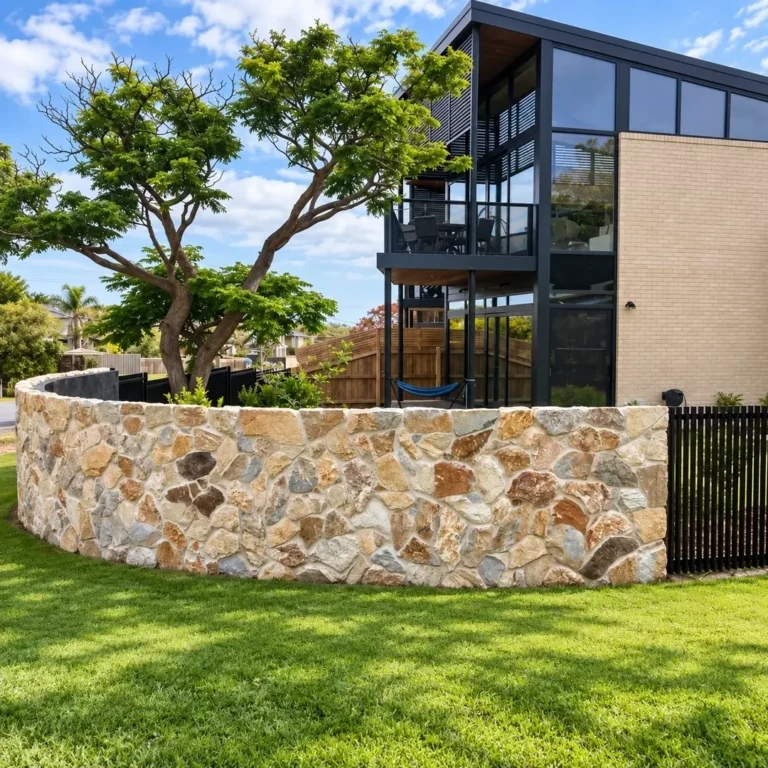
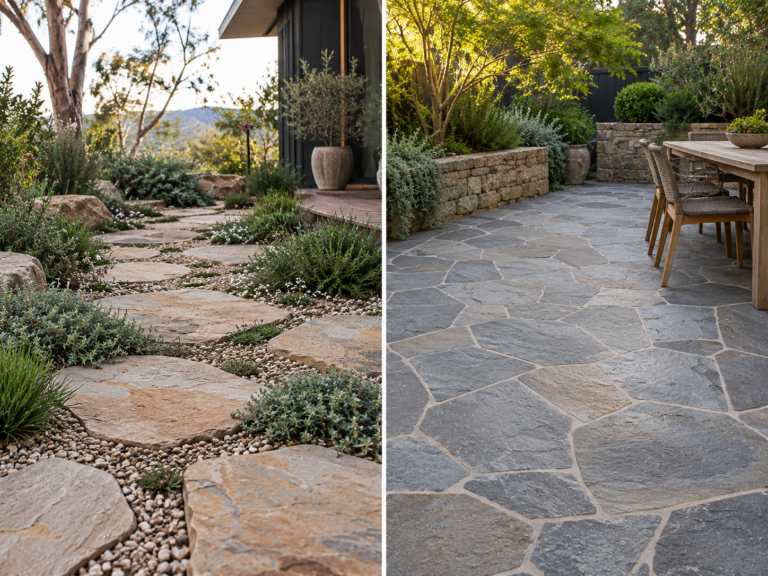
Outdoor limestone pavers can be an excellent choice for Australian patios, courtyards and alfresco areas when the stone, finish and installation method suit the project. They offer natural colour variation and a refined appearance, but buyers must also consider porosity, sealing, surface temperature, slip testing and ongoing care.
This guide explains how limestone performs outdoors, which colours and finishes are available, how it compares with other paving materials and what to check before ordering.
Outdoor limestone pavers are best suited to projects where natural appearance and design flexibility matter. Choose a product with the right thickness and finish for its intended application, confirm its tested slip rating for wet areas and follow product-specific sealing and maintenance advice.
Are Limestone Pavers a Good Choice for Outdoor Patios?
Limestone pavers are a strong patio option for homeowners who want natural stone with soft colour movement and a less uniform appearance than manufactured concrete. The broader natural stone paving range includes light, mid-grey, charcoal and warm-toned limestone products for different architectural styles.
However, limestone is a calcareous stone, which means it is sensitive to acidic substances. Its absorption rate can also vary considerably between individual limestone varieties. Product selection should therefore be based on technical suitability rather than appearance alone.
| Advantages | Points to consider |
| Natural colour and surface variation | Colour and texture vary between batches |
| Suits contemporary, coastal, Mediterranean and traditional homes | Most outdoor installations benefit from suitable sealing |
| Available in several colours, sizes and finishes | Acidic cleaners can etch or dull the surface |
| Can be used to create patios, paths and courtyards | Wet-area suitability depends on the tested product and finish |
| Coordinates well with timber, rendered walls and garden planting | Correct base preparation, drainage and installation are essential |
| Can develop an attractive aged character | Stains may become more noticeable on pale or highly absorbent stone |
Limestone should not be treated as one standard product. Density, absorption, strength, surface texture and finish can differ from one variety to another. Ask for the technical information for the specific paver you are considering.
What Is Limestone Paving?
Limestone is a sedimentary natural stone consisting mainly of calcium carbonate. It can form from accumulated shells, marine organisms and other carbonate material that becomes compacted over long geological periods.
Because it is a natural material, each paver may contain subtle differences in tone, grain, fossils, markings or surface texture. These variations are part of the stone rather than manufacturing defects. Limestone’s calcium carbonate composition also makes it vulnerable to acidic cleaners and substances such as vinegar or lemon juice.
Outdoor limestone is supplied in several formats, including:
- Standard rectangular pavers: Commonly used for patios, paths and courtyards.
- Large-format pavers: Create fewer joints and a clean, contemporary layout.
- French or ashlar patterns: Combine different sizes to produce a more traditional arrangement.
- Bullnose pieces: Have a rounded exposed edge for steps or selected pool applications.
- Drop-edge pieces: Create the appearance of a thicker stone edge.
- Custom-cut pieces: May be needed around curves, steps, drains or architectural details.
Not every limestone product is available in every format. Confirm the current sizes, thicknesses and edge profiles before completing the layout.
Common Limestone Paver Finishes

The finish affects the stone’s appearance, texture, cleaning requirements and potential grip underfoot.
| Finish | Appearance | Surface feel | Typical design use |
| Honed | Smooth, matte and refined | Relatively smooth | Covered patios, courtyards and contemporary spaces |
| Tumbled | Softened edges with an aged character | Gently textured | Mediterranean, traditional and relaxed garden designs |
| Sawn | Clean and understated | Fine cutting texture | Modern patios and structured layouts |
| Brushed | Subtle movement and a lightly weathered look | Lightly textured | Outdoor entertaining areas and pathways |
| Sandblasted | Consistent, granular appearance | More pronounced texture | Outdoor spaces where added surface texture is preferred |
| Acid-washed | Slightly weathered appearance | Textured | Selected patios, paths and pool surrounds |
A finish that feels textured is not automatically suitable for every wet area. Ask for a product-specific slip test report rather than relying only on visual appearance or marketing descriptions.
Limestone Paver Colours and Where Sienna Fits
Colour has a major effect on the way limestone paving relates to a house, garden and surrounding materials. It can also influence how much dirt, leaf staining and natural variation remain visible between cleaning cycles.
| Colour family | Typical appearance | Works well with |
| White and cream | Bright, open and understated | Coastal architecture, pale render and light timber |
| Light grey | Calm and contemporary | Concrete, steel, charcoal detailing and modern planting |
| Mid-grey | Balanced and grounded | Brick, timber and neutral exterior palettes |
| Charcoal or black | Bold and architectural | White render, dark metal and minimalist gardens |
| Warm beige or golden | Relaxed and inviting | Mediterranean planting, warm timber and traditional homes |
Sienna Limestone can be considered where a project needs a warmer alternative to pale cream or cool grey paving. View the current Sienna Limestone product page and request a physical sample before making a final colour decision. The sitemap confirms this as the relevant product destination.
Natural stone should be assessed in the actual project environment. A sample may look different indoors, under direct sun, beside a swimming pool or against the exterior walls of a house. Review it when dry and wet, and at different times of day.
Do Limestone Pavers Get Hot in the Sun?
Limestone pavers can become hot in direct sunlight. No outdoor paving material should be described as remaining cool during every Australian summer condition.
Surface temperature depends on several factors:
- Colour: Lighter surfaces generally reflect more solar radiation than darker surfaces.
- Solar exposure: Unshaded paving usually becomes warmer than areas protected by trees, pergolas or roof structures.
- Stone properties: Mineral composition, density and surface finish can affect heat behaviour.
- Air temperature: Paving becomes warmer during prolonged periods of high ambient temperature.
- Time of day: Surface temperatures generally increase after several hours of direct sunlight.
- Moisture and airflow: These can change how quickly a surface heats and cools.
Research into reflective paving shows that surfaces with higher solar reflectance can record lower temperatures than less reflective alternatives, but colour alone does not guarantee that a paver will remain comfortable underfoot.
For a patio receiving strong afternoon sun, compare physical samples in the intended location. Shade structures, trees and planting can also improve comfort without limiting the paving selection to one colour.
Are Limestone Pavers Slippery When Wet?
Limestone can be suitable for wet outdoor settings, but slip resistance depends on the individual product, finish, installation, contamination and maintenance. It is not accurate to label limestone generally as either slippery or non-slip.
AS 4586 classifies new pedestrian surface materials according to measured frictional characteristics. Test results may include a P classification from a wet pendulum test or an R classification from an oil-wet ramp test. These classifications refer to different testing methods and should not be treated as interchangeable.
Before selecting limestone for a wet patio or pool surround:
- Request the tested slip classification for the exact product and finish.
- Confirm that the rating suits the intended location.
- Avoid assuming that a rough-looking surface has been tested.
- Check whether sealing could affect the surface characteristics.
- Keep the finished surface clear of algae, moss, oil and loose debris.
- Provide suitable drainage so water does not remain on the paving.
- Ask the installer to confirm current regulatory and project requirements.
Polished or very smooth finishes are generally less appropriate for exposed wet areas than finishes designed for outdoor use. The final selection must still be based on testing and application-specific advice.
Limestone Pavers Around Pools
Limestone may be used around pools when the selected product, finish, thickness and edge treatment are confirmed as suitable by the supplier and installer.
A pool environment creates additional considerations:
- Regular exposure to water and pool chemicals
- Barefoot traffic
- Wet slip risk
- Drainage requirements
- Coping and edge detailing
- Staining from leaves, soil or metal furniture
- Movement between the pool structure and surrounding paving
Do not assume that a patio paver can automatically be used as pool coping. Confirm whether matching bullnose or drop-edge pieces are available and whether the product has been tested for the intended wet environment.
Limestone Pavers vs Travertine, Bluestone and Concrete
The best patio material depends on the desired appearance, site conditions, maintenance expectations and project budget.
| Material | Appearance | Heat considerations | Porosity and sealing | Maintenance | General cost position |
| Limestone | Soft, refined and available in warm or cool tones | Lighter colours may absorb less solar heat than dark options, but all paving can become hot | Absorption varies; sealing is commonly recommended | Requires non-acidic cleaning and stain management | Mid to premium |
| Travertine | Warm, textured and naturally varied | Light colours may suit sunny areas, but comfort should be tested | Naturally porous; holes may be filled or left open depending on product | Requires suitable sealing and careful cleaning | Mid to premium |
| Bluestone | Dark, architectural and contemporary | Dark varieties may become noticeably warm in full sun | Product characteristics vary; sealing may help with stain management | Regular cleaning helps control surface marks and organic growth | Mid to premium |
| Concrete | Consistent and available in many manufactured colours | Temperature varies with colour and finish | Porous unless treated or sealed | May fade, stain or develop surface wear over time | Budget to mid-range |
Limestone is generally the better fit when a project needs understated natural variation and a calm, refined finish. Travertine offers a more visibly textured Mediterranean character, while bluestone provides stronger contrast and a darker architectural appearance.
Homeowners considering a warmer, more visibly layered stone can also compare the practical differences between limestone and sandstone pavers.
How Much Do Limestone Pavers Cost in Australia?
There is no reliable single price for outdoor limestone pavers. The final cost depends on the product, format, quantity, delivery requirements and installation complexity.
| Cost factor | How it affects the project |
| Stone variety and grade | Different limestone sources and selections are priced differently |
| Paver size | Large formats may cost more and require additional handling |
| Thickness | Thicker units generally contain more material and weigh more |
| Surface finish | Additional processing can affect the product price |
| Edge treatment | Bullnose, bevelled and drop-edge pieces usually cost more than standard pavers |
| Quantity | Larger orders may affect freight, handling and batch availability |
| Delivery location | Distance, access and unloading requirements influence transport costs |
| Base preparation | Excavation, drainage and substrate work can add significantly to installation costs |
| Cutting and layout | Curves, steps, borders and detailed patterns increase labour and wastage |
| Sealing | Product, labour and future resealing should be included in the maintenance budget |
Request a written quote based on the required square metres, selected format, edge pieces and delivery address. Your installer should also calculate an appropriate allowance for cutting, breakage and future repairs.
Avoid choosing solely by the lowest price per square metre. An unsuitable thickness, finish or grade may create higher installation or maintenance costs later.
How to Lay and Seal Limestone Pavers
Outdoor limestone installation should be planned around the substrate, drainage, paver thickness, jointing system and intended traffic.
1. Confirm the Product’s Application
Check that the selected limestone is intended for the proposed patio, path or wet area. Confirm the required thickness and installation method with the supplier and installer.
2. Prepare a Stable Base
The base must be correctly excavated, compacted and designed for the site conditions. Poor preparation can contribute to movement, cracking, uneven levels and drainage problems.
3. Plan Drainage and Finished Levels
The paving should direct water away from buildings and prevent ponding. Drain locations, thresholds, garden beds and pool edges need to be considered before laying begins.
4. Dry-Lay and Blend the Stone
Open several crates or pallets and blend pavers from different sections of the order. This distributes natural variation rather than concentrating similar tones in one area.
5. Use Compatible Installation Products
Mortars, adhesives, grouts, primers and sealers should be suitable for natural limestone and the installation environment. Follow the manufacturers’ instructions rather than substituting general-purpose products.
6. Clean During Installation
Remove adhesive, grout and construction residue before it cures. Acid washing should not be used as a general cleaning method on limestone because acids can attack calcium carbonate surfaces.
7. Seal at the Correct Stage
Sealing can improve resistance to moisture and staining, but it does not make limestone stain-proof. The correct product and timing depend on the stone and installation system. This guide to whether you should seal pavers before or after grouting explains why the sequence must be planned before installation.
Complex patios, wet areas, steps and pool surrounds should be handled by an experienced natural stone installer.
How to Clean and Maintain Limestone Pavers

Limestone is manageable to maintain when spills, dirt and organic growth are addressed before they become established.
Do
- Sweep regularly to remove soil, grit, leaves and plant matter.
- Rinse loose dirt away with clean water.
- Use a pH-neutral cleaner formulated for natural stone.
- Follow the cleaner manufacturer’s dilution instructions.
- Blot spills rather than spreading them across the surface.
- Test new cleaning products on a small, inconspicuous area.
- Check the condition of joints, drainage and sealers periodically.
- Ask a stone-care professional to assess deep stains or widespread discolouration.
Do Not
- Use vinegar, lemon juice or acidic household cleaners.
- Apply acid washes without specialist product advice.
- Use abrasive powders that may scratch the finish.
- allow metal furniture or tools to rust directly on the stone.
- Assume sealing makes the paving completely stain-proof.
- Use uncontrolled high-pressure cleaning close to the surface.
- Mix bleach and ammonia.
The Natural Stone Institute recommends mild, non-acidic cleaners for calcareous stones and notes that sealing acts as a stain repellent rather than making stone completely stain-proof.
For more detailed ongoing care, refer to the guide on how to maintain limestone pavers.
Buying Limestone Pavers in Melbourne and Victoria
Melbourne and Victorian projects must account for changing temperatures, rainfall, site exposure and the way an outdoor area will be used throughout the year.
Before placing an order:
- Request samples: Compare colours and textures beside the home’s walls, roof, timber and landscaping.
- Check the technical details: Confirm sizes, thickness, finish, edge profiles and tested slip classification.
- Measure the area accurately: Include steps, borders, cuts and an appropriate wastage allowance.
- Inspect colour variation: Understand whether the product has consistent colouring or strong natural movement.
- Confirm availability: Make sure enough stock from a compatible batch is available for the whole project.
- Plan delivery: Check lead times, access, unloading arrangements and freight costs.
- Select an experienced installer: Natural stone requires suitable laying, cleaning, jointing and sealing methods.
Splendour in Stone’s Victoria service information covers paving and natural stone supply for projects across the state. Melbourne customers can also visit the Mitcham showroom listed on the company’s contact page.
Where the patio forms part of a larger landscape, limestone paving can be coordinated with natural stone walling to create a consistent palette across retaining walls, garden beds, steps and feature areas.
Choose Limestone for the Project, Not Just the Colour

Outdoor limestone pavers can create a refined, durable patio when the product is matched to the site, climate and intended use. Compare physical samples, verify the finish and technical information, and plan installation and sealing before ordering.
Browse the available limestone paving options or request a quote and samples for help selecting stone for a Melbourne or Victorian project.
Limestone Paver FAQs
1. Are limestone pavers slippery when wet?
Their wet slip performance depends on the exact limestone, surface finish, installation and maintenance. Ask for a test report showing the product’s classification under the relevant Australian slip-resistance standard. Do not rely only on terms such as textured, non-slip or outdoor grade.
2. Do limestone pavers get hot in the sun?
Yes, limestone pavers can become hot during prolonged direct sunlight. Lighter surfaces may reflect more solar radiation than dark alternatives, but colour does not guarantee a cool surface. Test a physical sample in the intended location before ordering.
3. Are limestone pavers good around pools?
Selected limestone products can be suitable for pool surrounds when the finish, thickness, edge treatment and slip classification meet the project requirements. Confirm suitability with the supplier, pool builder and installer before purchasing.
4. How long do limestone pavers last?
Quality limestone can provide long-term outdoor service when it is suitable for the application, installed on a stable base and maintained correctly. Longevity depends on the individual stone, exposure, drainage, traffic, cleaning and installation quality, so a universal lifespan cannot be guaranteed.
5. Do limestone pavers need sealing?
Many outdoor limestone pavers benefit from an appropriate impregnating sealer because limestone can absorb moisture and staining agents. However, sealing requirements vary. Follow the supplier’s advice for the specific stone, finish and installation.
6. What colours do limestone pavers come in?
Common limestone colours include white, cream, beige, warm gold, light grey, mid-grey and charcoal. Natural variation should be expected within the same product, particularly across larger paved areas.
7. Can limestone pavers be pressure washed?
Pressure cleaning must be approached carefully. Excessive pressure, a narrow nozzle or cleaning too close to the surface can affect joints, finishes and softer sections of stone. Start with sweeping, rinsing and a pH-neutral cleaner, or engage a professional for heavy staining.
8. Can vinegar be used on limestone pavers?
No. Vinegar is acidic and can etch calcium carbonate stones such as limestone. Use a cleaner specifically labelled as suitable for natural limestone instead.