Wall cladding is a layer of material fixed over a building’s walls to protect the structure underneath and give the building its finished look. It is not structural: the wall behind carries the load, while the cladding takes the rain, sun, salt and knocks.
The six mainstream cladding materials are natural stone, brick, timber, metal, fibre cement and vinyl, fixed either to a battened frame or directly to a solid substrate.
This guide covers what cladding does, the materials and where each fits, interior versus exterior use, how it is installed, the honest pros and cons, and how to choose.
What Does Wall Cladding Do?
Cladding earns its place by doing several jobs at once.
- Weather shielding. It intercepts rain, UV and wind so the structural wall stays dry and sound, which is the core function everything else hangs off.
- Appearance. It defines the building’s character, from heritage brick to split-face stone to standing-seam metal.
- Part of the insulation system. The cladding itself adds modest insulation; the real thermal gains come from the build-up it enables: a ventilated cavity, membrane and bulk insulation behind it, plus thermal mass when the cladding is masonry.
- Acoustic dampening. A clad wall assembly with a cavity takes the edge off traffic and aircraft noise compared with a bare lightweight wall.
- Lower structural maintenance. A wall that never gets wet or sun-struck needs far less repair over its life; the cladding takes the wear instead.
Types of Wall Cladding Materials
1. Stone cladding
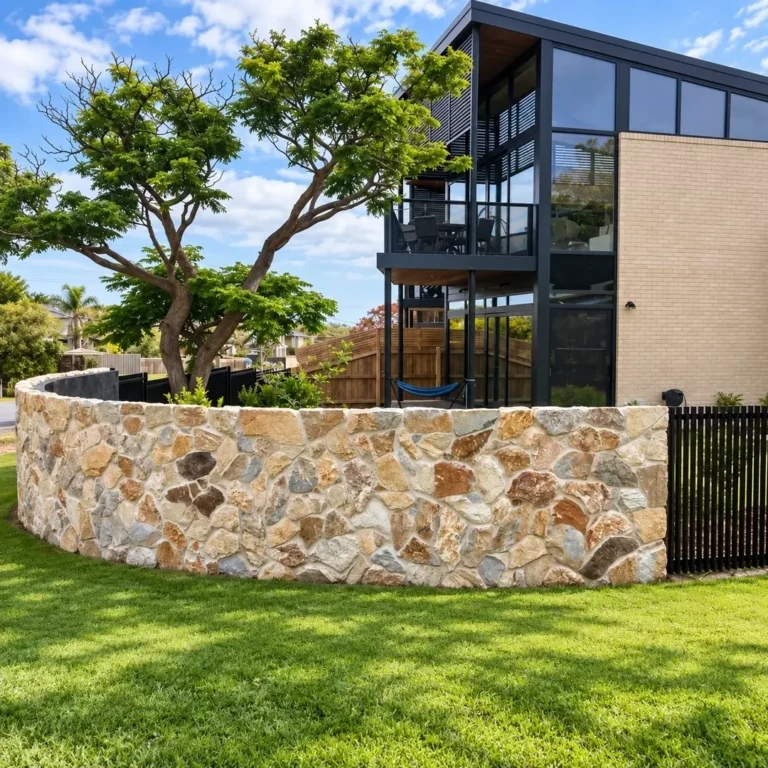
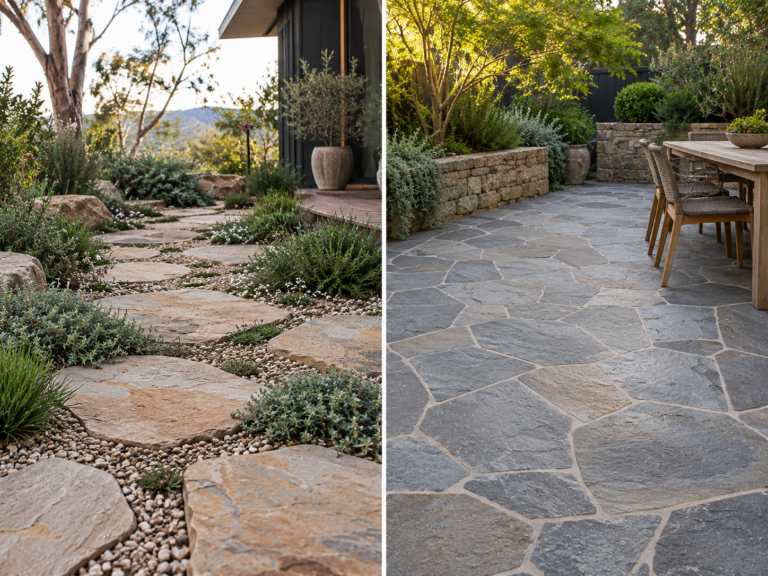
Natural stone such as granite, limestone, sandstone and quartz delivers the most durable and most distinctive facade, with colour and texture that run through the material rather than sitting on it.
Heavier pieces need correct fixing, and sometimes structural support; formats, profiles and applications are covered in the stone cladding guide. Manufactured stone look-alikes cost less but trade away the depth, lifespan and resale value of the real material.
2. Brick cladding
Fired clay brick is colourfast, non-combustible and effectively maintenance-free apart from eventual repointing. Full brickwork suits new builds, while brick slips handle recladding; choosing colours and formats is covered in the right bricks for a home exterior.
3. Timber cladding
Timber offers warmth no other material matches, with cedar, spotted gum and similar species common in Australia. It is also the highest-maintenance option: recoating every few years, termite management, and species or treatment selection for bushfire-prone sites.
4. Metal cladding
Solid steel and aluminium sheet give crisp modern lines, light weight and non-combustibility, with marine-grade coatings needed near the coast. Solid sheet should not be confused with polyethene-core composite panels, which have been banned or heavily restricted on Australian buildings.
5. Fibre cement cladding
Fibre cement boards and panels are stable, termite-proof and deemed non-combustible, which makes them a bushfire-zone staple. The paint system is the weather seal, so repainting roughly every 10 to 15 years is part of the deal.
6. Vinyl cladding
Vinyl is the budget option: light, moisture-resistant and easy to install. The trade-offs are UV embrittlement and fading over time, visible repairs, and poor fire performance.
Interior vs Exterior Wall Cladding
The same idea does two different jobs. Exterior cladding is a weatherproofing system first, so fixing method, drainage and fire performance drive the choice.
Interior cladding is about texture, acoustics and wear: feature walls, fireplace surrounds, entries and commercial fit-outs, where weight and weather drop out of the equation, and finish takes over.
The stone options differ too: see the best stones for indoor wall cladding and the practical differences in indoor vs outdoor stone walls.
How Is Wall Cladding Installed?
There are two fixing systems, and the material decides which.
1. Battened (mechanical) systems suit boards and panels: timber, fibre cement and metal.
- Check the wall is sound, then fix a weatherproof membrane over it.
- Install battens to create a drained, ventilated cavity behind the cladding.
- Fix the boards or panels from the bottom up, lapping or interlocking each course.
- Finish with corner trims, flashings and cappings so water sheds out, never in.
2. Direct-fix (adhered) systems suit stone veneer and brick slips on solid substrates.
- Prepare a clean, flat, structurally sound base such as rendered masonry or fibre cement sheet.
- Fix pieces with a flexible, polymer-modified adhesive, full coverage on each back; product choice is covered in the stone cladding adhesive guide.
- Add mechanical support (ledges or anchors) where the stone’s weight demands it.
- Detail movement joints, flashings and cappings, then clean off and seal porous stone.
Either way, the failures that matter (moisture behind the cladding, delamination, corroding fixings) are installation failures, which is why detailing deserves as much attention as material choice.
Advantages and Disadvantages of Wall Cladding
1. Advantages
- Protects the structure from weather, which extends the building’s life and cuts repair cycles.
- Steps the facade up visually, with options across every architectural style.
- Enables a properly insulated, ventilated wall build-up, improving comfort and efficiency.
- Quietens the interior compared with bare lightweight walls.
- Reads as quality at sale time, particularly stone and brick.
2. Disadvantages
- Premium materials and skilled installation cost real money upfront.
- Some materials carry an ongoing maintenance bill, timber most of all.
- Poor installation causes expensive, hidden problems: trapped moisture, mould, and fixing failure.
- Heavy claddings (full-bed stone, brick) may need structural support, which not every wall has.
- Synthetic options have weaker sustainability and end-of-life recyclability stories.
How Much Does Wall Cladding Cost?
Supplier pricing moves too much to quote here, but the cost ladder is stable: vinyl sits at the bottom, fibre cement and timber in the middle, metal varies with profile and grade, and brick and natural stone sit at the premium end, with stone’s installation labour a meaningful part of its cost.
Three things move any quote more than the material itself: substrate preparation, access and wall height, and structural support for heavy cladding. Judge the options on lifecycle cost rather than upfront cost; the premium materials are usually still on the wall when the budget ones are being replaced.
How Do You Choose the Right Wall Cladding?
- Start with exposure. Coastal salt, frost and full sun punish the wrong material; dense stone and brick handle all three, while coatings-dependent materials need more care.
- Be honest about maintenance appetite. If recoating every few years won’t happen, timber is the wrong answer, no matter how good it looks on day one.
- Check fire requirements early. Bushfire-prone sites carry BAL requirements that rule some materials out before aesthetics enter the conversation.
- Confirm the wall can carry it. Heavy stone and brick need a substrate and structure that can take the load, or a veneer-format alternative.
- Match the style of the house, not the trend cycle; the stone cladding style guide for Australian homes shows what works on each architectural era.
If longevity is the deciding factor, the material-by-material lifespans, fire ratings and failure points are compared in the ultimate guide to durable wall cladding.
Talk Through Your Options
If stone is on your shortlist, the fastest way to narrow it down is to see the materials together. Browse the stone wall cladding range or order samples and compare them against your plans.
FAQs
1. Is wall cladding the same as rendering?
No. Render is a wet-applied finish bonded to the wall itself, while cladding is a separate layer fixed over the wall. Render cracks with movement and needs recoating; cladding sheds weather as an independent skin. The full comparison is in cladding vs render.
2. What is the difference between cladding and veneer?
Veneer is a sub-type of cladding: thin-cut material (usually stone or brick) adhered to the wall, as opposed to thicker full-bed pieces or panel systems. The weight, cost and fixing differences are covered in cladding vs veneer.
3. Is wall cladding waterproof?
Cladding sheds water; it does not waterproof the wall on its own. The membrane, cavity and flashings behind it do the waterproofing, which is why installation detailing matters as much as the material.
4. What is the cheapest wall cladding?
Vinyl, followed by fibre cement. The saving is real upfront and partly returned later: shorter lifespan and visible ageing for vinyl, a repainting cycle for fibre cement. Stone and brick cost the most and last the longest.