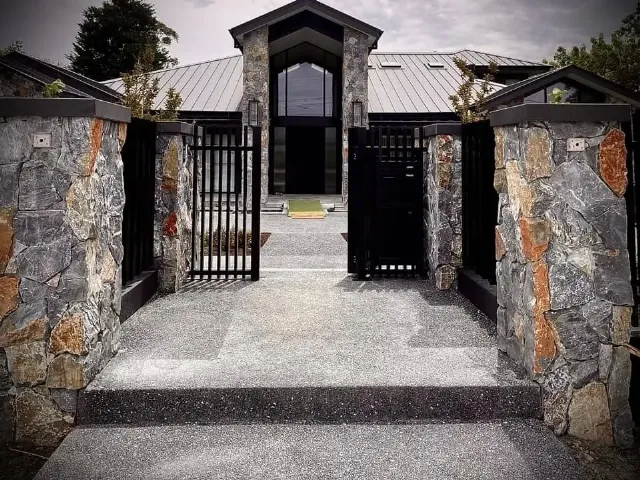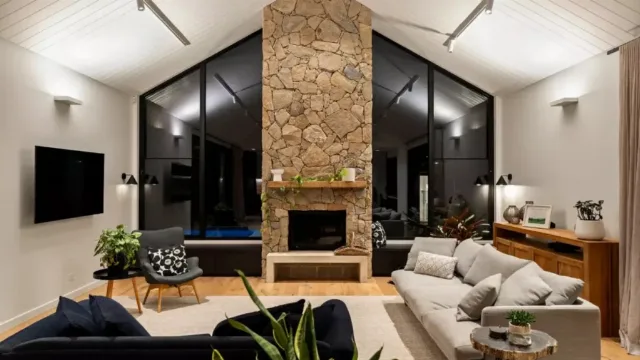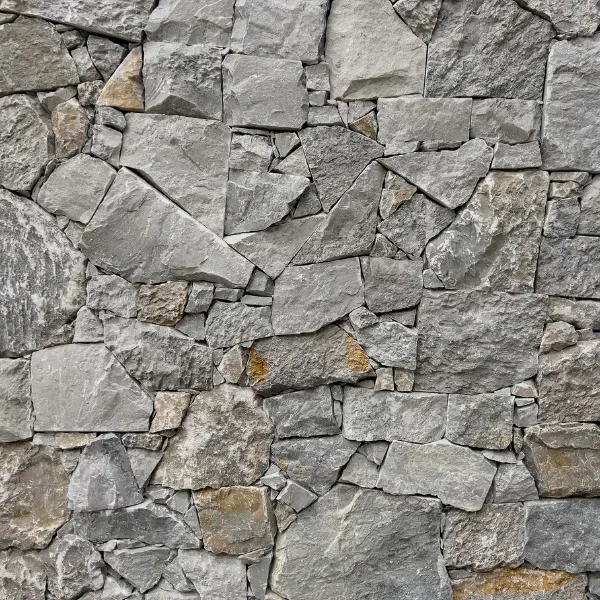
Natural stone walling is worth the investment when you plan to hold the property: a stone wall outlasts rendered and timber alternatives several times over, asks for almost no upkeep, and reads as a permanent quality to buyers.
The premium is paid once, upfront and for installation labour. The return arrives as decades without repainting, resurfacing or replacement, plus a facade that improves with age instead of dating.
This guide sets out the honest investment case: where the money goes, the seven returns it buys, the stones that suit walling, and the situations where stone is the wrong call.
In this guide
Is Natural Stone Walling Worth the Money?
The cost of a stone wall has three parts: the stone, the structure or substrate behind it, and the mason’s labour, which, on detailed work, can rival the material line; what drives that figure is broken down in the cost of hiring a stonemason.
Against that, price what the alternatives cost over 30 years: render wants recoating and crack repair on a cycle, timber wants restaining and eventual replacement, and painted finishes never stop asking. Stone takes the larger first cheque and then leaves the maintenance budget alone. On a short hold, the premium may not return; on a long hold, it usually does, twice.
7 Reasons Natural Stone Walling Pays Off
1. It outlasts every alternative
A properly built stone wall runs 50 to 100 plus years, with the pointing serviced occasionally and the stone itself effectively permanent. The material-by-material lifespans are compared in the ultimate guide to durable wall cladding; stone tops the table.
2. No two walls are alike
Granite, limestone, sandstone, quartz and travertine each carry their own grain, tone and texture, and every batch varies again. The wall you build cannot be repeated from a catalogue, which is exactly what manufactured veneers imitate and never achieve.
3. Maintenance becomes an afterthought
A wash now and then, a penetrating sealer on porous stone every few years, and that is the regime. There is no coating to fail, no colour to fade and no surface to resurface, because the colour and texture are the stone.
4. Mass that quiets and steadies the home
Stone’s density blocks sound the way lightweight walls cannot, taking the edge off traffic and neighbour noise. The same mass moderates indoor temperature swings by absorbing heat and releasing it slowly. To keep the claim honest: that is thermal mass, not insulation.
The insulating layer sits behind the stone in a modern wall, and together they make a quiet, stable interior.
5. The sustainability story is real
Stone is quarried and cut, not fired, resin-bound or chemically processed, and it emits no VOCs indoors. Its century-scale lifespan means it is replaced rarely, and old stone gets reused and repurposed rather than landfilled. No “renewable” claims needed; longevity is the green credential.
6. Buyers pay for what it signals
Stone walling is legible from the street as money spent properly, and it photographs like it in a listing. The effect on sale outcomes is covered in how natural stone boosts property value; the short version is that stone is one of the few exterior upgrades that reads as both premium and permanent.
7. One material, every wall on the property
The same investment logic covers facades, feature walls, retaining walls, boundary walls and garden structures, so the look carries across the whole block. For the breadth of what is possible, see stone wall ideas for gardens and exteriors.
Where Stone Walling Earns Its Keep
- Exterior walls and facades, where weather resistance and street presence do the heavy lifting; options are covered in outdoor wall stone.
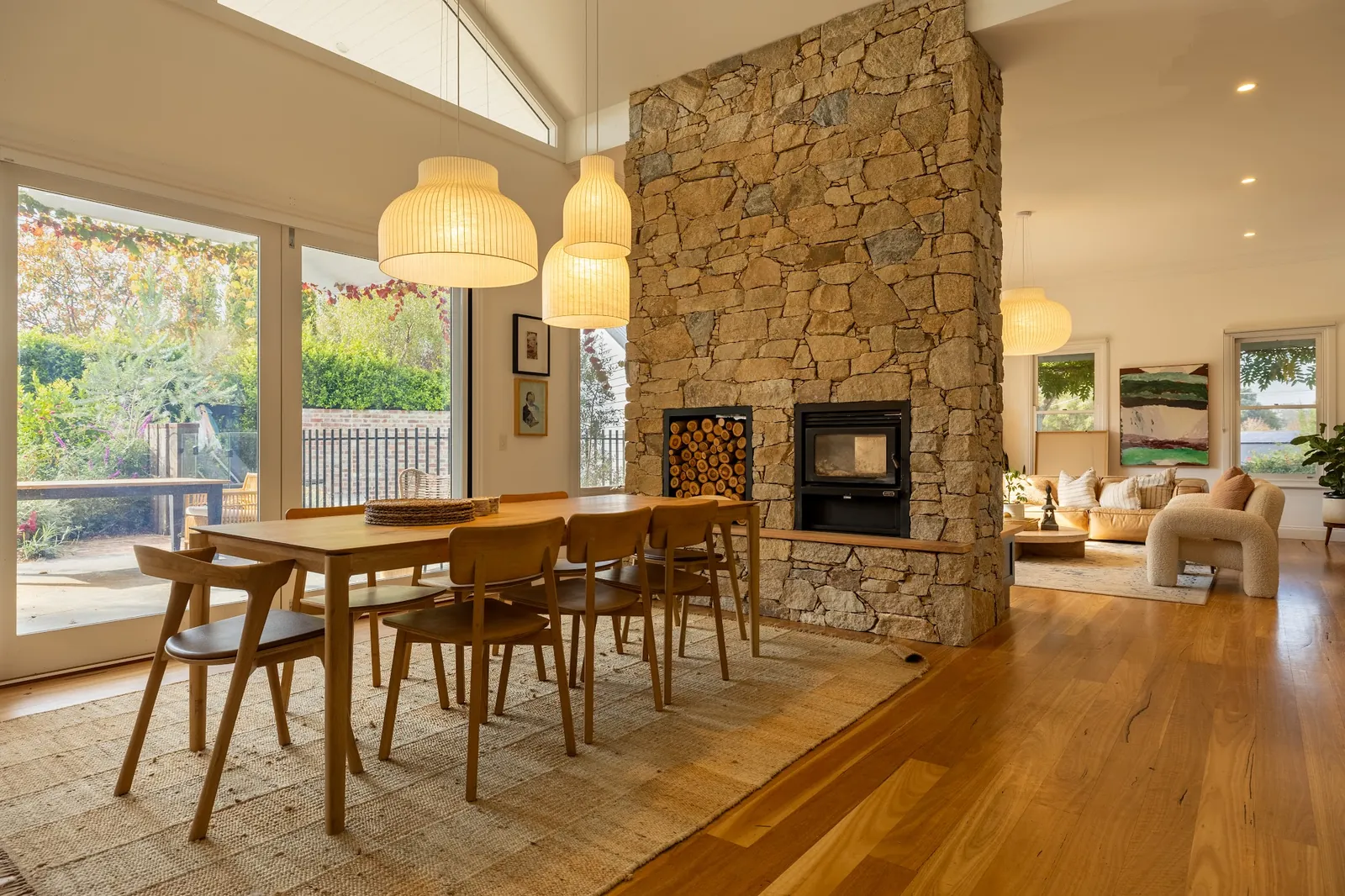
- Interior feature walls, fireplaces and entries, where the texture becomes the room’s centrepiece; see stone feature wall ideas.
- Retaining walls, where mass and drainage solve a structural problem attractively, the engineering side is in the stone retaining walls guide.
- Gabion and landscape structures, the budget-friendlier route to stone mass outdoors, are weighed up in stone grid gabions advantages.
Which Stones Suit Walling?
| Stone | Why does it work on walls | Start here |
| Limestone | Compressive strength plus workability; crisp joints and warm tones | Why limestone tops walling stone |
| Quartzite | Very hard, low porosity, holds its face in full exposure | Benefits of quartzite walling |
| Sandstone | Earthy texture and colour, the classic Australian wall | Sandstone cladding |
| Quartz | Sparkle and depth with serious weather resistance | Quartz walling for outdoor living |
| Travertine | Soft, layered tones for refined facades and courtyards | Silver travertine walling benefits |
Granite belongs on the list too, where maximum hardness and a speckled, colourfast face are the priority.
When Stone Walling Is Not the Right Call
An honest investment case includes the cases against.
- Short hold periods on tight budgets. If the property sells in two years, the stone premium may not return; render buys the look for less, and the next owner inherits the recoating cycle.
- Structures that can’t carry it. Full-bed stone is heavy. Lightweight framed walls need veneer formats and proper fixing design, and skipping that engineering is how cladding fails.
- DIY ambitions on structural walls. Veneer panels on a sound substrate are within reach of a capable owner; structural and retaining walls are not. The honest line between the two is drawn in the truth about DIY stone walls.
Price the Wall Properly
The investment case only gets real with your wall’s dimensions and stone choice in front of you. Browse the stone walling range or order samples and compare the contenders side by side.
FAQs
How long does a natural stone wall last?
Fifty to one hundred plus years for a properly built wall, with the stone itself essentially permanent. The serviceable parts are the joints: repointing every few decades keeps the structure tight.
Does stone walling add value to a house?
Yes, in two ways: it lifts street appeal immediately, and it signals durable quality to buyers weighing the maintenance they will inherit. It is one of the few exterior spaces that survives changing trends, because the material predates all of them.
Is stone walling expensive?
It sits at the premium end of walling, and labour is often as large a line as the stone, because good walling is skilled, piece-by-piece work. Judge it on lifecycle cost: the alternatives cost less upfront and keep charging you afterwards.
Can I install stone walling myself?
Adhered veneer on a sound, flat substrate is achievable for a careful DIYer. Structural walls, retaining work and anything tall belong with a professional, and picking the right one matters; use the checks in tips for hiring the right stone mason.