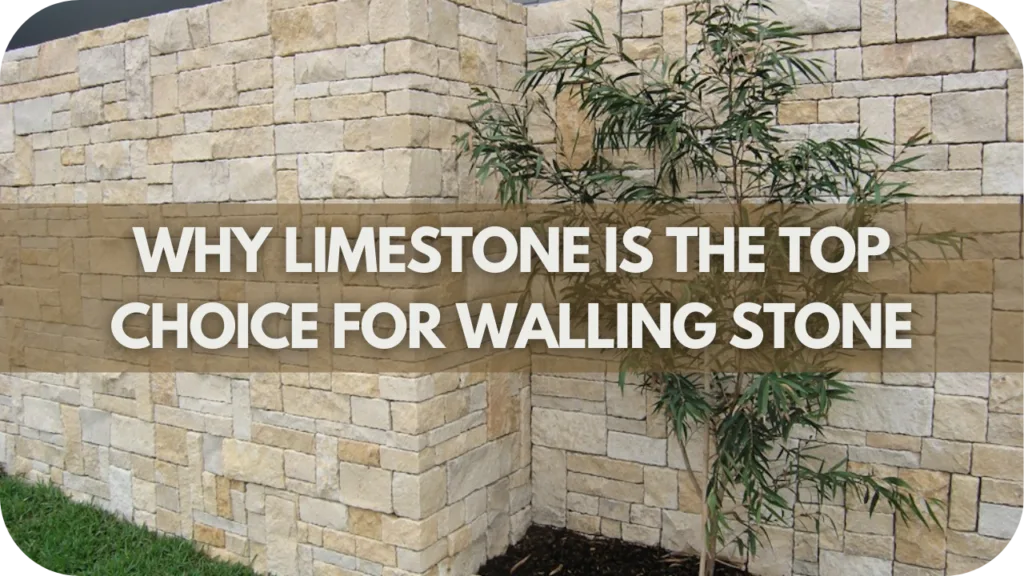
Limestone has been a walling stone for thousands of years because it pairs high compressive strength with workability: dense enough to carry real loads, soft enough to cut and shape with precision, in warm natural tones, nothing manufactured matches.
Its trade-offs are known and manageable: it is softer than granite, and porous varieties need sealing in exposed settings.
This guide makes the case properly: what limestone brings to a wall, where it works best, which limestones to choose from, and how to keep a limestone wall looking sharp for decades.
In this guide
What Makes Limestone Good for Walls?
Walls ask two things of a stone: carry compression without crumbling, and take shaping without shattering. Limestone does both, which is why it sits in structures from the Great Pyramid of Giza to Victorian public buildings to current Melbourne facades. Masons can cut it to crisp ashlar blocks, tight-jointed cladding or rough random walling, and the stone weathers to a patina rather than wearing out. There are many varieties with different densities and tones, covered in what is limestone; the dense ones are the walling stones.
Limestone’s case sits inside the broader argument for natural stone walling: full-body colour, no coatings to fail, and a finish that improves with age.
5 Benefits of Limestone Walling
1. Proven structural durability
Good dense limestone has the compressive strength walls need and a track record measured in centuries. It resists cracking, handles Australian weather extremes, and its performance in local conditions is detailed in limestone durability in Australia.
2. Workability you can see in the joints
Because limestone cuts and dresses more easily than granite or quartzite, masons can produce crisp arrises, tight joints and detailed profiles without heroic labour. That precision is the difference between a wall that looks built and a wall that looks crafted, and it shows up in the installation quote, too.
3. A warm, livable palette
Limestone runs from creamy whites through beiges and ambers to smoky greys and charcoals, often with subtle fossil and shell detail that gives the surface quiet depth. The full spread of tones and surface treatments is mapped in the limestone walling finishes, texture and colour guide.
4. Thermal mass that steadies the room
Solid limestone and limestone-faced masonry absorb heat through the day and release it slowly, flattening indoor temperature swings. To be precise about it: that is thermal mass, not insulation. The insulating layer in a modern wall sits behind the stone, and the two together make a comfortable, efficient wall.
5. Low upkeep, with one rule
A limestone wall asks for an occasional wash with mild detergent and, in exposed locations, a penetrating sealer; the case for it is set out in the benefits of sealing limestone exteriors. The one rule: never use acidic cleaners. Limestone is calcareous, and acid etches it on contact.
Where Limestone Walling Works Best
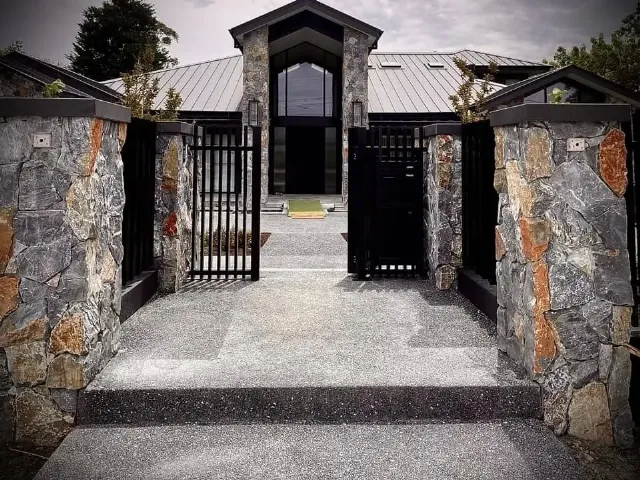
- Exterior cladding and facades. Limestone’s tone and texture carry a whole elevation without shouting; the looks it produces are showcased in elegant limestone cladding.
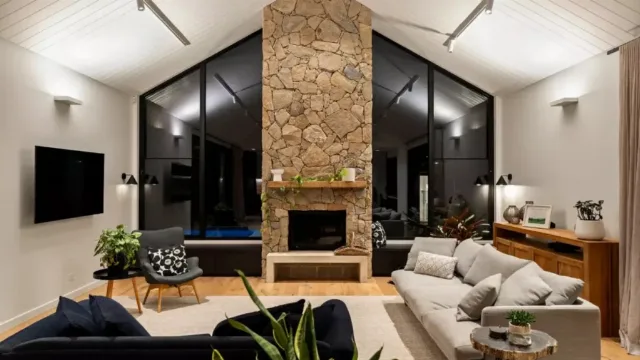
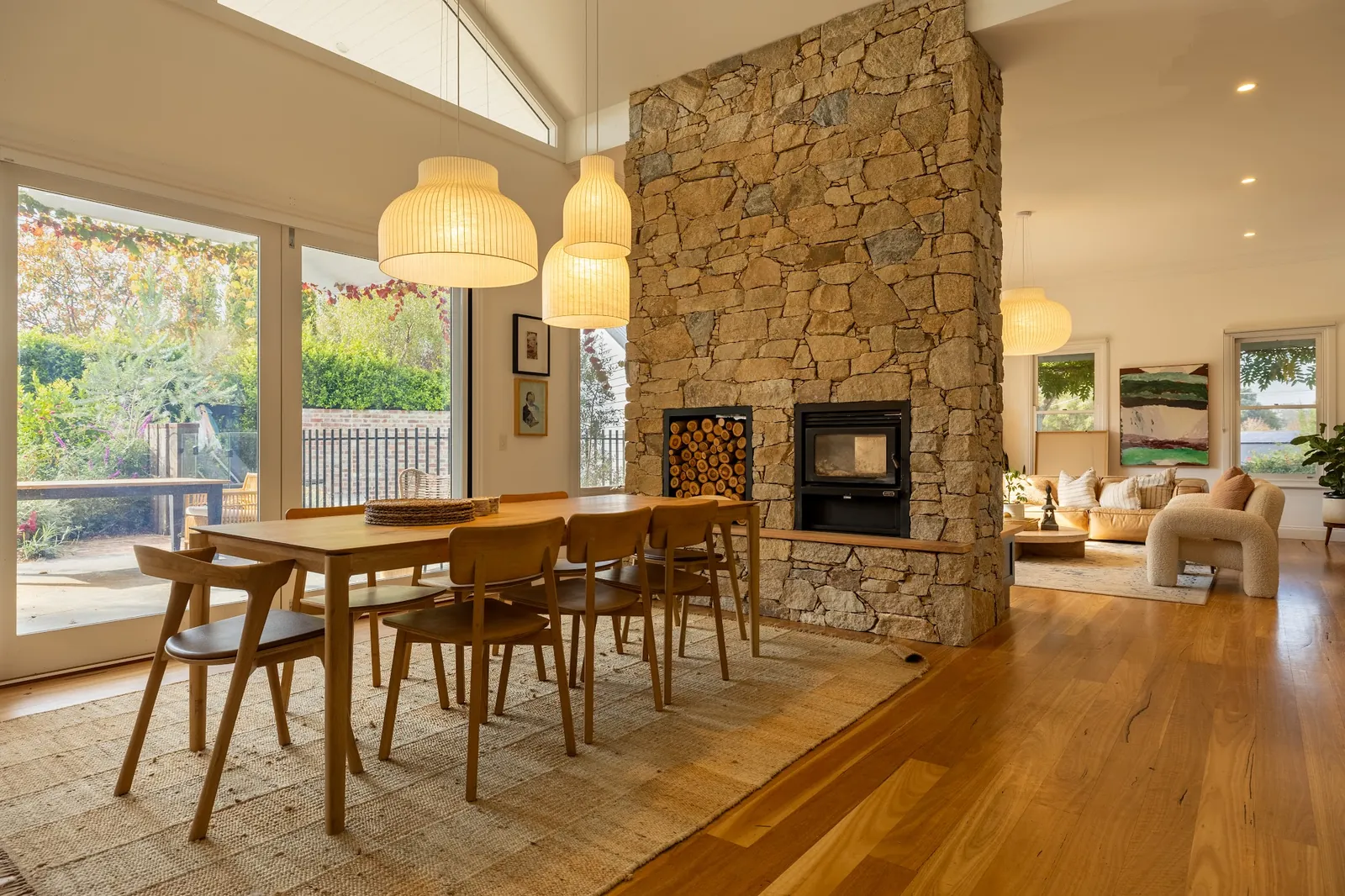
- Interior and feature walls. Indoors, weather drops out of the equation and limestone’s warmth takes over, from fireplace surrounds to entry walls; formats and design moves are in the stone feature wall guide.
- Retaining walls. Mass limestone blocks resist soil pressure and look better doing it than concrete sleepers; structure, drainage and design are covered in the stone retaining walls guide.
- Garden and boundary walls. Limestone reads as established the day it is built, and dry-stacked walls even give insects and small plants a habitat over time.
- Commercial buildings. Lobbies, facades and public spaces use limestone for the same reasons homes do, at a scale where its consistency between pieces becomes an asset.
Which Limestone Should You Choose?
The variety changes the wall more than any other decision.
| Limestone | Character | Suits |
| Beloka | Charcoal tones with bronze veining | Bold, contemporary walls and contrasting facades |
| Tuscan | Dense, even-profiled walling stone | Classic exteriors across a wide range of styles |
| Jamieson | Burnt amber tones, rustic texture | Warm, earthy walls and country builds |
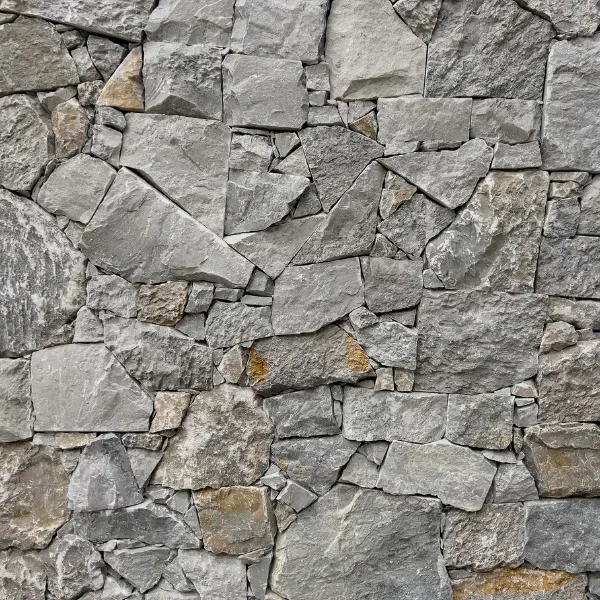
| Jasper | Smoky greys with a broken texture | Sharp, architectural elevations |
The range also includes Luxe, Sienna and Berkshire limestones. To match density, tone and format to your specific wall, work through how to choose the perfect limestone for your walling project.
How Do You Maintain a Limestone Wall?
- Wash with mild detergent and water; skip pressure washing on softer faces and never use acid-based products.
- Seal exposed exterior walls with a penetrating sealer, renewed every three to five years, depending on weather exposure.
- Treat moss and algae early on shaded walls; the gentle methods for removing moss and algae from limestone.
- Repoint failing joints and replace damaged blocks individually; the techniques are covered in repairing and restoring limestone walls.
Build the Wall Once
A limestone wall is a long decision, so make it with the stone in front of you. Browse the stone walling range or book a consultation and compare Beloka, Tuscan, Jamieson and Jasper side by side.
Limestone Walling FAQs
Is limestone strong enough for retaining walls?
Yes. Dense limestone blocks have the mass and compressive strength to retain work demands, with drainage behind the wall doing as much for longevity as the stone itself. Many councils require permits and engineering once a wall passes roughly 600mm to 1 metre in height, so check local rules before building.
Does limestone walling need sealing?
Exposed exterior limestone benefits from a penetrating sealer, renewed every few years, because the stone is porous enough to take in water and stains. Sheltered and interior walls are often left unsealed to keep the natural surface.
Is limestone harder than granite?
No, and it doesn’t need to be. Granite is harder at the surface; limestone wins walls on compressive strength, workability and cost of installation. Surface hardness matters for floors underfoot, compression and detailing matter for walls, and limestone is built for the second job.
Can limestone be used near the coast?
Dense limestone performs well in coastal settings when sealed and detailed properly, with an occasional freshwater rinse keeping salt build-up off the face. Highly porous varieties in direct salt spray are the ones to avoid, so let the supplier match the stone grade to the exposure.