Bluestone paving suits outdoor areas because it is one of the most durable, slip-capable, and good-looking stones you can lay, and it holds both its structure and its deep blue-grey colour outdoors for decades. It works as well around a pool as it does on a driveway or a garden path, which is why it is one of the most specified paving stones in Australia.
This guide gives you the honest version: what bluestone actually is, the benefits that hold up (and the one myth worth correcting), the finishes that change how it performs, ten design ideas you can use, and how it is laid and looked after.
What is Bluestone?

Bluestone is the Australian name for basalt, a dense, fine-grained igneous rock quarried largely in Victoria. That density is the source of everything bluestone is known for: it resists cracking, chipping, and fading, and it carries heavy traffic and harsh weather without significant wear.
The colour runs from deep charcoal blue-grey to a softer grey, sometimes with small natural pock marks (catseyes) that are part of the stone, not a flaw.It comes in a range of finishes, each suited to a different job: sawn for clean modern edges, honed for a smooth refined face, flamed for grip in wet areas, and tumbled or cobble formats for character.
The finish you choose matters as much as the stone itself, which is the point most guides skim over.
The real benefits of bluestone paving

- Durability that justifies the price. Bluestone’s dense basalt structure resists cracking, chipping, and fading under heavy traffic and weather. Bluestone usually costs more upfront than concrete or some other pavers, but it lasts decades with little upkeep, which is what makes it cost-effective over the life of the surface rather than just on day one.
- Slip resistance where it counts. In a flamed or exfoliated finish, bluestone grips well underfoot when wet, which is why it is a favourite for pool surrounds and garden paths. One honest qualifier the original glossed over: honed bluestone is smoother and less grippy, so save it for dry or formal areas, not wet ones.
- Timeless, varied looks. No two pieces are identical, and the blue-grey palette suits both modern and traditional schemes. It reads as elegant rather than trend-driven, so it dates slowly.
- Genuine versatility. Available in pavers, cobbles, coping, and crazy paving, bluestone adapts from a sleek grid patio to a rustic flagstone path, and it can be cut and shaped to custom edges and borders.
- Low maintenance. Sweeping and the occasional rinse keep it clean; a pH-neutral cleaner handles deeper grime. It resists staining well, especially sealed.
- Adds property value. A quality natural-stone surface reads as a premium feature to buyers, and bluestone is among the stones that lift a property’s appeal, whether on a driveway, patio, or entry.
- The myth worth correcting: heat. The original article claimed bluestone “retains heat for a comfortable environment.” In reality, bluestone is dark, so it absorbs heat and gets warm in full sun, like any dark surface. That is worth planning around, not a selling point. For a full-sun pool deck, choose a textured finish and factor in shade; do not expect the stone to stay cool because it is natural.
How finish changes performance
| Finish | Look | Grip | Best suited to |
| Sawn | Smooth, modern, crisp edges | Moderate | General paving, patios, courtyards |
| Honed | Smooth, matte, refined | Lower | Interiors, formal dry areas |
| Flamed (thermal) | Textured, rugged | High | Pool surrounds, wet areas |
| Exfoliated | Lightly textured matte | Medium to high | Paths, outdoor living |
| Tumbled / cobble | Aged, rounded, rustic | Medium | Heritage, character areas, driveways |
The short version: anything around water or on a slope wants flamed or exfoliated. Honed belongs in dry, formal, or indoor settings.
Ten design ideas for bluestone paving

1. Classic patio. Large rectangular slabs in a grid or running bond give a clean, structured floor that works in modern and traditional settings alike. Pair with simple furniture for an elegant alfresco.
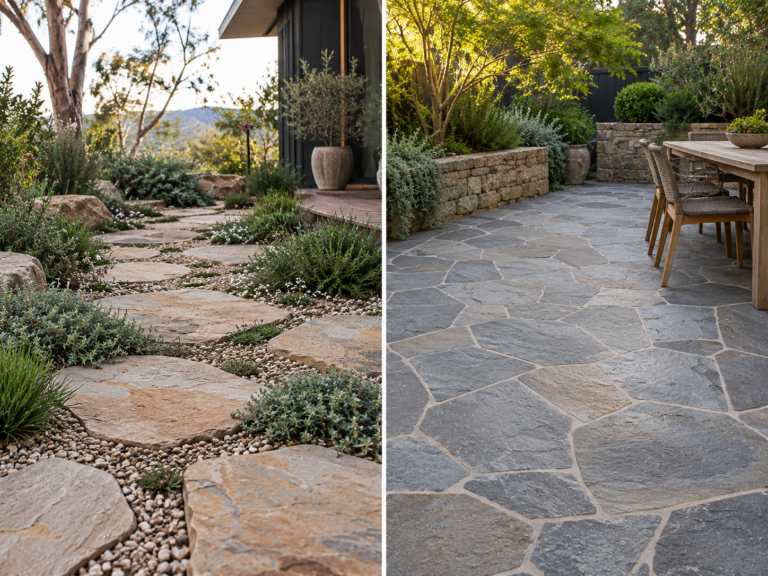
2. Winding garden path. Irregular flagstones with planted gaps between them let grass or ground cover grow through, for a soft, natural route. See our garden paths and pathways guide for layout detail.
3. Dynamic patterns. Herringbone, basket weave, or diagonal layouts add movement and texture, and mixing sizes deepens the effect. Strong in courtyards and dining areas. Our paver patterns guide covers the options.
4. Poolside. A flamed or exfoliated finish gives safe footing at the water’s edge, and bluestone’s tone sits beautifully against blue water. Pair it with matching pool coping for a finished edge.
5. Multi-level spaces. Bluestone steps, terraces, and raised platforms define zones and add depth to a sloping garden. Keep the finish consistent across levels for a cohesive look.
6. Fire pit area. Circular or semi-circular bluestone around a fire pit creates a natural gathering point. A textured, rugged finish suits the earthy mood.
7. Outdoor dining. Smooth, level bluestone slabs make a stable base for tables and chairs, and the surface wipes clean after meals, which suits a high-use area.
8. Border accents. Smaller bluestone pieces edge lawns, beds, and paths, adding contrast and definition and tying a scheme together.
9. Water feature surrounds. Bluestone framing a pond, fountain, or reflecting pool reads calm and considered, with the stone’s tones echoing the water.
10. Blended finishes. Combining, say, sawn and tumbled, or honed and flamed, in one scheme adds texture and a bespoke feel. Keep it to two finishes so it stays intentional, not busy.
How bluestone paving is installed

The method follows the load, and getting the base right is what separates paving that lasts from paving that moves.
For pedestrian areas, bluestone is set on a screeded sand bed over a compacted crushed-rock base, with joints filled and edges restrained.
For driveways and high-traffic or formal areas, it is bedded in mortar on a sound, well-draining base. Either way, four things decide the outcome: a properly compacted base, correct fall for drainage (around 10mm per metre, running away from buildings), firm edge restraint, and clean cutting with a diamond blade where pieces need shaping. For the full method, see our stone paver installation guide.
On joining, polymeric sand is worth knowing about: it hardens once wetted, locking the stones and resisting weeds and wash-out far better than loose sand, especially on slopes or exposed areas.
Maintaining Your Bluestone Paving

Bluestone is low-maintenance, not maintenance-free. Sweep with a stiff broom and rinse to clear dirt and leaves, and use a pH-neutral stone cleaner for deeper grime. Avoid acidic cleaners and high-pressure washing, which can mark the finish and blow sand out of the joints.
Seal it for outdoor longevity. A penetrating sealer applied every two to three years (or as the product advises) slows water uptake, resists staining, and helps keep moss and algae down in shaded, damp spots.
Keep joints topped up with sand or polymeric compound so the pavers stay locked, and check periodically for any loose or lifted stones, re-bedding them before they become a trip hazard. More details in our bluestone care and maintenance guide.
Is bluestone paving right for your outdoor space?
Bluestone earns its reputation: durable, slip-capable in the right finish, good-looking in almost any scheme, and a genuine lift to a property, as long as you choose the finish to match where it goes and plan for heat in full sun. Whether it is a quiet garden path or a poolside entertaining area, the stone does the work for decades.
To see the finishes and tones in person, Splendour in Stone supplies bluestone paving, cobbles, and coping across the range, with samples and advice on the right finish for your project. Get in touch for a quote.
FAQs
1. Is bluestone good for outdoor paving?
Yes, it is one of the best. Bluestone is a dense basalt that resists cracking, fading, and heavy wear, and in a flamed or exfoliated finish it grips well when wet. It suits patios, pool surrounds, driveways, and paths, and holds its colour outdoors for decades. The main thing to plan for is heat, since it is dark and warms in full sun.
2. Does bluestone paving get hot in the sun?
Yes. Bluestone is dark, so it absorbs heat and can feel warm underfoot in full sun, like any dark surface. A textured finish helps, and shade solves it. For a full-sun pool deck where bare feet matter, weigh this up and consider lighter stone if cool underfoot is the priority, or build in shade.
3. Is bluestone slippery when wet?
It depends on the finish. Flamed and exfoliated bluestone are textured and grip well when wet, which is why they suit pools and paths. Honed bluestone is smooth and more slippery when wet, so keep it to dry or formal areas. Match the finish to whether the surface gets wet.
4. How much does bluestone paving cost?
Bluestone usually costs more upfront than concrete or basic pavers, but its durability and low upkeep make it cost-effective over the surface’s life. The figure depends on finish, format, thickness, area, and whether installation is included. For an accurate price, request a quote with your square metreage and preferred finish.
5. Does bluestone paving need sealing?
Sealing is not essential but is recommended outdoors. A penetrating sealer resists staining, slows water uptake, deepens the colour, and helps keep moss and algae down in shaded areas. Reseal every two to three years, depending on exposure and traffic. Indoors, sealing is optional but useful near water.
6. Is bluestone paving low-maintenance?
Yes. Regular sweeping and rinsing keep it clean, with a pH-neutral cleaner for deeper grime. Sealing every few years and topping up joint sand is most of the ongoing work. Avoid acidic cleaners and high-pressure washing, which damage the finish. With that light routine, bluestone stays looking right for decades.