The most durable wall cladding materials in Australia are natural stone, brick and fibre cement. All three routinely last 50 years or more, and all three are non-combustible or deemed non-combustible under the National Construction Code. Natural stone leads the group on combined lifespan, weather resistance and fire performance because it does not rot, warp, corrode or fade.
This guide compares every major cladding material on service life, maintenance and fire performance, then covers the stones, installation details and care routines that decide whether your cladding lasts 20 years or 70.
In this guide
- Repair or Replace? A Quick Guide
- 1. Cracking, Shifting or Uneven Surfaces
- 2. Persistent Staining and Discolouration
- 3. Drainage Problems or Water Pooling
- 4. Outdated or Inconsistent Appearance
- 5. Increased Maintenance and Repairs
- 6. Visible Weed Growth Between Joints
- 7. Surfaces Feel Too Hot Underfoot
- Which Natural Stone Should You Replace It With?
- Is Replacing Old Paving with Natural Stone Worth It?
- Ready to Update Your Paving?
- FAQs
Repair or Replace? A Quick Guide
| Sign | What it usually means | Repair or replace? | |
| 1 | Cracked, shifting or uneven pavers | Base failure, ground movement or material fatigue | Relay isolated pavers; replace when it is widespread |
| 2 | Stains and fading that will not clean off | Porous, UV-degraded surface past the help of sealing | Replace if deep cleaning and resealing fail |
| 3 | Water pooling after rain | Settled base or falls laid incorrectly | Lift and relay on a regraded base, or replace |
| 4 | Outdated or patchwork appearance | Mismatched repairs and discontinued materials | Replace when you are ready for a refresh |
| 5 | Constant cleaning and repairs | Surface at the end of its service life | Replace; upkeep now costs more than it returns |
| 6 | Weeds through the joints | Joint and base breakdown holding moisture | Re-sand and seal joints first; replace if it recurs |
| 7 | Too hot to walk on | Dark or dense material holding heat | Replace with a cooler, lighter-toned stone |
1. Cracking, Shifting or Uneven Surfaces
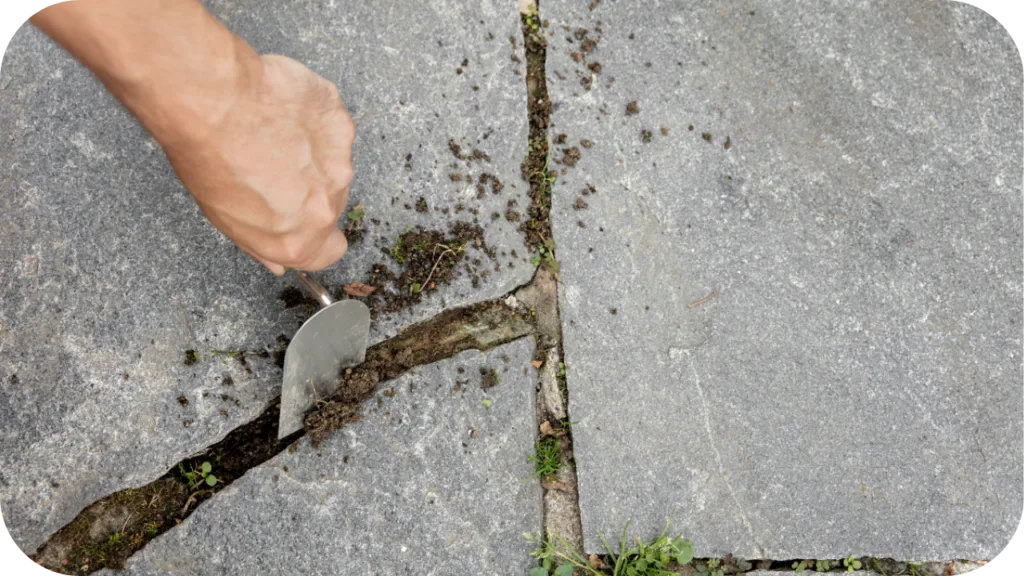
Cracks, sunken patches and rocking pavers point to problems below the surface: a poorly compacted base, ground movement or material that has simply fatigued. Water entering the gaps accelerates all three, and raised edges quickly become trip hazards.
Repair or replace: a few cracked or rocking pavers can be lifted and relaid. Cracking across multiple areas means the base has failed, and new pavers on a failed base will fail the same way. Both paths are covered in our stone paver installation and repair guide.
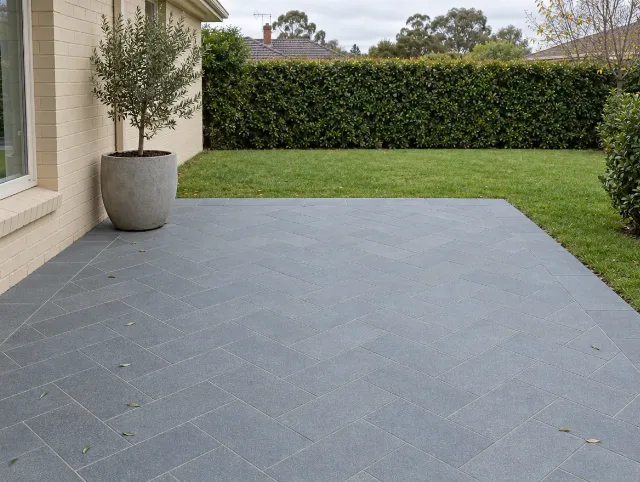
Dense stone such as granite or bluestone, laid over a properly compacted road base, handles point loads and seasonal ground movement far better than thin manufactured units.
2. Persistent Staining and Discolouration
Oil, mould, tannins and food stains sink into porous paving and eventually stop responding to scrubbing. UV exposure then fades the surface colour, so the area looks tired even when it is freshly cleaned.
Repair or replace: try a deep clean and reseal first; our paver cleaning and maintenance guide matches products to stain types. If the marks sit deeper than a sealer can reach, replacement is the fix.
Natural stone carries its colour through the full thickness of the unit, and a penetrating sealer keeps most spills on the surface long enough to wipe away. It weathers to a patina rather than looking worn out.
3. Drainage Problems or Water Pooling
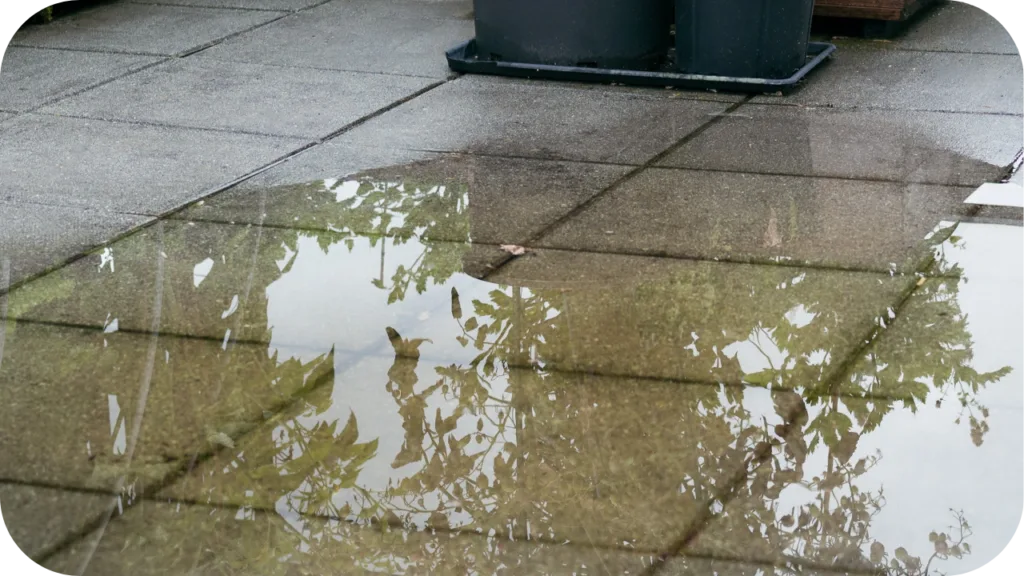
Ponding after rain means the falls were laid incorrectly or the base has settled. Standing water breeds slippery moss and mould, feeds weed growth and works down into the bedding layer, where it undermines the paving from below.
Repair or replace: pooling cannot be fixed from the top. The affected section needs lifting and relaying on a regraded base, which is usually the sensible moment to upgrade the surface as well.
New stone paving laid to a fall of around 1 in 80 to 1 in 100 away from the house sheds water properly, and several stones also come in formats suited to permeable systems. Our permeable paving guide explains when that approach pays off.
4. Outdated or Inconsistent Appearance
Patchwork repairs in near-match pavers, discontinued lines and faded sections make an outdoor area look neglected and date the whole property.
Repair or replace: this one is cosmetic, so replace when you are ready for a refresh rather than as an emergency. Colour-matching old, discontinued paving rarely succeeds.
Because no two pieces of natural stone are identical, variation reads as a considered design feature instead of a repair history, and the range of formats runs from cobbles to large-format pavers across traditional and contemporary styles.
5. Increased Maintenance and Repairs
When every season brings another round of pressure cleaning, patching or re-levelling, the surface is telling you it is done. Past a certain point, upkeep costs more than the paving returns.
Repair or replace: replace. Repairs only buy time on a surface that has reached the end of its life.
Once installed and sealed, natural stone sits firmly in low maintenance paving territory: an occasional wash and periodic resealing, with no resurfacing cycle.
6. Visible Weed Growth Between Joints
Weeds need a foothold, and they find one wherever jointing sand has washed out and moisture sits in the gaps. Left alone, roots widen the joints and lift pavers, turning a tidy surface uneven and unsafe.
Repair or replace: start with the joints. Re-sanding and sealing, covered in our paver joint filling and sealing guide, often solves it. If weeds return within a season or two, the bedding underneath is holding water and the area needs relaying.
Tight-jointed stone formats finished with quality jointing compounds leave weeds very little to work with, and dry-laid systems over a well-compacted base drain instead of trapping moisture.
7. Surfaces Feel Too Hot Underfoot
Dark, dense paving can become too hot for bare feet on a summer afternoon, which matters most around pools, patios and children’s play areas.
Repair or replace: no treatment cools an existing dark surface. Replacing it with a lighter, less heat-retentive material is the only real fix.
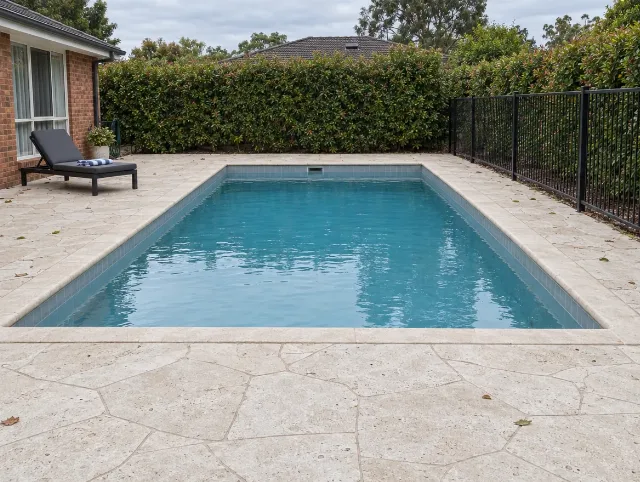
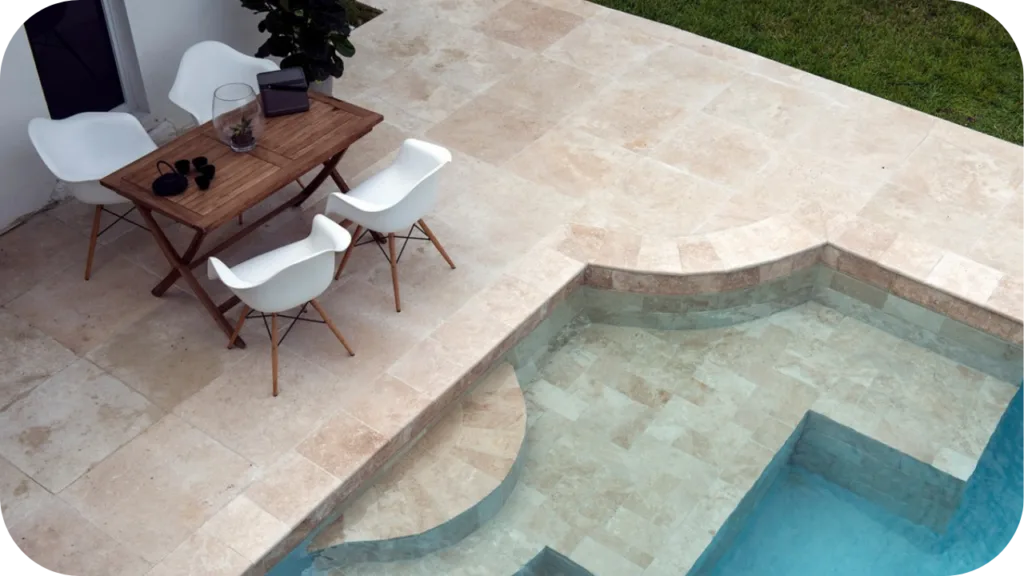
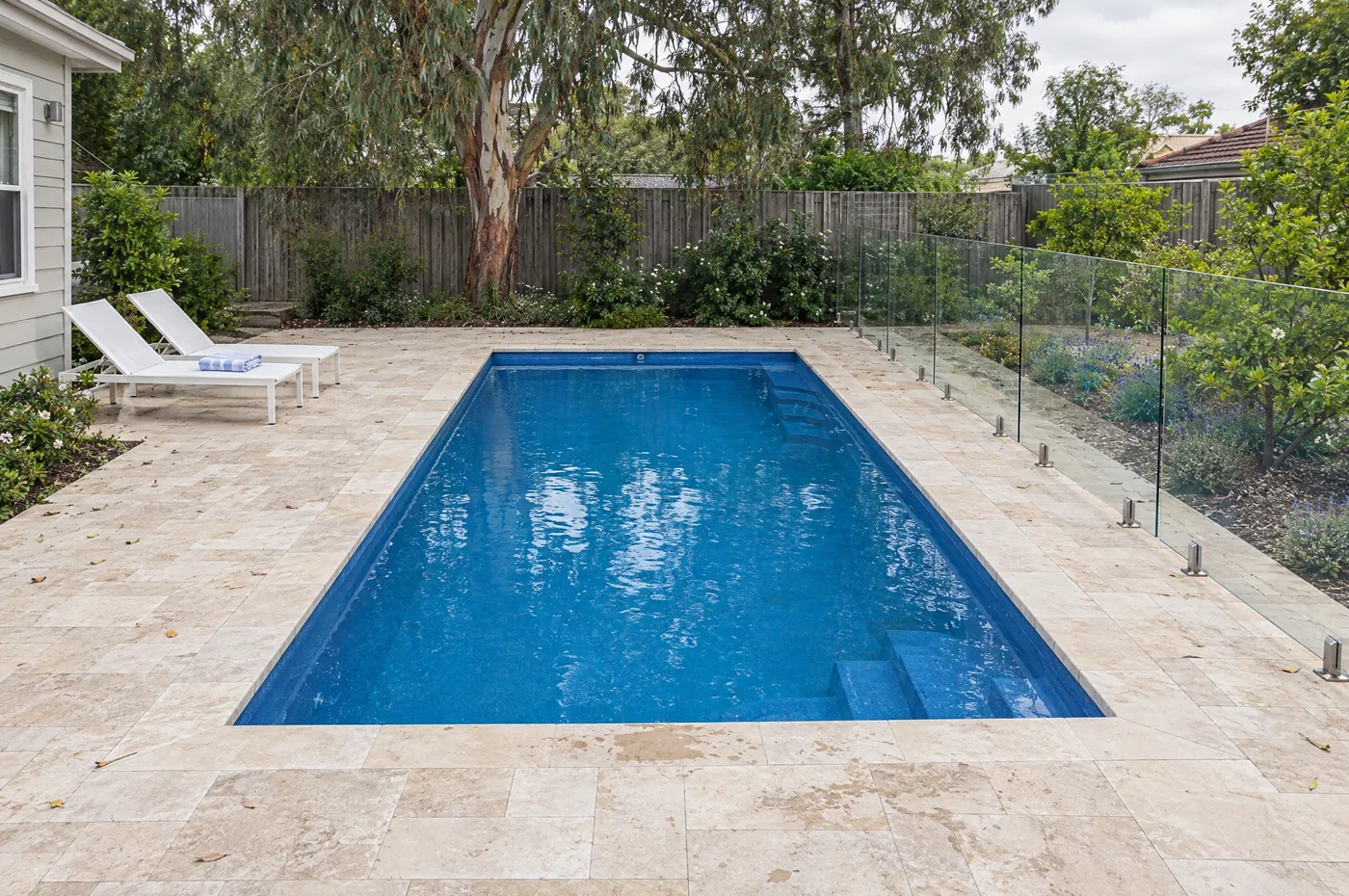
Lighter-toned stones reflect more heat than they absorb, and travertine in particular stays comfortable underfoot, which is why travertine pavers around pools are the default choice for barefoot zones.
Which Natural Stone Should You Replace It With?
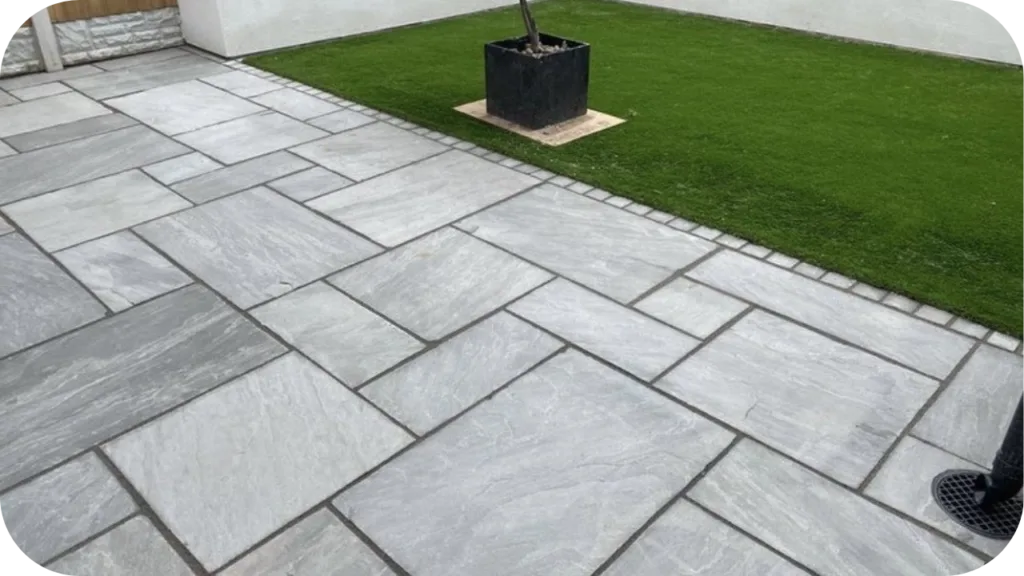
Match the stone to the job the old surface failed at, not just to the look you want.
| Stone | Where it excels | Start here |
| Bluestone | Driveways, paths and high-traffic areas | Ultimate bluestone pavers guide |
| Granite | Driveways and heavy-duty surfaces | Granite pavers guide |
| Travertine | Pool surrounds and barefoot patios | Travertine patios guide |
| Limestone | Alfresco areas and light, soft palettes | Limestone durability in Australia |
| Porphyry | Cobbled driveways and non-slip exteriors | Porphyry cobbles |
Is Replacing Old Paving with Natural Stone Worth It?
Usually, yes. Replacing once with stone beats repaving twice with a cheaper material, and the gap widens the longer you stay in the home.
- Longevity economics. Correctly installed natural stone gives 50 plus years of service, against 20 to 30 for typical manufactured surfaces, so the cost per year of service favours stone despite the higher upfront spend.
- Lower ongoing upkeep. A wash and periodic reseal replaces the patch-and-repair cycle that ageing paving demands.
- Buyer appeal. Quality hard landscaping presents strongly at sale time; tired paving does the opposite.
- Sustainability. Stone is quarried and cut, not fired or resin-bound, and its service life means it is replaced far less often.
For the broader cost question, see our breakdown of whether pavers are worth the money.
Ready to Update Your Paving?
If two or more of the seven signs sound familiar, the surface is past saving and the money is better spent on replacement. Browse the stone paving range or book a consultation to match the right stone to your project.
FAQs
How long does paving last before it needs replacing?
Concrete pavers commonly give 20 to 30 years, clay brick 40 plus, and natural stone 50 plus when laid on a sound base. A failed base shortens all of them, which is why widespread movement matters more than the age of the surface.
Can you repair cracked pavers instead of replacing them?
Yes, if the damage is isolated: individual pavers can be lifted, the bedding corrected and the same or matching units relaid. Cracking spread across the area indicates base failure, and replacement is the only durable fix.
Can you lay new stone over an existing concrete slab?
Often, yes. A sound, well-draining slab can take stone laid directly over it, which avoids excavation. The method and its conditions are covered in our guide to laying bluestone over concrete.
Is natural stone better than concrete pavers?
Stone outlasts concrete, holds its colour through the full unit and weathers to a patina rather than wearing out, while concrete wins on upfront price. The full comparison is in natural stone vs concrete for outdoor projects.